One Last Chance

One Last Chance

Kentucky players walk off the Bridgestone Arena court after another demoralizing early exit in tournament play (Dr. Michael Huang Photo).

(LEXINGTON, Ky.) – Talk about unpredictable. The Kentucky basketball team this year has been exactly that. Coach John Calipari’s squad began the preseason with a lofty No. 4 national ranking and visions of a ninth national title dancing in everyone’s heads. Seventeen weeks later on Selection Sunday, the Wildcats are still dancing—but just barely. They’re saddled with a middling 6th seed in the East (New York City) Regional of the upcoming NCAA Tournament, ready to embark on an improbable—but totally necessary—quest for redemption.

That’s not hyperbole either. Kentucky gets one last last chance to avoid disaster—the shameful extension of a four-year drought brought on by a worldwide pandemic and ignominiously crowned with a humiliating and inexplicable first-round tournament loss to Saint Peters last year. That on the heels of a historically worst ever 9 – 16 trainwreck of a season just one year prior. Combine all that with this current campaign of crushed hopes and shattered expectations, and you can see why the natives are uptight.

Uptight might just be the understatement of the year. Plenty of fans within Big Blue Nation are downright furious, some already brandishing pitchforks and torches. Others are even worse off—disgustingly apathetic after having already thrown in the towel. The remaining segment of die-hards are hanging by their fingernails with a residual smidgeon of ever-fading hope—fervently praying for a miraculous rebirth like they experienced in that magical run in 2014.

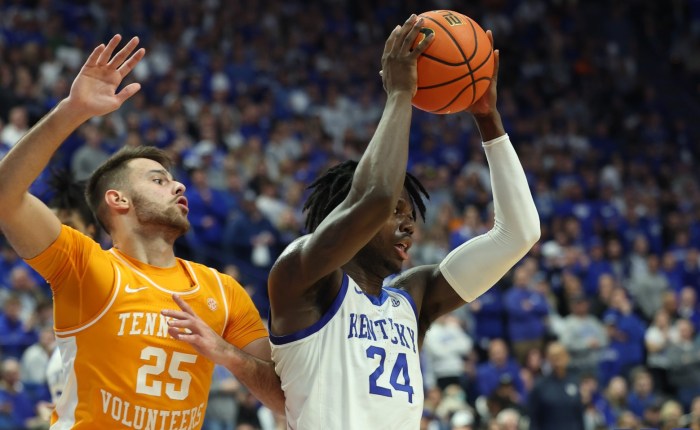
What can we expect? Your guess is as good as anyone’s. I do know that with this team, expect the unexpected. The Wildcats lost to lowly South Carolina at home, but beat a highly-ranked Tennessee team the very next game on the road. They blew out a dangerous Auburn team by thirty-two points, then lost to Vanderbilt on Senior Night in Rupp. The team rallied to beat the Hogs in Bud Walton Arena, then pulled the stinker in the SEC Tournament. You can’t blame anyone for being perpetually perplexed.   

Truth be told, Kentucky fans flooded into Nashville last week with high expectations of a return to normalcy. By that I mean routine championship runs with the Cats still playing on Sunday afternoon. The blue mist blew in with visions of three straight days of good food, good friends, and late nights on Broadway. It had been way too long since the good times rolled.

Of course—surprise, surprise—the unexpected happened, and Vandy sent Kentucky fans packing on Friday night. For many, that was the proverbial last straw. FUHGEDDABOUDIT! Season over.

Or is it? Remember, the Big Dance means one last chance at One Shining Moment, and Coach Calipari has harped incessantly this year about his team playing only for March. Also remember that this Kentucky team performs exactly the opposite of how you think it will. That means you have to fill out Kentucky’s path in the bracket exactly the opposite of how you think they’ll fare.

There’s only one huge problem with that “reverse thinking” type strategy, and it has to do with Kentucky’s first-round opponent. Heading into the matchup with No. 11 seed Providence (21 – 11) on Friday in Greensboro—given what happened last year and now with UK transfer Bryce Hopkins waiting in the wings—the pressure to win will be immense. The Cats will need to shake those opening game jitters (or more accurately, Calipari needs to keep everyone’s head from exploding) in order to move on to the round of 32. Many cynics are already picking Kentucky to lose—which means they’ll win.

From then on, you wouldn’t expect Kentucky to advance any further—which with this team means subsequent victories over No. 3 seed Kansas State (23 – 9), No. 2 seed Marquette, and No. 1 seed Purdue if the seeds hold up. If there’s one thing we’ve learned this year, it’s that the Wildcats always play their best as underdogs, with their backs against the wall.

That would mean a trip to the Final Four in Houston. Don’t laugh. It’s exactly what’s needed for the aforementioned redemption and exactly where fans were thinking this team was headed at the beginning of the year. We shouldn’t lower the bar just because the team wobbled during the regular season. Kentucky fans should never settle for mediocrity. Droughts like this are not par for the course for the program with the greatest tradition in the history of college basketball.

When measured against the gold standard, the last four years have been totally unacceptable. Here’s one last chance to make things right.

See you in Greensboro.

This blog posting was originally submitted as a UK Basketball Column for Nolan Group Media publications.

Doctor Cal

Doctor Cal

He may not be Sigmund Freud, but Coach John Calipari sure knows how to push the right psychological buttons (Dr. Michael Huang Photo).

(LEXINGTON, Ky.) – John Calipari has played the role of psychologist more than basketball coach this year. Not that there’s anything wrong with that. A hall of fame coach has to be many things to many people—especially his players. Mentor, father figure, disciplinarian, cheerleader, or counselor—a caring, players-first coach by necessity wears many hats.

Dealing successfully with inflated egos and entitled mindsets is an art that Coach Cal has mastered over his forty-plus years in the business. This particular season, however, his skillful navigation through a minefield of mental distress deserves a shiny gold star. Truth be told, this Wildcat team may be one of the most emotionally fragile teams in UK history.

Personality plays a huge role in that aforementioned fragility. Players this year seem quite a bit more hypersensitive to fan criticism than usual. Although Calipari has warned them to stay off of social media, they’re only human and are naturally curious about what people say about them.

Additionally, injuries have drastically altered playing times and rotations, confidence has wildly wavered, and no one has really stepped up to be the bona fide team leader. Uncertainty about future NBA riches also drew angst on a team with multiple borderline prospects. No doubt about it, play for pay messes with your mind.

Along the same lines, who knows how NIL issues have affected team chemistry. Throw in the tragic death of a player’s father just before the season began and the brouhaha early on associated with the proper utilization of your returning point guard, and you can see why the team was heading off an emotional cliff.

But fear not! Coach Cal—or should we say Doctor Cal—to the rescue. Throughout the roller coaster of a season, the wise and seasoned 64-year-old Calipari has maintained just the right amount of both compassion and assertiveness to keep his team from letting go of the rope.

“You know, there’s two things when you’re coaching,” Doctor Cal reminded the media after Kentucky’s impressive 86 – 54 blowout win over Auburn on Saturday. “One, you’ve got to hold them accountable. But you’re juggling balls because you also got to build them up.”

Anyone paying attention to Calipari press conferences has rolled their eyes at his incessant attempts to build players up during the times they were struggling. Listening to Calipari, you’d think every one of his star pupils was having a breakout season. No matter how many times he threw the ball away, Sahvir Wheeler could do no wrong. Jacob Toppin was always poppin’—even though early on he couldn’t throw it in the ocean, and Oscar Tshiebwe was always “getting better”—despite opponents destroying him time and time again on the pick and roll. And of course, there was always the endearing “How ‘bout Lance” comment every time Lance Ware simply made a court appearance.

I’ve learned over the years that everyone—no matter their status and achievements in life—needs encouragement when they’re down. A pat on the back can do wonders for a wounded psyche. For some players, it’s just what the doctor ordered.

“Yeah, of course,” answered Antonio Reeves when asked whether he appreciated and needed all the balloons and sunshine. “From the team and [from the coach]. We all need to be connected to one another and tell each other if we’re not playing well. ‘Just keep your head up’ or ‘keep playing your game’ basically.”

On the other hand, players like Cason Wallace would rather Calipari just stifle the effusive fake praise once and for all.

“That’s just how I am,” said the freshman point guard after breaking out of his extended shooting slump. “I don’t need the congratulations and the ‘good job, Cason.’ Just tell me what I need to get better at. We know it’s from a good place. If [Coach Cal’s] getting on us, he wants what’s best for us and the team. You just got to take it with a grain of salt.”

Individual players respond differently to various motivational approaches, and it seems to me like Coach Cal is indeed pushing all the right buttons. But it doesn’t really count what I think—or what you think, for that matter. How he’s perceived by the players is what’s ultimately important.

“I give him a lot of credit,” Oscar said when asked how much of the recent turnaround is due specifically to his coach’s psychobabble. “He works so hard. He just comes in everyday thinking, ‘What can I do to make these kids ready to go? What can I do to make sure these kids are happy?’”

“I know people have been hard on him,” the returning Player of the Year continued empathetically. “No matter what we are going through, he’s just going to come in with the motivation [and] positive words. He sends us messages every single day about positive stuff. ‘Stay positive!’”

That’s certainly good advice during times of trial and tribulation, so let’s give credit where credit is due. John Calipari has successfully steered his team through the mental abyss. Not only has Coach Cal done a good job on the basketball court drawing up Xs and Os this year, but Doctor Cal has done a masterful job manipulating everybody’s mind.

As the madness of March approaches and the pucker factor rises, the mental game becomes more important than ever. Let’s all hope that psychological wizardry continues to reap dividends in the postseason win column.

Dr. John Huang is a retired orthodontist, military veteran, and award-winning author. This blog posting was originally submitted as a UK Basketball Column for Nolan Group Media publications. If you enjoy his Kentucky Basketball stories, be sure to check out his latest book at https://www.amazon.com/dp/1684351669

Can We Really Trust the Process?

Can We Really Trust the Process?

(LEXINGTON, Ky.) – “The waiting is the hardest part”Tom Petty and the Heartbreakers

Kentucky fans are notoriously impatient. They don’t like waiting for anything. Not in long lines at the supermarket, in bad traffic on the highways, or for national titles on the basketball court. In their quest for championship trophies, the citizens of Big Blue Nation get especially antsy when their heralded five-star recruits don’t make the anticipated impacts required for projected deep runs in the NCAA tournament.

And yet, you can’t really blame fans for their impatience. After all, the Wildcats have been waiting for what seems like an eternity for that much-awaited deep run. Over a decade for that national championship, a seven-year-drought since their last Final Four, and over 1,400 days and counting since they last won a postseason tournament game. That’s certainly not acceptable for the program claiming to have the greatest tradition in the history of college basketball. It’s definitely not in line with the self-professed John Calipari “gold standard.”

Kentucky’s Hall of Fame head basketball coach has been stressing patience since the beginning of time. We’ve all heard his cautionary tales of how his one-and-done players aren’t necessarily one-and-done but rather on their own individual timeframes and pathways to success. For most of his troops, success means NBA glory and riches. For them to get there, Calipari stresses the need to “trust the process.”

Freshman Chris Livingston seems to have fully bought into the process. In Kentucky’s 66 – 54 upset win over Tennessee on Saturday, the 6-foot-6 forward from Akron, Ohio, scored 12 points and pulled down a season-high 10 rebounds—his first career double-double.

That timely showing by Livingston followed another beast-mode performance in the team’s prior 71 – 68 road victory over Mississippi State. Two breakout appearances in a row from the McDonald’s All-American—who earlier in the season struggled to simply dribble and drive—provided just the necessary salve for a Wildcat season teetering on the brink.

Within two games, the Wildcats went from outside the NCAA tournament bubble to squarely in the hunt for one of the top seeds in the SEC tournament. During that time, they’ve stacked up three more quadrant one wins with an excellent chance of accruing two or three more before the regular season comes to a close. All because of the process.

“I was just waiting my turn,” Livingston emphasized, when asked about the reason for the dramatic change in his game. “I just stayed with the process and trusted the process and look where we are now…I’m really cool with the journey I’ve been on and the journey I’ve been a part of under the coaching, under this team.”

What exactly is the process?

If it’s the pathway of someone like Shai Gilgeous-Alexander, who went from a four-star high school recruit to a first-round NBA draft choice within a matter of months, then bottle up that secret sauce and make a fortune spreading that recipe around.

If the process involves taking an extra year—like it did with P.J. Washington or Immanuel Quickley—than so be it. Players and fans alike should willingly take those situations as massive win-wins for everybody involved.

Even a three-year college player like Nick Richards eventually thanked the process for helping him achieve his life-long dream of playing in the Big Boy League.

As for five-star recruits like Kahlil Whitney who left the program after only half a season, or Skal Labissiere—who never got untracked from day one—or players like Quade Green, Charles Matthews, or Sacha Killeya-Jones who transferred out and are now saddled with the rigors of the NBA G League…well, I guess they didn’t quite trust the process.

Or maybe they weren’t patient enough. Alex Poythress certainly was. He trusted the process, tore his knee up, and bummed around the fringes of the NBA before winding up playing overseas. That’s not a horrible career, mind you. It’s just not what he envisioned when he inked with the Wildcats.

Let’s be honest. Everybody signing on with Kentucky is used to being coddled in some form or fashion. They listen to their friends, their family, and whoever else serves as their handlers who think they’re not getting enough court time or aren’t being utilized as their talents warrant. They all feel like they’re somehow too vital or special to wait for the process to take hold.

The reality, however, is that there’s a maturational element associated with the process that you simply can’t rush. It involves leveraging the system—the coaching, the training facilities, and the huge platform and support services of the University of Kentucky basketball machine—to your personal advantage. It involves developing your game through day-to-day practices with other elite talent while learning valuable interpersonal and communication skills along the way. Having top-level national media exposure at your every beck and call obviously doesn’t hurt the process either.

Most importantly, trusting the process involves trusting John Calipari. He’s the coach. He determines the practice drills, the playing time, and the various schemes he wants to run. The players’ individual success depends totally on them buying into the process—HIS process.

In that regard, you can’t fault the process at all. The litany of Calipari players in the NBA speaks for itself.

Unfortunately for Kentucky fans, that impressive achievement hasn’t resulted in a smidgeon of program satisfaction on the basketball court as of late. In fact, it’s worked itself in the opposite direction. The Wildcat faithful have become alarmingly disgruntled over the on-court foibles of these past few seasons as the list of Wildcats in the NBA continues to grow. By all accounts, it’s fair to say they’ve displayed patience by the boatload.

I’m happy for Chris Livingston’s breakout success this year. I’m looking forward to similar trajectories for the players from the five-star recruiting bonanza coming in 2023 – 24.

But I’m also deathly tired of waiting for that elusive championship number nine. There are two more weeks left in this regular season, three more weeks until Selection Sunday, and six more weeks until Final Four weekend in Houston. I’m convinced that Calipari’s process speaks absolute truth for the players-first coach he claims to be. I just hope and pray the process finally results in some upcoming postseason wins.

Lord knows, we’ve waited long enough.

This blog posting was originally submitted as a UK Basketball Column for Nolan Group Media publications.

Ranking the Road Venues

Ranking the Road Venues

The trip to Ole Miss was a bit disappointing, but it did finally complete my entire circuit of SEC Road Venues.

(Oxford, Ms.) – As a die-hard Kentucky Basketball fan, there’s not a better feeling in all the world than heading into the heart of enemy territory and snatching out a hard-earned victory. After all, when the Wildcats are on the road, it’s everybody’s Super Bowl—and there’s nothing more euphoric than spoiling an opponent’s weekend celebration.

When I started this media gig, one of my goals was to visit all the opposing SEC venues in both football and basketball. I’m still missing two football stadiums, but I’m happy to report that after my recent trip to Oxford, Mississippi, I have now officially completed the entire basketball circuit.

To celebrate, I thought I’d rank each of these venues according to the atmosphere around and within the arena on gameday. Now, this is my experience only. Yours may vastly differ. But it’s also important to note that I visited each of these places when Kentucky came to town, so you can bet your bottom dollar that the arenas were at their very loudest and rowdiest.

Coincidentally, it didn’t matter whether the Wildcats were nationally ranked or not, there always seemed to be a white-out, stripe-out, t-shirt giveaway, celebrity sighting, jersey retirement, or mascot rappelling out of the rafters adding to the chaos and frenzy of the afternoon or evening.

Let’s dive in, then, in reverse order—from least to most intimidating.

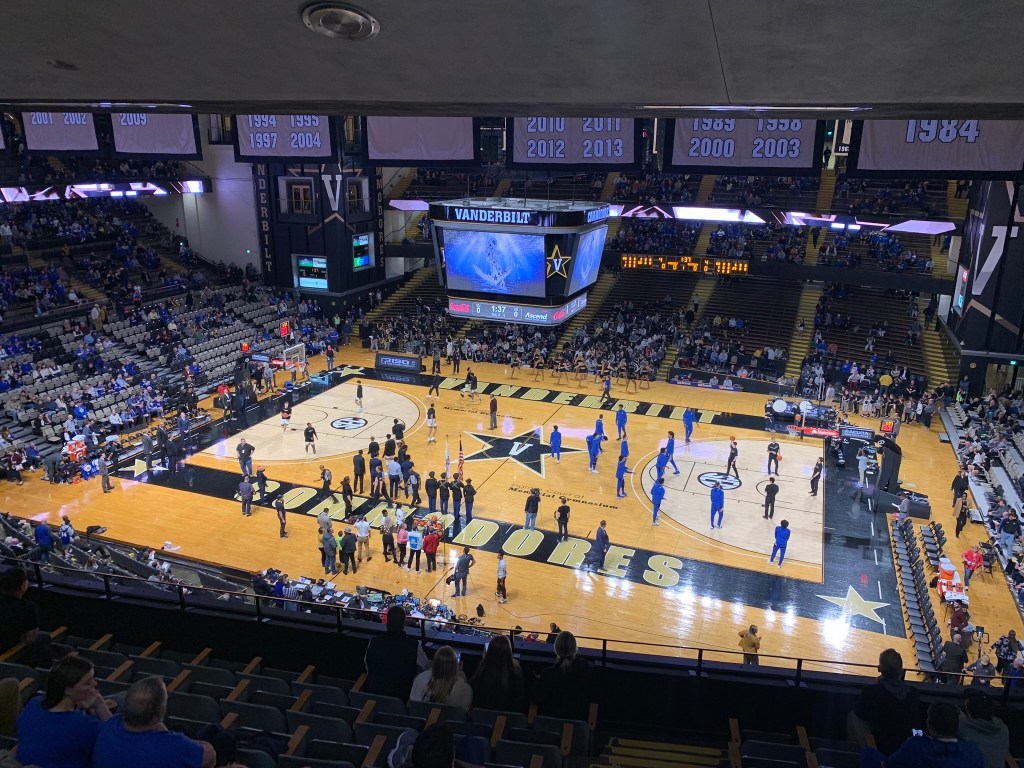
Vanderbilt

One of the most familiar trips for Cat fans to make is the quick jaunt to Nashville. The road to Music City now also ranks as the least intimidating. Don’t get me wrong, historic Memorial Gymnasium (capacity 14,316) can still get loud, but the magic of yesteryear is greatly overrated. The place is dated and worn, and the weird seating configuration—where the best seats (and the benches) are in the endzone—makes you feel like you’re watching an opera rather than a basketball game. Students still filed in early loaded for bear, but by the time the contest tipped off, half the seats were filled with blue. You’ll often hear more “Go Big Blue” chants in Nashville than you would in Rupp Arena.

Missouri

Other than the “M-I-Z—Z-O-U” chants, nothing really stands out about Mizzou Arena (15,061). It’s surprisingly spacious, but the layout looks and feels like you’re playing in a converted airplane hangar. Everything screams “lukewarm” in the “Show-Me” state, including the fans. Trust me, there’s not much going on outside the stadium in the town of Columbia, either—making my sojourn here a likely one-and-done.

Ole Miss

Okay, it’s not really fair basing your ranking on a visit during an ice storm. Unfortunately, that’s what happened to me. The Pavilion at Ole Miss seats 9,500, but on my cold and frigid visit, it was only about a quarter full. The sleek, modern, state-or-the-art facility was still loud, however, so you’ll have to use your imagination on how crazy it might be on a normal Saturday night. Keep in mind that the town of Oxford is a gem of a place to visit. If Kentucky stinks it up, there’s still plenty of charm to make you smile.

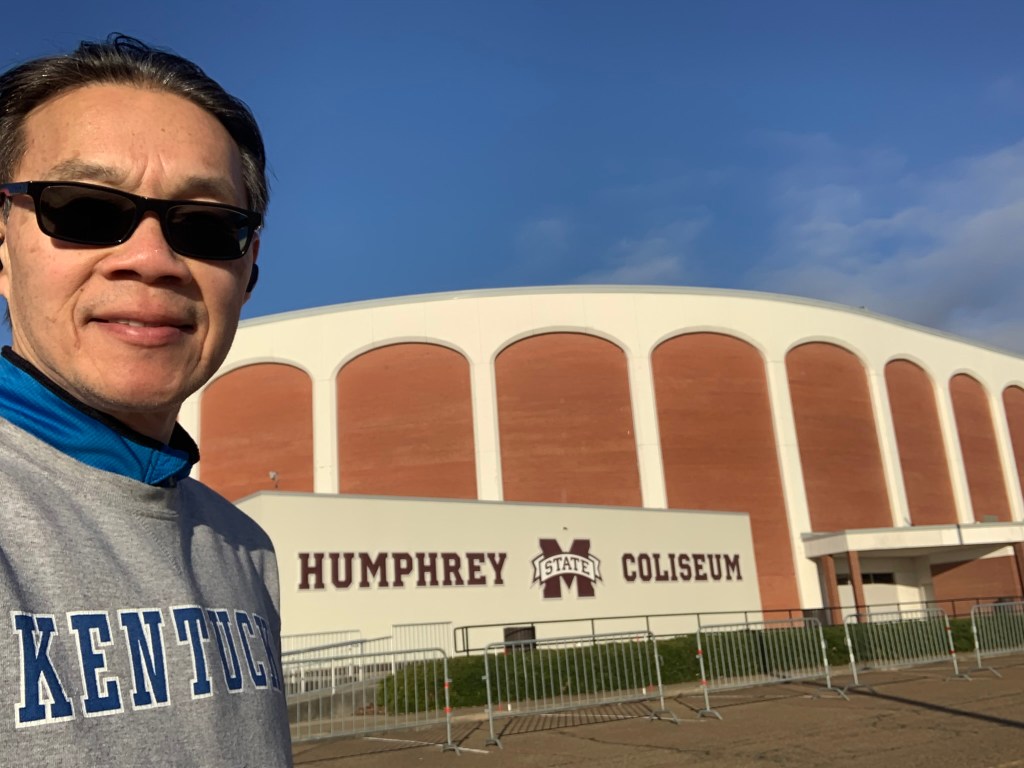
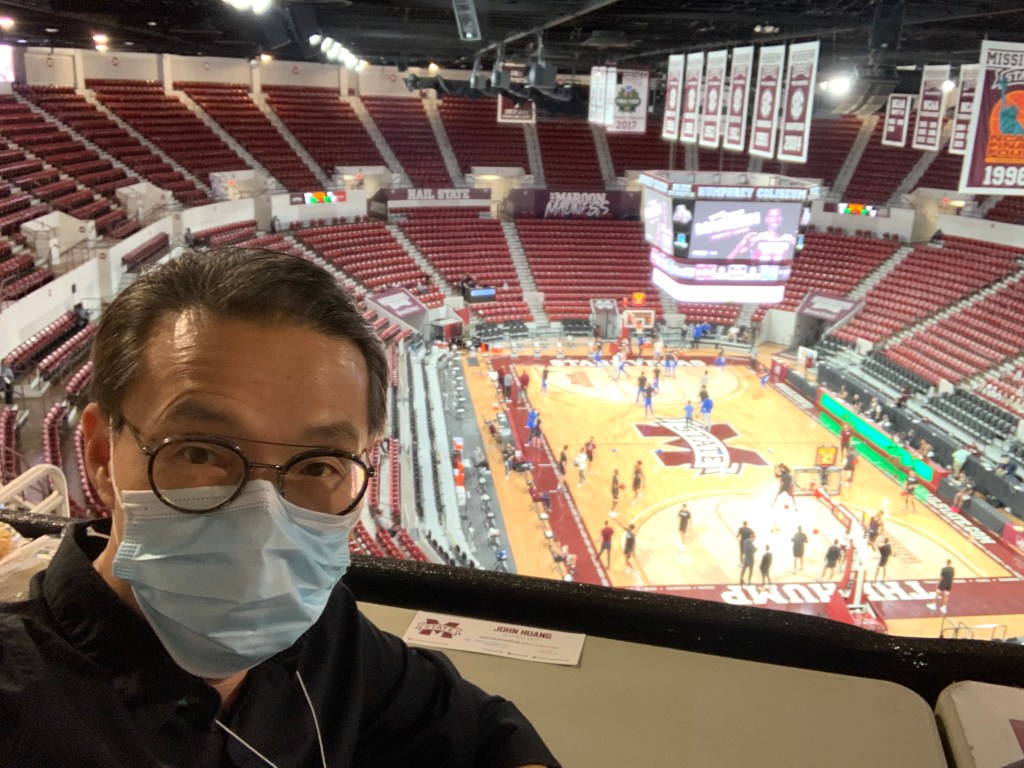
Mississippi State

Reports of Starkville, Mississippi, being totally isolated and boring are greatly exaggerated. In my humble opinion, StarkVegas is only partially isolated and boring. That makes a game at Humphrey Coliseum (10,575) a fairly significant night on the town. Accordingly, the “Hump” can get pretty raucous, and victories against the Bulldogs are hard to come by if you fall behind early. I happened to visit during the Covid year, so I’m basing this ranking partially on what I’ve previously gleaned on television over the years.

Georgia

Stegeman Coliseum (10,523) could be formidable when Georgia was competitive. The problem for Bulldog fans is that their basketball team seldom was. It’s a football school, and the enthusiasm for basketball dies down as soon as the home team goes down double digits—which happened quickly and frequently during the Tom Crean era. Do yourself a favor and spend your time at the bars and restaurants around campus instead. As bad as their basketball is, Athens, Georgia, might just be the best college town in America.

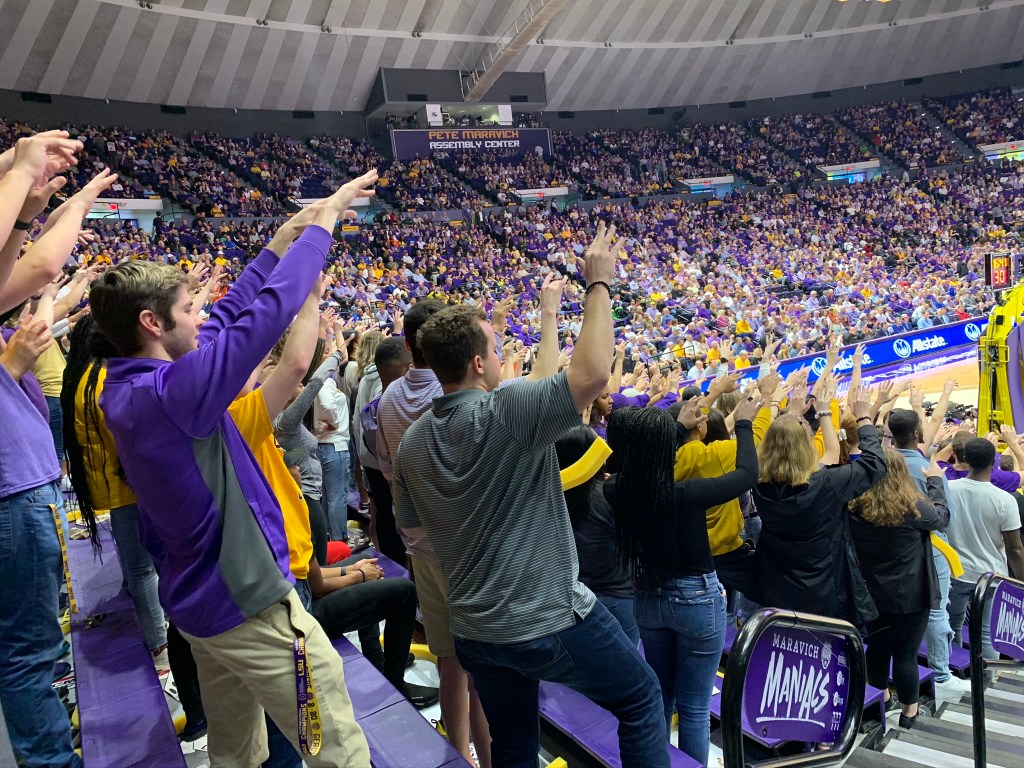
LSU

If you love Cajun food, then a trip to Baton Rouge, Louisiana, has to be on your bucket list. Go during Mardi Gras, and you’ll certainly get more than your money’s worth. Show up at the Pete Maravich Assembly Center (13,215) for a game versus the Tigers, however, and you’ll most likely be disappointed. It’s fairly easy to steal a victory here as most fans in attendance are too drunk to care. They’re mostly still thinking about past pigskin parties. Walk a few feet next door to Tiger Stadium and see where the real sport is played.

Texas A&M

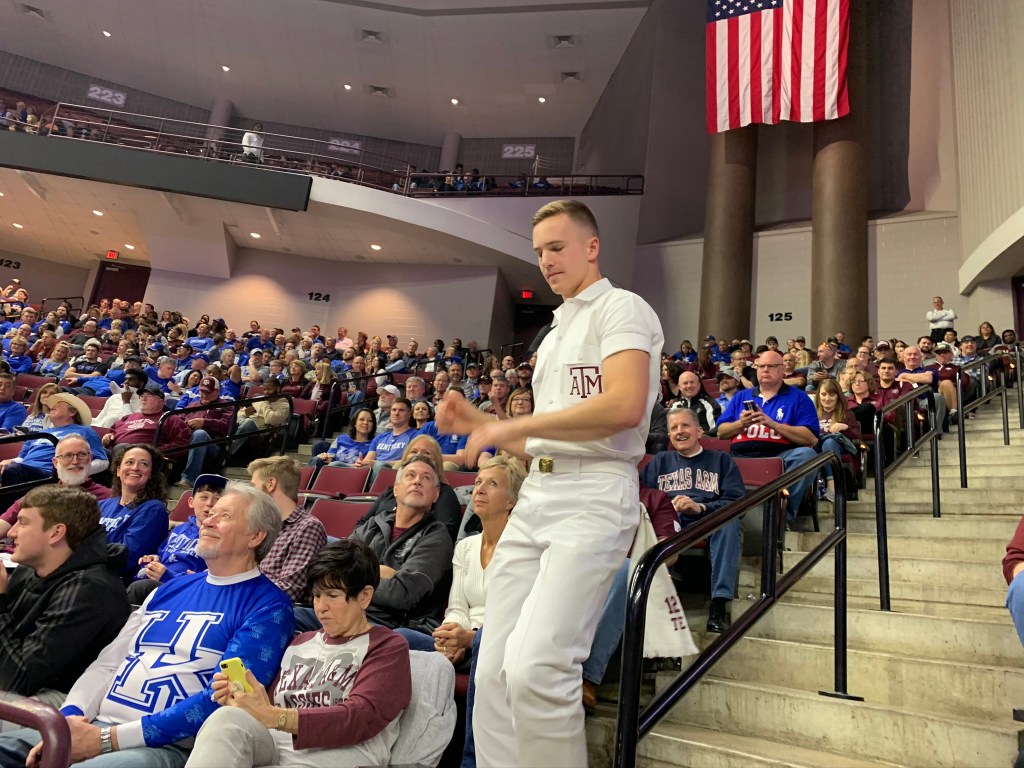
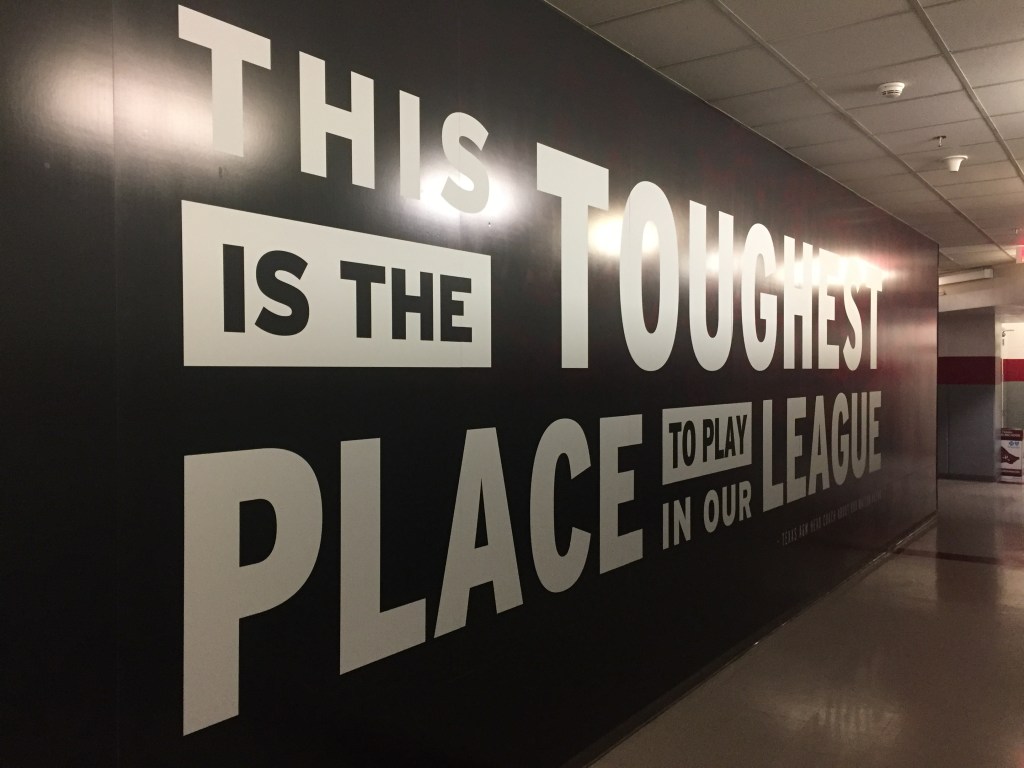
It’s a haul to get from Lexington to College Station, so your trip to Texas A&M’s Reed Arena (12,989) better include some tourist sites along the way. The George H.W. Bush Presidential Library is right on campus and is well worth a visit. As far as the game environment is concerned, it’s predictably rowdy—especially with those Aggie Yell Leaders leading the charge. They’re a bit too weird for my liking, but they’ll boost the crowd to a fever pitch in no time at all.

Alabama

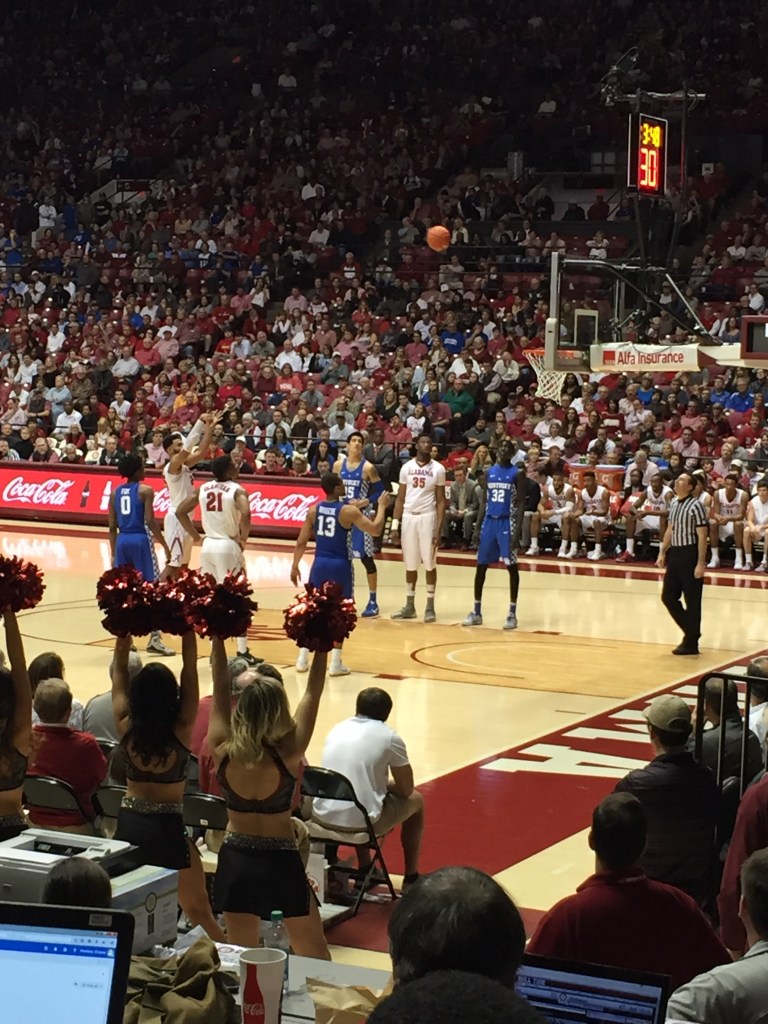
Tuscaloosa is another venue where football rules the roost. But Coleman Coliseum (14,474) always seems stoked when the Wildcats come to town. It’s partially the size and the layout that makes it challenging to win. But Alabama always has the athletes to run with Kentucky. Their style of play gets the crowd into the game early. Fall behind here, and the mob mentality rules. Blowouts are as common as barbecue brisket and “Roll Tide” cheers.


Florida

The Exactech Arena at the Stephen C. O’Connell Center (10,500) underwent a renovation back in 2016, so it’s not quite as harrowing as it was before. The Rowdy Reptiles are still there cheering their team on in force, but they’re no longer spilling out on to the court as before. The place is also open enough for the noise levels to dissipate. As Florida’s competitiveness has ratcheted down recently, so has the O’dome reputation for carnage.

South Carolina

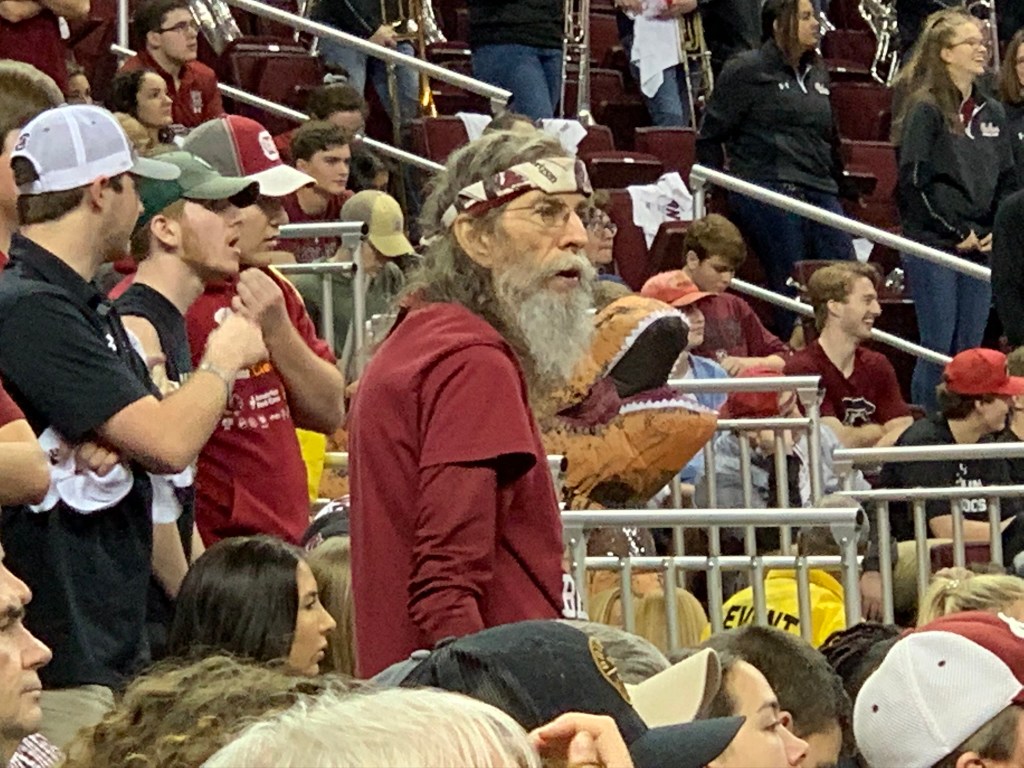
Of all the visiting venues, this one was the darkest. And I don’t mean the lighting. Colonial Life Arena (18,000) reeked of evil the minute I stepped inside. Fans were loud, proud, and downright MEAN. Throw in Sandstorm and a heavy dose of Gamecock Jesus, and you’re in need of an exorcism when all is said and done. If Calipari’s getting ejected, you know it’s happening right here in Columbia. Be sure to take a shower before you leave town.

Tennessee

Thompson-Boling Arena (21,678) is certainly big enough. In fact, the only reason it seats what it does is because they wanted it to be bigger than Rupp Arena. Unfortunately, the only time the Vols can consistently fill it up is when the Women’s basketball team plays here…and, of course, when Kentucky comes to town. I’ll admit, when the Wildcats come a calling, it can easily turn into a madhouse. Some blue always manages to get in, but that Rocky Top orange will dominate more times than not. Escape with a win, and you’ve earned your checkerboard.

Arkansas

A visit to Bud Walton Arena (19,368) is certainly a bucket list item. When the Wildcats are in town, it’s predictably loud, boisterous, and intimidating. Moreover, Arkansas fans have the championship pedigree to hang with Kentucky. They also boast of the best cheer in the SEC. “Calling the Hogs” always brings me goosebumps. And for that reason alone, Fayetteville, Arkansas, becomes a very difficult place to win.

Auburn

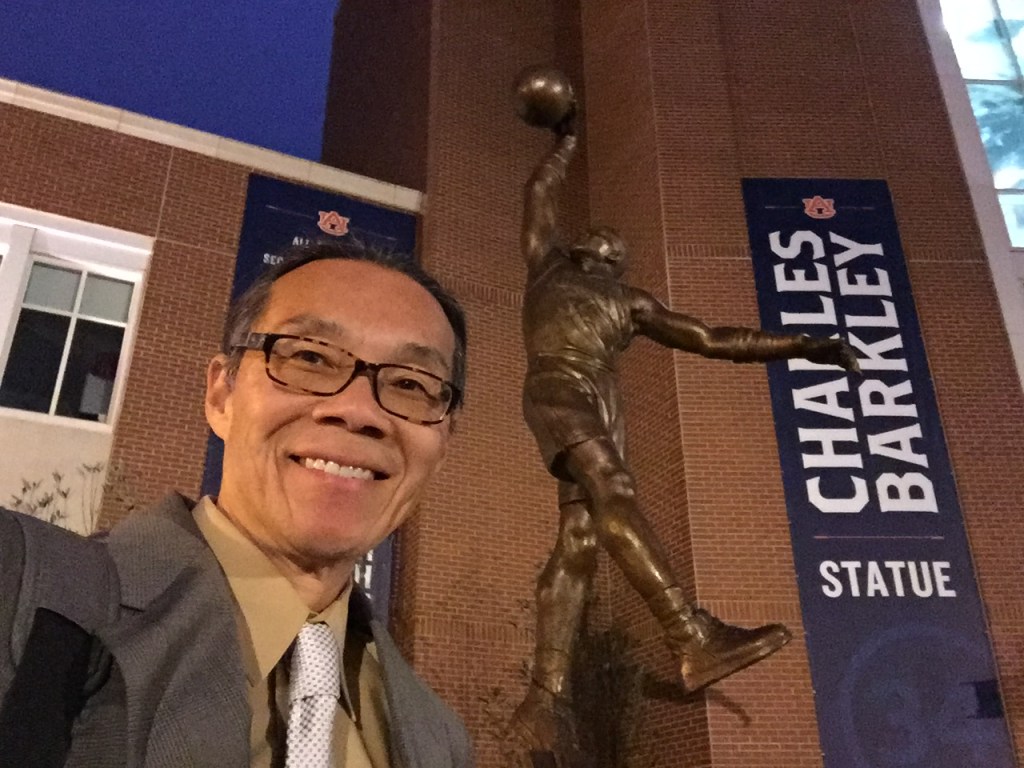
Cozy and compact, Neville Arena (9,121) is as intimidating as it gets for Kentucky fans courageous enough to make the trip. It’s almost as if the place was built for one purpose only—for Auburn to beat the Wildcats. Charles Barkley cried when Kentucky beat him in the 1984 SEC tournament, and his statue out front screams “overcompensation.” The acoustics are A+ here, the decibel levels somehow ratcheted up to insane, ear-splitting levels. With Bruce Pearl sweating on the sidelines and the student body ringing the floor, the Loveliest Village on the Plains is the smallest—but also the toughest—place in the conference to get that road “W.”

But maybe not for long. Conference expansion is fast approaching. I wonder where Austin, Texas, and Norman, Oklahoma, will rank when they enter the conference? I can’t wait to make the trip and find out.

Dr. John Huang is a retired orthodontist, military veteran, and award-winning author. This blog posting was originally submitted as a UK Basketball Column for Nolan Group Media publications. If you enjoy his writing, you can follow him on Twitter @KYHuangs.

Oh, So Close!

Oh, So Close!

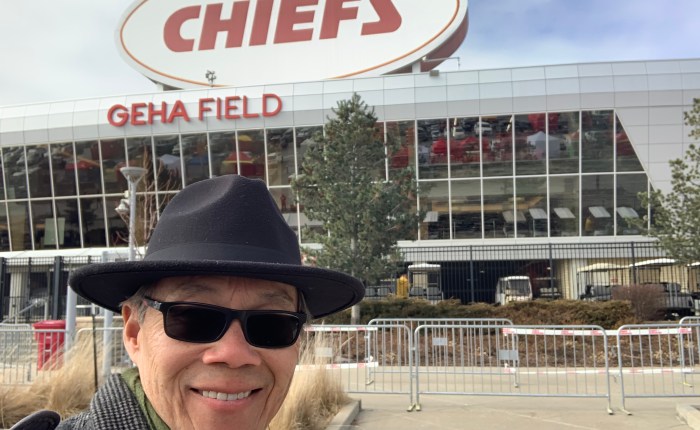
My trip to the AFC Championship game at Burrowhead Stadium didn’t end like I anticipated.

(KANSAS CITY, Mo) – Super Bowl appearances are elusive but not impossible. Like a blind squirrel finding that elusive hidden nut, anybody can get lucky and stumble upon one of them. It’s when you bag two that you know you’ve really made it big.

Cincinnati fell just short of making it to two Super Bowls in a row, falling to Kansas City 23 – 20 in a tense AFC championship contest played out before a packed house at Arrowhead Stadium.

“It aches, trust me,” head coach Zac Taylor said when asked about the loss. “To be this close. Our goal is to win the Super Bowl. To be seconds away from getting back there, and watching [the Chiefs] celebrate, it’s horrible. This team has invested so much in each other to get to this point.”

Ten wins in a row to finish out the year, three straight wins over the Chiefs, and that beatdown last week against the Buffalo Bills had everybody in the Queen City dreaming of an upcoming trip to the Arizona desert. Unfortunately, when expectations rise as such, it hurts that much more when you ultimately fall short.

Cincinnati quarterback Joe Burrow felt the pain immediately afterwards.

“Tough loss,” said Joey Franchise in a packed visitors media room the size of a broom closet. “We didn’t make the plays we needed to win this game. And they did down the stretch. That’s what it came down to.”

With the score tied at 20 and 2:30 left on the clock, Cincinnati forced a Kansas City punt and had the ball on their own six-yard line. These are the situations that Super Bowl dreams are made of. Surely Burrow would drive the Bengals down the field for the game-winning score—just as the clock runs out, right?

Wrong! After moving his team out to their own 35-yard line, Burrow was sacked, and the Bengals had to punt with thirty seconds remaining.

On their ensuing possession, with just 17 seconds left, the Chiefs Patrick Mahomes ran out of bounds after a five yard gain. Bengals defensive lineman Joseph Ossai clearly hit Mahomes late, resulting in a 15-yard penalty putting the ball on the Bengals 27-yard line. That set up Harrison Butker’s 45-yard game-winning field goal try. The ball cleared the uprights, and suddenly Cincinnati’s Super Bowl dreams abruptly ended on the confetti-laced turf of Burrowhead Stadium.

“It didn’t come down to that,” said Taylor, regarding Ossai’s penalty and it’s effect on the game’s outcome. “There’s a lot of other plays that we just missed out on.”

Yes, it’s true. Missing out on back-to-back Super Bowl appearances really does hurt. Here, however, is the irony in that statement. During this entire magical two-year run, no one really thought the Bengals were any good. Everyone regarded last year’s Super Bowl appearance as a lucky outlier. The talking media heads said that Zac Taylor was a flash in the pan who got lucky when his team got hot at the end of last year. When Cincinnati started out 0 – 2 to begin this season, the skeptics were quick to say, “I told you so.”

Then the offensive line began to gel, the defense started playing lights out, and Joe Burrow became the meteoric rising star that no one dared to bet against. The Bengals became damn good in the process. Everyone—me included—picked them to go all the way. I even purchased airline tickets (refundable ones, thankfully) to Phoenix.

Were our expectations realistic? I’m still not sure. Past history is difficult to shake. It’s hard trading three decades of playoff futility for a couple of magical seasons of success.

Perhaps Zac Taylor said it best when asked about the future of the franchise.

“It’s a special organization,” said the man steering the ship. “It’s special people leading it, [it’s a] special group of coaches, [and a] special group of players. We love representing our city and our fan base. It’s just time to get back to work.”

Those are certainly nice words. But in life and in football, actions speak louder than words. I watched Zac Taylor in the locker room afterwards greeting, consoling, congratulating, hugging, and shaking the hand of every one of his players.

The guy has shown he can coach ‘em up on the field. He’s also shown that he’s got a lot of character and class. That’s a great combination moving forward.

See you next year. WhoDey!

This blog posting was originally submitted as a Cincinnati Bengals Column for Sports View America publications.

Rockin’ Like Old Times

Rockin’ Like Old Times

BBN tried their best to will the Wildcats to victory (Dr. Michael Huang Photo).

(LEXINGTON, Ky.) – My dear Rupp Arena. Oh, how I’ve missed you.

It was just like old times on Saturday night as the two winningest programs in college basketball battled for supremacy in front of a packed house in downtown Lexington.

For the record, No. 9-ranked Kansas (17 – 4) defeated Kentucky (14 – 7) by a score of 77 – 68, ending the Wildcats’ four-game win streak and sending the 20,418 rabid and raucous fans home in funk.

“Unbelievable crowd,” said Coach John Calipari immediately afterwards. “Unbelievable. [The] students were there, and you want to reward them as a coach and as a team. You want to do that. But we never stopped playing. We fought the whole time, and we got a lot of games left. This is a marathon. We’ve got games and we’ve just got to keep getting better.”

You couldn’t blame the crowd for this one. They came ready to rumble, arriving early, and maintaining a full-throated roar for most of the tense forty-minute contest.

Every once in a while, Rupp Arena takes on a life of its own and simply wills the home team to victory. Think back to Kentucky’s upset win over #2-ranked LSU in 1981. Or the Unforgettables over Shaq in 1990. Or even John Wall’s first-game heroics in that comeback victory over Miami (OH) in 2009. Unfortunately, the outcome was disappointing in this one. But one thing remained certain:  It was LOUD in the building again!

The eRUPPtion Zone was LOUD tonight.But these are college-age students on a Saturday night. They’re overflowing with energy, testosterone, and alcohol. You expect them to be loud.

But the fans in the upper level were LOUD also.That’s not that surprising, either. These have always been the folks who come early and stay late. For the first time in forever, endzone sections 240 and 241 were packed to the rafters.

Even my media colleagues in the press box were LOUD! Okay, you can’t outwardly cheer, but I heard plenty of “oohs, aahs, and holy sh*ts” after Jacob Toppin threw down that running, two-handed slam.

What was really pleasantly surprising to me, however, were the blue-haired big donors sitting down low screaming their guts out. Forget about the walkers, canes, and hearing aids for now—this big blue geriatric set came loaded for bear. Don’t get me wrong, I like old people (I am one). UK also needs rich people. But in order for Rupp to keep rocking like it did, these old, rich geezers must shell out and show up every single game.

I know that’s asking a lot. It’s not their fault they’ve been fed a bland diet of no-name directional schools for the first two full months of the season. In fact, it’s downright criminal that we all had to wait until the end of January to experience Rupp Arena as it was meant to be.

But be forewarned—the remaining portion of the home schedule has some big-time opponents that should generate the same type of rabid atmosphere as when the Jayhawks came to town. I’m talking Florida, Arkansas, Tennessee, Auburn, and Vanderbilt—all five remaining home games that Kentucky now needs desperately to win. It’s up to the Rupp Arena faithful to see them through.

“I just want to say ‘thank you’ to all our fans,” said Oscar Tshiebwe, who led the team with 18 points and 9 rebounds. “Today was a tough one. It was a big boy fight. We just came in, and we were fighting. They came out from losing three games in a row, and just came in to win this game. For us too, we were fighting. But it was a tough one for us. So, I just want to say ‘thank you’ to our friends, and we’re going to keep fighting.”

Nope, you can’t blame Rupp Arena for this one.

Blame Kansas forward Jalen Wilson (22 points, 8 rebounds), instead. The guy’s good. NBA good. Every time Kansas needed a bucket, the guy delivered.

Or maybe blame Kentucky’s inability to defend the pick and roll. How many times did Kansas get uncontested dunks at the basket? I counted at least four. The Wildcats’ perimeter defense also gave up three soul-crushing three-pointers down the stretch, effectively ending the game.

Or perhaps blame Kentucky’s inability to crash the offensive boards. It was downright puzzling how the nation’s best offensive rebounding team didn’t get a single offensive rebound in the first half and ended the night with zero second-chance points.

Or blame Coach Cal for not playing the so-called “Basketball Benny” lineup the entire first half. And yet, the combination of Oscar, Toppin, CJ Fredrick, Antonio Reeves, and Cason Wallace were on the floor—and effective—for the majority of the second.

In other words, there was plenty of blame to go around. Just don’t blame the fans. Rupp was rocking—just like it used to be. Just like it needs to be. Just the way it always should be from here on in.

This blog posting was originally submitted as a UK Basketball Column for Nolan Group Media publications.

Don’t let Kentucky Basketball Steal your Joy

Don’t let Kentucky Basketball Steal your Joy

“When times are good, be happy: but when times are bad, consider this: God has made the one as well as the other. Therefore, no one can discover anything about their future.”—King Solomon. (Dr. Michael Huang Photo)

My love affair with Kentucky Basketball began when our family moved to Lexington in the late 1960s. I was only eight years old at the time but was immediately smitten by Adolph Rupp and his four national championships. Every kid growing up in Lexington at the time wanted to be Dan Issel, and I was certainly no different.

For the next fifty years, Kentucky Basketball remained at the top of my priority list. If the Cats were playing, I was tuned in. Even while stationed overseas, I somehow managed to catch Cawood Ledford and his legendary broadcasts on the Armed Forces Radio Network. My oh my, how I looked forward to those biweekly issues of The Cats’ Pause delivered directly (albeit two weeks later) to my front door.

Like many of you, I discovered that my daily mood swings were tied in to how the Wildcats were doing. Tough losses (Dream game to Louisville, Middle Tennessee State, Georgetown, Laettner, Wisconsin) drove me to the depths of despair. But when Kentucky won big (1978, 1996, 1998, 2012), all was right with my soul.

Two years ago, the program with the greatest tradition in the history of college basketball slogged through their worst season ever with a 9 – 16 record. They followed that up last year with their worst loss in program history to Saint Peter’s in the first round of the NCAA tournament. Suddenly, a once proud fan base used to national championships and Final Fours found themselves without a tournament victory in nearly four years. That’s unfathomable.

Just when you thought it couldn’t get any worse, however, the freefall into obscurity continued this year.  In case you hadn’t heard, Kentucky lost at Alabama by 26 points this past Saturday. Then just last night, South Carolina—a 19.5-point underdog and one of the worst teams in the SEC—upset the Wildcats in Rupp Arena.

Take a quick peek on social media, and you can see the fans are past restless. They’ve got their pitchforks and torches out. Coach John Calipari appears clueless, and there’s no place for him to hide. Players calling out other players, rumors of locker room dissension, fans holding critical signs in Rupp or shouting at Calipari in his postgame radio show—it’s all falling apart right before our eyes.

In other words, it’s ugly. It’s like the Titanic, and fans are jumping ship left and right.

I think that’s what hurts most of all. Talk to anyone over thirty-five, and they’ll tell you Kentucky Basketball just isn’t what it once was. The passion is missing. Kentucky fans used to be invested in their team and the program. There was a deep pleasure and satisfaction derived from having your identity tied in with what you knew was the greatest program on the face of the earth. Sadly, that ownership, kinship, and brotherhood seems to have flown the coop.

Let’s be honest. Kentucky is a small state. Other than bourbon, horses, and fried chicken, there’s not a whole lot about the Bluegrass State that citizens of the commonwealth can brag about. For many, life is a grind. The one thing we do know, however, is that we are good at basketball.

When Kentucky Basketball is relevant and competing for championships, life’s hardships just don’t seem to hurt quite as much anymore. Regardless of race, socioeconomic status, or political viewpoints, Kentucky fans have that common bond—an inherent passion to somehow will their team to victory and to let the rest of the basketball world know how much they care.

That bond is slipping away, and that makes me unbearably sad.

So, what do I do now as my beloved Wildcats seem poised on the brink of a massive meltdown? Do I stay perpetually pissed off? Pop another Xanax? Follow another team? Tune out all together?

HELL NO! If the Titanic’s going down, I’ve decided I’m going to be one of the last ones off. Regardless of blowouts, blunders, or boycotts, I’ll stay tuned in—silently cheering from my seat in the peanut gallery on press row. Kentucky Basketball has brought me boatloads of precious memories over the years. It’s taken me on so many fabulous road trips. I’ve gotten to meet wonderful Wildcat fans from all over the world.  I’M NOT LETTING THE CURRENT STATE OF KENTUCKY BASKETBALL STEAL MY JOY—and neither should you!

Look, Kentucky fans are knowledgeable, dedicated, and loyal to a fault—or at least they used to be. Say anything remotely negative about the team—and be prepared to face the wrath of an angry BBN. Remember when disaster hit the program in the Billy Gillispie years? Kentucky fans were hurt and embarrassed. But they somehow circled the wagons, went into protective mode, and came back more passionate than ever.

This program isn’t about John Calipari. It’s far bigger than any one coach or player. When you cut to the core, it’s really more about us—the intensity and passion of die-hard fans willing to follow their team through thick and thin. The Big Blue Nation is what makes Kentucky Basketball so special. Lose the fans, and you’re left with nothing.

I doubt if King Soloman was a Kentucky fan, but I’m told he was a pretty smart guy. You’d be wise to heed his advice during this firestorm of a season. Despite the impending train wreck and dumpster fire, Kentucky fans need to stand firm. Don’t worry, be happy, and just stay passionate while watching or attending the games. The reward comes as part of the journey. You never know what changes the future will bring.

This blog posting was originally submitted as a UK Basketball Column for Nolan Group Media publications.

Monday Night Horror

Monday Night Horror

Buffalo Bills’ players, coaches, and team officials kneeling in prayer at Paycor Stadium after abrupt and chilling ending to Monday Night Football (Photo Credit @BuffaloBills).

(CINCINNATI, Oh.) – It wasn’t supposed to be like this.

In what was shaping up as a game for the ages, Bengals versus Bills on Monday Night Football abruptly ended on a chilling note. Bills’ safety Damar Hamlin collapsed on the field after making what looked to be a routine tackle. After the collision, Hamlin—a second-year player out of Pittsburgh—popped back up on his feet but fell immediately to the turf a split second later.

The Buffalo Bills later confirmed that Hamlin suffered a cardiac arrest following the hit. His heartbeat was restored on the field, and he was transferred to UC Medical Center for further testing and treatment. He is currently sedated and listed in critical condition.

Talk about scary. In one fell swoop, the overflowing record crowd at Paycor Stadium went from a night of anticipated merriment to several hours of abject horror.

For coaches, players, and their families, it had to be surreal. NFL players are a different breed of tough. They’re desensitized to broken bones, torn ligaments, and concussions as part of what they do. This injury, however, was different. Life or death is not part of the job description. You could see the shock, anguish, and concern etched on the faces of everyone on the sidelines. Imagine being Hamlin’s mom, escorted from her seat in the stands into the waiting ambulance taking her precious son to his unknown fate.

For media members in the press box, confusion reigned. We came to cover a football game matching two of the top teams in the league in their hunt for playoff seeding. We didn’t sign up for this. It’s difficult in that moment of chaos to process reliable truth with the rampant speculation around an unconfirmed medical prognosis. All of a sudden, everyone in the media room had a medical degree, or at least a relative working at the local hospital texting furiously with the latest breaking news on Hamlin’s condition.

As media members, we did the best we could in disseminating accurate information as the events were unfolding before us.

According to my notes, the tragic moment occurred at the 5:58 mark of the first quarter with the Bengals leading 7 – 3. I’ve watched a lot of professional football over the years. During that time, I’ve never seen a stretcher and ambulance summoned so quickly. Medical personnel furiously attended to Hamlin for about twenty minutes while the 67,000 or so looked on in stunned silence.

Watching players from both teams kneel jointly in prayer for a fallen comrade is always one of the most sobering sights in sports.

Five minutes after the ambulance pulled out, we all got the word that “the game was temporarily suspended until further notice.” Forty-five minutes later, after discussions with both teams, the NFL officially postponed the contest. During the next hour, people filed out of the stadium in a very orderly fashion, fully cognizant and accepting of the fact that no more football would be played that night.

In the tunnels underneath the stadium leading to the locker rooms, we witnessed players consoling each other and hugging their family members. Understandably, we had no access to any players, coaches, or administrative personnel.

“I don’t care who you are, you are not coming down this hallway,” said one Bengals’ official.

The evening was a stark reminder that as much as we love the NFL, the league embraces a brand of competitive violence that always leaves the door slightly ajar for these types of potential tragedies.

To be fair, however, this incident was indeed different and somewhat unique. I’m old enough to remember the Darryl Stingley paralysis in 1978, or Joe Theismann’s gruesome ankle injury on Monday Night Football in 1985. The Mike Utley, Ryan Shazier, and Tua Tagovailoa injuries are all nightmarish events. They’re all part of tragic sports moments everyone wishes never happened.

This was worse. Don’t get me wrong—career-ending injuries are awful. Life-altering paralysis is unfathomable. The long-term effects of CTE are becoming exposed as a living hell. But they simply don’t compare to the immediate acuteness of what we all experienced tonight.

Hamlin’s injury was akin to Hank Gathers collapsing and dying on the basketball court. Thirty-three years later, I still can’t get that image out of my mind.

I doubt if I’ll ever be able to dismiss this one either.

Dr. John Huang covers professional sports for Sports View America. This post first appeared on SportsViewAmerica.com. If you enjoy his writing, you can follow him on Twitter @KYHuangs.
Meeting the Challenge

Meeting the Challenge

Bill Owen enjoys his last official day on the job at his beloved Rupp Arena (Dr. Michael Huang Photo).

(LEXINGTON, Ky.) – If those Rupp Arena walls could talk, I’m sure they’d sound a lot like Bill Owen.

Owen, President and CEO of Lexington Center Corporation for twenty-two years, retired from his position as chief cook and bottle washer for one of Lexington’s most iconic and recognizable public-gathering facilities on December 31, 2022. A big Kentucky basketball fan, Owen appropriately spent his last official day on the job—at Rupp Arena—watching the Wildcats dismantle their in-state rival, the Louisville Cardinals.

“You can’t grow up in Lexington and not be a Wildcat fan,” Owen explained. “When I was in high school, I had a paper route, and [UK Athletics Director] Bernie Shively was one of my customers. Once a month, I would go to Memorial Coliseum and walk past Coach Adolph Rupp’s office, and Bernie Shively would pay me my $3.20.”

Growing up Blue

As such, Owen’s connection to Lexington and the University of Kentucky was solidified early on. Born in Gainesville, Georgia, Owen moved to Lexington when he was only two years old. His father served as head pastor of Calvary Baptist Church, so the preacher’s kid grew up in the Ashland Park area of the city, attending Cassidy Elementary, Morton Junior High, and Henry Clay High School.

Owen would naturally go on to attend the University of Kentucky. After graduating with a degree in history (class of ’73), he surprisingly found himself working in commercial real estate development and asset management. Six years learning from Wallace Wilkinson (before he became governor) and another six years working with the renowned Webb Brothers honed his business skills to a tee. That led directly to Owen taking on his Chief Administrative/Financial Officer role for Lexington Center Corporation in 1991. Nine years later, when Tom Minter retired, Owen took on the role of President and CEO.

Lexington Center Transformation

If you somehow hadn’t noticed, the Lexington Center recently underwent a transformative facelift under Owen’s dedicated watch. The project was unique—not a mere renovation, mind you, but rather a virtual complete replacement and restoration. Because most indoor sports venues traditionally have short shelf lives, you won’t find many comparable basketball arenas like Rupp—not only surviving, but still relevant and thriving forty-five years after initial construction.

“They blew up Charlotte Coliseum after only nineteen years,” Owen ruefully recounted. “I’ve got underwear that’s older than that.”

In today’s climate, working with a daunting $310 million budget is nothing to scoff at, and Owen made sure every penny of it was properly distributed and allocated in this latest rebuild. The result is a brand spanking new looking Lexington Center, a shining beacon of pride within the local civic, arts, and business communities. None of that would have been possible without Bill Owens spearheading the charge.

And what a fabulous charge it’s been. Big-time concerts, memorable sporting events, and world-renowned visitors are all part of Lexington Center Corporation’s rich and vibrant pedigree crafted during Owen’s sparkling tenure.

Rupp Arena

The parade of concerts featuring A-list celebrities visiting Rupp Arena is long and lengthy—everybody from Paul McCartney to Elton John to Tina Turner. Owen specifically remembers being wound tighter than a banjo string the time he booked Turner. When it came time for her sound check the day of the concert, the “queen of rock ‘n’ roll” was nowhere to be found. It turns out her limo driver had mistakenly taken her to Louisville instead of Lexington. Fortunately, with the help of a police escort and a slight curtain delay, the Rupp audience rocked for a full two and a half hours as Owen looked on in relief.

Then there was the Garth Brooks concert on Halloween weekend in 2014. If you remember, Brooks played four performances over two nights in front of 70,000 adoring fans. Over the years, Owen admits to becoming somewhat celebrity desensitized, but he remembers meeting Garth backstage and talking about their kids attending the same colleges.

“By gosh, here I am standing here talking to Garth Brooks, and it’s like I’m talking to another dad I just met at a tailgate,” said Owen, himself a proud father of three.

The very next night, however, it was back to reality as the University of Kentucky hosted Pikeville in a college basketball game. When it came to Rupp Arena, there was never a dull moment.

“What that building contributes to the community,” Owen gushed. “Obviously it’s the home of UK Basketball, which is its marquee and our most important relationship—but for the community and for the state of Kentucky, it’s so much more. You can’t underestimate its impact. Being able to stretch its life well beyond its peer group, that’s kind of special.”

As far as basketball games at Rupp, Tayshaun Prince’s five three-pointers to begin the game versus North Carolina stands out prominently in Owen’s mind. Hosting NCAA tournament games also provided quite a thrill. Coincidentally, Owen served as the official scorer’s table representative when Rick Pitino’s Louisville squad was upset by Texas A&M in 2007.

“Had Pitino not done that, we would have never heard of Billy Gillispie,” Owen quipped.

Convention Center

Not to be outdone, the Lexington Convention Center has had its share of grand moments and distinguished visitors as well. President George W. Bush came a calling for the Little League International Congress in 2010. Bill Clinton and Barack Obama also made visits to the Lexington Center during subsequent years.

“Growing up in Lexington, I think of our little burg of a community,” Owen reflected. “But yet, here we are hosting sitting and former presidents in our convention facilities. It’s something you think about. Our organization met that challenge. I guess that’s one of the things that’s significant with the Lexington Center’s staff. As an organization, we met every challenge. I can’t think of a thing that we were ill equipped to achieve. And now opening this really grand new facility, that’s kind of the zenith of it.”

Owen, with President George W. Bush, at the Little League International Congress held at the Lexington Convention Center in 2010.

Opera House

And finally, there’s the Opera House, one of the smallest theaters in the country that still offers its patrons a touring Broadway series. The city bought it through Lexington Center Corporation, renovated it, and gave it new life.

“I’m reminded of the line from The Wizard of Oz,” Owen said. “Dorothy, with tears in her eyes, looks at the Scarecrow and says, ‘I think I’ll miss you most of all.’ And they put that on a plaque on the entrance to the Opera House. And it’s next to a plaque where the original founders and board of directors of Lexington Center Corporation are listed. And to think that my name is up there with them. That’s very humbling—particularly for somebody who grew up here.”

Owen’s commemorative plaque at entrance to the Lexington Opera House. “I think I’ll miss you most of all.”

Disasters Looming

Lest you think Owen’s tenure was all sunshine and roses, think again. Two of the most significant world-wide crises occurred on his watch.

For Owen, 911 resulted in many sleepless nights. As a public assembly building manager, he spent countless hours poring over those endless reviews by Homeland Security. Think about it. That fateful Tuesday morning in 2001 forever changed the manner in which people gathered for concerts, conventions, and ballgames.

Covid-19 threw Owen an even bigger haymaker.

“March 12, 2020, for me was the day the earth stood still,” he recounted. “We’re in the second day, first game of the girls’ Sweet 16 tournament. We had just come off of three record-setting financial years. The arena is deeply under construction…and it all comes apart.”

In one fell swoop, Lexington Center went from one hundred twenty-six full-time employees to, at one point, only seventeen. Personnel decisions are always difficult. After all, it’s your work family. Time after time, Owen had to tell a lot of good friends that they couldn’t work there anymore. That was especially tough.

Tensions with UK

Here’s something I perceived was even tougher on Owen. Over the years, it’s been well documented that the city of Lexington and the University of Kentucky have engaged in a tireless (and often bitter) tug of war over ownership rights to Rupp Arena. Should a downtown location be the major community focus, or would an on-campus facility better serve the needs of the university? With so much at stake financially, it’s natural for friction to develop between the two negotiating factions, especially when they possess different end goals.

You know you’ve struck a nerve when you’re satirized in an editorial cartoon.

And yet, Owen kept his cool and remained philosophical through it all—the fickle fate of his beloved arena forever at the mercy of an unexpected regime change, a newly elected public official, or the ever-shifting whims of the state legislature.

“I’ve been married fifty years,” he told me. “UK has been in this building forty-six years. Our relationship with UK as our tenant is not unlike my relationship with my wife. It’s not like it’s been fifty years of wedded bliss and everything great. Nor has it been fifty years of combat and conflict. There’s been a share of both. But overall, both of us are a lot better off because of the relationship. And that’s kind of the way we are with UK. There are times when it’s been more of a business relationship. And other times it’s been more of a partnership.”

Who’ll Steer the Ship Now?

At age 71, Owen appears fully prepared for the upcoming retirement transition. In 2018, Lexington Center Corporation entered into a booking and management agreement with OVG, Oakview group. The California based private management company fully took over operations in October of 2021 and has since become the new Bill Owen—just as the old Bill Owen dutifully served out his term as Director of Construction in order to complete the final phases of the building project.

Understandably, Owen has a few reservations about an out-of-state corporate entity making future decisions regarding his community treasures.

“I’ve had to make my share of decisions,” Owen acknowledged. “In twenty-two years as CEO here, I’ve made an awful lot of decisions with my head. But I’ve made some with my heart too. Can you develop that if you don’t have a personal connection with the community? You probably can, but it’s easier to develop if you’ve got that connection.”

Grandpa Bill

On a personal level, I can’t see Bill Owen sitting on the couch watching Netflix and eating Bonbons. You never know, though. Everyone has their own way of dealing with major life changes.

Family Strong! Seated Left to Right: Owen, wife Debby, daughter Katie. Standing Left to Right: Daughter-in-law Sydney, son Grant, daughter Kristen.

“You can prepare for retirement every way but emotionally,” Owen said with a wry smile. “You can’t prepare emotionally until you experience it. I’ve worked steadily since I was fifteen. I got my last paycheck a week or so ago. I told my wife, ‘I’m not getting a paycheck anymore.’ That’s an adjustment.”

Owen’s wife, Debby, hates to fly, so large-scale travel most likely won’t be an adjustment problem in the years to come. Although they own some Florida property, Owen assures me he’s staying put in Lexington. He may do some consulting. A distillery docent or a horse farm tour guide aren’t out of the question, either. Most importantly, Owen just enjoys spending time with his three-year-old grandson, L.J.

“He’s taken over without firing a shot,” Owen joked. “Had I known they’d be so much fun, I would have had them first. It’s nice being close to family. I’m blessed with that.”

Owen, with grandson L.J., at a recent UK basketball game.

Thoughts Regarding Legacy

Sitting in the concourse of Rupp Arena, I asked Owen about leaving a legacy. What were his most significant professional accomplishments? How did he want others to remember him as he walked out the door?

“That’s a tough question,” he answered pensively. “I managed to be a part of keeping the torch lit. And improving all of our facilities—Rupp Arena, the Convention Center, the Opera House primarily—and extending our facilities’ contribution to the city, and to the community for a long while.”

Owen then whipped out his phone and showed me a picture of a brand-new street sign on the private driveway connecting Manchester Street to the Rupp Arena garage. The sign said “Bill Owen Way.”

“That was bestowed on me just two weeks ago,” he said. “I’m very proud of that. I’m very humbled by that.”

The newly dedicated Bill Owen Way leading up to Rupp Arena.

The Importance of Faith

Appropriately, I concluded my chat with Owen about a topic very near and dear to his heart—his Christian faith. Over time, I’ve interviewed a lot of successful individuals, and I’ve noticed one thing in particular. People of faith are somehow different. There’s a special aura surrounding them. That was certainly true of Owen. Through all his business successes, the son of a Baptist preacher always managed to keep spiritual things at the front of the line.

“I’ve grown up in the church,” he said. “I was active in leadership. I taught Sunday School. A personal faith and belief in God and reaching him through a Savior in Jesus Christ for me is an important part of my life. It always has been. The hope of something grander after this life is something I was taught, something I believed—and still believe.”

“His master replied, ‘Well done, good and faithful servant! You have been faithful with a few things; I will put you in charge of many things.’”

Congratulations, Bill Owen, on your retirement.

A very hearty “thanks” to you and your talented and dedicated staff at Lexington Center Corporation for always meeting the challenge!

Dr. John Huang is a UK columnist for Nolan Group Media and editor-in-chief of JustTheCats.com. He also covers the NFL and MLB for Sports View America. You can follow him on Twitter @KYHuangs. If you enjoy his writing, be sure to check out his new book, KENTUCKY PASSION. https://www.amazon.com/Kentucky-Passion-Wildcat-Wisdom-Inspiration/dp/1684351669