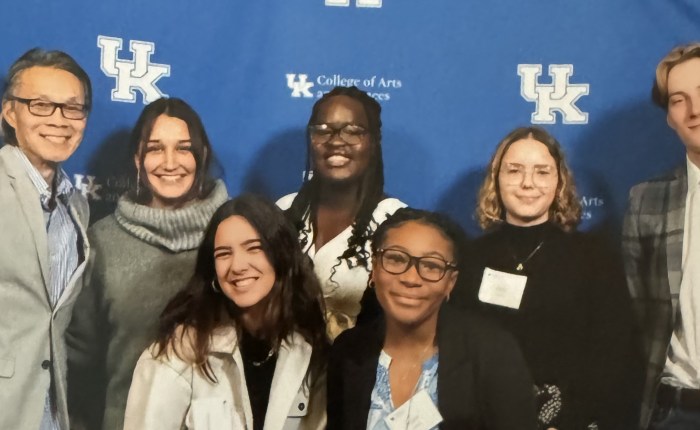
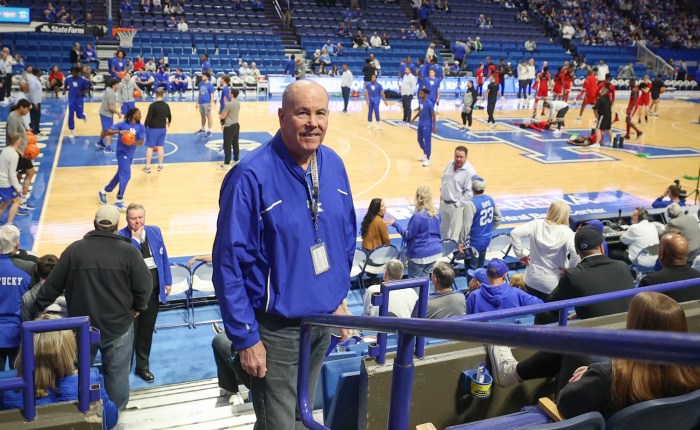
Me, with scholarship recipients at the recent Dean’s Circle Donors Luncheon sponsored by the UK College of Arts and Sciences.
I miss my dad. It’s hard to believe it’s already been over two years since he died. I think about him a lot—much more so it seems as the days slip away.
I find myself thinking also about his circle of influence. As his eldest-born son, his influence on me was meaningful and profound. But during his ninety-three years on the face of this earth, what legacy did he leave behind to the many others he encountered?
Come to think of it, what lasting legacies do any of us leave behind? The answer, I’m afraid, is slim to none. Most legacies fade away like yesterday’s news. Once you’re laid out on that cement slab, people quickly forget the things you’ve accomplished.
Just look at the great athletes of our generation. After Father Time catches up with them and their playing careers are kaput, no one remembers them anymore. They’re all distant memories, reduced to a small footnote in the annals of sports history.
An even better example are the legacies of U.S. presidents. Here you have people who at one time held the most powerful positions on the planet. And yet, other than George Washington, Abraham Lincoln, and Franklin Roosevelt, we can’t really recall any of their most significant achievements.
What did Zachary Taylor or Millard Fillmore ever do?
Here’s my point. My dad was not a transcendent athlete or famous political figure, but he was legacy smart. Before he left us, he directed a substantial part of his life savings towards scholarships at Centenary Church and at the University of Kentucky, knowing full well that education has a transformative and lasting impact.
I’ll admit I bristled a bit when I heard he was giving away my inheritance. But practically speaking, it made sense. Years from now, those scholarships would be worth a heck of a lot more than an African safari or a new Mercedes.
In that vein, I now present to you “Family Strong,” a memoir that my father meticulously crafted before his passing. It’s not just a book; it’s a beacon of hope, a reminder that our stories can create lasting impact for others in our own circle of influence. By purchasing the book, you not only gain insights into my dad’s remarkable life, but you also become a permanent part of the scholarships he established, furthering his legacy of belief in the transformative power of education and academic achievement.
“Family Strong” takes you on a journey from Fujian, China, to the heart of America, weaving together a tapestry of faith, love, and perseverance. My dad’s inspirational story embodies the American Dream in action, showcasing virtues like industriousness, honesty, humility, selflessness, and love. Through his vivid recollections, you’ll gain a unique perspective on the American immigrant experience during the 1950s and ’60s—all sprinkled with rich doses of humor, wisdom, and cultural insights.
This memoir, however, is not just my dad’s story told in his own words; it’s a celebration of love, faith, and family. As you explore his amazing life, you’ll also discover these similar narrative themes coming from us—his children and grandchildren—thus adding depth and warmth to the overall tale.
Moreover, the book pays homage to my dad’s legacy through the aforementioned Huang Family Scholarships. Established in June 2022, these scholarships inspire academic success, hard work, and a spirit of learning that transcends time.
Ultimately, “Family Strong” is an invitation to embark on a journey of faith, love, and the pursuit of your own dreams. My dad’s life, with all its trials and triumphs, serves as an inspiration for you to reflect on your own unique journey and the personal legacy you wish to leave behind.
Please join me in spreading the good word about “Family Strong” and be a part of preserving my dad’s legacy for generations to come. Remember, your purchase is not just a transaction—it’s a step towards ensuring that his story continues to inspire, motivate, and impact lives.
Click on the link below to purchase. Note that kindle, paperback, and hardcover versions are all available.
Once you’ve made a purchase, please let me know either through direct message or email (KYHuangs@aol.com) so that I can include your name as a permanent part of the scholarship legacy.
THANK YOU!
“From generation to generation – Dr Huang came to Kentucky and fulfilled an American dream for his children, their children and those who will follow in extending a legacy of goodness, kindness and a love for his colleagues, students and the Wildcats.”
—Dr. Eli Capilouto, University of Kentucky President
“As a pastor, I meet many people who are extremely kind, who are humble and who have accomplished great things. I’ve met very few who can be described in all three ways. Dr. Huang was a man of impressive achievement, yet he respected others and was a true witness of his deep, Christian faith. His autobiography is not only interesting but so very inspiring.”
—James Williams, Centenary Church Lead Pastor
“This book serves to witness that our Lord Jesus Christ is merciful, full of love and grace, and is a good Shepherd who always wants to find and save His lost sheep.”
Tre Mitchell celebrates with teammates in a 22-point effort in victory over Saint Joseph’s.
(LEXINGTON, Ky.) – The passion is back.
In Kentucky’s 96 – 88 overtime victory the other night against the Saint Joseph’s Hawks, there was a point in the game that I thought the Wildcats might actually lose. With 30 seconds left in regulation and his team trailing by a point, D.J. Wagner shot a layup that would have given the Wildcats the lead.
He missed.
Fortunately for Big Blue Nation, Tre Mitchell grabbed the errant rebound and slammed it home for a one-point lead.
What was significant about this moment wasn’t that Kentucky ultimately prevailed in overtime and avoided the monumental upset loss at home. But rather, the significance was that—for the first time in a while—I actually cared again whether Kentucky Basketball won or lost.
And so apparently did a bunch of other Wildcat fans watching around the commonwealth. It’s been a while since we’ve all collectively felt the joy—that nail-biting, gut-wrenching nervous energy excitement of actually giving a crap. When Kentucky wins, we’re on cloud nine. When Kentucky loses, we’re depressed for a week.
As weird as that sounds, I miss that feeling.
I can’t tell you how many times over the past couple of seasons that I heard former die-hard fans tell me that joy was gone. Half the time, they didn’t even know when the Cats were playing. That’s sad. When it comes to Kentucky Basketball, there’s nothing worse than fan apathy.
Let’s face it, we’re all tired of hearing about 9 -16 seasons, first-round exits to Saint Peter’s in the NCAA tournament, and Kansas surpassing us as the all-time winningest program in college basketball. Everyone and their brother is totally frustrated by situations where Shaedon Sharpe doesn’t play at all or where Devin Askew plays too much. We’re devastated and demoralized that Final Fours—much less national championships—have apparently become things of the past.
Amidst the gloom and doom of it all, we’ve all forgotten the exhilaration of seeing the last shot go in, the elation of shooting (and making) a bunch of three-point daggers, and even the excitement of successfully running a simple inbounds play.
In one fell swoop the other night, all those emotions came flowing back.
I guarantee you this current team will recapture your passion. They’re agile, mobile, and versatile. Sure, they’re young, but they’re also extremely fun to watch. Talent is overflowing in the backcourt. Antonio Reeves can shoot with the best of them, and “dawgs” like Wagner and Rob Dillingham don’t frequently appear together out of thin air.
Reed Sheppard, however, may be better than anyone, and he’s already a fan favorite. Check out the buzz whenever he’s on the floor.
And don’t forget about Mitchell—the star of the game. The West Virginia transfer can definitely stretch the floor with his three-point shooting. Don’t ever underestimate his maturity and leadership either. It’s all part of the championship puzzle.
On top of all that, Coach John Calipari seems to be letting them play. Random basketball he calls it.
“Random is we are spacing the court, and we are playing off of one another,” the Hall of Fame coach explained. “It is kind of like you have five 3-point shooters. Do you know what you would do? Shoot a lot of 3s.”
One man’s “random” may be another man’s “rolling the balls out.”
Either way, it’s exciting for the program with the greatest tradition in the history of college basketball to be relevant again. It’s appropriate for Kentucky to recapture the all-time wins mantle. And it’s certainly exciting and appropriate for the most passionate fans on the planet to care about their team again.
Is it sustainable? I hope so.
If Kentucky gets a healthy seven-footer (or two or three) back into the lineup, then it certainly will be. Then and only then will all be right with the world.
Happy Thanksgiving.
Dr. John Huang is a retired orthodontist, military veteran, and award-winning author. He currently serves as a reporter and sports columnist for Nolan Group Media. His latest book, “They Call Me Mr. Secretary,” has been met with great anticipation. You can follow Dr. Huang on social media @KYHuangs and check out all his books at https://www.Amazon.com/stores/Dr.-John-Huang/author/B092RKJBRD
Think about someone you really admired in your youth.
Maybe it was a famous movie star or cultural icon. Or perhaps a political or military leader. For many of us, it might have been someone who was not necessarily famous but rather just a bit closer to home. Perhaps a loving parent, an impactful teacher, or even your local pastor. Whether Dr. Martin Luther King, Jr. or Jesus in the flesh, we all had heroes that we all dreamed of emulating.
For those of us who are sports fans, our heroes are often front and center. We all had athletes who we enjoyed watching, that we looked up to, and who we cheered on passionately. As a lifelong, die-hard University of Kentucky sports fan, my heroes landed squarely in the sweet spot of the late ’70s—that magical seven month run where the UK football team went 10 – 1, was undefeated in the SEC, and achieved a No. 6 national ranking, while the UK basketball team won their fifth championship title—the first in my lifetime.
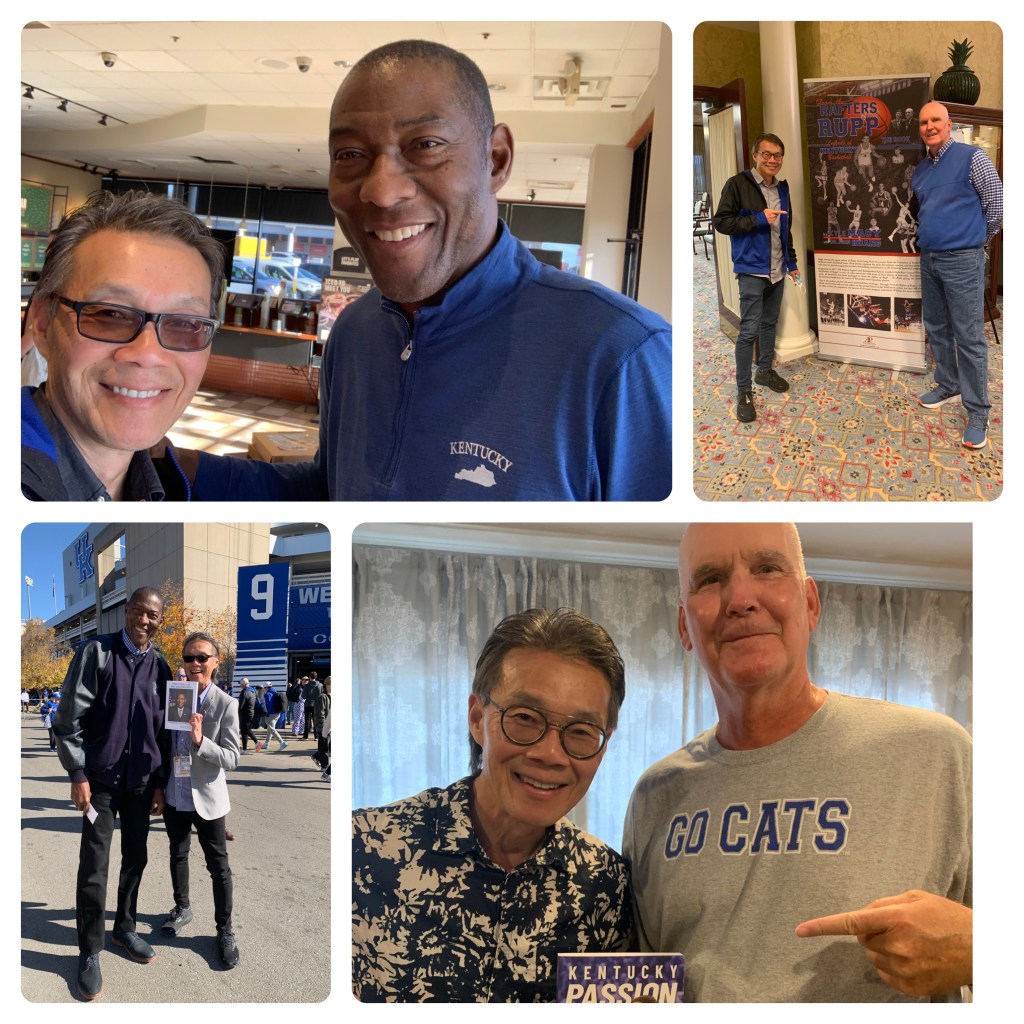
Kyle Macy was the point guard on that 1978 championship basketball team, while Derrick Ramsey quarterbacked the Wildcats through that blitzkrieg of the 1977 football season. And guess what? Those two UK greats just happened to be two of my all-time favorite UK players.
Not only did I finally meet these Wildcat legends face to face, but I also recently got to know them up close and personal. You see, I worked with Kyle on our awesome “From The Rafters of Rupp” book project back in 2021. And I’m finishing up my role as coauthor of Derrick’s just released, blockbuster new memoir, “They Call Me Mr. Secretary.”
Imagine that. If you had told me back in the day—as a nerdy, sports obsessed pre-dental student who dreamed delusionally of on-the-field stardom—that I’d one day be rubbing elbows with two superstars who I’d only gawked at and worshipped previously from afar, I would have told you that you were CERTIFIABLY NUTS!
But it’s strange how life plays out sometimes. One of the things I’ve enjoyed the most about collaborating with these two UK icons is discovering how fantastic they are as people. You learn a lot about someone—how they think, what makes them tick, and how they view the world—when you spend hours and hours with them gathering the information that’ll properly cement their legacy.
It’s downright fascinating where the conversation meanders when you’re watching historical videos in their living room (as I did with Derrick) or driving to ball games (as I did with Kyle). It suddenly dawns on you that despite their immense athletic talents, they’re regular human beings just like the rest of us—real people with real worries, real hurts, and even real hopes in life that occasionally don’t quite pan out like we planned.
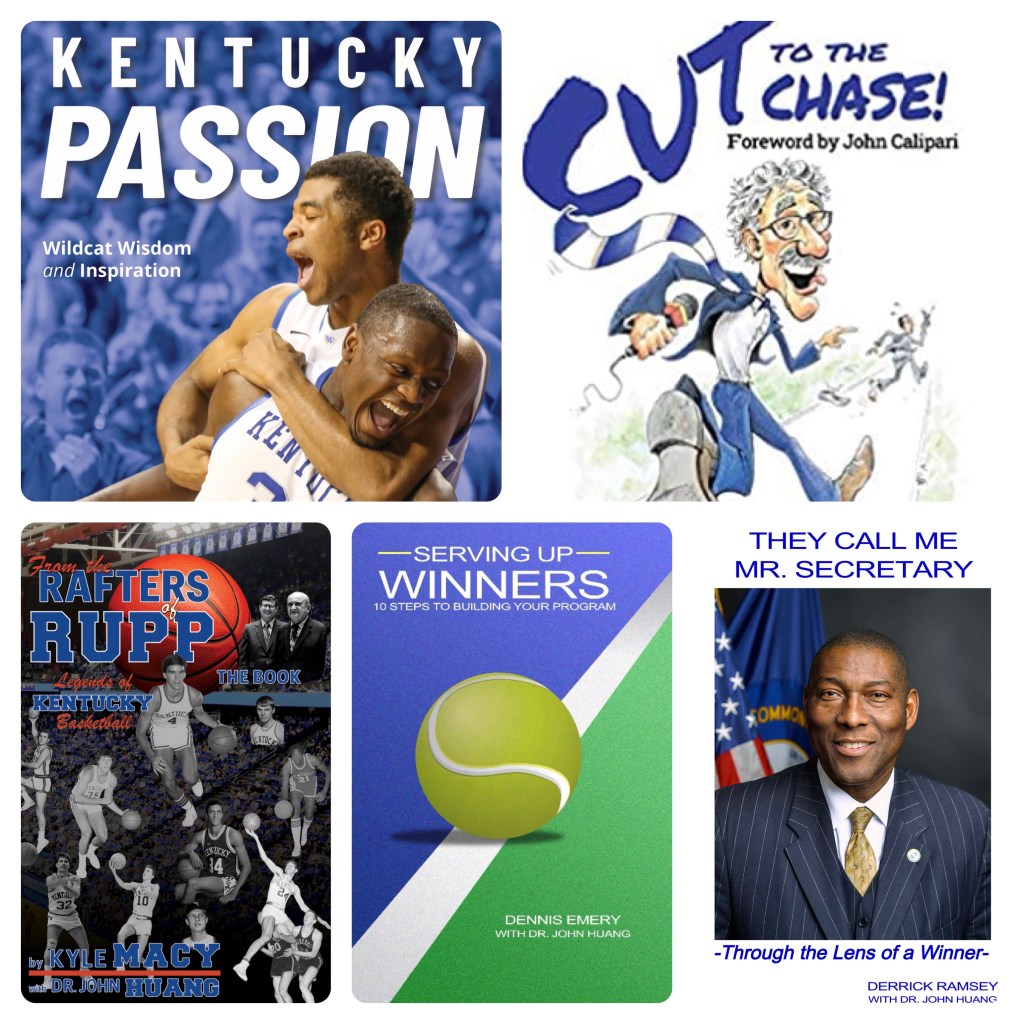
Whether it’s Derrick, or Kyle, or the bold and opinionated Alan Cutler in “Cut To The Chase,” or my award-winning coauthor Del Duduit in our best-selling “Kentucky Passion,” or the Hall of Fame UK tennis coach Dennis Emery in “Serving Up Winners,” I hope you’ve enjoyed all the heartfelt time and effort that everyone’s poured into these labor of love projects.
If you’ve read or commented or helped promote any of these books in any way possible in the past, I want to thank you from the bottom of my heart. If you’ve actually spent your hard-earned money to buy any or all of them, then—you’re not only my friend, but—you’re my true hero.
I’m living the dream. And everyone needs heroes in order to keep dreaming.
Dr. John Huang is a retired orthodontist, military veteran, and award-winning author. He currently serves as a reporter and sports columnist for Nolan Group Media. He is the author/coauthor of five books, Cut To The Chase, Kentucky Passion, From The Rafters Of Rupp, Serving Up Winners, and his latest release, They Call Me Mr. Secretary. You can follow Dr. Huang on social media @KYHuangs and check out all his books at https://www.Amazon.com/stores/Dr.-John-Huang/author/B092RKJBRD
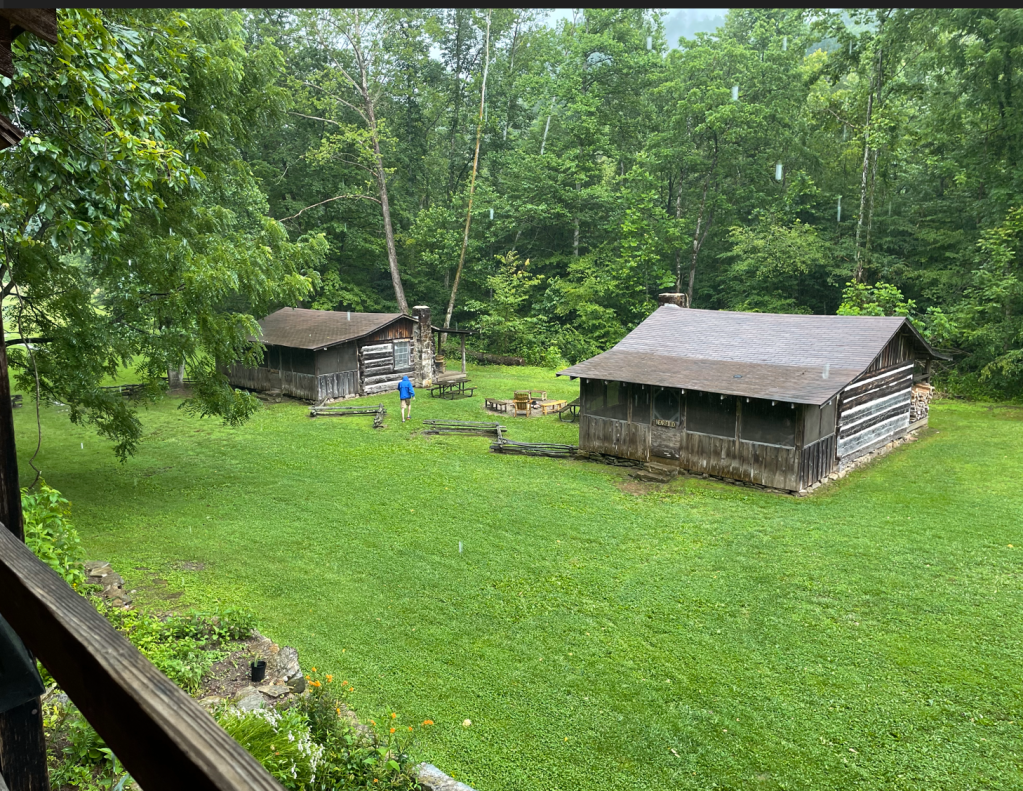
Left to right: me, Beau, Trent, Mike (kneeling), Billy, and Andy in front of Charit Creek Lodge.
This blog posting is based on a recent real-life event. The names have been changed to protect me from the wrath of my friends.
Throughout my entire life, I’ve had a love-hate relationship with nature. On one hand, I love being outdoors, traveling the world, and gazing at the marvelous wonders of God’s creation. On the other hand, I’ve always hated up-close encounters with mosquitos, poison ivy, and the occasional venomous snake.
Don’t get me wrong—I’m no pansy, no stranger to sleeping on hard ground. As kids, our family camped in a tent all the time. We spent many a weekends and summer vacations “roughing it” at the various state and national parks. On top of that, nearly ten years in the military hardened me to the rigors of outdoor latrines, forced road marches, and barely palatable meals out of a pouch.
Even now, I still don’t mind at all carrying a heavy pack and eating beef jerky during the course of an arduous hike up a mountain. But at the end of the day, I’d much prefer retiring to a big bowl of lobster bisque, a pulsating hot shower, and some smooth satin sheets at your neighborhood Embassy Suites—if you know what I mean.
So, you can understand my hesitancy in signing up for an overnight stay at the Charit Creek Lodge in northern Tennessee. The Embassy Suites it’s not. Like many other accommodations run by the National Parks Service, it’s a mere couple of bunk-bed cabins in an isolated clearing out in the middle of nowhere. You have to hike in from a designated trailhead, there’s no electricity, internet, or cell service on site, and many hungry bears supposedly roam the surrounding trails toiling for food.
There are eight of us preparing for this sojourn for the soul, mostly acquaintances from church looking to reconnect with each other and disconnect from life’s stresses for a mere couple of days. Shortly before we embark, however, two guys drop out due to sore back issues, making me question whether my bad bout with plantar fasciitis should make me pull the plug as well.
Despite my lingering reticence, I decide to go for it and head out on the three-hour drive to the remote vantage point along the Big South Fork of the Cumberland River. My five other fellow hikers arrive shortly thereafter, locked and loaded and raring to go.
John, Andy, Mike, Beau, Trent, and Billy
Mike, our fearless leader and trip organizer, is the antithesis of myself. He loves being out in the elements more than life itself. Don’t be fooled by his calm and disarming grandfatherly appearance. Inside, he’s as energetic as an ambitious young Sherpa, looking to summit the next Mount Everest in the blink of an eye.
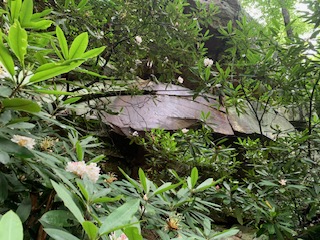
We all fall in step onto the meandering forest path. Beau, an accomplished trail runner, leads the way. He could cover this ground in no time flat but takes pity on the rest of us huffing through the dense forest foliage. Fortunately, Beau gives us plenty of rest breaks as we admire the towering rock cliffs and rhododendron blooms engulfing our senses.
Speaking of senses, I fall in behind Billy, who’ll talk your ear off. At seventy-eight years young, he’s still going strong—hiking these trails while guys half his age relax on the couch and suck air. You talk about the ultimate flex. And I thought I was keeping myself in relatively decent shape. Go ahead, Billy, kick sand in my face.
Andy and Trent complete the ranks. Every group like ours needs an Andy—an experienced paramedic at your beck and call who’s ready to treat the inevitable twisted ankle or surprise bee sting anaphylaxis with equal aplomb. Our group is blessed also with somebody like Trent—agreeable and amenable and SO DARN NICE. If you can’t get along with Trent, you’ve got a big problem.
We arrive at the lodge in plenty of time for dinner. Gary, our host, runs an impressive one-man show. This evening, he’s the concierge, housekeeper, and chef all rolled into one. And boy, can he cook. I was expecting spam and celery sticks. Instead, we get roasted pork tenderloin, a scrumptious bean casserole, macaroni and cheese baked with love, and biscuits to die for. Throw in some chocolate cake for dessert, and we’re definitely in culinary heaven.
What’s more, I find out that Charit Creek Lodge has running water—hot showers and flush toilets included in the nightly rate. HALLELUJAH! That indoor toilet seat never felt so comfortable. Now, just find me a way to snuff out snoring from my bunkmates, and I’ll check out a very happy man.
Honestly though, as great as the scenery, food, and accommodations were on this trip, the best part about this awesome experience was the fellowship involved. There’s something to be said about camaraderie and esprit de corps—especially among a group of such godly and spiritual men friends in such an austere and natural setting. Sitting in those rocking chairs on our moonlit cabin porch, we had some insightful and brutally honest discussions regarding our faults, our failings, and surviving some rather horrific life’s challenges.
But through it all, God also showered us with wisdom, humility and compassion toward each other. As iron sharpens iron, we also sharpened one another with our stories of survival and triumph. Our Lord reminded us that although the gate to eternal life remains narrow, many great saints have already blazed a wide path for those of us who wish to follow through together. It’s a distinct honor and privilege for us to plod on through.
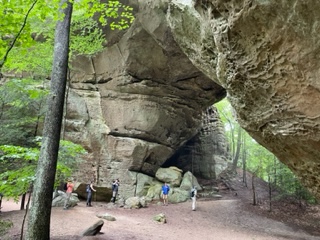
After some gully-washing thunderstorms and a hike to the magnificent twin arches the next day, I headed back to civilization with a sense of renewal and encouragement. I guarantee you all six of my brothers did likewise. We all understood how we’d just been enormously blessed.
If you’re considering a similar type of “retreat-type” experience in the near future, don’t hesitate to hold it at the Charit Creek Lodge http://www.ccl-bsf.com/. Mosquitos, thunderstorms, snoring bunkmates—and bad feet—be damned, a walk in the woods always works wonders for your soul.
Dr. John Huang is a retired orthodontist, military veteran, and award-winning author. He currently serves as a freelance reporter and sports columnist. He is the author/coauthor of four books, Cut To The Chase, Kentucky Passion, From The Rafters Of Rupp, and Serving Up Winners. You can follow him on Twitter @KYHuangs.
I once asked Larry Vaught, the esteemed and well-respected Kentucky sportswriter, why he didn’t write books for a living. After all, he’s supremely gifted, survived multiple media wars, and has enough golden stories stockpiled in his memory arsenal to fill Fort Knox.
“Too much work,” he replied dismissively. “I live a good life. Why ruin it?”
Larry was absolutely right. If you want to dive head first into a project that will eat up your valuable time, drive you batty in the process, and provide pennies on the dollar in royalty returns, then writing a book is right up your alley. In other words, DON’T DO IT…unless…
Unless you have a story to tell.
I’ve always loved tennis. I was quick on my feet and could endlessly run that baseline. What I lacked in true skill and athleticism, I more than made up with interest and enthusiasm. I was so dedicated to that fuzzy yellow ball that one summer I even received a free t-shirt as champion of the intermediate division of my Shillito Park recreation league. I was your proverbial student of the game and followed its stars with unbridled passion.
So, imagine my surprise when the great Coach Dennis Emery approached me to collaborate on his upcoming book project. Realizing that this was the great Dennis Emery—the winningest tennis coach in University of Kentucky history and one of the most decorated coaches in the collegiate game—I jumped at the chance.
Here was a Hall of Fame inductee with six hundred and fifty-five head coaching career wins, twenty-three NCAA tournament appearances, and three SEC championships teaching me intricacies about the game I loved and telling me stories about the greats I idolized.
Here was a legend who had coached thirty-nine All-Americans, three of whom advanced to the NCAA tournament singles final. Talk about living the dream. As John McEnroe once famously said, “You cannot be serious!”
What resulted is a book that both of us are extremely proud of. It’s first and foremost a labor of love. It’s a legacy book where Coach Emery wanted to share his tennis experience with other up-and-coming coaches looking to develop players and build their teams. As the youngest full-time head coach in the history of college tennis, he took a dormant program with no facilities and built it into a national juggernaut.
“Coach Emery transformed the University of Kentucky’s men’s tennis program into one that is a perennial power and competes at the highest level annually,” Kentucky head basketball coach John Calipari wrote in the book’s foreword. “And the greatest testament to him and what he built? It has sustained success even with him no longer at the helm.”
If you hadn’t noticed, Kentucky Tennis remains a highly ranked program and still competes regularly for conference and national titles. And yet, it consistently flies under the radar. Given its accomplishments on the court, it’s arguably the most under-appreciated athletic program on the Wildcat campus. Not surprisingly then, there is little recorded about the star players of the past and their epic achievements. Anyone looking into the program’s history will soon discover that there’s simply no place to dig.
“It dies with me,” Coach Emery sadly lamented when I shared that reality with him.
No it doesn’t, Coach. Let’s preserve it right here. Let’s share it with the rest of the world.
Dr. John Huang is a retired orthodontist, military veteran, and award-winning author. He currently serves as a freelance reporter and sports columnist. He is the author/coauthor of three other books, CUT TO THE CHASE, KENTUCKY PASSION, and FROM THE RAFTERS OF RUPP. You can contact him at www.Huangswhinings.com or follow him on Twitter @KYHuangs.
The trip to Ole Miss was a bit disappointing, but it did finally complete my entire circuit of SEC Road Venues.
(Oxford, Ms.) – As a die-hard Kentucky Basketball fan, there’s not a better feeling in all the world than heading into the heart of enemy territory and snatching out a hard-earned victory. After all, when the Wildcats are on the road, it’s everybody’s Super Bowl—and there’s nothing more euphoric than spoiling an opponent’s weekend celebration.
When I started this media gig, one of my goals was to visit all the opposing SEC venues in both football and basketball. I’m still missing two football stadiums, but I’m happy to report that after my recent trip to Oxford, Mississippi, I have now officially completed the entire basketball circuit.
To celebrate, I thought I’d rank each of these venues according to the atmosphere around and within the arena on gameday. Now, this is my experience only. Yours may vastly differ. But it’s also important to note that I visited each of these places when Kentucky came to town, so you can bet your bottom dollar that the arenas were at their very loudest and rowdiest.
Coincidentally, it didn’t matter whether the Wildcats were nationally ranked or not, there always seemed to be a white-out, stripe-out, t-shirt giveaway, celebrity sighting, jersey retirement, or mascot rappelling out of the rafters adding to the chaos and frenzy of the afternoon or evening.
Let’s dive in, then, in reverse order—from least to most intimidating.
Vanderbilt
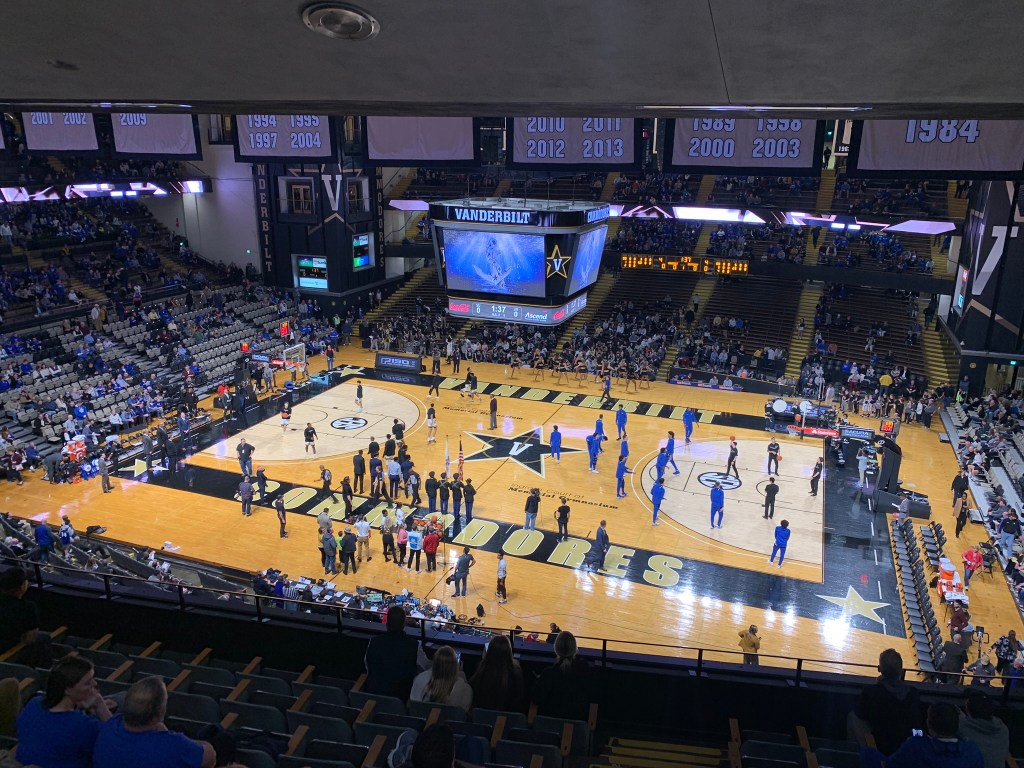
One of the most familiar trips for Cat fans to make is the quick jaunt to Nashville. The road to Music City now also ranks as the least intimidating. Don’t get me wrong, historic Memorial Gymnasium (capacity 14,316) can still get loud, but the magic of yesteryear is greatly overrated. The place is dated and worn, and the weird seating configuration—where the best seats (and the benches) are in the endzone—makes you feel like you’re watching an opera rather than a basketball game. Students still filed in early loaded for bear, but by the time the contest tipped off, half the seats were filled with blue. You’ll often hear more “Go Big Blue” chants in Nashville than you would in Rupp Arena.
Missouri
Other than the “M-I-Z—Z-O-U” chants, nothing really stands out about Mizzou Arena (15,061). It’s surprisingly spacious, but the layout looks and feels like you’re playing in a converted airplane hangar. Everything screams “lukewarm” in the “Show-Me” state, including the fans. Trust me, there’s not much going on outside the stadium in the town of Columbia, either—making my sojourn here a likely one-and-done.
Ole Miss
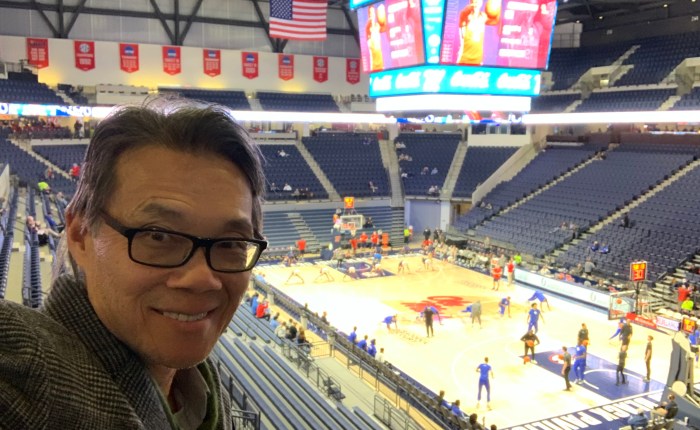
Okay, it’s not really fair basing your ranking on a visit during an ice storm. Unfortunately, that’s what happened to me. The Pavilion at Ole Miss seats 9,500, but on my cold and frigid visit, it was only about a quarter full. The sleek, modern, state-or-the-art facility was still loud, however, so you’ll have to use your imagination on how crazy it might be on a normal Saturday night. Keep in mind that the town of Oxford is a gem of a place to visit. If Kentucky stinks it up, there’s still plenty of charm to make you smile.
Mississippi State
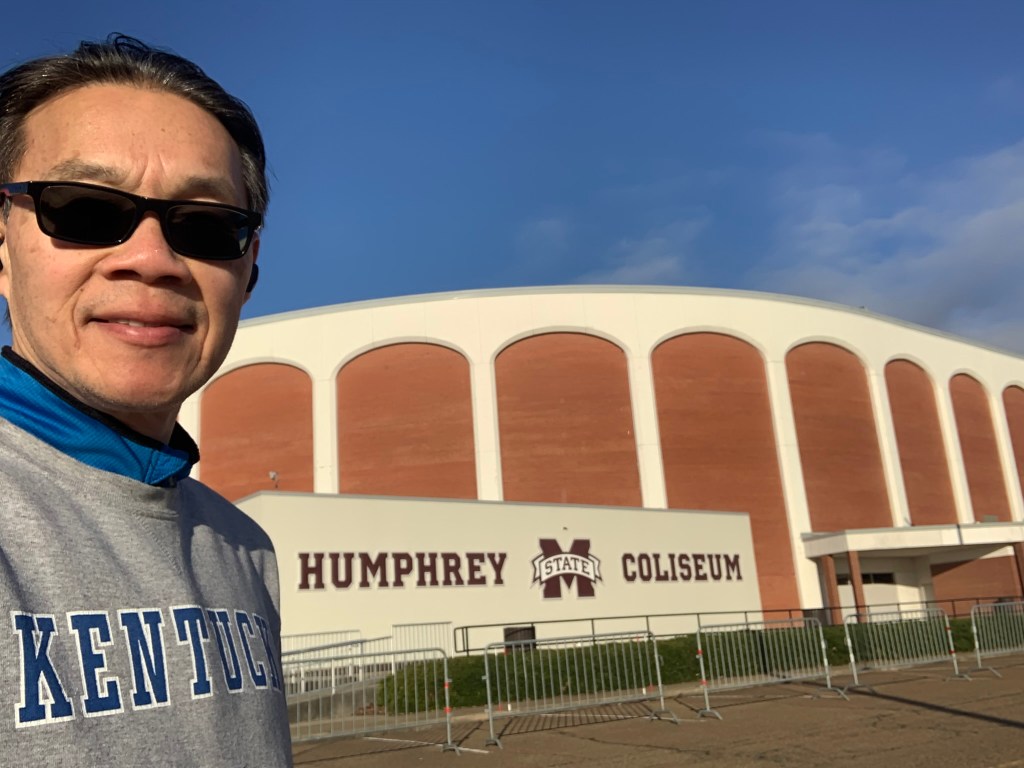
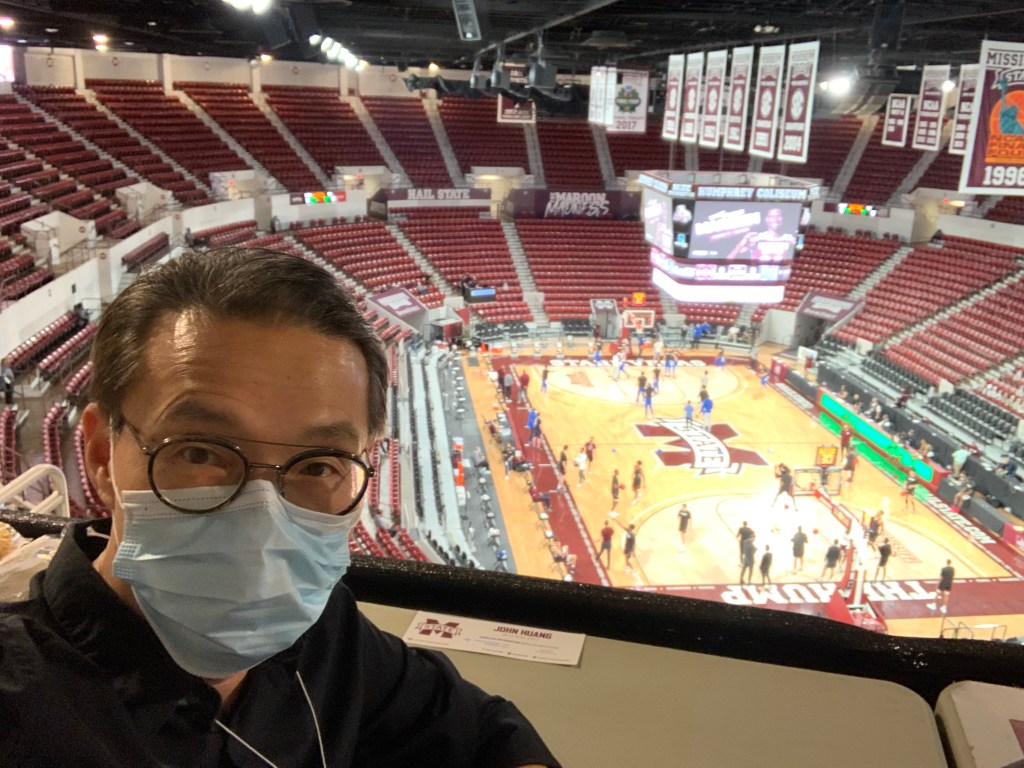
Reports of Starkville, Mississippi, being totally isolated and boring are greatly exaggerated. In my humble opinion, StarkVegas is only partially isolated and boring. That makes a game at Humphrey Coliseum (10,575) a fairly significant night on the town. Accordingly, the “Hump” can get pretty raucous, and victories against the Bulldogs are hard to come by if you fall behind early. I happened to visit during the Covid year, so I’m basing this ranking partially on what I’ve previously gleaned on television over the years.
Georgia
Stegeman Coliseum (10,523) could be formidable when Georgia was competitive. The problem for Bulldog fans is that their basketball team seldom was. It’s a football school, and the enthusiasm for basketball dies down as soon as the home team goes down double digits—which happened quickly and frequently during the Tom Crean era. Do yourself a favor and spend your time at the bars and restaurants around campus instead. As bad as their basketball is, Athens, Georgia, might just be the best college town in America.
LSU
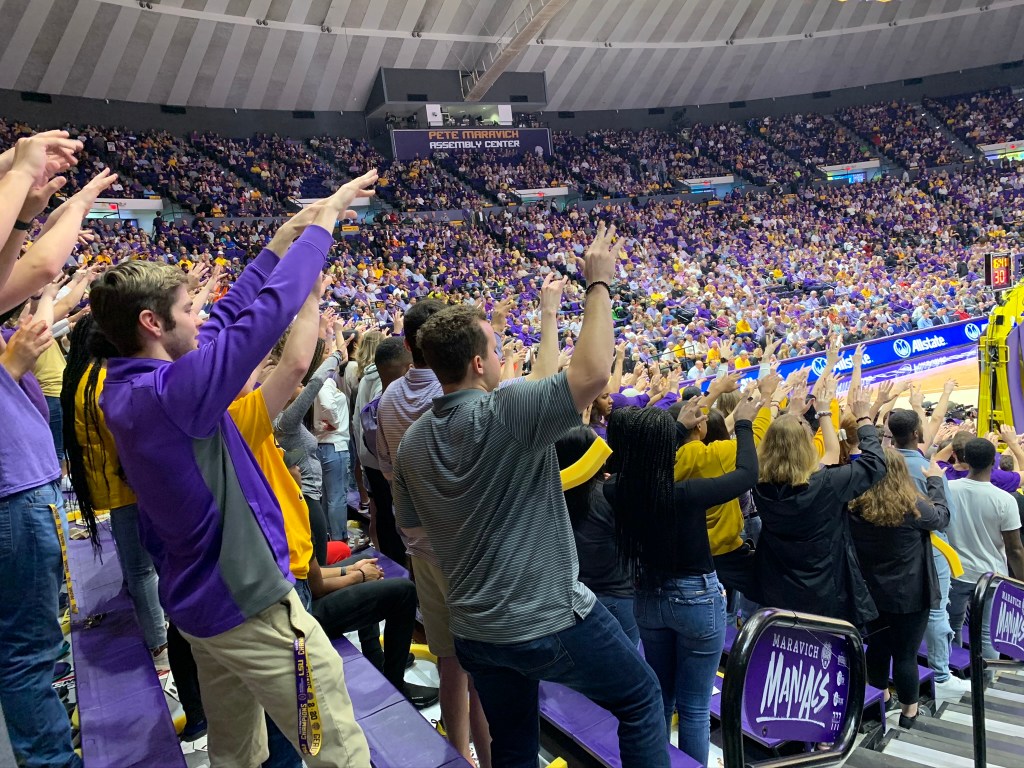
If you love Cajun food, then a trip to Baton Rouge, Louisiana, has to be on your bucket list. Go during Mardi Gras, and you’ll certainly get more than your money’s worth. Show up at the Pete Maravich Assembly Center (13,215) for a game versus the Tigers, however, and you’ll most likely be disappointed. It’s fairly easy to steal a victory here as most fans in attendance are too drunk to care. They’re mostly still thinking about past pigskin parties. Walk a few feet next door to Tiger Stadium and see where the real sport is played.
Texas A&M
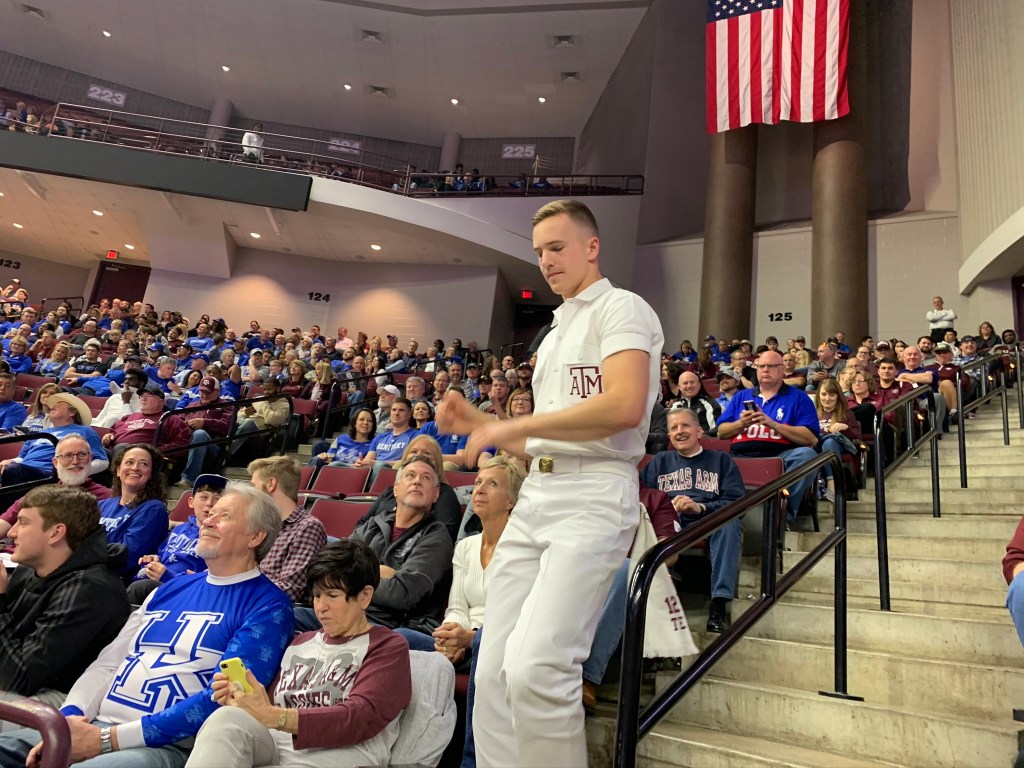
It’s a haul to get from Lexington to College Station, so your trip to Texas A&M’s Reed Arena (12,989) better include some tourist sites along the way. The George H.W. Bush Presidential Library is right on campus and is well worth a visit. As far as the game environment is concerned, it’s predictably rowdy—especially with those Aggie Yell Leaders leading the charge. They’re a bit too weird for my liking, but they’ll boost the crowd to a fever pitch in no time at all.
Alabama
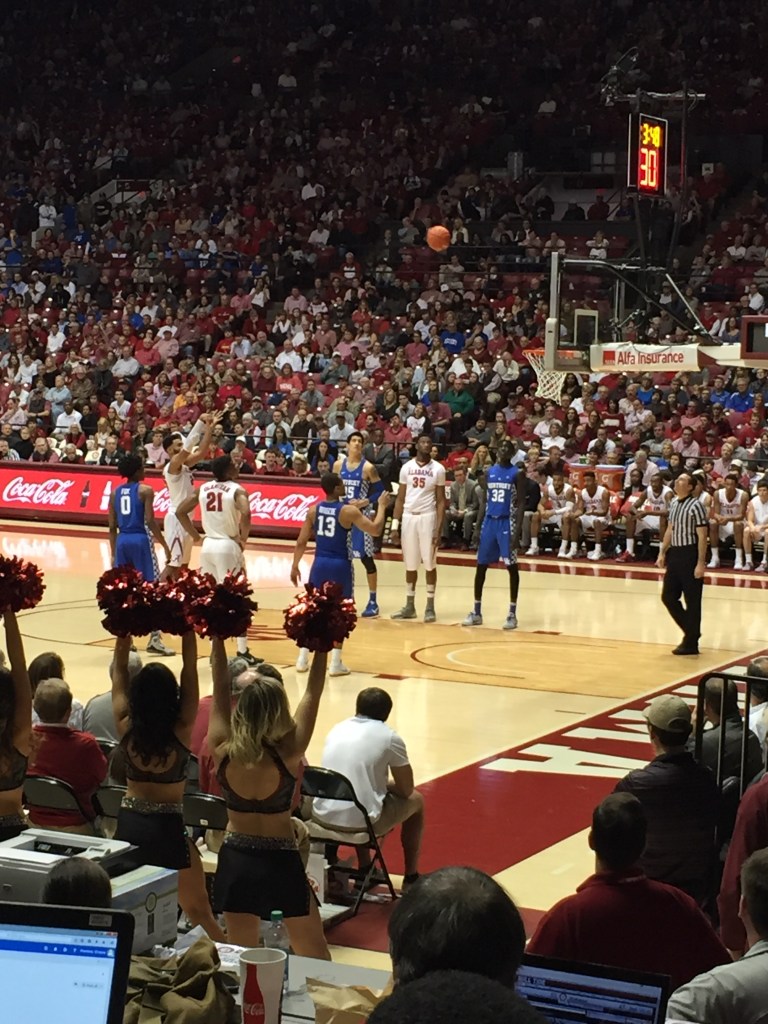
Tuscaloosa is another venue where football rules the roost. But Coleman Coliseum (14,474) always seems stoked when the Wildcats come to town. It’s partially the size and the layout that makes it challenging to win. But Alabama always has the athletes to run with Kentucky. Their style of play gets the crowd into the game early. Fall behind here, and the mob mentality rules. Blowouts are as common as barbecue brisket and “Roll Tide” cheers.
Florida
The Exactech Arena at the Stephen C. O’Connell Center (10,500) underwent a renovation back in 2016, so it’s not quite as harrowing as it was before. The Rowdy Reptiles are still there cheering their team on in force, but they’re no longer spilling out on to the court as before. The place is also open enough for the noise levels to dissipate. As Florida’s competitiveness has ratcheted down recently, so has the O’dome reputation for carnage.
South Carolina
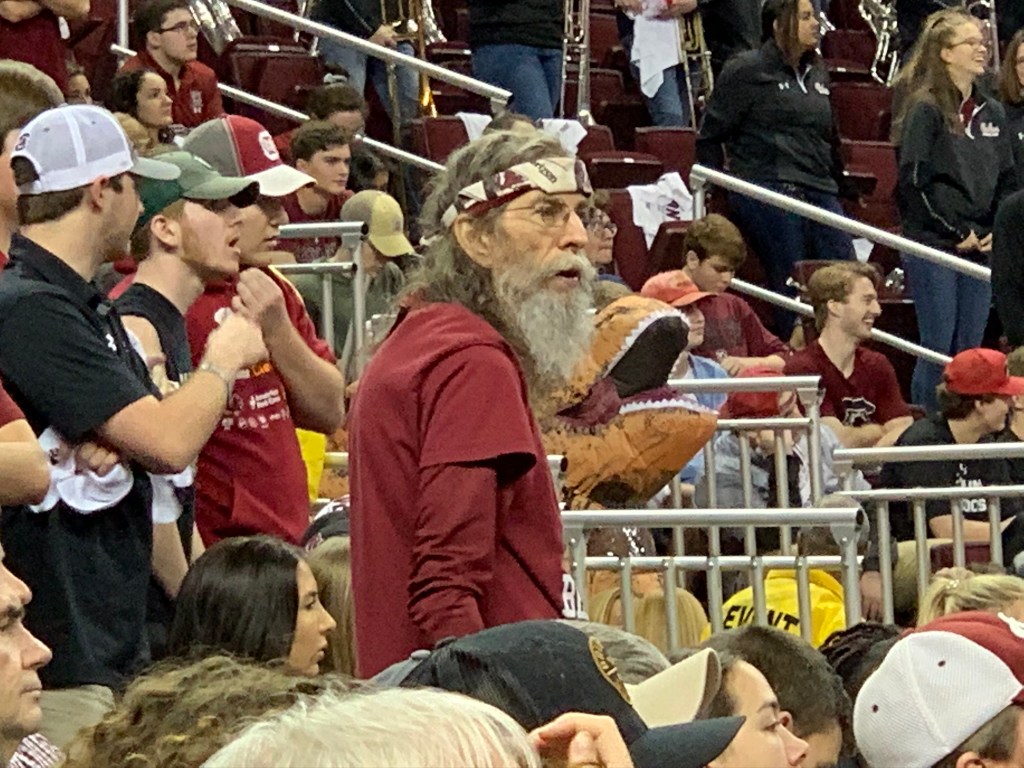
Of all the visiting venues, this one was the darkest. And I don’t mean the lighting. Colonial Life Arena (18,000) reeked of evil the minute I stepped inside. Fans were loud, proud, and downright MEAN. Throw in Sandstorm and a heavy dose of Gamecock Jesus, and you’re in need of an exorcism when all is said and done. If Calipari’s getting ejected, you know it’s happening right here in Columbia. Be sure to take a shower before you leave town.
Tennessee
Thompson-Boling Arena (21,678) is certainly big enough. In fact, the only reason it seats what it does is because they wanted it to be bigger than Rupp Arena. Unfortunately, the only time the Vols can consistently fill it up is when the Women’s basketball team plays here…and, of course, when Kentucky comes to town. I’ll admit, when the Wildcats come a calling, it can easily turn into a madhouse. Some blue always manages to get in, but that Rocky Top orange will dominate more times than not. Escape with a win, and you’ve earned your checkerboard.
Arkansas
A visit to Bud Walton Arena (19,368) is certainly a bucket list item. When the Wildcats are in town, it’s predictably loud, boisterous, and intimidating. Moreover, Arkansas fans have the championship pedigree to hang with Kentucky. They also boast of the best cheer in the SEC. “Calling the Hogs” always brings me goosebumps. And for that reason alone, Fayetteville, Arkansas, becomes a very difficult place to win.
Auburn
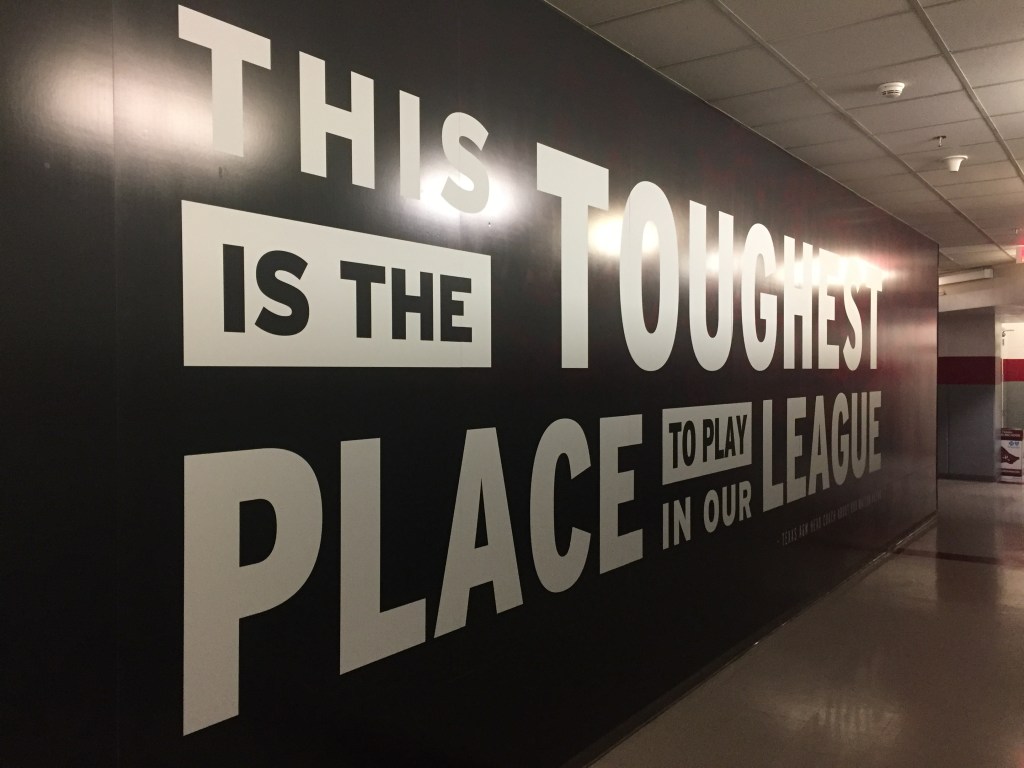
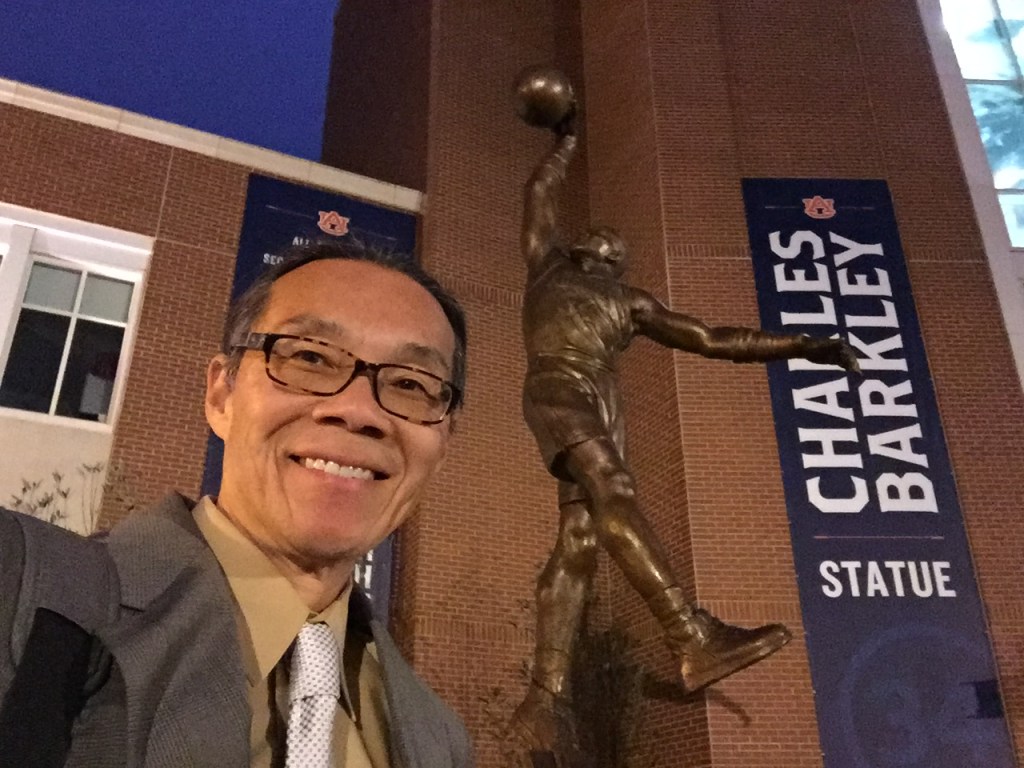
Cozy and compact, Neville Arena (9,121) is as intimidating as it gets for Kentucky fans courageous enough to make the trip. It’s almost as if the place was built for one purpose only—for Auburn to beat the Wildcats. Charles Barkley cried when Kentucky beat him in the 1984 SEC tournament, and his statue out front screams “overcompensation.” The acoustics are A+ here, the decibel levels somehow ratcheted up to insane, ear-splitting levels. With Bruce Pearl sweating on the sidelines and the student body ringing the floor, the Loveliest Village on the Plains is the smallest—but also the toughest—place in the conference to get that road “W.”
But maybe not for long. Conference expansion is fast approaching. I wonder where Austin, Texas, and Norman, Oklahoma, will rank when they enter the conference? I can’t wait to make the trip and find out.
Dr. John Huang is a retired orthodontist, military veteran, and award-winning author. This blog posting was originally submitted as a UK Basketball Column for Nolan Group Media publications. If you enjoy his writing, you can follow him on Twitter @KYHuangs.
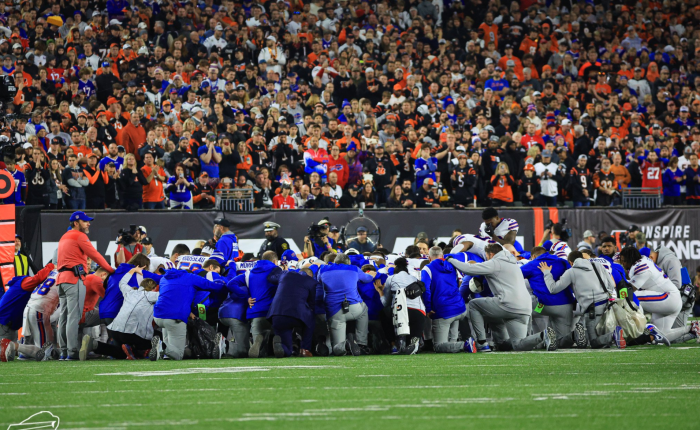
Buffalo Bills’ players, coaches, and team officials kneeling in prayer at Paycor Stadium after abrupt and chilling ending to Monday Night Football (Photo Credit @BuffaloBills).
(CINCINNATI, Oh.) – It wasn’t supposed to be like this.
In what was shaping up as a game for the ages, Bengals versus Bills on Monday Night Football abruptly ended on a chilling note. Bills’ safety Damar Hamlin collapsed on the field after making what looked to be a routine tackle. After the collision, Hamlin—a second-year player out of Pittsburgh—popped back up on his feet but fell immediately to the turf a split second later.
The Buffalo Bills later confirmed that Hamlin suffered a cardiac arrest following the hit. His heartbeat was restored on the field, and he was transferred to UC Medical Center for further testing and treatment. He is currently sedated and listed in critical condition.
Talk about scary. In one fell swoop, the overflowing record crowd at Paycor Stadium went from a night of anticipated merriment to several hours of abject horror.
For coaches, players, and their families, it had to be surreal. NFL players are a different breed of tough. They’re desensitized to broken bones, torn ligaments, and concussions as part of what they do. This injury, however, was different. Life or death is not part of the job description. You could see the shock, anguish, and concern etched on the faces of everyone on the sidelines. Imagine being Hamlin’s mom, escorted from her seat in the stands into the waiting ambulance taking her precious son to his unknown fate.
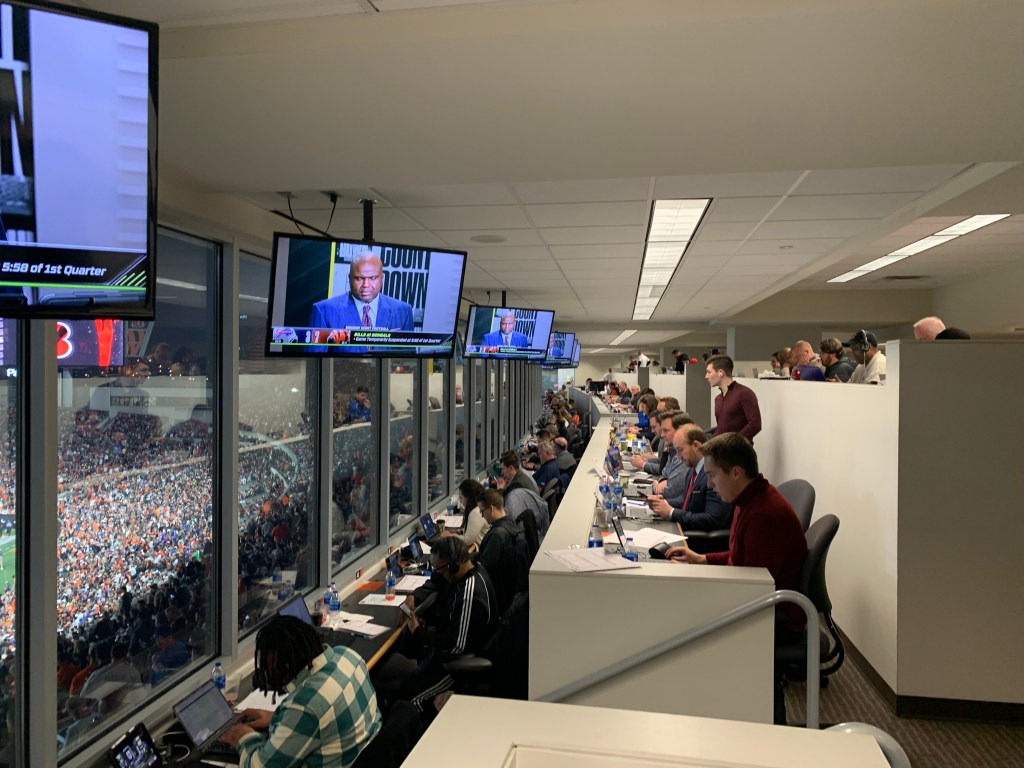
For media members in the press box, confusion reigned. We came to cover a football game matching two of the top teams in the league in their hunt for playoff seeding. We didn’t sign up for this. It’s difficult in that moment of chaos to process reliable truth with the rampant speculation around an unconfirmed medical prognosis. All of a sudden, everyone in the media room had a medical degree, or at least a relative working at the local hospital texting furiously with the latest breaking news on Hamlin’s condition.
As media members, we did the best we could in disseminating accurate information as the events were unfolding before us.
According to my notes, the tragic moment occurred at the 5:58 mark of the first quarter with the Bengals leading 7 – 3. I’ve watched a lot of professional football over the years. During that time, I’ve never seen a stretcher and ambulance summoned so quickly. Medical personnel furiously attended to Hamlin for about twenty minutes while the 67,000 or so looked on in stunned silence.
Watching players from both teams kneel jointly in prayer for a fallen comrade is always one of the most sobering sights in sports.
Five minutes after the ambulance pulled out, we all got the word that “the game was temporarily suspended until further notice.” Forty-five minutes later, after discussions with both teams, the NFL officially postponed the contest. During the next hour, people filed out of the stadium in a very orderly fashion, fully cognizant and accepting of the fact that no more football would be played that night.
In the tunnels underneath the stadium leading to the locker rooms, we witnessed players consoling each other and hugging their family members. Understandably, we had no access to any players, coaches, or administrative personnel.
“I don’t care who you are, you are not coming down this hallway,” said one Bengals’ official.
The evening was a stark reminder that as much as we love the NFL, the league embraces a brand of competitive violence that always leaves the door slightly ajar for these types of potential tragedies.
To be fair, however, this incident was indeed different and somewhat unique. I’m old enough to remember the Darryl Stingley paralysis in 1978, or Joe Theismann’s gruesome ankle injury on Monday Night Football in 1985. The Mike Utley, Ryan Shazier, and Tua Tagovailoa injuries are all nightmarish events. They’re all part of tragic sports moments everyone wishes never happened.
This was worse. Don’t get me wrong—career-ending injuries are awful. Life-altering paralysis is unfathomable. The long-term effects of CTE are becoming exposed as a living hell. But they simply don’t compare to the immediate acuteness of what we all experienced tonight.
Hamlin’s injury was akin to Hank Gathers collapsing and dying on the basketball court. Thirty-three years later, I still can’t get that image out of my mind.
I doubt if I’ll ever be able to dismiss this one either.
Dr. John Huang covers professional sports for Sports View America. This post first appeared on SportsViewAmerica.com. If you enjoy his writing, you can follow him on Twitter @KYHuangs.
Bill Owen enjoys his last official day on the job at his beloved Rupp Arena (Dr. Michael Huang Photo).
(LEXINGTON, Ky.) – If those Rupp Arena walls could talk, I’m sure they’d sound a lot like Bill Owen.
Owen, President and CEO of Lexington Center Corporation for twenty-two years, retired from his position as chief cook and bottle washer for one of Lexington’s most iconic and recognizable public-gathering facilities on December 31, 2022. A big Kentucky basketball fan, Owen appropriately spent his last official day on the job—at Rupp Arena—watching the Wildcats dismantle their in-state rival, the Louisville Cardinals.
“You can’t grow up in Lexington and not be a Wildcat fan,” Owen explained. “When I was in high school, I had a paper route, and [UK Athletics Director] Bernie Shively was one of my customers. Once a month, I would go to Memorial Coliseum and walk past Coach Adolph Rupp’s office, and Bernie Shively would pay me my $3.20.”
Growing up Blue
As such, Owen’s connection to Lexington and the University of Kentucky was solidified early on. Born in Gainesville, Georgia, Owen moved to Lexington when he was only two years old. His father served as head pastor of Calvary Baptist Church, so the preacher’s kid grew up in the Ashland Park area of the city, attending Cassidy Elementary, Morton Junior High, and Henry Clay High School.
Owen would naturally go on to attend the University of Kentucky. After graduating with a degree in history (class of ’73), he surprisingly found himself working in commercial real estate development and asset management. Six years learning from Wallace Wilkinson (before he became governor) and another six years working with the renowned Webb Brothers honed his business skills to a tee. That led directly to Owen taking on his Chief Administrative/Financial Officer role for Lexington Center Corporation in 1991. Nine years later, when Tom Minter retired, Owen took on the role of President and CEO.
Lexington Center Transformation
If you somehow hadn’t noticed, the Lexington Center recently underwent a transformative facelift under Owen’s dedicated watch. The project was unique—not a mere renovation, mind you, but rather a virtual complete replacement and restoration. Because most indoor sports venues traditionally have short shelf lives, you won’t find many comparable basketball arenas like Rupp—not only surviving, but still relevant and thriving forty-five years after initial construction.
“They blew up Charlotte Coliseum after only nineteen years,” Owen ruefully recounted. “I’ve got underwear that’s older than that.”
In today’s climate, working with a daunting $310 million budget is nothing to scoff at, and Owen made sure every penny of it was properly distributed and allocated in this latest rebuild. The result is a brand spanking new looking Lexington Center, a shining beacon of pride within the local civic, arts, and business communities. None of that would have been possible without Bill Owens spearheading the charge.
And what a fabulous charge it’s been. Big-time concerts, memorable sporting events, and world-renowned visitors are all part of Lexington Center Corporation’s rich and vibrant pedigree crafted during Owen’s sparkling tenure.
Rupp Arena
The parade of concerts featuring A-list celebrities visiting Rupp Arena is long and lengthy—everybody from Paul McCartney to Elton John to Tina Turner. Owen specifically remembers being wound tighter than a banjo string the time he booked Turner. When it came time for her sound check the day of the concert, the “queen of rock ‘n’ roll” was nowhere to be found. It turns out her limo driver had mistakenly taken her to Louisville instead of Lexington. Fortunately, with the help of a police escort and a slight curtain delay, the Rupp audience rocked for a full two and a half hours as Owen looked on in relief.
Then there was the Garth Brooks concert on Halloween weekend in 2014. If you remember, Brooks played four performances over two nights in front of 70,000 adoring fans. Over the years, Owen admits to becoming somewhat celebrity desensitized, but he remembers meeting Garth backstage and talking about their kids attending the same colleges.
“By gosh, here I am standing here talking to Garth Brooks, and it’s like I’m talking to another dad I just met at a tailgate,” said Owen, himself a proud father of three.
The very next night, however, it was back to reality as the University of Kentucky hosted Pikeville in a college basketball game. When it came to Rupp Arena, there was never a dull moment.
“What that building contributes to the community,” Owen gushed. “Obviously it’s the home of UK Basketball, which is its marquee and our most important relationship—but for the community and for the state of Kentucky, it’s so much more. You can’t underestimate its impact. Being able to stretch its life well beyond its peer group, that’s kind of special.”
As far as basketball games at Rupp, Tayshaun Prince’s five three-pointers to begin the game versus North Carolina stands out prominently in Owen’s mind. Hosting NCAA tournament games also provided quite a thrill. Coincidentally, Owen served as the official scorer’s table representative when Rick Pitino’s Louisville squad was upset by Texas A&M in 2007.
“Had Pitino not done that, we would have never heard of Billy Gillispie,” Owen quipped.
Convention Center
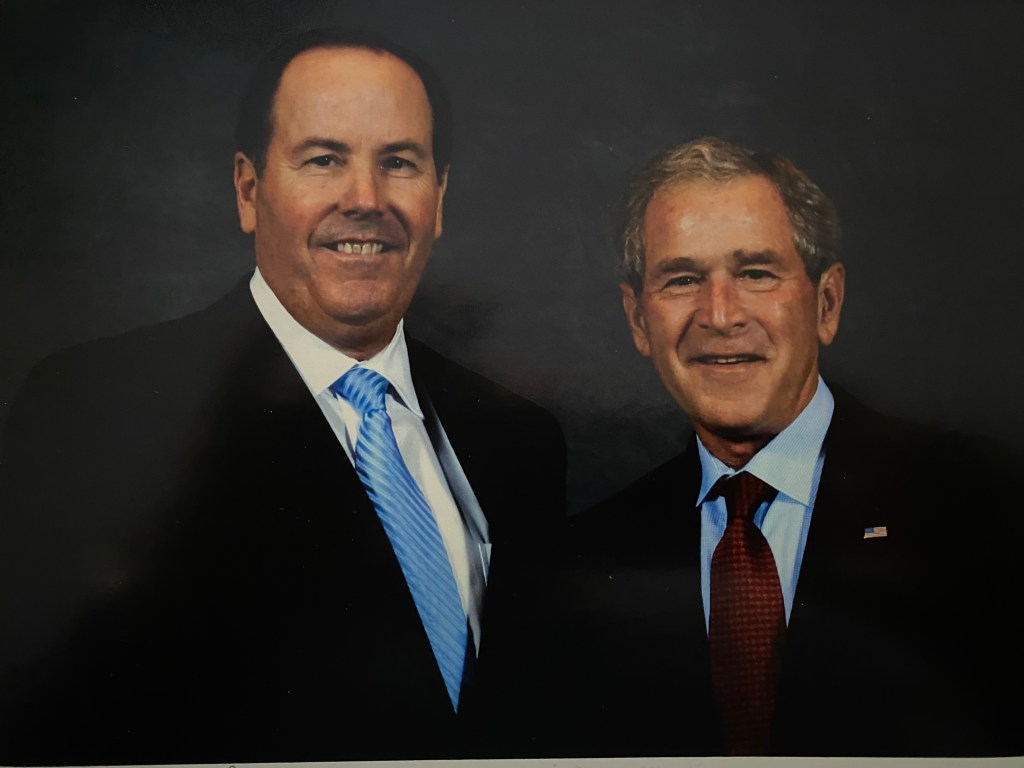
Not to be outdone, the Lexington Convention Center has had its share of grand moments and distinguished visitors as well. President George W. Bush came a calling for the Little League International Congress in 2010. Bill Clinton and Barack Obama also made visits to the Lexington Center during subsequent years.
“Growing up in Lexington, I think of our little burg of a community,” Owen reflected. “But yet, here we are hosting sitting and former presidents in our convention facilities. It’s something you think about. Our organization met that challenge. I guess that’s one of the things that’s significant with the Lexington Center’s staff. As an organization, we met every challenge. I can’t think of a thing that we were ill equipped to achieve. And now opening this really grand new facility, that’s kind of the zenith of it.”
Owen, with President George W. Bush, at the Little League International Congress held at the Lexington Convention Center in 2010.
Opera House
And finally, there’s the Opera House, one of the smallest theaters in the country that still offers its patrons a touring Broadway series. The city bought it through Lexington Center Corporation, renovated it, and gave it new life.
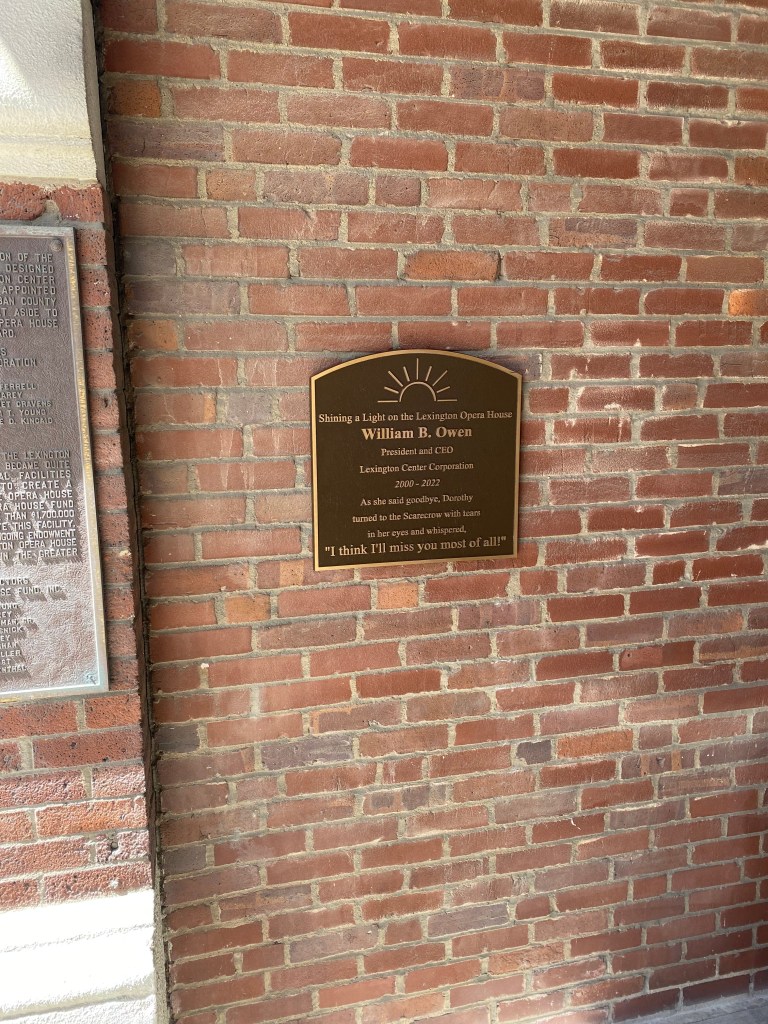
“I’m reminded of the line from The Wizard of Oz,” Owen said. “Dorothy, with tears in her eyes, looks at the Scarecrow and says, ‘I think I’ll miss you most of all.’ And they put that on a plaque on the entrance to the Opera House. And it’s next to a plaque where the original founders and board of directors of Lexington Center Corporation are listed. And to think that my name is up there with them. That’s very humbling—particularly for somebody who grew up here.”
Owen’s commemorative plaque at entrance to the Lexington Opera House. “I think I’ll miss you most of all.”
Disasters Looming
Lest you think Owen’s tenure was all sunshine and roses, think again. Two of the most significant world-wide crises occurred on his watch.
For Owen, 911 resulted in many sleepless nights. As a public assembly building manager, he spent countless hours poring over those endless reviews by Homeland Security. Think about it. That fateful Tuesday morning in 2001 forever changed the manner in which people gathered for concerts, conventions, and ballgames.
Covid-19 threw Owen an even bigger haymaker.
“March 12, 2020, for me was the day the earth stood still,” he recounted. “We’re in the second day, first game of the girls’ Sweet 16 tournament. We had just come off of three record-setting financial years. The arena is deeply under construction…and it all comes apart.”
In one fell swoop, Lexington Center went from one hundred twenty-six full-time employees to, at one point, only seventeen. Personnel decisions are always difficult. After all, it’s your work family. Time after time, Owen had to tell a lot of good friends that they couldn’t work there anymore. That was especially tough.
Tensions with UK
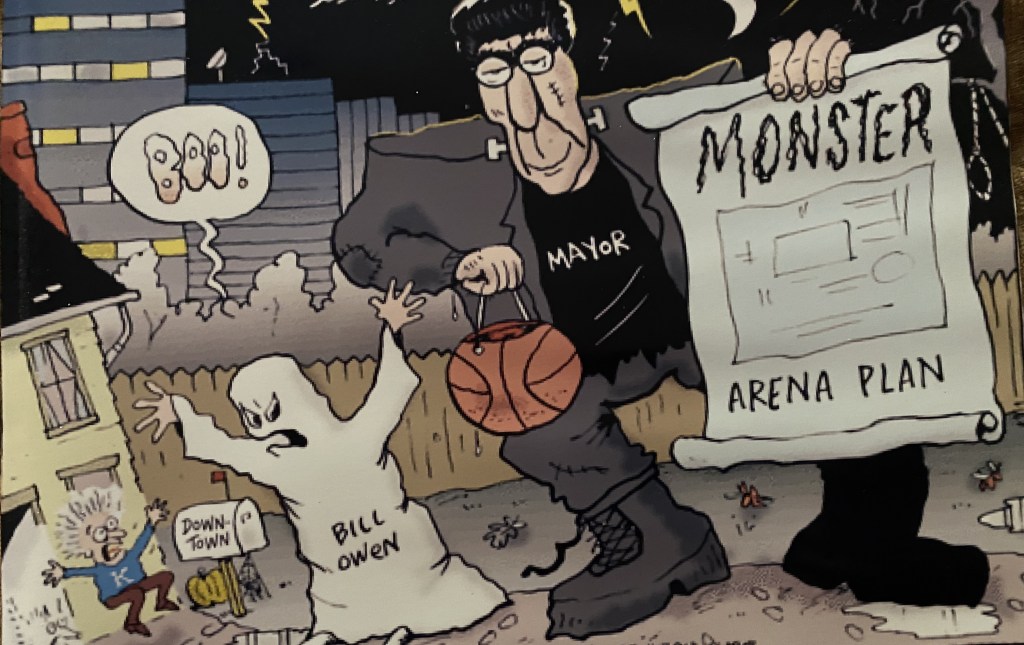
Here’s something I perceived was even tougher on Owen. Over the years, it’s been well documented that the city of Lexington and the University of Kentucky have engaged in a tireless (and often bitter) tug of war over ownership rights to Rupp Arena. Should a downtown location be the major community focus, or would an on-campus facility better serve the needs of the university? With so much at stake financially, it’s natural for friction to develop between the two negotiating factions, especially when they possess different end goals.
You know you’ve struck a nerve when you’re satirized in an editorial cartoon.
And yet, Owen kept his cool and remained philosophical through it all—the fickle fate of his beloved arena forever at the mercy of an unexpected regime change, a newly elected public official, or the ever-shifting whims of the state legislature.
“I’ve been married fifty years,” he told me. “UK has been in this building forty-six years. Our relationship with UK as our tenant is not unlike my relationship with my wife. It’s not like it’s been fifty years of wedded bliss and everything great. Nor has it been fifty years of combat and conflict. There’s been a share of both. But overall, both of us are a lot better off because of the relationship. And that’s kind of the way we are with UK. There are times when it’s been more of a business relationship. And other times it’s been more of a partnership.”
Who’ll Steer the Ship Now?
At age 71, Owen appears fully prepared for the upcoming retirement transition. In 2018, Lexington Center Corporation entered into a booking and management agreement with OVG, Oakview group. The California based private management company fully took over operations in October of 2021 and has since become the new Bill Owen—just as the old Bill Owen dutifully served out his term as Director of Construction in order to complete the final phases of the building project.
Understandably, Owen has a few reservations about an out-of-state corporate entity making future decisions regarding his community treasures.
“I’ve had to make my share of decisions,” Owen acknowledged. “In twenty-two years as CEO here, I’ve made an awful lot of decisions with my head. But I’ve made some with my heart too. Can you develop that if you don’t have a personal connection with the community? You probably can, but it’s easier to develop if you’ve got that connection.”
Grandpa Bill
On a personal level, I can’t see Bill Owen sitting on the couch watching Netflix and eating Bonbons. You never know, though. Everyone has their own way of dealing with major life changes.
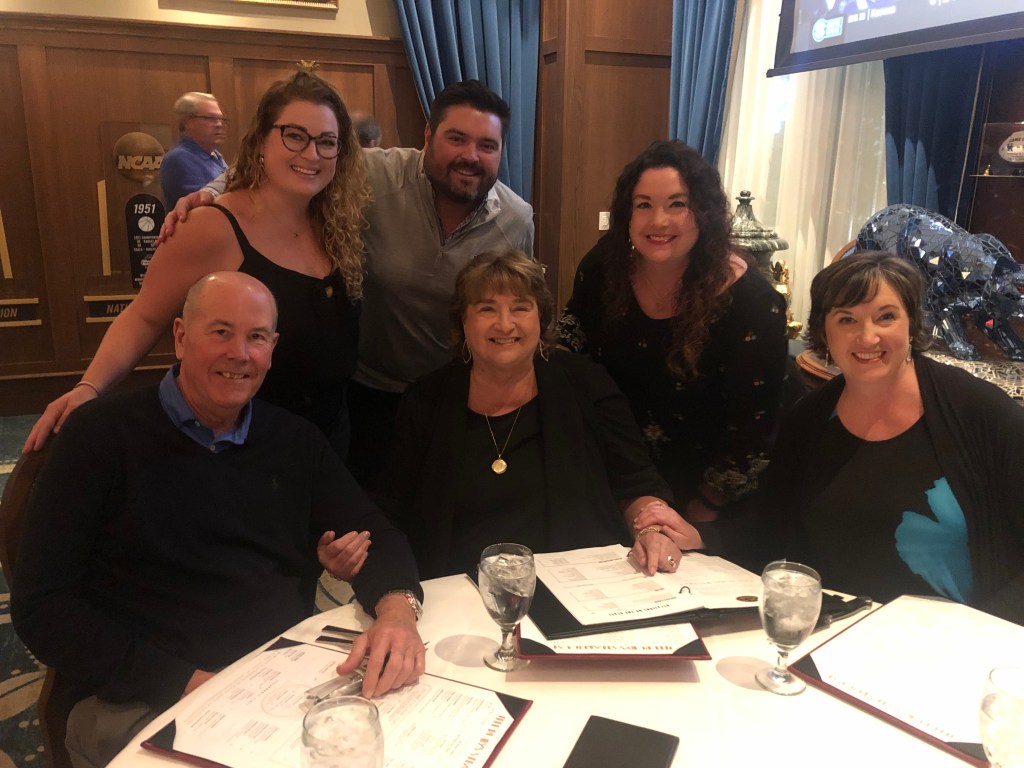
Family Strong! Seated Left to Right: Owen, wife Debby, daughter Katie. Standing Left to Right: Daughter-in-law Sydney, son Grant, daughter Kristen.
“You can prepare for retirement every way but emotionally,” Owen said with a wry smile. “You can’t prepare emotionally until you experience it. I’ve worked steadily since I was fifteen. I got my last paycheck a week or so ago. I told my wife, ‘I’m not getting a paycheck anymore.’ That’s an adjustment.”
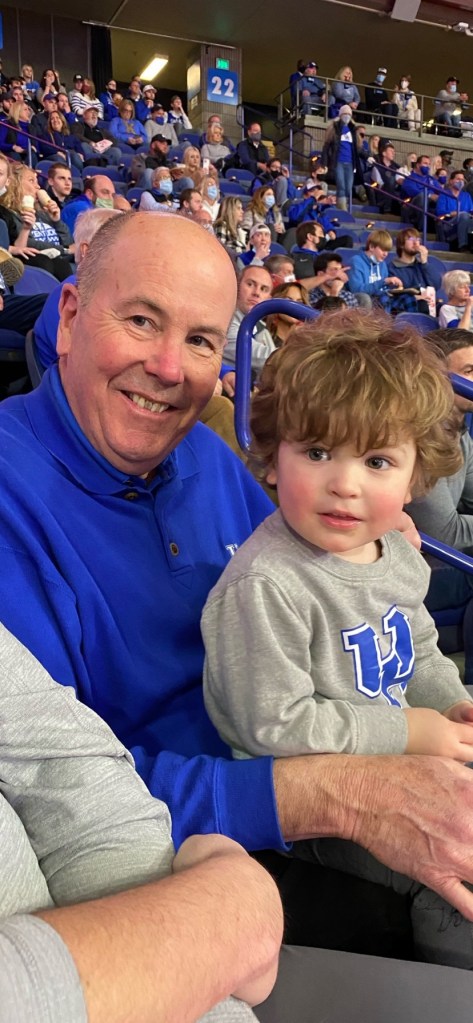
Owen’s wife, Debby, hates to fly, so large-scale travel most likely won’t be an adjustment problem in the years to come. Although they own some Florida property, Owen assures me he’s staying put in Lexington. He may do some consulting. A distillery docent or a horse farm tour guide aren’t out of the question, either. Most importantly, Owen just enjoys spending time with his three-year-old grandson, L.J.
“He’s taken over without firing a shot,” Owen joked. “Had I known they’d be so much fun, I would have had them first. It’s nice being close to family. I’m blessed with that.”
Owen, with grandson L.J., at a recent UK basketball game.
Thoughts Regarding Legacy
Sitting in the concourse of Rupp Arena, I asked Owen about leaving a legacy. What were his most significant professional accomplishments? How did he want others to remember him as he walked out the door?
“That’s a tough question,” he answered pensively. “I managed to be a part of keeping the torch lit. And improving all of our facilities—Rupp Arena, the Convention Center, the Opera House primarily—and extending our facilities’ contribution to the city, and to the community for a long while.”
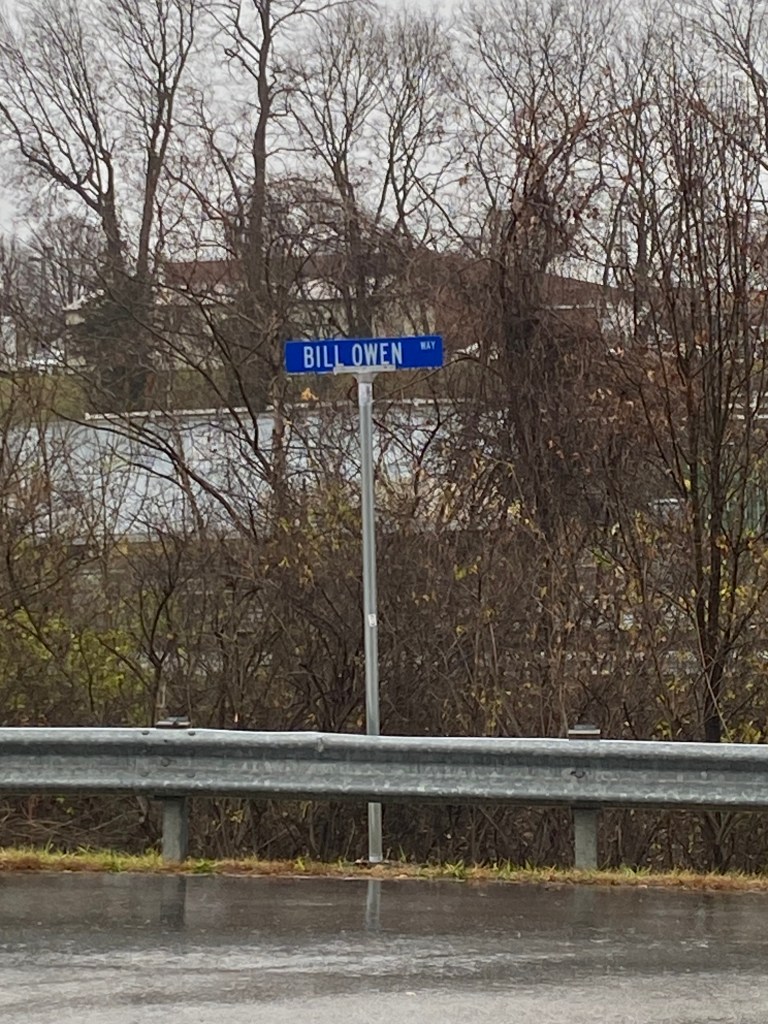
Owen then whipped out his phone and showed me a picture of a brand-new street sign on the private driveway connecting Manchester Street to the Rupp Arena garage. The sign said “Bill Owen Way.”
“That was bestowed on me just two weeks ago,” he said. “I’m very proud of that. I’m very humbled by that.”
The newly dedicated Bill Owen Way leading up to Rupp Arena.
The Importance of Faith
Appropriately, I concluded my chat with Owen about a topic very near and dear to his heart—his Christian faith. Over time, I’ve interviewed a lot of successful individuals, and I’ve noticed one thing in particular. People of faith are somehow different. There’s a special aura surrounding them. That was certainly true of Owen. Through all his business successes, the son of a Baptist preacher always managed to keep spiritual things at the front of the line.
“I’ve grown up in the church,” he said. “I was active in leadership. I taught Sunday School. A personal faith and belief in God and reaching him through a Savior in Jesus Christ for me is an important part of my life. It always has been. The hope of something grander after this life is something I was taught, something I believed—and still believe.”
“His master replied, ‘Well done, good and faithful servant! You have been faithful with a few things; I will put you in charge of many things.’”
Congratulations, Bill Owen, on your retirement.
A very hearty “thanks” to you and your talented and dedicated staff at Lexington Center Corporation for always meeting the challenge!
I traveled down to Mississippi with my good friend and media colleague, Lonny Demaree (right). The Ole Miss fan in between us gave us a personal tour of “The Grove.” The people tailgating were super friendly. Unfortunately, there were just way too many of them.
(OXFORD, Ms.) – When Kentucky first released its current 2022 football schedule, there was one road game I circled immediately. Ever since I started this media gig, a trip to Ole Miss remained at the top of my bucket list of SEC venues to visit. Not only had I never been to Oxford, but stories I heard of tailgating in The Grove were legendary in my mind.
Described frequently as the “Holy Grail of tailgating sites,” The Grove takes on a life of its own during Ole Miss football Saturdays. Geographically speaking, it’s located right in the center of a picturesque college campus and consists of stately oak, elm, and magnolia trees providing the perfect mixture of ambience and shade. What really distinguishes it from any other park-like setting, however, is the massive mix of partygoers and football fanatics reveling within its boundaries on gameday.
When I first walked through the maze of tents, TVs, and tailgaters three hours before kickoff, I was a bit taken aback. I immediately sensed that this place was out of control. Because in my mind, I somehow pictured ornate canopies in spacious meadows filled with aristocratic gentlemen and southern belles. Everyone’s dressed to the nines with unlimited access to their favorite food and drink (think Picnic with the Pops on steroids).
Instead, I was greeted by a virtual madhouse of sweaty football humanity. Frat boys, slick donors, soccer moms, average Joes, grandmas, former jocks, and current drunks all crammed shoulder to shoulder under an assortment of cover you might find in the various tent cities of worldwide refugee camps. It’s only 8:00 a.m., and the area is already so jam packed that there’s no room to walk, turn around, or breathe. Fifty feet into the morass, and I had seen enough.
Life in the press box at Vaught-Hemingway Stadium turned out to be just as unpleasant. With their heartbreaking 22 – 19 defeat at the hands of their Rebel hosts, the Wildcats once again snatched defeat from the jaws of victory.
What was maddingly frustrating for the 12 – 15,000 Big Blue faithful who made the trip down South was that despite the inopportune red zone fumbles, the lack of protection by the O-line, and the kicking game meltdowns, Kentucky still had a chance to win the game at the end. Sure, Barion Brown’s 245 all-purpose yards, Chris Rodriguez’s return to action, and the defense making some critical stops are continued causes for future optimism. But make no mistake—this loss hurts. It hurts really bad.
Many say to rejoice and be glad because Kentucky had never been ranked this high (No. 7 in the nation) before. I say cry and lament because it’s an opportunity squandered as the Wildcats may never find themselves in this lofty position again.
But I’m here primarily to report on the tailgating, so immediately upon hearing the final horn, I hightail it back over to The Grove to meet a few of my friends who have traveled down from Kentucky. It’s a miracle I’m even able to hook up with them amidst the exuberant masses pouring forth from the stadium exits.
We finally settle into our pre-purchased spot at The Grove, our feet navigating the mound of dry dirt and dirty straw masquerading as the plush carpet of green grass I had previously imagined in my dreams. As reality hit, I realized there would be no chandeliers nor champagne, no caviar nor Cuban cigars. Maybe I was still sulking from the Ole Miss beatdown, but to be honest, The Grove was ridiculously overrated. The tailgating around the bucolic rolling hills surrounding Kroger Field—with plenty of room for cornhole and tossing footballs—was far better in my mind.
Then suddenly, I noticed a subtle change in my mood. As I chatted with my friends and they introduced me to their friends, I discovered that the thoughts of despair surrounding Kentucky’s loss magically dissipated. This was exactly what the doctor ordered. No longer was I lamenting “what could have been.” Now I was savoring the moment—good times with good people, good food, and good conversations. The final score no longer mattered. Enjoying the journey is what ultimately counts.
Here’s what I learned on my trip to Oxford. When experiencing The Grove, it’s not about the fancy tents, or the majestic oaks, or the renowned party atmosphere. It’s more about the company you keep. Seriously, you can have a fabulous time tailgating under an asphalt bridge. Just make sure it’s with people you like and care about.
For that reason, I hereby anoint Kroger Field as “the mecca of tailgating sites.” I’ve been to the “holy grail.” Trust me, Kentucky Football tailgating is as good as it gets.
Dr. John Huang covers professional sports for Sports View America. He’s also a columnist for Nolan Group Media and serves as editor-in-chief of JustTheCats.com. Check out his latest Kentucky Basketball book, KENTUCKY PASSION, at https://www.amazon.com/Kentucky-Passion-Wildcat-Wisdom-Inspiration/dp/1684351669 . If you enjoy his coverage, you can follow him on Twitter @KYHuangs.