The Scholarship Used to Be the Prize

The Scholarship Used to Be the Prize

(And Somewhere Along the Way, We Started Treating It Like a Coupon)

Let me get this out of the way early so nobody mistakes me for the guy yelling at clouds.

I know NIL is here to stay. I know players have always been paid. I know the system wasn’t pure, holy, or wrapped in a choir robe stitched by Sandy Bell in the UK Compliance office.

I’m not naïve. I’m just… disappointed. And there’s a difference.

Believe me, this isn’t about money. It’s about what money replaced.

Back in the day—cue the violin music, please—the scholarship was the prize. The scholarship was the golden ticket. It was the thing you earned, protected, and quietly understood could change the trajectory of your life.

Now? The sheepskin is an afterthought. A line item. Something you get thrown in after the collective wires the cash.

Wake up everyone! College sports didn’t just evolve. It inverted.

Players used to come to Kentucky for the name on the front of the jersey and hope—pray, even—that one day the name on the back might matter. Now the name on the back is everything, and the front is just a temporary billboard.

We’ve turned student-athletes into short-term mercenaries, and then we act surprised when loyalty evaporates faster than Vince Marrow’s blue wardrobe.

Again, I’m not anti-player. I’m anti-illusion. College sports has become all smoke and mirrors.

What bothers me isn’t that athletes are making money. It’s that we’ve somehow convinced them—and ourselves—that money is the point, not the fruit of hard-earned labor. We’ve normalized entitlement at warp speed. It no longer happens over multiple years of eligibilty. It’s now bestowed instantly.

A freshman hasn’t played a minute and already knows his “market value.” He doesn’t ask, How can I grow here? He asks, What’s my next leverage point? That’s not empowerment. That’s living one transaction at a time.

And the collateral damage of this lunacy? The college education—the very thing that was supposed to be the great equalizer—has been reduced to background noise.

Let me offer a confession from a man who looks suspiciously like a retired orthodontist with opinions.

My education made me rich. Not Warren Buffet-rich. Not even NIL-rich. But life-rich. It gave me a profession. It gave me options. It gave me the ability to fail and pivot and fail again without falling through the floorboards of society.

My college education wasn’t just about attending classes. It rewarded me with time—time to grow up, mess up, learn accountability, and figure out who I was when nobody was handing me a check. Let it be known that no booster ever Venmo’d me for showing up to Biology 101.

Now we’re telling kids—explicitly and implicitly—that education is optional, temporary, and secondary to their “brand.” That’s not progress. That’s negligent at best—and destructive at worst.

Here’s the part nobody wants to say out loud: If the scholarship no longer matters, the university no longer matters. And if the university no longer matters, then college sports becomes minor-league professional sports without contracts, guardrails, or accountability.

Which is exactly where we’re headed.

You can’t build culture on one-year leases.
You can’t preach loyalty while negotiating exits.
You can’t sell tradition to people shopping for the next upgrade.

And you certainly can’t pretend the system will hold when the foundation—education itself—has been hollowed out. When the value of the scholarship is cheapened, the value of the institution crumbles. When institutions crumble, so does the illusion that this was ever about anything more than money. And when the illusion dies, so does the sport we thought we loved.

I still watch. I still care. I still write. I still hope—perhaps foolishly—that the pendulum swings back toward balance instead of breaking loose entirely.

But make no mistake: this is doomsday not because athletes are getting paid—but because we’ve taught them that nothing else is worth valuing.

And when education becomes optional, everything downstream collapses. I don’t want to go backward. I want us to remember what was worth protecting as we move forward.

Happy New Year!
Now, please excuse me while I go ice my knee, check my blood pressure, and remind myself I’m not yelling at clouds.

I’m yelling at the future—because I still care about it.

This article was originally written for distribution through Nolan Group Media publications.
Dr. John Huang is a retired orthodontist, military veteran, and award-winning author. Currently serving as a columnist for Nolan Group Media, he invites readers to follow him on social media @KYHuangs. Explore his latest, Whining For Posterity, and all his books at Amazon.

When Words Wound

When Words Wound

“The words of the reckless pierce like swords,
but the tongue of the wise brings healing.”

Proverbs 12:18

I was raised to believe that the presidency matters. Not necessarily the man occupying it at any given moment, but the office itself. It is bigger than personality, bigger than party, and often bigger even than policy. The presidency is one of the few remaining civic institutions that still carries moral weight—at least, it should. When the president speaks, the country listens. When the president stumbles, the consequences echo far beyond a 24-hour news cycle.

That conviction shapes how I view politics, and it shaped my reaction this week to the brutal deaths of filmmaker Rob Reiner and his wife. A double homicide is the kind of tragedy that should still our arguments, even briefly. Death has a way of reminding us that before we are voters or ideologues, we are human beings.

And yet, almost immediately, words were spoken that did not heal.

President Donald Trump’s public response to the Reiner tragedy did not center on condolences or restraint. Instead, it reframed the deaths through a political lens—speculating about psychological torment and ideological obsession, and implying, without evidence, that political animus somehow mattered in the moment of loss. Whatever one thinks of Rob Reiner’s politics—and he was outspoken and combative—this was not a moment for diagnosis or deflection. It was a moment for dignity.

Proverbs would call such speech reckless.

I want to be clear about my posture. I did not put Donald Trump in office. As a naturalized citizen, I cannot run for president myself, which perhaps gives me an added reverence for the institution. I love this country. I respect the presidency deeply. I appreciate secure borders. I admit—somewhat selfishly—that I like seeing a strong stock market. I even admire, at times, the president’s willingness to speak plainly rather than hide behind political correctness.

Respecting the office, however, does not require blind loyalty to the occupant. In fact, true respect for the presidency demands moral accountability.

Scripture does not evaluate leaders only by what they accomplish. It weighs how they speak.

The issue here is not policy. It is posture.

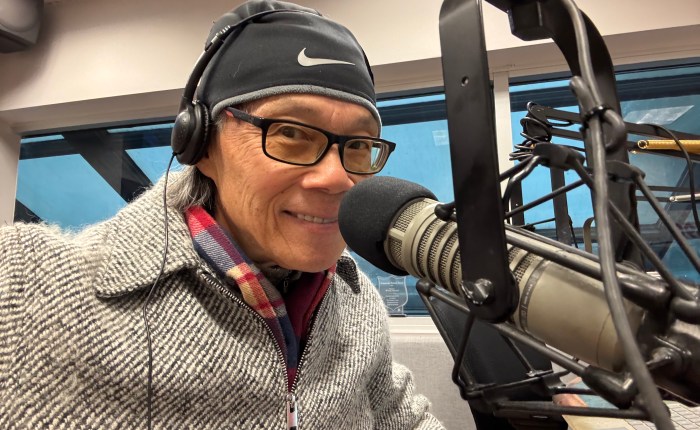
As a writer, author, and frequent radio guest, I’m very mindful of the difference between speaking one’s mind and wielding one’s tongue like a weapon. Proverbs warns that reckless words pierce. They cut deeper than intended. They leave wounds long after the speaker has moved on. When such words come from the presidency, they do more than wound individuals—they shape the moral atmosphere of the nation.

This is the tension many thoughtful citizens feel. We want candor without cruelty. Honesty without hatred. Conviction without contempt. These are not incompatible virtues, but they require wisdom—and wisdom is precisely what Proverbs elevates above raw power.

“The tongue of the wise brings healing.”

Healing does not mean agreement. It does not mean pretending differences don’t matter. It does not even mean withholding criticism. It means recognizing when a moment calls for restraint rather than rhetoric. It means knowing that grief is not a platform and death is not a talking point.

Rob Reiner was a fierce critic of Donald Trump. He was relentless, provocative, and unapologetic. But even fierce opponents deserve dignity in death. If “hate the sin, love the sinner” is more than a slogan, it must apply most clearly when someone can no longer answer back.

We live in a culture that rewards outrage and mistakes humility for weakness. Social media trains us to respond instantly, not wisely. But presidents are not influencers. They are stewards—not only of power, but of language. The words spoken from that office carry disproportionate weight. They can calm a nation or inflame it. They can heal or they can pierce.

And swords, Scripture reminds us, always cut deeper than expected.

Donald Trump has often cast himself as a defender of those who feel unheard. That role carries moral gravity. It also carries responsibility. One cannot champion dignity for some while dismissing it for others, especially in moments of irreversible loss.

This is not about hating Donald Trump. It is not about loving him either. It is about loving the presidency enough to say: this mattered. Words mattered. The moment mattered. The office mattered.

A nation can survive bad policies. It can recover from flawed leadership. What it cannot tolerate is the erosion of empathy from the highest office in the land.

Proverbs 12:18 leaves us with a choice. We can pierce, or we can heal. We can speak quickly, or we can speak wisely. We can cheapen the presidency—or we can honor it by demanding better from those who hold it.

I still believe the office means something.

That is precisely why this moment did too.

Dr. John Huang is a retired orthodontist, military veteran, and award-winning author. Currently serving as a columnist for Nolan Group Media, he invites readers to follow him on social media @KYHuangs. Explore his latest, “Whining For Posterity,” and all his books at https://www.Amazon.com/stores/Dr.-John-Huang/author/B092RKJBRD

The House Always Wins

The House Always Wins

What good is it for someone to gain the whole world, yet forfeit their soul?

Remember when the worst thing to happen in a basketball game was Perry Stevenson goaltending a free throw or Christian Laettner stomping on someone’s chest? Those were simpler times. Now we’ve got Chauncey Billups and Terry Rozier being investigated for sports gambling.

Welp, shame on us. We got what we asked for.

When we opened the floodgates to legalized sports betting, we were told it would be harmless fun—a way to “enhance fan engagement.” The marketing geniuses promised us responsible wagering, clean oversight, and a little extra tax revenue for our schools. What we actually got was a nation of addicts-in-training, daily fantasy junkies, and people screaming at their phones during the fourth quarter of a meaningless midweek NBA game because they needed one more rebound to hit the over.

And yes, I get it. Gambling itself isn’t inherently evil. It’s not like betting on Kentucky to cover the spread automatically condemns your soul to perdition. But let’s not pretend we didn’t invite the devil in when we started normalizing this stuff as if it were just another harmless hobby.

I know because I’m wired that way myself. I’ve got an addictive personality. Always have. I still remember the euphoric rush of winning my first NCAA tournament bracket—strutting around like Einstein in sneakers because I had correctly predicted some 11-seed Cinderella run to the Sweet 16. Then came fantasy football. Oh, the sweet taste of victory on Monday night! I’d sit there with one player left in the lineup, calculating yards and touchdowns like a Wall Street trader watching his stock portfolio. When my guy scored, I’d practically levitate off the couch.

You see, that’s the problem. It’s never enough. You always want a little more action, a little bigger hit of adrenaline, the proverbial dopamine rush. For people like me, that’s a slippery slope. One day you’re betting a friendly five bucks with your buddies; the next day you’re mortgaging the house because the Bengals can’t possibly blow another lead.

The truth is, gambling can ruin lives. It destroys families, wrecks bank accounts, and turns decent people into liars and thieves. It feeds on desperation and ego—the belief that you can beat the odds, that you’re smarter than the system or your neighbor down the street, that this next parlay will finally get you even. Spoiler alert: the house always wins.

And when that “house” happens to be tied to the integrity of our sports, that’s when things really go south. If you can’t watch a game without wondering whether the ref’s call was clean, or whether the player missed that shot on purpose, what are we even cheering for? The beauty of sports has always been its purity—hard work, skill, competition. Gambling muddies that. It injects suspicion where there should instead be joy.

Money, of course, is the root of it all. It always is. Money draws in the riff raff, the hustlers, and the shadowy figures waiting in the alleys of every major sports scandal. Organized crime didn’t just disappear when we legalized betting; it just put on a nicer suit and opened an app. The lure of easy cash will always attract those looking to exploit the system—and sadly, some of those people will have locker room access.

When I was growing up, sports were an escape from the mess of the world—a pure and noble pursuit of excellence. Now they’re just another line item in somebody’s betting portfolio. Every pitch, every possession, every field goal attempt is a potential profit or loss. Even the broadcasters can’t resist dropping the over/under like it’s part of the game itself.

And while we’re pointing fingers, let’s not forget the sports radio guys who spend half their shows preaching about “responsible gambling” while the other half reading ad copy for the very apps causing the mess. Spare me the sanctimony. You can’t sermonize about integrity one minute and then tell me to “hammer the over” with a promo code the next.

I’m not naïve. I know you can’t unring the bell. Gambling is here to stay. The toothpaste is out of the tube, and no amount of moral handwringing is going to put it back. But we can at least be honest about what it’s doing to us. For every “responsible gamer” out there treating it like entertainment, there are dozens more suckers sinking deeper into the quicksand.

I suppose it’s fine if you know your limits—if you can place a small wager and walk away without checking your phone every five minutes. But for most people, those limits blur over time. The lines between fun and fixation disappear, and before long, you’re chasing losses like Calipari after Covid.

So yeah, when I hear about Chauncey Billups and Terry Rozier getting tangled in the gambling web, I’m not shocked—I’m sad. Sad for them, sad for the sport, sad for the fans who still believe in fair play. Because the more this stuff spreads, the more we risk losing what made us fall in love with sports in the first place.

I’m not preaching here. Like I said, I’m as susceptible as anyone. If gambling apps had been around when I was younger, I might have been one of those guys refreshing DraftKings under the table during Sunday service. (I’m joking… mostly.) But maybe that’s why I’m so wary of it now. I know how easy it is to get hooked, how quickly something innocent can become destructive.

So as these investigations unfold, I’ll be watching—not for the point spreads or the odds, but for the soul of the game itself. Because if we keep going down this road, if we keep letting money and manipulation call the shots, one day we might wake up and realize the thrill is gone. The joy’s been replaced by suspicion, and the purity of the game by the price of the bet.

And when that happens, it won’t matter who wins or loses. The house will have already won.

Dr. John Huang is a retired orthodontist, military veteran, and award-winning author. Currently serving as a columnist for Nolan Group Media, he invites readers to follow him on social media @KYHuangs. Explore his latest, “Whining For Posterity,” and all his books at https://www.Amazon.com/stores/Dr.-John-Huang/author/B092RKJBRD

Let Freedom Ring

Let Freedom Ring

I first penned this essay back in April of 2019. It still remains one of my favorite pieces. Happy Birthday, America!

Final Four? I don’t care. I guess I’m a sore loser. The minute Kentucky gets eliminated in the NCAA tournament, I just want to get as far away from basketball as possible. In 2017, right after UNC’s Luke Maye sent the Wildcats prematurely packing, I immediately started packing for my own trip to Turks and Caicos. When Kansas State upset the Big Blue a year later, I booked the first flight out for the Florida Gulf Coast. In 2019, unfortunately, I headed out early again—to someplace far away from Minneapolis, where I could put overtime losses to Bruce Pearl completely out of sight and out of mind.

You see, less than twenty-four hours after returning from the disappointment in Kansas City, I was stuffing my suitcase for Washington, DC. I’ve been there many times over the course of my lifetime, but never while the cherry blossoms were in full bloom. I was killing two birds with one stone on this trip—making my wife happy and NOT watching basketball during the first weekend in April.

Ah, the memories came flooding back. My first visit to our nation’s capital was with my mom and dad back in the mid-1960s. As newly minted, starry-eyed, first-generation immigrants from China, my parents wanted to show firsthand—to their number one son—the sights and symbols representing their personal pursuit of the American dream. Where better than Washington, DC, where founding fathers and freedom fighters named Washington, Jefferson, and Abraham Lincoln stood sentinel over democracy? Granted, I was only six years old at the time, but something deep down inside of me still resonated with this Land of Opportunity. Even back then, the inalienable rights of life, liberty, and the pursuit of happiness sounded pretty darned good to me.

I returned to DC again in the early 1980s, this time as a recent college graduate, indoctrinated with the liberal agenda and misguided cynicism flowing out of all university campuses. The city had a different vibe for me this time around. Thoughts of American imperialism, social injustice, and racial inequality sadly replaced the wide-eyed innocence of my earlier visit. With malice towards none; charity for all suddenly became a slogan that pipedreams were made of. Not going to happen in this America, I surmised at the time.

I returned to Washington again in the early 1990s, a thirty-something professional with a beautiful wife and one-year-old daughter in tow. Ten years in the military with a stint living overseas, and my thoughts on America had changed. The good ole’ USA was now all about capitalism—making a buck, keeping up with the Joneses, and paying off your mortgage. To me, DC represented all that was worth striving for—the money of the Federal Reserve, the power on Capitol Hill, and the status of the West Wing. I have a dream. It was a different dream than Dr. Martin Luther King had, but it was my dream, nonetheless.

And now, nearly three decades later, I’m back again—armed with a lifetime of experiences and a bucketload of supposedly new wisdom. It’s somewhat bittersweet. My mom has since passed, my daughter is all grown up, and I’ve been retired and put out to pasture. On a beautiful sunny weekday morning, I stroll leisurely along the National Mall, with plenty of time to ruminate about life’s regrets, growing old, and what America has meant to me.

Over a half a century as a naturalized American citizen gives me a perspective grounded mostly in gratitude. I’m grateful for many things—a fine education, access to health care, and languorous walks with my dog. But as I pause in front of all the different war memorials, I realize that the thing I’m mostly grateful for in America is freedom. Freedom to speak, write, gather, and worship as I choose. The United States of America still has its faults, but in terms of individual freedom, it remains the greatest nation on the face of the earth.

Walking up the steps of the Jefferson Memorial, I’m reminded that with freedom comes responsibility. Freedom isn’t free. Many have died fighting for it. “May we think of freedom, not as the right to do as we please, but as the opportunity to do what is right.” (author unknown)

Our Founding Fathers got it right in the beginning. “We hold these truths to be self-evident: that all men are created equal, that they are endowed by their Creator with certain inalienable rights, among these are life, liberty, and the pursuit of happiness…” May Washington, DC, remain forever a bastion of liberty and a beacon for democracy. Let freedom ring!

By the way, the cherry blossoms were beautiful in April. My wife is happy. Final Four? Who does Duke play again?

Dr. John Huang is a retired orthodontist, military veteran, and award-winning author. Currently serving as a columnist for Nolan Group Media, he invites readers to follow him on social media @KYHuangs. If you enjoy his writing, please check out his newest book, “Whining for Posterity,” available here: https://www.amazon.com/dp/B0FDLCGR1P

Don’t You Dare Trash Our UK Degrees

Don’t You Dare Trash Our UK Degrees

Today was a big day.

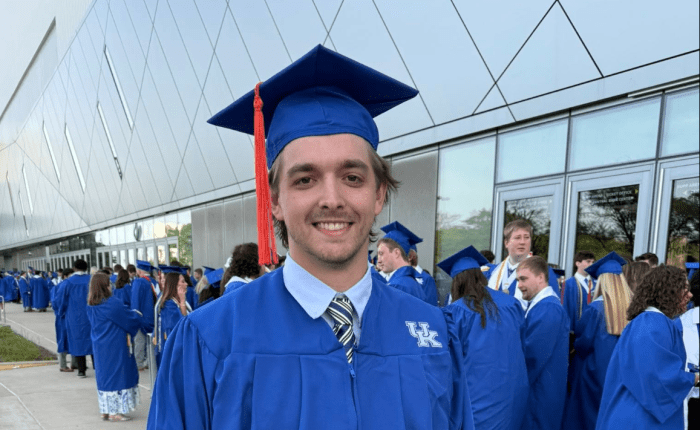
My nephew, Griffin Shively, walked across the stage at the University of Kentucky commencement ceremonies. Not only did he officially extend the growing line of Huang Family academic nerds, but he also followed in the hallowed footsteps of my dear old dad with a coveted engineering degree. Needless to say, the whole family is quite proud of Griffin.

There’s been a lot of talk over the years about the value of a college education—especially one from the University of Kentucky. As someone who spent eleven years chasing after a bachelor’s, master’s, and doctorate degree from my beloved alma mater, I feel uniquely qualified to set the record straight.

Remember when former Wake Forest center Olivier Sarr was considering a transfer to Kentucky? Demon Deacon head coach Steve Forbes started a firestorm by posing the question, “Why would you want to go to Wake for three years and then graduate from a place like Kentucky?”

Of course, Forbes was just trying to be cute…and I thought his quip was humorous. Unfortunately, it just wasn’t true.

During my decade in the military, I worked side by side with individuals with degrees from all different institutions of higher learning, and I’ll put my UK diplomas up against any of theirs. My education at the University of Kentucky served me as well or better than anything Wake Forest, Duke, or any of the Ivy League schools could dish up for that matter. When you throw in the value my parents received for in-state tuition, an argument could be made that I finished head and shoulders above any of those elitist snobs.

For athletes headed for professional glory, where they get their degrees really won’t matter. After all, they’ve got their sights set on that lucrative NBA or NFL contract. But for the rest of us—for the hardworking students and student-athletes who graduated this week—that University of Kentucky degree represents years of sweat equity and life-changing opportunity.

In the high-profile college sports of basketball and football, the value of an athletic scholarship frequently gets taken for granted. A half million dollars’ worth of room and board, books, top-flight medical care, academic counseling, first-class travel, fancy hotels, and gourmet food can easily get lost against the backdrop of potential money gained from name, image, and likeness. Throw in future earnings at the next level—and for someone like Otega Oweh and his rising basketball superstardom—the world truly is their oyster.

But for the rest of us regular folk, a college degree can make all the difference between financial success or failure. I don’t care how fast you can run or how high you can jump, student-athletes who remain serious about academic performance and grades will ultimately be rewarded seventy times seven.

Despite all the hullabaloo surrounding NIL and Pay-for-Play, my UK degrees remain my life’s most valuable assets.

So, congratulations are in order for all the UK students and student-athletes receiving their degrees during this academic year. They’re all in possession now of that treasured blue sheepskin.

Each and every one of them graduating from “a place like Kentucky.”

Well, I’ve got news for Coach Forbes. As one of my dental school instructors used to tell me, “It doesn’t matter which bus you ride, it’s the destination that’s important.”

We all punched our ticket on the Big Blue Bus. Griffin and I plan to keep riding for a long, long time.

Dr. John Huang is a retired orthodontist, military veteran, and award-winning author. Currently serving as a columnist for Nolan Group Media, he invites readers to follow him on social media @KYHuangs. For more whimsical and opinionated posts like this, be sure to check out his latest book project, “Whining for Posterity.” Explore his debut novel— “Name, Image, and Murder”—and all his books at https://www.Amazon.com/stores/Dr.-John-Huang/author/B092RKJBRD

YMCA Blues: He is Risen—And So Is My Blood Pressure

YMCA Blues: He is Risen—And So Is My Blood Pressure

Young man, there’s no need to feel down
I said, young man, pick yourself off the ground
I said, young man, ’cause you’re in a new town
There’s no need to be unhappy

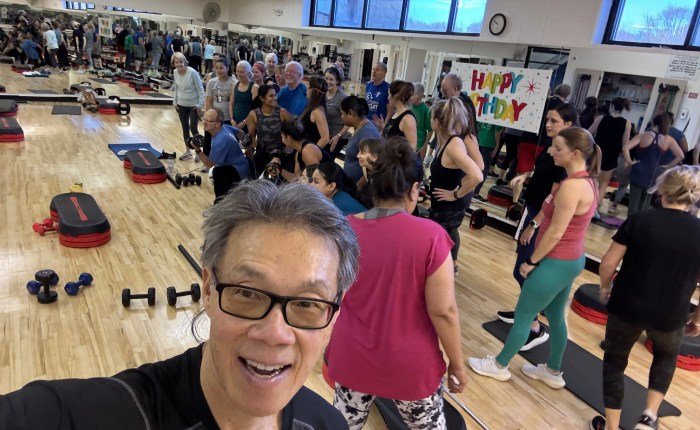
With all due respect to the Village People, I am by no means a young man—but I’ve nevertheless fallen head over heels for my local Y.M.C.A. These days, I’m practically living at the Beaumont branch. Now that I’m retired and officially in the Medicare club, I get free membership with my supplement plan. And boy, have I been milking that perk for all it’s worth.

On most weekday mornings, you’ll find me at the “Y” for a solid three hours. I’ve got my routine down pat—40 minutes of cardio on the treadmill or elliptical, a 50-minute weight training class, and then an hour of stretching and mobility work through either Mat Pilates or Yoga. And you wonder why I can eat like a horse and not gain an ounce. Truth be told, I’m leaner, meaner, and more flexible than ever. For the first time in my life, I can touch my toes without bending my knees. Woohoo!

In addition to all the physical benefits, I’ve also come to enjoy the social interactions that come with my membership privileges. The Beaumont staff are always super friendly, and there’s definitely something uplifting when engaging with fellow like-minded retirees who prioritize their health.

After having said all that, there is one teeny-tiny beef I have with the Y. Actually, it’s not so itsy-bitsy in my mind. Honestly, it’s a HUGE, GARGANTUAN beef. It drives me so crazy that I’m in the midst of a one-man crusade. At the minimum, the perpetrators should be sentenced to an eternity of endless burpees or sent to a silent yoga retreat in Siberia. Just thinking about their egregious offenses has sent my blood pressure soaring.

By now you’re undoubtedly thinking, I’ve got some serious issues—but here’s my complaint: Too many idiots are breaking the Y’s noise regulations.

Let me explain. Displayed prominently throughout the facility are the YMCA’s fitness floor behavioral guidelines.

Guideline No. 4: Please use courteous phone etiquette by refraining from loud phone conversations. Avoid using your cell phone while on equipment or resting on the machine between sets.

Guideline No. 6: Please use earbuds or headphones when listening to personal music devices.

Seems simple enough, right?

And yet, every single day I bear witness to the same recurring crimes against humanity: Loud phone calls about drama at work. YouTube videos blaring at 120 decibels. Full-blown coffee shop conversations between neighbors on side-by-side treadmills. Huffing, puffing, coughing, grunting—all of it flooding across the floor like a bad case of uncontrolled diarrhea.

Okay, I know it’s totally irrational for me to go apesh*t when I see someone committing blatant violations. I understand that they’re just guidelines. But for whatever reason, I just can’t restrain myself.

Look, I enjoy a warm hello and the occasional life update as much as the next guy. If it’s been a while since we’ve connected, by all means, tell me about your grandkids or your latest trip to Palm Springs. I don’t even mind updates regarding your most recent hip replacement. But let’s not turn a public gym into your personal podcast studio. I’m not your therapist or your captive audience. I’m trying to meditate, to breathe, to recite God’s word and memorize Scripture.

The treadmill, for me, is holy ground. Not only am I cruising in my target heart rate zone, but I’m also fine tuning my mind. I can’t focus and concentrate if you’re shamelessly regurgitating out loud.

Hey, I get the irony. Not very Christian of me, you say. I don’t care. Rules are rules! NO TALKING! OBEY OR GET OUT!

I know, I know—ranting about cell phone etiquette hardly seems like the path to holiness. But even in the gym, spiritual discipline matters. And wouldn’t you know it, the Bible has a few things to say about loud mouths and loose lips:

“Everyone should be quick to listen, slow to speak and slow to become angry, because human anger does not produce the righteousness that God desires.” –James 1:19-20

“When words are many, transgression is not lacking, but whoever restrains his lips is prudent.” –Proverbs 10:19

“But no human being can tame the tongue. It is a restless evil, full of deadly poison.” –James 3:8

“Whoever guards his mouth preserves his life: he who opens wide his lips comes to ruin.” –Proverbs 13:3

“The words of the wise heard in quiet are better than the shouting of a ruler among fools.” –Ecclesiastes 9:17

Okay, I feel better now. I’m good.

So, this Easter, whether you’re in church or at the gym, may your spirit be renewed, your phone silenced, and your neighbor blessedly quiet. He is risen—hallelujah! Now please, for the love of all things holy…

Stop talking on the treadmill.

Happy Easter.

Dr. John Huang is a retired orthodontist, military veteran, and award-winning author. Currently serving as a columnist for Nolan Group Media, he invites readers to follow him on social media @KYHuangs. Explore his debut novel— “Name, Image, and Murder”—and all his books at https://www.Amazon.com/stores/Dr.-John-Huang/author/B092RKJBRD

Press Box Humor is No Joking Matter

Press Box Humor is No Joking Matter

It’s kind of scary when you think about it. In this ever-colliding world of social media and political correctness, we’re all just one mis-uttered word away from crashing and burning. Just ask Thom Brennaman.

By now, everyone has heard the replay of the Cincinnati Reds broadcaster using a homophobic slur during his call of the Reds versus Kansas City Royals game last week. The fact that Brennaman didn’t know the mic was hot doesn’t really matter. Nor does the fact that he issued an apology shortly thereafter. The damage was done. You can’t put the toothpaste back in the tube. As far as his career with the Reds is concerned, most people I’ve talked to think he’s toast.

But should society be so quick to judge? What about forgiveness? In my new gig working with people in the broadcasting profession, I’ve learned that everyone brandishing that microphone is nowadays acutely aware of slipping up and saying something stupid, vulgar, or offensive—spewing out an on-air comment so galling that it costs them their career.

I’m not here to defend Thom, but there is a culture among media people that’s similar to a locker room. I’ve felt it personally in the press box. Everyone, including myself, wants to belong—to be accepted as one of the boys. As you know, for an announcing team to “click,” there has to be a natural camaraderie between the participants in the broadcast booth. It’s why we all tune in to Tom Leach and Jeff Piecoro calling the Kentucky games. They’ve developed that in-studio comfort level that Dick Gabriel of Big Blue Insider explained to me the other night on his show. It’s the same comfort level banter between Michael Bennett and Shannon the Dude that makes our Just the Cats hour so entertaining.

“What comes on in broadcast booths during commercial breaks is at times like a locker room,” confirmed Alan Cutler, my soon-to-be published co-author, and the former long-time host of the Cincinnati Bengals Radio Network. “Sometimes it’s very funny. And sometimes there are things said that shouldn’t be said. I’ve never heard anything like what Thom said, but I’ve heard plenty of things that NEVER could be broadcast.”

Regardless, Thom should have known better. His actions were wrong and what he said was not funny and deeply offensive. He probably got a bit too comfortable in his exalted status as Reds radio kingpin and thought he was above the law. He suddenly forgot that it’s now 2020 and not 1984. Times have changed, and multiple segments of American society remain ready to pounce at the slightest provocation. As Governor Andy has scolded us all ad nauseum during the pandemic, “You cant’ be doing that.”

So what do we make of all of this? Thom says that he’s a man of faith. So am I, and so are many of you who are reading this. Should we forgive him? The Bible tells us “forgive, and you will be forgiven.” But more importantly, it also challenges us to do better. “Let us not love with words or speech but with action and in truth,” said the Apostle John. Action and truth is the only way we can bring proper healing to this divisive mess of a country we’re in.

In his on-air apology, Thom claims that’s not who he is. Well, then show us—not with mere empty spoken words, but with sincere heartfelt action. Because we don’t really know what’s in his heart, Thom needs to do something radically productive to make a difference. He can apologize all he wants to his bosses and his fans, but he has to first reach out and embrace the LGBTQ community in some unprecedented way. He has to act in a manner which earns their forgiveness and demonstrates his repentance before a righteous God. After all, if you don’t show love to others, then you’re not a true Christ follower.

Thom has a ton of equity in the professional bank. He’s worked as a successful broadcaster for Fox Sports for nearly two decades. He has a strong family pedigree and a personal reputation to match. If he can now just humble himself to act in a fashion that earns him kudos directly from the community he has disparaged, it’ll be a heck of a lot easier for everyone else watching on the sidelines to forgive him also. If sincere, it’ll also go a long way toward personal redemption and restoring his professional life.

It’s his move. I’m hopeful he can do it. We should all be cheering him on.

Thanks to Pastor Randy Maynard for always keeping me accountable walking my talk, and for reminding me constantly of the powerful reach of a sports related platform. If you enjoy my writing, you can read more at JustTheCats.com, NolanGroupMedia.com, or follow me on Twitter @KYHuangs.