An Oak of Righteousness

An Oak of Righteousness

“But the wisdom that comes from heaven is first of all pure; then peace-loving, considerate, submissive, full of mercy and good fruit, impartial and sincere.” – James 3:17

You can read Dr. Tom Cooper’s obituary if you want the facts. https://www.milwardfuneral.com/obituaries/Dr-Thomas-M-Cooper?obId=46963575

You’ll learn where he studied, what he accomplished, how many students he taught, how many lives he touched in the official, measurable ways that look good on paper and sound impressive when read aloud. All of it is true. All of it matters.

But none of it explains why his passing yesterday saddened me in ways that words simply can’t adequately express.

Dr. Cooper was one of my mentors. In dental school, yes. But also in Sunday School, which, as it turns out, may have been the more important classroom. In both settings, he did something meaningful: he paid attention to people. Not just the impressive ones, nor the loud ones, nor the future rising stars—but to every ordinary Joe like me who showed up wanting to learn.

In dental school, it’s easy to think teaching is about brilliance—how much you know, how fast you can correct someone, how efficiently you can expose ignorance. Dr. Cooper never taught that way. He had an unhurried confidence, the kind that didn’t need to prove anything. When he spoke, you leaned in—not because he demanded attention, but because you were curious about what he had to say.

He didn’t just teach dentistry. He taught students.

And then there was Sunday School—where he taught life.

Long before I ever stood in front of a class or a congregation, I watched him do something deceptively simple and profoundly wise. He didn’t teach the lesson he wanted to teach. He taught the lesson we were ready to hear.

One Sunday, probably sensing my early, unpolished enthusiasm for teaching, he gave me a piece of advice that has followed me through every single speaking engagement—whether radio broadcast, packed classroom, or that awkward circle of folding chairs when only two people showed up:

“Take the class where they want to take you.”

It sounds almost too gentle to be revolutionary. But it is.

What he meant was this: teaching isn’t about dragging people to where you think they should be. It’s about honoring where they already are. It’s about listening long enough to hear the questions beneath the questions. It’s about understanding that people don’t need your brilliance nearly as much as they need your presence.

That lesson shaped me more than any syllabus ever could.

It kept me from preaching at people when I should have been walking with them.
It kept me from filling silence when I should have been letting it speak.
It kept me from confusing authority with influence.

Dr. Cooper never chased the spotlight. He didn’t need it. His faith was sturdy, quiet, and deeply rooted. The Bible calls that an “oak of righteousness, a planting of the Lord for the display of His splendor.” That phrase fits him perfectly—not flashy, not brittle, not swayed by every new wind of opinion.

Just solid. You leaned on Dr. Cooper without realizing it. And only when he’s gone do you feel how much weight he was carrying for others.

I don’t remember every lesson he taught. I don’t remember every Scripture he unpacked or every clinical pearl he dropped in passing. But I remember how he made me feel: seen, capable, invited.

That’s the kind of teaching that lasts.

If there’s a classroom in heaven, I suspect he’s there already, smiling patiently, waiting for the rest of us to catch up. And if I’m lucky, when I finally walk in, he’ll give me that same gentle reminder one more time:

“Take the class where they want to take you.”

Because that’s where the real learning happens.

Dr. John Huang is a retired orthodontist, military veteran, and award-winning author. Currently serving as a columnist for Nolan Group Media, he invites readers to follow him on social media @KYHuangs. Explore his latest, Whining For Posterity, and all his books at Amazon.

Discover his next scheduled teaching event here: Man Up – Men’s Ministry Retreat – St. Luke Church | Lexington, KY

Fifty Years After Unspeakable Tragedy, Thundering Herd Charges On

Fifty Years After Unspeakable Tragedy, Thundering Herd Charges On

It’s now November 14, 2025–fifty-five years since that unspeakable tragedy. Randy Maynard and Mike Hamrick have moved on to new positions, but their love for Marshall University remains unshakably steadfast.

(LEXINGTON, Ky. November 14, 2020) – The Covid-19 pandemic has turned our sporting world upside down. As die-hard fans, we’re all sick and tired of this invisible pathogen messing with the games we love. Even as mandatory masks, routine testing, and socially distanced stadiums have become the norm, everyone should be quick to realize that it’s not the first time a harbinger of evil has punched us squarely in the face.

Certainly, the events after 9/11 made us all feel vulnerable. Terrorist attacks, assassination attempts, and political upheaval can cripple a nation with fear. Likewise, natural disasters—such as Hurricane Katrina or the 1989 San Francisco earthquake—can scramble our game-day priorities. Even something as surreal as the O.J. Simpson saga can easily invade, disrupt, and destroy our collective sports psyches more than we care to admit.

Having lived through all of the above, one of the most impressionable off-the-field sports tragedies of my generation occurred nearly fifty years ago—just a short two-hour drive from Lexington—directly east on I-64. Seminal moments such as these can shatter you to the core—forcing you to think about your mortality, your purpose, and the sanctity of life on earth.

Pastor Randy Maynard, Marshall University Class of ‘79, and one of the most passionate Thundering Herd supporters around, still speaks about that fateful day with a quiver in his voice.

“We wanted everyone to be OK,” Maynard painfully recalled. “But it turned out not to be the case.”

November 14, 1970—Horror

On November 14, 1970, Southern Airways Flight 932, a McDonnell Douglas DC-9 chartered by Marshall University, crashed a mile short of the runway at Tri-State Airport in Kenova, West Virginia. On board was the Thundering Herd football team, including 36 players, five coaches, 19 administrative and staff personnel, 10 prominent boosters, and a flight crew of five. The entourage was returning home from Kinston, North Carolina, after a 17 – 14 homecoming loss to the East Carolina Pirates.

Pilot Frank Abbott had never flown into Tri-State Airport. It was a rainy and foggy evening when the plane approached the runway. According to the National Transportation Safety Board, the airport did not have any equipment that would warn incoming pilots about low-altitude dangers.

With an estimated 300 feet of cloud cover, Abbott misjudged the plane’s altitude. The jet clipped the top of some trees, then hit a hillside, cartwheeled and exploded into flames.

All on board were instantly killed. Six bodies were charred beyond recognition and could never be positively identified.

“Ten feet higher and the plane would have made it,” NSTB chairman John D. Reed said at the time. “That’s all it needed.”

The accident remains the worst sports-related air tragedy in U.S. history.

Maynard, who grew up in Kenova, West Virginia, was a 17-year-old high school senior when he heard about the crash while attending a United Methodist Youth Fellowship event in Huntington. He received a call from his father telling him the Marshall plane had crashed—and that it looked to be an awfully bad accident. Immediately, Maynard and his best friend, Randy Adkins, began to pray, not knowing at the time that everybody on board had already perished.

“When the report came out at midnight that there were no survivors, I was overcome with emotion,” Maynard recounted. “There was an almost unbearable sense of grief and sadness.”

Mike Hamrick was thirteen when he heard the news. He and some buddies had just returned from an afternoon movie. They were in a local restaurant eating quarter hotdogs, drinking ten-cent cokes, and playing the pinball machines when an alert flashed across the television set.

“I can remember it like it was yesterday,” Hamrick said. “I looked up at the TV and it scrolled across the bottom that there had been a plane crash. I didn’t think much about it at first, but then when I found out [the crash] involved the Marshall University football team, I went, ‘OH NO!’”

Upon returning home, Hamrick heard his father sobbing on the telephone. His dad was the local football coach at Herbert Hoover High School in Clendenin, West Virginia. He had just received the official news that several people he knew—including one of his former assistant coaches—had perished in the crash.

“It was the only time I’ve seen my dad cry,” Hamrick recalled.

Almost everybody in Huntington knew somebody on that plane. Several of the players who died were married, some were engaged, and one was a soon-to-be parent. In an unbelievably cruel twist of fate, his child was born on the very same day he was buried. Unfathomably, several young people in the community lost both sets of parents. Those escaping heartbreak were stricken with a sense of survivor’s guilt—left wondering why they were spared while so many of their friends, colleagues, and loved ones were so indiscriminately taken away.

Mary Jane Tolley, wife of head coach Rick Tolley, usually traveled on these road trips. On this particular occasion, she was advised to stay home in order to care for her ailing German shepherd. Her life was spared, but in one fell swoop, the world around her was permanently shattered. She lost not only her husband, but 25 good friends in that one ghastly moment.

The Marshall cheerleaders were allotted a limited number of seats on the flight. They decided that since not all of them could go, then none of them would go. They all bypassed the flight, but they were haunted for years by the nightmares that followed.

Time would do little in soothing their wounds.

November 14, 2000—Catharsis

To understand the long-lasting impact the tragedy had on those in the Marshall community, let’s fast forward to the year 2000—a full thirty years after the fateful crash. Now a proud Marshall alumnus, Randy Maynard ironically found himself pastoring a church just outside of Greenville, North Carolina—the site of East Carolina University, the same school Marshall played just hours before the horrifying air disaster. He decides to write an article about the 30-year anniversary of the Marshall plane crash for the Greenville Daily Reflector newspaper.

“It was cathartic for me,” Maynard answered, when I asked him why he felt compelled to write about an event that happened three decades earlier. “I needed to put down on paper events surrounding the crash and about what had transpired. I actually felt like that God had placed me in Greenville, North Carolina, because of my connection to the tragedy. I know that may sound crazy to a lot of people, but I truly felt that. There were two members in my congregation that played in that game against Marshall, and I was able to somehow minister to them.”

What many don’t realize is how many people from East Carolina were similarly affected by the tragedy. Sadness and sorrow of that magnitude cannot easily be contained. Maynard sensed that pain of that intensity had already spread well outside the Marshall family and would not necessarily dissipate with time. Even today, he hears story after story from opposing players, coaches, and fans who witnessed that game telling him how stunned they were upon hearing the news of the crash and how they still struggle to reconcile the horrible events of that day.

As Maynard continued to do research for his article, he’s introduced to Mike Hamrick, who just serendipitously happens to be the East Carolina Pirates’ athletics director at the time. Like Maynard, Hamrick was also a fellow Herd alumnus by then, so the two naturally hit it off by talking about anything and everything related to their mutual college experience. Hamrick had played linebacker for the Herd from ’76 through ’79, and was recruited by Coach Jack Lengyel—only five short years after the resurrection of the program—at a time when many questioned whether Marshall should have even been fielding a football team.

Leading up to the plane crash, Marshall had not had a winning season since 1963. At one point, they went 27 consecutive games without a victory. Some well-intentioned boosters and alumni subsequently broke NCAA rules in trying to secure some additional victories. In 1969, the school was placed on probation for more than 140 recruiting violations and kicked out of the Mid-American Conference. With the daunting prospect of starting from scratch after the crash—and the specter of probation still hanging over their heads—it’s understandable why some in the Marshall family wanted to stop playing football altogether.

“If Marshall had stopped playing football, it would have meant those in the plane crash would have died in vain,” Hamrick told Maynard in the 2000 newspaper story. “Even though we did not have much success at Marshall, each time we stepped on the field we knew we were playing for those that had their lives tragically shortened. Playing at Marshall taught me so much about not ever quitting. In the grand scheme of things, what we accomplished while I was at Marshall set the stage for the success the program is enjoying now.”

Of course, that success began with Jack Lengyel, portrayed by Matthew McConaughey in the 2006 Hollywood production We Are Marshall. Hired on in 1971 as the coach to literally and figuratively rebuild a football program from the ashes, Lengyel took four holdovers (who fortuitously didn’t make the trip to Greenville), some walk-ons, some ex-service men, some transfers, and a team of freshman (granted a special NCAA exemption to play that year)…and miraculously molded them into a serviceable unit.

To the amazement of many, Lengyel’s “Young Thundering Herd” won its second game of the 1971 season, beating Xavier 15 – 13 on the game’s last play. As expected, the team that year also suffered some lopsided defeats, but it did manage to rack up another improbable 12 – 10  win against a Don Nehlen-coached Bowling Green team later in the campaign.

There were some extremely rocky seasons for Marshall during that first decade of rebuilding, but by the mid-1980s, the Herd was on a roll. From 1986 through 2004, Marshall never had a losing season. During that period, they also moved successfully from Division I-AA to I-A. The school had the best record of any Division I football team of the 1990s, amassing a total of 114 victories, including two Motor City Bowl postseason wins, in that span. Randy Moss, Chad Pennington, Byron Leftwich, and Bobby Pruett—just a few of the Marshall greats responsible for such an improbable resurrection.

By 1999, the team finished undefeated at 13 – 0 and was ranked 10th in the country at the end of the season by both the Associated Press and the ESPN/USA Today coaches polls. Maynard swears he’ll go to his grave believing Marshall could have beaten Florida State, the eventual national champion, if only they had been given a chance to play that year.

November 14, 2020—Remembrance

Another 20 years go by, and the pain remains palpable.

As Marshall prepares to commemorate the 50-year anniversary of the tragedy, I caught up with both Randy Maynard and Mike Hamrick to talk about their thoughts on the significance of what happened back in 1970. In hindsight, what are the lessons they’ve gleaned?

“Marshall Football is the greatest comeback story in the history of college athletics,” Hamrick told me proudly. “Your whole team—coaches, administrators, top boosters—are wiped out, and you came back and started having the success that we started having in the 80s and 90s and clear up to today. I don’t believe there’s another story like it.”

Hamrick, believe it or not, is now in his 12th season as Marshall’s athletics director. He returned home in 2009—thirty years after his playing days ended. His football alma mater enters the game on Saturday undefeated at 7 – 0, inching toward a top-10 ranking, and with one of the top-rated defenses in the country. With emotions running at a fever pitch, poor Middle Tennessee (or Alabama for that matter) surely doesn’t stand a chance.

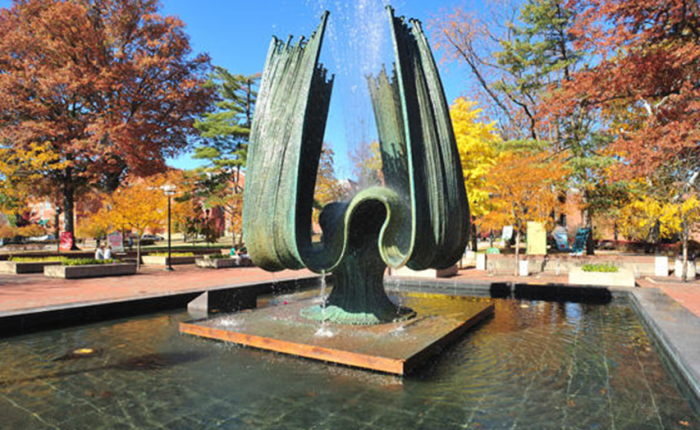
If you’re part of the Marshall family, every November 14th is emotional. This year will be no different. Hamrick’s voice will crack as usual when he gives his speech at the Memorial Fountain ceremony on the morning before the game. He’ll shed tears again when 75 roses are laid by the fountain by family members in memory of their lost loved ones.

Four East Carolina football players who played in the game just hours before the tragedy are also planning to make the trip up to Huntington to pay their respects. They wanted to come—on their own accord, with no prompting—to lay wreaths by the fountain.

Lucianne Kautz will be the featured speaker. She’s one of the cheerleaders who elected to skip the ill-fated flight. Her father, Charles Kautz, was the athletics director who lost his life in the crash, so you can bet she’ll have an exceptionally poignant message to share.

Michael W. Smith, the three-time Grammy winner, contemporary Christian musician, and Kenova, West Virginia native, will be flying up from Nashville to participate in the fountain ceremony and to sing the national anthem. “Mike” (as he’s called back in Kenova) remembers that a little over a month after his 13th birthday, his dad took him to the crash site, and he described how witnessing the smoldering flames impacted him deeply. Mike briefly attended Marshall.

In addition to all that, the University will also be adding something extra special this year. The thirty-nine players who died in 1970 never received their college degrees. On Friday, each student who perished will be honored with a posthumous degree in their program of study. How special will that be?

Seldom does a day go by that Hamrick doesn’t think about the many lives cut short by the crash. The players who perished were youngsters who never had the opportunity to live out their dreams. Those young men wore the same uniform and played for the same school that Hamrick did.

“Every time we get on an airplane and fly with that Marshall football team, I promise you, it goes through my mind what happened 50 years ago,” Hamrick confessed. “I always bow my head and say a quick prayer. If you’re a Marshall person and you know anything about November 14, 1970—which every Marshall person does—that tragedy is forever on your mind.”

“It’s our W-H-Y,” Hamrick continued. “It’s why we’re here. It’s why we do things. It’s the fabric that made this university. Unfortunately, it was a tragedy. But Marshall has embraced it, and for the simple reason to honor those and to never forget those who we lost.”

Because of that W-H-Y, the 63-year-old Hamrick never takes anything for granted anymore. He enjoys every day on the job, he appreciates his coaches more, and he cares more about his players now more than ever. He wants all of them to have a great college experience.

“Most of all,” Hamrick surmised. “What happened on November 14, 1970, helps me put everything into proper perspective.”  

Every year, the Marshall football coaches lead the team from the stadium, and they’ll go on a little run up to Spring Hill Cemetery where the six players who could not be positively identified are buried in a common grave. The coaches will then speak to the players about why the setting is so significant, why they need to remember it, and why it means so much to the community and to the family members of those who died.

You remember the scene in the movie where McConaughey/Lengyel makes his impassioned pregame speech.

“Six players, six teammates, six sons of Marshall,” he explains. “This is our past, gentlemen. This is where we have been. This is how we got here. This is who we are—today.”

Today, Randy Maynard serves as a Pastoral Care Coordinator at Centenary United Methodist Church in Lexington—one of the largest Methodist congregations in the region. He’s quick to proclaim that what transpired fifty years earlier on a fog-shrouded hillside just a mile from his home directly affected his calling into the pastorate. On that day, God placed in his heart an empathy for those who have lost people near and dear to them.

“I for sure think that God would want us to be involved in the lives of those who have lost loved ones,” Maynard solemnly reflected. “To be there for support—not necessarily with words—but to let folks know that you care, that you’ll be there for them, and that you’ll want to support them any way that you can…and especially that you’ll be praying for them.”

Maynard, who together with his wife Cindy, named one of their children “Marshall” in memory of the 75 crash victims who perished, still thinks frequently about hearing the bad news a half century earlier. Even as a man of deep faith, he still occasionally wonders about the suffering we all must endure as spiritual beings living in this earthly world.

“The plane crash made a lasting impression on me,” he said. “It serves as a vivid reminder that no one is guaranteed another minute on this earth. Hence, we are to do all we can to be in constant service and to be in close communion with our risen Savior, ready to meet him when we leave this earthly home.”

For both the preacher and the athletics director, home—for the time being—is Marshall University. They’ll be cheering like crazy this Saturday for the Thundering Herd. Two close friends sharing a 50-year memory, an unbreakable bond, and a love for a university…that arose out of an unspeakable tragedy.

“I think Marshall’s just a special place,” Maynard reiterated. “You have to be part of it to really understand it. What happened on November 14, 1970, created a deep-seated love between the University and the community that couldn’t be fabricated otherwise. It’s hard for outsiders to look at Marshall and to have the depth of passion that those who have been there have.”

In other words, “We are Marshall!”

On November 14, 2020, so too will be the rest of the sporting world.

Dr. John Huang is a retired orthodontist, military veteran, and award-winning author. Currently serving as a columnist for Nolan Group Media, he invites readers to follow him on social media @KYHuangs. Explore his latest, “Whining For Posterity,” and all his books at https://www.Amazon.com/stores/Dr.-John-Huang/author/B092RKJBRD

Don’t You Dare Trash Our UK Degrees

Don’t You Dare Trash Our UK Degrees

Today was a big day.

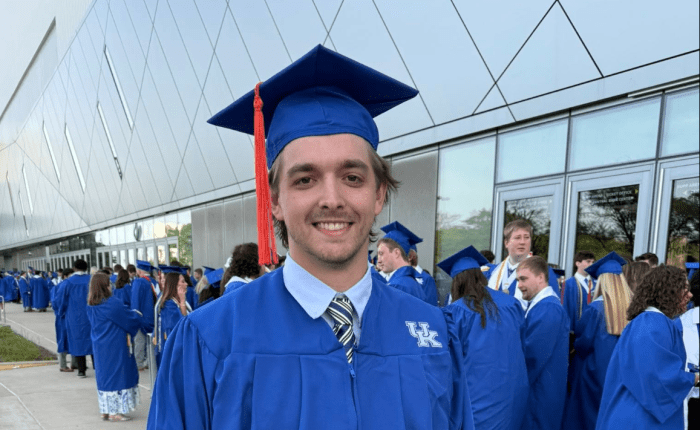
My nephew, Griffin Shively, walked across the stage at the University of Kentucky commencement ceremonies. Not only did he officially extend the growing line of Huang Family academic nerds, but he also followed in the hallowed footsteps of my dear old dad with a coveted engineering degree. Needless to say, the whole family is quite proud of Griffin.

There’s been a lot of talk over the years about the value of a college education—especially one from the University of Kentucky. As someone who spent eleven years chasing after a bachelor’s, master’s, and doctorate degree from my beloved alma mater, I feel uniquely qualified to set the record straight.

Remember when former Wake Forest center Olivier Sarr was considering a transfer to Kentucky? Demon Deacon head coach Steve Forbes started a firestorm by posing the question, “Why would you want to go to Wake for three years and then graduate from a place like Kentucky?”

Of course, Forbes was just trying to be cute…and I thought his quip was humorous. Unfortunately, it just wasn’t true.

During my decade in the military, I worked side by side with individuals with degrees from all different institutions of higher learning, and I’ll put my UK diplomas up against any of theirs. My education at the University of Kentucky served me as well or better than anything Wake Forest, Duke, or any of the Ivy League schools could dish up for that matter. When you throw in the value my parents received for in-state tuition, an argument could be made that I finished head and shoulders above any of those elitist snobs.

For athletes headed for professional glory, where they get their degrees really won’t matter. After all, they’ve got their sights set on that lucrative NBA or NFL contract. But for the rest of us—for the hardworking students and student-athletes who graduated this week—that University of Kentucky degree represents years of sweat equity and life-changing opportunity.

In the high-profile college sports of basketball and football, the value of an athletic scholarship frequently gets taken for granted. A half million dollars’ worth of room and board, books, top-flight medical care, academic counseling, first-class travel, fancy hotels, and gourmet food can easily get lost against the backdrop of potential money gained from name, image, and likeness. Throw in future earnings at the next level—and for someone like Otega Oweh and his rising basketball superstardom—the world truly is their oyster.

But for the rest of us regular folk, a college degree can make all the difference between financial success or failure. I don’t care how fast you can run or how high you can jump, student-athletes who remain serious about academic performance and grades will ultimately be rewarded seventy times seven.

Despite all the hullabaloo surrounding NIL and Pay-for-Play, my UK degrees remain my life’s most valuable assets.

So, congratulations are in order for all the UK students and student-athletes receiving their degrees during this academic year. They’re all in possession now of that treasured blue sheepskin.

Each and every one of them graduating from “a place like Kentucky.”

Well, I’ve got news for Coach Forbes. As one of my dental school instructors used to tell me, “It doesn’t matter which bus you ride, it’s the destination that’s important.”

We all punched our ticket on the Big Blue Bus. Griffin and I plan to keep riding for a long, long time.

Dr. John Huang is a retired orthodontist, military veteran, and award-winning author. Currently serving as a columnist for Nolan Group Media, he invites readers to follow him on social media @KYHuangs. For more whimsical and opinionated posts like this, be sure to check out his latest book project, “Whining for Posterity.” Explore his debut novel— “Name, Image, and Murder”—and all his books at https://www.Amazon.com/stores/Dr.-John-Huang/author/B092RKJBRD
YMCA Blues: He is Risen—And So Is My Blood Pressure

YMCA Blues: He is Risen—And So Is My Blood Pressure

Young man, there’s no need to feel down
I said, young man, pick yourself off the ground
I said, young man, ’cause you’re in a new town
There’s no need to be unhappy

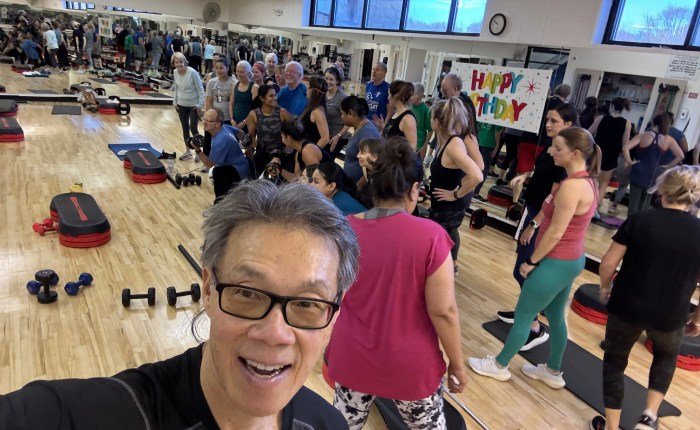
With all due respect to the Village People, I am by no means a young man—but I’ve nevertheless fallen head over heels for my local Y.M.C.A. These days, I’m practically living at the Beaumont branch. Now that I’m retired and officially in the Medicare club, I get free membership with my supplement plan. And boy, have I been milking that perk for all it’s worth.

On most weekday mornings, you’ll find me at the “Y” for a solid three hours. I’ve got my routine down pat—40 minutes of cardio on the treadmill or elliptical, a 50-minute weight training class, and then an hour of stretching and mobility work through either Mat Pilates or Yoga. And you wonder why I can eat like a horse and not gain an ounce. Truth be told, I’m leaner, meaner, and more flexible than ever. For the first time in my life, I can touch my toes without bending my knees. Woohoo!

In addition to all the physical benefits, I’ve also come to enjoy the social interactions that come with my membership privileges. The Beaumont staff are always super friendly, and there’s definitely something uplifting when engaging with fellow like-minded retirees who prioritize their health.

After having said all that, there is one teeny-tiny beef I have with the Y. Actually, it’s not so itsy-bitsy in my mind. Honestly, it’s a HUGE, GARGANTUAN beef. It drives me so crazy that I’m in the midst of a one-man crusade. At the minimum, the perpetrators should be sentenced to an eternity of endless burpees or sent to a silent yoga retreat in Siberia. Just thinking about their egregious offenses has sent my blood pressure soaring.

By now you’re undoubtedly thinking, I’ve got some serious issues—but here’s my complaint: Too many idiots are breaking the Y’s noise regulations.

Let me explain. Displayed prominently throughout the facility are the YMCA’s fitness floor behavioral guidelines.

Guideline No. 4: Please use courteous phone etiquette by refraining from loud phone conversations. Avoid using your cell phone while on equipment or resting on the machine between sets.

Guideline No. 6: Please use earbuds or headphones when listening to personal music devices.

Seems simple enough, right?

And yet, every single day I bear witness to the same recurring crimes against humanity: Loud phone calls about drama at work. YouTube videos blaring at 120 decibels. Full-blown coffee shop conversations between neighbors on side-by-side treadmills. Huffing, puffing, coughing, grunting—all of it flooding across the floor like a bad case of uncontrolled diarrhea.

Okay, I know it’s totally irrational for me to go apesh*t when I see someone committing blatant violations. I understand that they’re just guidelines. But for whatever reason, I just can’t restrain myself.

Look, I enjoy a warm hello and the occasional life update as much as the next guy. If it’s been a while since we’ve connected, by all means, tell me about your grandkids or your latest trip to Palm Springs. I don’t even mind updates regarding your most recent hip replacement. But let’s not turn a public gym into your personal podcast studio. I’m not your therapist or your captive audience. I’m trying to meditate, to breathe, to recite God’s word and memorize Scripture.

The treadmill, for me, is holy ground. Not only am I cruising in my target heart rate zone, but I’m also fine tuning my mind. I can’t focus and concentrate if you’re shamelessly regurgitating out loud.

Hey, I get the irony. Not very Christian of me, you say. I don’t care. Rules are rules! NO TALKING! OBEY OR GET OUT!

I know, I know—ranting about cell phone etiquette hardly seems like the path to holiness. But even in the gym, spiritual discipline matters. And wouldn’t you know it, the Bible has a few things to say about loud mouths and loose lips:

“Everyone should be quick to listen, slow to speak and slow to become angry, because human anger does not produce the righteousness that God desires.” –James 1:19-20

“When words are many, transgression is not lacking, but whoever restrains his lips is prudent.” –Proverbs 10:19

“But no human being can tame the tongue. It is a restless evil, full of deadly poison.” –James 3:8

“Whoever guards his mouth preserves his life: he who opens wide his lips comes to ruin.” –Proverbs 13:3

“The words of the wise heard in quiet are better than the shouting of a ruler among fools.” –Ecclesiastes 9:17

Okay, I feel better now. I’m good.

So, this Easter, whether you’re in church or at the gym, may your spirit be renewed, your phone silenced, and your neighbor blessedly quiet. He is risen—hallelujah! Now please, for the love of all things holy…

Stop talking on the treadmill.

Happy Easter.

Dr. John Huang is a retired orthodontist, military veteran, and award-winning author. Currently serving as a columnist for Nolan Group Media, he invites readers to follow him on social media @KYHuangs. Explore his debut novel— “Name, Image, and Murder”—and all his books at https://www.Amazon.com/stores/Dr.-John-Huang/author/B092RKJBRD
A Father’s Heart Smolders as California Burns

A Father’s Heart Smolders as California Burns

The Palisades fire, as seen from the roof of my daughter Katie’s Santa Monica condominium, has made the news seem all too real.

Natural disasters affecting those we know always hit closer to home.

Destructive tornados, devastating ice storms, and ravaging flood waters are frequent visitors to the citizens of our great commonwealth. As Kentuckians, we fully understand the impact Mother Nature has on the lives of our friends and neighbors, and we’re always quick to spring into action with helping hands, a much-needed donation, or loving hugs and prayers.

So, what do we make of these crazy fires out in California—these hundreds of acres that are burning as we speak out on the West Coast, which sometimes feels so far removed from our daily lives here in the Bluegrass.

Those of you familiar with my blog know that I’ve got some bona fide ties to Southern California. My daughter Katie and son-in-law CJ live in Santa Monica, I’ve got property in LA County, and I’ve kind of made the Los Angeles area part of my second home.

I’m well familiar with all the iconic landmarks, hiking trails, and neighborhoods and businesses that you’ve seen engulfed in a flaming Armageddon on CNN the past couple of nights. Of course, I’m worried about my condo burning down and not being around to sweep up the ashes, but my real angst lies in Katie and worrying about her safety.

You see, although she’s in her thirties and has always been about as independent as you can get, Katie’s still my little girl—and Daddy’s worrying while LA burns.

The fires are getting way too close for comfort. You wouldn’t think buildings located in such a densely populated area could combust so easily. I mean, it’s a literal concrete jungle with high rises, sidewalks, and endless miles of pavement. And yet, throw in some 70 mile-per-hour Santa Ana winds and a few rogue embers, and everything quickly goes up in smoke.

I feel for my daughter. To be honest, it’s always been tough having her thousands of miles away. I’ve always kind of envied those whose kids have stayed close to home. It’s one thing to call, FaceTime, and text, but sometimes you just need to drive down the street and wrap your protective arms around them—especially when potential disaster is looming.

Given the circumstances, Katie’s holding up as well as anyone could. She’s staying vigilant as the evacuation line creeps agonizingly close. With CJ in Denmark on business, Katie is packed and ready to move. She can easily spot the fires from the roof of their place, and this morning she can finally smell the smoke. It’s not horrible, but she says the air quality definitely sucks more than usual.

“I kind of don’t want to be alone,” Katie texted me earlier. “CJ needs to get back and suffer with me. How the heck did he get out of this?”

Through it all, I’m trying to remain calm and reassuring. Katie stayed with her friends, Mallory and Matt, last night. They feasted on pizza. CJ’s mom is also just a short drive away. Kanisa’s brother is also within shouting distance. There are plenty of options and escape routes available. I know she’ll use good judgment.

“It’s really sad how everything is burning,” Katie lamented on another text. “Crazy. I feel bad for the firefighters. They’re probably spread so thin. Fires popping up everywhere in the city.”

It’s too easy to distance ourselves from these disasters whenever they hit. As of this writing, let’s not forget that five people have died and thousands have lost their homes. I know that God uses adversity to draw us ever closer to him. When you’ve got skin in the game, you can’t help but get sucked in. After all, there’s no greater skin than your own flesh and blood. I guess some degree of worry is a part of parenthood that never leaves you.

For my devotional time this morning, I recited and meditated over one of my favorite memorized verses from the book of Isaiah.

“When you pass through the waters,
    I will be with you;
and when you pass through the rivers,
    they will not sweep over you.
When you walk through the fire,
    you will not be burned;
    the flames will not set you ablaze.”

 – Isaiah 43:2

These words remind me that, no matter how distant or helpless I feel, God’s presence is unwavering. Just as He promises me comfort, I pray for His strength to guide all those firefighters, decision makers, and those affected by these devastating blazes. And please, Lord, take care of Katie and CJ.

Let’s all take a moment to reflect, pray, and, if possible, support relief efforts. The Red Cross or local fire recovery funds are always effective ways to donate. Together, we can help restore hope to all those affected in and around the City of Angels.

Dr. John Huang is a retired orthodontist, military veteran, and award-winning author. Currently serving as a columnist for Nolan Group Media, he invites readers to follow him on social media @KYHuangs. Explore his debut novel— “Name, Image, and Murder”—and all his books at https://www.Amazon.com/stores/Dr.-John-Huang/author/B092RKJBRD
A Legacy Renewed

A Legacy Renewed

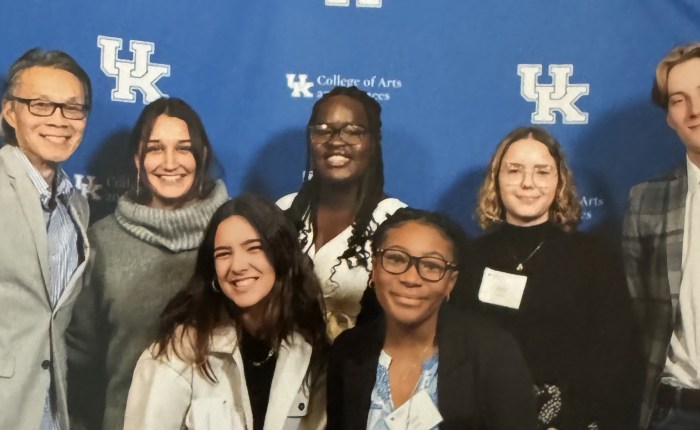
Me, with scholarship recipients at the recent Dean’s Circle Donors Luncheon sponsored by the UK College of Arts and Sciences.

I miss my dad. It’s hard to believe it’s already been over two years since he died. I think about him a lot—much more so it seems as the days slip away.

I find myself thinking also about his circle of influence. As his eldest-born son, his influence on me was meaningful and profound. But during his ninety-three years on the face of this earth, what legacy did he leave behind to the many others he encountered?

Come to think of it, what lasting legacies do any of us leave behind? The answer, I’m afraid, is slim to none. Most legacies fade away like yesterday’s news. Once you’re laid out on that cement slab, people quickly forget the things you’ve accomplished.

Just look at the great athletes of our generation. After Father Time catches up with them and their playing careers are kaput, no one remembers them anymore. They’re all distant memories, reduced to a small footnote in the annals of sports history.

An even better example are the legacies of U.S. presidents. Here you have people who at one time held the most powerful positions on the planet. And yet, other than George Washington, Abraham Lincoln, and Franklin Roosevelt, we can’t really recall any of their most significant achievements.

What did Zachary Taylor or Millard Fillmore ever do?

Here’s my point. My dad was not a transcendent athlete or famous political figure, but he was legacy smart. Before he left us, he directed a substantial part of his life savings towards scholarships at Centenary Church and at the University of Kentucky, knowing full well that education has a transformative and lasting impact.

I’ll admit I bristled a bit when I heard he was giving away my inheritance. But practically speaking, it made sense. Years from now, those scholarships would be worth a heck of a lot more than an African safari or a new Mercedes.

In that vein, I now present to you “Family Strong,” a memoir that my father meticulously crafted before his passing. It’s not just a book; it’s a beacon of hope, a reminder that our stories can create lasting impact for others in our own circle of influence. By purchasing the book, you not only gain insights into my dad’s remarkable life, but you also become a permanent part of the scholarships he established, furthering his legacy of belief in the transformative power of education and academic achievement.

“Family Strong” takes you on a journey from Fujian, China, to the heart of America, weaving together a tapestry of faith, love, and perseverance. My dad’s inspirational story embodies the American Dream in action, showcasing virtues like industriousness, honesty, humility, selflessness, and love. Through his vivid recollections, you’ll gain a unique perspective on the American immigrant experience during the 1950s and ’60s—all sprinkled with rich doses of humor, wisdom, and cultural insights.

This memoir, however, is not just my dad’s story told in his own words; it’s a celebration of love, faith, and family. As you explore his amazing life, you’ll also discover these similar narrative themes coming from us—his children and grandchildren—thus adding depth and warmth to the overall tale.

Moreover, the book pays homage to my dad’s legacy through the aforementioned Huang Family Scholarships. Established in June 2022, these scholarships inspire academic success, hard work, and a spirit of learning that transcends time.

Ultimately, “Family Strong” is an invitation to embark on a journey of faith, love, and the pursuit of your own dreams. My dad’s life, with all its trials and triumphs, serves as an inspiration for you to reflect on your own unique journey and the personal legacy you wish to leave behind.

Please join me in spreading the good word about “Family Strong” and be a part of preserving my dad’s legacy for generations to come. Remember, your purchase is not just a transaction—it’s a step towards ensuring that his story continues to inspire, motivate, and impact lives.

Click on the link below to purchase. Note that kindle, paperback, and hardcover versions are all available.

https://www.amazon.com/dp/B0CTD1ML8J

Once you’ve made a purchase, please let me know either through direct message or email (KYHuangs@aol.com) so that I can include your name as a permanent part of the scholarship legacy.

THANK YOU!

“From generation to generation – Dr Huang came to Kentucky and fulfilled an American dream for his children, their children and those who will follow in extending a legacy of goodness, kindness and a love for his colleagues, students and the Wildcats.”        

Dr. Eli Capilouto, University of Kentucky President

“As a pastor, I meet many people who are extremely kind, who are humble and who have accomplished great things. I’ve met very few who can be described in all three ways. Dr. Huang was a man of impressive achievement, yet he respected others and was a true witness of his deep, Christian faith. His autobiography is not only interesting but so very inspiring.”

—James Williams, Centenary Church Lead Pastor

“This book serves to witness that our Lord Jesus Christ is merciful, full of love and grace, and is a good Shepherd who always wants to find and save His lost sheep.”

—”Pete” Huang, author of Family Strong

A Walk in the Woods

A Walk in the Woods

Left to right: me, Beau, Trent, Mike (kneeling), Billy, and Andy in front of Charit Creek Lodge.

This blog posting is based on a recent real-life event. The names have been changed to protect me from the wrath of my friends.

Throughout my entire life, I’ve had a love-hate relationship with nature. On one hand, I love being outdoors, traveling the world, and gazing at the marvelous wonders of God’s creation. On the other hand, I’ve always hated up-close encounters with mosquitos, poison ivy, and the occasional venomous snake.

Don’t get me wrong—I’m no pansy, no stranger to sleeping on hard ground. As kids, our family camped in a tent all the time. We spent many a weekends and summer vacations “roughing it” at the various state and national parks. On top of that, nearly ten years in the military hardened me to the rigors of outdoor latrines, forced road marches, and barely palatable meals out of a pouch.

Even now, I still don’t mind at all carrying a heavy pack and eating beef jerky during the course of an arduous hike up a mountain. But at the end of the day, I’d much prefer retiring to a big bowl of lobster bisque, a pulsating hot shower, and some smooth satin sheets at your neighborhood Embassy Suites—if you know what I mean.

So, you can understand my hesitancy in signing up for an overnight stay at the Charit Creek Lodge in northern Tennessee. The Embassy Suites it’s not. Like many other accommodations run by the National Parks Service, it’s a mere couple of bunk-bed cabins in an isolated clearing out in the middle of nowhere. You have to hike in from a designated trailhead, there’s no electricity, internet, or cell service on site, and many hungry bears supposedly roam the surrounding trails toiling for food.

There are eight of us preparing for this sojourn for the soul, mostly acquaintances from church looking to reconnect with each other and disconnect from life’s stresses for a mere couple of days. Shortly before we embark, however, two guys drop out due to sore back issues, making me question whether my bad bout with plantar fasciitis should make me pull the plug as well.

Despite my lingering reticence, I decide to go for it and head out on the three-hour drive to the remote vantage point along the Big South Fork of the Cumberland River. My five other fellow hikers arrive shortly thereafter, locked and loaded and raring to go.

John, Andy, Mike, Beau, Trent, and Billy

Mike, our fearless leader and trip organizer, is the antithesis of myself. He loves being out in the elements more than life itself. Don’t be fooled by his calm and disarming grandfatherly appearance. Inside, he’s as energetic as an ambitious young Sherpa, looking to summit the next Mount Everest in the blink of an eye.

We all fall in step onto the meandering forest path. Beau, an accomplished trail runner, leads the way. He could cover this ground in no time flat but takes pity on the rest of us huffing through the dense forest foliage. Fortunately, Beau gives us plenty of rest breaks as we admire the towering rock cliffs and rhododendron blooms engulfing our senses.

Speaking of senses, I fall in behind Billy, who’ll talk your ear off. At seventy-eight years young, he’s still going strong—hiking these trails while guys half his age relax on the couch and suck air. You talk about the ultimate flex. And I thought I was keeping myself in relatively decent shape. Go ahead, Billy, kick sand in my face.

Andy and Trent complete the ranks. Every group like ours needs an Andy—an experienced paramedic at your beck and call who’s ready to treat the inevitable twisted ankle or surprise bee sting anaphylaxis with equal aplomb. Our group is blessed also with somebody like Trent—agreeable and amenable and SO DARN NICE. If you can’t get along with Trent, you’ve got a big problem.

We arrive at the lodge in plenty of time for dinner. Gary, our host, runs an impressive one-man show. This evening, he’s the concierge, housekeeper, and chef all rolled into one. And boy, can he cook. I was expecting spam and celery sticks. Instead, we get roasted pork tenderloin, a scrumptious bean casserole, macaroni and cheese baked with love, and biscuits to die for. Throw in some chocolate cake for dessert, and we’re definitely in culinary heaven.

What’s more, I find out that Charit Creek Lodge has running water—hot showers and flush toilets included in the nightly rate. HALLELUJAH! That indoor toilet seat never felt so comfortable. Now, just find me a way to snuff out snoring from my bunkmates, and I’ll check out a very happy man.

Honestly though, as great as the scenery, food, and accommodations were on this trip, the best part about this awesome experience was the fellowship involved. There’s something to be said about camaraderie and esprit de corps—especially among a group of such godly and spiritual men friends in such an austere and natural setting. Sitting in those rocking chairs on our moonlit cabin porch, we had some insightful and brutally honest discussions regarding our faults, our failings, and surviving some rather horrific life’s challenges.

But through it all, God also showered us with wisdom, humility and compassion toward each other. As iron sharpens iron, we also sharpened one another with our stories of survival and triumph. Our Lord reminded us that although the gate to eternal life remains narrow, many great saints have already blazed a wide path for those of us who wish to follow through together. It’s a distinct honor and privilege for us to plod on through.

After some gully-washing thunderstorms and a hike to the magnificent twin arches the next day, I headed back to civilization with a sense of renewal and encouragement. I guarantee you all six of my brothers did likewise. We all understood how we’d just been enormously blessed.

If you’re considering a similar type of “retreat-type” experience in the near future, don’t hesitate to hold it at the Charit Creek Lodge http://www.ccl-bsf.com/. Mosquitos, thunderstorms, snoring bunkmates—and bad feet—be damned, a walk in the woods always works wonders for your soul.

Dr. John Huang is a retired orthodontist, military veteran, and award-winning author. He currently serves as a freelance reporter and sports columnist. He is the author/coauthor of four books, Cut To The Chase, Kentucky Passion, From The Rafters Of Rupp, and Serving Up Winners. You can follow him on Twitter @KYHuangs.  

Monday Night Horror

Monday Night Horror

Buffalo Bills’ players, coaches, and team officials kneeling in prayer at Paycor Stadium after abrupt and chilling ending to Monday Night Football (Photo Credit @BuffaloBills).

(CINCINNATI, Oh.) – It wasn’t supposed to be like this.

In what was shaping up as a game for the ages, Bengals versus Bills on Monday Night Football abruptly ended on a chilling note. Bills’ safety Damar Hamlin collapsed on the field after making what looked to be a routine tackle. After the collision, Hamlin—a second-year player out of Pittsburgh—popped back up on his feet but fell immediately to the turf a split second later.

The Buffalo Bills later confirmed that Hamlin suffered a cardiac arrest following the hit. His heartbeat was restored on the field, and he was transferred to UC Medical Center for further testing and treatment. He is currently sedated and listed in critical condition.

Talk about scary. In one fell swoop, the overflowing record crowd at Paycor Stadium went from a night of anticipated merriment to several hours of abject horror.

For coaches, players, and their families, it had to be surreal. NFL players are a different breed of tough. They’re desensitized to broken bones, torn ligaments, and concussions as part of what they do. This injury, however, was different. Life or death is not part of the job description. You could see the shock, anguish, and concern etched on the faces of everyone on the sidelines. Imagine being Hamlin’s mom, escorted from her seat in the stands into the waiting ambulance taking her precious son to his unknown fate.

For media members in the press box, confusion reigned. We came to cover a football game matching two of the top teams in the league in their hunt for playoff seeding. We didn’t sign up for this. It’s difficult in that moment of chaos to process reliable truth with the rampant speculation around an unconfirmed medical prognosis. All of a sudden, everyone in the media room had a medical degree, or at least a relative working at the local hospital texting furiously with the latest breaking news on Hamlin’s condition.

As media members, we did the best we could in disseminating accurate information as the events were unfolding before us.

According to my notes, the tragic moment occurred at the 5:58 mark of the first quarter with the Bengals leading 7 – 3. I’ve watched a lot of professional football over the years. During that time, I’ve never seen a stretcher and ambulance summoned so quickly. Medical personnel furiously attended to Hamlin for about twenty minutes while the 67,000 or so looked on in stunned silence.

Watching players from both teams kneel jointly in prayer for a fallen comrade is always one of the most sobering sights in sports.

Five minutes after the ambulance pulled out, we all got the word that “the game was temporarily suspended until further notice.” Forty-five minutes later, after discussions with both teams, the NFL officially postponed the contest. During the next hour, people filed out of the stadium in a very orderly fashion, fully cognizant and accepting of the fact that no more football would be played that night.

In the tunnels underneath the stadium leading to the locker rooms, we witnessed players consoling each other and hugging their family members. Understandably, we had no access to any players, coaches, or administrative personnel.

“I don’t care who you are, you are not coming down this hallway,” said one Bengals’ official.

The evening was a stark reminder that as much as we love the NFL, the league embraces a brand of competitive violence that always leaves the door slightly ajar for these types of potential tragedies.

To be fair, however, this incident was indeed different and somewhat unique. I’m old enough to remember the Darryl Stingley paralysis in 1978, or Joe Theismann’s gruesome ankle injury on Monday Night Football in 1985. The Mike Utley, Ryan Shazier, and Tua Tagovailoa injuries are all nightmarish events. They’re all part of tragic sports moments everyone wishes never happened.

This was worse. Don’t get me wrong—career-ending injuries are awful. Life-altering paralysis is unfathomable. The long-term effects of CTE are becoming exposed as a living hell. But they simply don’t compare to the immediate acuteness of what we all experienced tonight.

Hamlin’s injury was akin to Hank Gathers collapsing and dying on the basketball court. Thirty-three years later, I still can’t get that image out of my mind.

I doubt if I’ll ever be able to dismiss this one either.

Dr. John Huang covers professional sports for Sports View America. This post first appeared on SportsViewAmerica.com. If you enjoy his writing, you can follow him on Twitter @KYHuangs.

Meeting the Challenge

Meeting the Challenge

Bill Owen enjoys his last official day on the job at his beloved Rupp Arena (Dr. Michael Huang Photo).

(LEXINGTON, Ky.) – If those Rupp Arena walls could talk, I’m sure they’d sound a lot like Bill Owen.

Owen, President and CEO of Lexington Center Corporation for twenty-two years, retired from his position as chief cook and bottle washer for one of Lexington’s most iconic and recognizable public-gathering facilities on December 31, 2022. A big Kentucky basketball fan, Owen appropriately spent his last official day on the job—at Rupp Arena—watching the Wildcats dismantle their in-state rival, the Louisville Cardinals.

“You can’t grow up in Lexington and not be a Wildcat fan,” Owen explained. “When I was in high school, I had a paper route, and [UK Athletics Director] Bernie Shively was one of my customers. Once a month, I would go to Memorial Coliseum and walk past Coach Adolph Rupp’s office, and Bernie Shively would pay me my $3.20.”

Growing up Blue

As such, Owen’s connection to Lexington and the University of Kentucky was solidified early on. Born in Gainesville, Georgia, Owen moved to Lexington when he was only two years old. His father served as head pastor of Calvary Baptist Church, so the preacher’s kid grew up in the Ashland Park area of the city, attending Cassidy Elementary, Morton Junior High, and Henry Clay High School.

Owen would naturally go on to attend the University of Kentucky. After graduating with a degree in history (class of ’73), he surprisingly found himself working in commercial real estate development and asset management. Six years learning from Wallace Wilkinson (before he became governor) and another six years working with the renowned Webb Brothers honed his business skills to a tee. That led directly to Owen taking on his Chief Administrative/Financial Officer role for Lexington Center Corporation in 1991. Nine years later, when Tom Minter retired, Owen took on the role of President and CEO.

Lexington Center Transformation

If you somehow hadn’t noticed, the Lexington Center recently underwent a transformative facelift under Owen’s dedicated watch. The project was unique—not a mere renovation, mind you, but rather a virtual complete replacement and restoration. Because most indoor sports venues traditionally have short shelf lives, you won’t find many comparable basketball arenas like Rupp—not only surviving, but still relevant and thriving forty-five years after initial construction.

“They blew up Charlotte Coliseum after only nineteen years,” Owen ruefully recounted. “I’ve got underwear that’s older than that.”

In today’s climate, working with a daunting $310 million budget is nothing to scoff at, and Owen made sure every penny of it was properly distributed and allocated in this latest rebuild. The result is a brand spanking new looking Lexington Center, a shining beacon of pride within the local civic, arts, and business communities. None of that would have been possible without Bill Owens spearheading the charge.

And what a fabulous charge it’s been. Big-time concerts, memorable sporting events, and world-renowned visitors are all part of Lexington Center Corporation’s rich and vibrant pedigree crafted during Owen’s sparkling tenure.

Rupp Arena

The parade of concerts featuring A-list celebrities visiting Rupp Arena is long and lengthy—everybody from Paul McCartney to Elton John to Tina Turner. Owen specifically remembers being wound tighter than a banjo string the time he booked Turner. When it came time for her sound check the day of the concert, the “queen of rock ‘n’ roll” was nowhere to be found. It turns out her limo driver had mistakenly taken her to Louisville instead of Lexington. Fortunately, with the help of a police escort and a slight curtain delay, the Rupp audience rocked for a full two and a half hours as Owen looked on in relief.

Then there was the Garth Brooks concert on Halloween weekend in 2014. If you remember, Brooks played four performances over two nights in front of 70,000 adoring fans. Over the years, Owen admits to becoming somewhat celebrity desensitized, but he remembers meeting Garth backstage and talking about their kids attending the same colleges.

“By gosh, here I am standing here talking to Garth Brooks, and it’s like I’m talking to another dad I just met at a tailgate,” said Owen, himself a proud father of three.

The very next night, however, it was back to reality as the University of Kentucky hosted Pikeville in a college basketball game. When it came to Rupp Arena, there was never a dull moment.

“What that building contributes to the community,” Owen gushed. “Obviously it’s the home of UK Basketball, which is its marquee and our most important relationship—but for the community and for the state of Kentucky, it’s so much more. You can’t underestimate its impact. Being able to stretch its life well beyond its peer group, that’s kind of special.”

As far as basketball games at Rupp, Tayshaun Prince’s five three-pointers to begin the game versus North Carolina stands out prominently in Owen’s mind. Hosting NCAA tournament games also provided quite a thrill. Coincidentally, Owen served as the official scorer’s table representative when Rick Pitino’s Louisville squad was upset by Texas A&M in 2007.

“Had Pitino not done that, we would have never heard of Billy Gillispie,” Owen quipped.

Convention Center

Not to be outdone, the Lexington Convention Center has had its share of grand moments and distinguished visitors as well. President George W. Bush came a calling for the Little League International Congress in 2010. Bill Clinton and Barack Obama also made visits to the Lexington Center during subsequent years.

“Growing up in Lexington, I think of our little burg of a community,” Owen reflected. “But yet, here we are hosting sitting and former presidents in our convention facilities. It’s something you think about. Our organization met that challenge. I guess that’s one of the things that’s significant with the Lexington Center’s staff. As an organization, we met every challenge. I can’t think of a thing that we were ill equipped to achieve. And now opening this really grand new facility, that’s kind of the zenith of it.”

Owen, with President George W. Bush, at the Little League International Congress held at the Lexington Convention Center in 2010.

Opera House

And finally, there’s the Opera House, one of the smallest theaters in the country that still offers its patrons a touring Broadway series. The city bought it through Lexington Center Corporation, renovated it, and gave it new life.

“I’m reminded of the line from The Wizard of Oz,” Owen said. “Dorothy, with tears in her eyes, looks at the Scarecrow and says, ‘I think I’ll miss you most of all.’ And they put that on a plaque on the entrance to the Opera House. And it’s next to a plaque where the original founders and board of directors of Lexington Center Corporation are listed. And to think that my name is up there with them. That’s very humbling—particularly for somebody who grew up here.”

Owen’s commemorative plaque at entrance to the Lexington Opera House. “I think I’ll miss you most of all.”

Disasters Looming

Lest you think Owen’s tenure was all sunshine and roses, think again. Two of the most significant world-wide crises occurred on his watch.

For Owen, 911 resulted in many sleepless nights. As a public assembly building manager, he spent countless hours poring over those endless reviews by Homeland Security. Think about it. That fateful Tuesday morning in 2001 forever changed the manner in which people gathered for concerts, conventions, and ballgames.

Covid-19 threw Owen an even bigger haymaker.

“March 12, 2020, for me was the day the earth stood still,” he recounted. “We’re in the second day, first game of the girls’ Sweet 16 tournament. We had just come off of three record-setting financial years. The arena is deeply under construction…and it all comes apart.”

In one fell swoop, Lexington Center went from one hundred twenty-six full-time employees to, at one point, only seventeen. Personnel decisions are always difficult. After all, it’s your work family. Time after time, Owen had to tell a lot of good friends that they couldn’t work there anymore. That was especially tough.

Tensions with UK

Here’s something I perceived was even tougher on Owen. Over the years, it’s been well documented that the city of Lexington and the University of Kentucky have engaged in a tireless (and often bitter) tug of war over ownership rights to Rupp Arena. Should a downtown location be the major community focus, or would an on-campus facility better serve the needs of the university? With so much at stake financially, it’s natural for friction to develop between the two negotiating factions, especially when they possess different end goals.

You know you’ve struck a nerve when you’re satirized in an editorial cartoon.

And yet, Owen kept his cool and remained philosophical through it all—the fickle fate of his beloved arena forever at the mercy of an unexpected regime change, a newly elected public official, or the ever-shifting whims of the state legislature.

“I’ve been married fifty years,” he told me. “UK has been in this building forty-six years. Our relationship with UK as our tenant is not unlike my relationship with my wife. It’s not like it’s been fifty years of wedded bliss and everything great. Nor has it been fifty years of combat and conflict. There’s been a share of both. But overall, both of us are a lot better off because of the relationship. And that’s kind of the way we are with UK. There are times when it’s been more of a business relationship. And other times it’s been more of a partnership.”

Who’ll Steer the Ship Now?

At age 71, Owen appears fully prepared for the upcoming retirement transition. In 2018, Lexington Center Corporation entered into a booking and management agreement with OVG, Oakview group. The California based private management company fully took over operations in October of 2021 and has since become the new Bill Owen—just as the old Bill Owen dutifully served out his term as Director of Construction in order to complete the final phases of the building project.

Understandably, Owen has a few reservations about an out-of-state corporate entity making future decisions regarding his community treasures.

“I’ve had to make my share of decisions,” Owen acknowledged. “In twenty-two years as CEO here, I’ve made an awful lot of decisions with my head. But I’ve made some with my heart too. Can you develop that if you don’t have a personal connection with the community? You probably can, but it’s easier to develop if you’ve got that connection.”

Grandpa Bill

On a personal level, I can’t see Bill Owen sitting on the couch watching Netflix and eating Bonbons. You never know, though. Everyone has their own way of dealing with major life changes.

Family Strong! Seated Left to Right: Owen, wife Debby, daughter Katie. Standing Left to Right: Daughter-in-law Sydney, son Grant, daughter Kristen.

“You can prepare for retirement every way but emotionally,” Owen said with a wry smile. “You can’t prepare emotionally until you experience it. I’ve worked steadily since I was fifteen. I got my last paycheck a week or so ago. I told my wife, ‘I’m not getting a paycheck anymore.’ That’s an adjustment.”

Owen’s wife, Debby, hates to fly, so large-scale travel most likely won’t be an adjustment problem in the years to come. Although they own some Florida property, Owen assures me he’s staying put in Lexington. He may do some consulting. A distillery docent or a horse farm tour guide aren’t out of the question, either. Most importantly, Owen just enjoys spending time with his three-year-old grandson, L.J.

“He’s taken over without firing a shot,” Owen joked. “Had I known they’d be so much fun, I would have had them first. It’s nice being close to family. I’m blessed with that.”

Owen, with grandson L.J., at a recent UK basketball game.

Thoughts Regarding Legacy

Sitting in the concourse of Rupp Arena, I asked Owen about leaving a legacy. What were his most significant professional accomplishments? How did he want others to remember him as he walked out the door?

“That’s a tough question,” he answered pensively. “I managed to be a part of keeping the torch lit. And improving all of our facilities—Rupp Arena, the Convention Center, the Opera House primarily—and extending our facilities’ contribution to the city, and to the community for a long while.”

Owen then whipped out his phone and showed me a picture of a brand-new street sign on the private driveway connecting Manchester Street to the Rupp Arena garage. The sign said “Bill Owen Way.”

“That was bestowed on me just two weeks ago,” he said. “I’m very proud of that. I’m very humbled by that.”

The newly dedicated Bill Owen Way leading up to Rupp Arena.

The Importance of Faith

Appropriately, I concluded my chat with Owen about a topic very near and dear to his heart—his Christian faith. Over time, I’ve interviewed a lot of successful individuals, and I’ve noticed one thing in particular. People of faith are somehow different. There’s a special aura surrounding them. That was certainly true of Owen. Through all his business successes, the son of a Baptist preacher always managed to keep spiritual things at the front of the line.

“I’ve grown up in the church,” he said. “I was active in leadership. I taught Sunday School. A personal faith and belief in God and reaching him through a Savior in Jesus Christ for me is an important part of my life. It always has been. The hope of something grander after this life is something I was taught, something I believed—and still believe.”

“His master replied, ‘Well done, good and faithful servant! You have been faithful with a few things; I will put you in charge of many things.’”

Congratulations, Bill Owen, on your retirement.

A very hearty “thanks” to you and your talented and dedicated staff at Lexington Center Corporation for always meeting the challenge!

Dr. John Huang is a UK columnist for Nolan Group Media and editor-in-chief of JustTheCats.com. He also covers the NFL and MLB for Sports View America. You can follow him on Twitter @KYHuangs. If you enjoy his writing, be sure to check out his new book, KENTUCKY PASSION. https://www.amazon.com/Kentucky-Passion-Wildcat-Wisdom-Inspiration/dp/1684351669