BLUEprint for Winning?

BLUEprint for Winning?

When I first saw Kentucky’s announcement about this new “BLUEprint” system, my initial reaction was the same as a lot of yours.

What is this BS?

Another buzzword. Another corporate-sounding initiative. Another step away from anything that once felt familiar.

But the more I sat with it, the more uncomfortable the realization became.

This isn’t BS. It’s reality. And maybe—whether I like it or not—it’s progress.

Because what Kentucky rolled out this week isn’t just some fancy database. BLUEprint is a centralized, analytics-driven platform designed to evaluate players across football, basketball, volleyball—every revenue sport—not just by how they perform, but by what they’re worth. It pulls together performance data, financial considerations, and roster projections into one system that helps decision-makers build teams with precision.

In plain terms, Kentucky has built itself a professional front office, the kind you’d expect in the National Football League, not on a college campus. And for the first time, Kentucky isn’t even trying to pretend otherwise.

And that’s where I really struggle.

Because I’ve spent a lot of time—probably too much time—writing about what Kentucky used to be. The tradition, the standard, the idea that this place meant something beyond wins and losses. That players came here not just because of opportunity, but because of identity.

But let’s be real—this pie-in-the-sky idealism didn’t die this week. It’s been fading for years. All BLUEprint does is put structure and a name to what has already replaced it.

And if the only thing that matters—if the bottom line—is winning, then I can’t sit here and tell you this is the wrong move. In fact, it might be the smartest thing Kentucky has done in years. Because the game has changed, and not adjusting isn’t noble—it’s negligent. You can’t compete in a marketplace driven by NIL dollars, transfer portal movement, and constant roster churn with gut instinct and nostalgia. You need structure. You need discipline. You need something that tells you not just who a player is, but what he’s actually worth to your program.

That’s what this is. It’s not about building a team anymore. It’s about managing a portfolio.

And frankly, that’s what Kentucky has been missing.

The last few seasons haven’t fallen short because of effort or pride. They’ve fallen short because the pieces didn’t fit—because the roster construction didn’t match the expectations, and because we were still operating like it was 2015 while everyone else had already moved on.

BLUEprint is an acknowledgment of that—a quiet admission that guessing isn’t good enough anymore.

But here’s the part I can’t shake—and I don’t think you should either.

There’s a cost to this. There always is.

Because once you start assigning value to players in a system like this, it inevitably changes how you see them. Not all at once, not in some dramatic, heartless way—but gradually, subtly. Development becomes projection. Loyalty becomes leverage. And that kid, like Dominique Hawkins or Derek Willis, who might have taken three years to grow into something special becomes harder to justify—and eventually, impossible to keep—when the numbers say someone else offers a better return right now.

That’s not evil.

It’s just efficient.

And efficiency doesn’t care about sentiment, pedigree, or passion—it just cares about return.

So when we talk about “Kentucky guys,” about culture, about the things that once separated the program with the greatest tradition in the history of college basketball from everyone else, we have to be honest about what we’re risking. Those things don’t disappear overnight—but they do get squeezed, marginalized, and replaced, piece by piece, by a system that rewards production over patience.

And maybe that’s what it takes now.

Maybe this is the price of competing at the highest level again.

I don’t like it. But I also don’t like watching Kentucky struggle to keep up in a world that has clearly moved on.

So here we are—not clinging to the past, not fully comfortable with the future, but standing somewhere in between, trying to convince ourselves this is still the same program we fell in love with—and cried over.

It’s not.

And maybe the most honest thing Kentucky did this week wasn’t launching BLUEprint. It was admitting—without actually saying it—that winning now requires becoming something different.

The question isn’t whether this works. It probably will. The real question is whether we’re willing to accept what Kentucky has to become for it to work.

Kentucky didn’t sell its soul. It just realized—too late—that it already had. And now, with BLUEprint, it’s trying to buy it back.

Not with tradition.

Not with loyalty.

But with numbers…and, hopefully, more wins.

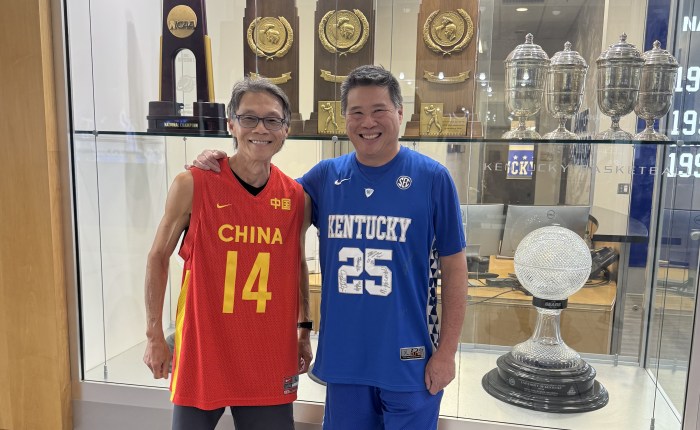
Dr. John Huang is a retired orthodontist, military veteran, and award-winning author. Currently serving as a columnist for Nolan Group Media, he invites readers to follow him on social media @KYHuangs. Explore his latest, Whining For Posterity, and all his books at Amazon.

An Oak of Righteousness

An Oak of Righteousness

“But the wisdom that comes from heaven is first of all pure; then peace-loving, considerate, submissive, full of mercy and good fruit, impartial and sincere.” – James 3:17

You can read Dr. Tom Cooper’s obituary if you want the facts. https://www.milwardfuneral.com/obituaries/Dr-Thomas-M-Cooper?obId=46963575

You’ll learn where he studied, what he accomplished, how many students he taught, how many lives he touched in the official, measurable ways that look good on paper and sound impressive when read aloud. All of it is true. All of it matters.

But none of it explains why his passing yesterday saddened me in ways that words simply can’t adequately express.

Dr. Cooper was one of my mentors. In dental school, yes. But also in Sunday School, which, as it turns out, may have been the more important classroom. In both settings, he did something meaningful: he paid attention to people. Not just the impressive ones, nor the loud ones, nor the future rising stars—but to every ordinary Joe like me who showed up wanting to learn.

In dental school, it’s easy to think teaching is about brilliance—how much you know, how fast you can correct someone, how efficiently you can expose ignorance. Dr. Cooper never taught that way. He had an unhurried confidence, the kind that didn’t need to prove anything. When he spoke, you leaned in—not because he demanded attention, but because you were curious about what he had to say.

He didn’t just teach dentistry. He taught students.

And then there was Sunday School—where he taught life.

Long before I ever stood in front of a class or a congregation, I watched him do something deceptively simple and profoundly wise. He didn’t teach the lesson he wanted to teach. He taught the lesson we were ready to hear.

One Sunday, probably sensing my early, unpolished enthusiasm for teaching, he gave me a piece of advice that has followed me through every single speaking engagement—whether radio broadcast, packed classroom, or that awkward circle of folding chairs when only two people showed up:

“Take the class where they want to take you.”

It sounds almost too gentle to be revolutionary. But it is.

What he meant was this: teaching isn’t about dragging people to where you think they should be. It’s about honoring where they already are. It’s about listening long enough to hear the questions beneath the questions. It’s about understanding that people don’t need your brilliance nearly as much as they need your presence.

That lesson shaped me more than any syllabus ever could.

It kept me from preaching at people when I should have been walking with them.
It kept me from filling silence when I should have been letting it speak.
It kept me from confusing authority with influence.

Dr. Cooper never chased the spotlight. He didn’t need it. His faith was sturdy, quiet, and deeply rooted. The Bible calls that an “oak of righteousness, a planting of the Lord for the display of His splendor.” That phrase fits him perfectly—not flashy, not brittle, not swayed by every new wind of opinion.

Just solid. You leaned on Dr. Cooper without realizing it. And only when he’s gone do you feel how much weight he was carrying for others.

I don’t remember every lesson he taught. I don’t remember every Scripture he unpacked or every clinical pearl he dropped in passing. But I remember how he made me feel: seen, capable, invited.

That’s the kind of teaching that lasts.

If there’s a classroom in heaven, I suspect he’s there already, smiling patiently, waiting for the rest of us to catch up. And if I’m lucky, when I finally walk in, he’ll give me that same gentle reminder one more time:

“Take the class where they want to take you.”

Because that’s where the real learning happens.

Dr. John Huang is a retired orthodontist, military veteran, and award-winning author. Currently serving as a columnist for Nolan Group Media, he invites readers to follow him on social media @KYHuangs. Explore his latest, Whining For Posterity, and all his books at Amazon.

Discover his next scheduled teaching event here: Man Up – Men’s Ministry Retreat – St. Luke Church | Lexington, KY

This Ain’t No Philosophy Seminar

This Ain’t No Philosophy Seminar

(LEXINGTON, Ky.) – When coaches are under fire, they usually don’t speak in riddles—they rant.

Jim Mora famously barked, “Playoffs?! Don’t talk about playoffs!”
Herm Edwards simplified the profession to its core: “You play to win the game.”
Mike Gundy, veins popping, yelled, “I’m a man! I’m 40!”

Those quotes didn’t require interpretation. They didn’t need a decoder ring. They landed because frustration stripped the message down to bone.

Which is why Mark Pope’s recent quote on his weekly coach’s show left so many Kentucky fans scratching their heads like they’d accidentally tuned into a philosophy podcast.

“What’s really important for us as coaches and as teammates is understanding the story that each of our guys and each member of our staff is telling themselves about what we’re going through right now…”

This is not a rant. It’s not normal coach-speak. It sounds more like a narrative symposium held in Ballroom A at the downtown Hyatt.

Before we dismiss it entirely—or turn it into a meme—let me explain why I might be uniquely qualified to translate what Pope was trying to say.

I spent decades as an orthodontist listening to people describe pain that wasn’t always where they thought it was. Patients told elaborate stories about one tooth when the real issue lived somewhere else entirely. My job wasn’t to validate the story. It was to identify the truth underneath it and fix the problem—whether the patient liked the diagnosis or not.

Coaching, at its best, works the same way.

So when Pope talks about “the story each guy is telling himself,” he’s really saying this:

Players are processing adversity differently. Some think it’s bad luck. Some think it’s their fault. Some think the system isn’t for them. Some think they should be playing more.

That part is reasonable, human, and accurate.

Then Pope says he wants to bring those stories back to two things: a point of truth and a point of common understanding.

Translation:
“We need everyone to stop lying to themselves—and agree on what we’re actually bad at.”

Still reasonable. Still logical. But strangely phrased for Kentucky basketball. It feels like Phil Jackson’s Zen without the structure—philosophy without the scoreboard support to justify it.

And that’s why it landed sideways.

Kentucky fans don’t need help understanding the story when the evidence is screaming:

• Slow starts
• Inconsistent effort
• Poor perimeter defense
• Questionable preparation

When you’ve had nearly two weeks to prepare and still fall behind by 21 points, the story doesn’t matter nearly as much as the symptoms. The frustration isn’t that Pope is wrong.

It’s that he’s explaining instead of commanding. At Kentucky, explanation often sounds like excuse—even when it’s not intended that way.

Fans are conditioned to expect blunt clarity in moments like this. Mora didn’t unpack emotional narratives. Edwards didn’t ask players how losing made them feel. Gundy didn’t workshop his truth.

They owned it.

That doesn’t mean Pope lacks intelligence or care. In fact, this quote suggests the opposite—he’s thoughtful, introspective, and trying to understand the human side of his team.

But this job isn’t graded on thoughtfulness. It’s graded on readiness—and ultimately wins and championships.

If every player is telling himself a different story, that’s not a literary problem. It’s a leadership one. Great programs don’t require narrative alignment sessions. They create roles so clear that internal monologues don’t matter.

At Kentucky, the story is supposed to be singular:

Defend.
Compete.
Earn minutes.
Win.

No subplots. No word-salad narratives from the coach. Kentucky basketball doesn’t need a narrator.

Pope’s quote might sound thoughtful in June. It sounds confusing in January.

And in January, Big Blue Nation is longing for something refreshingly old-school:

Less parable.
More accountability.

Let’s hope we get it.

This article was originally written for distribution through Nolan Group Media publications.

Dr. John Huang is a retired orthodontist, military veteran, and award-winning author. Currently serving as a columnist for Nolan Group Media, he invites readers to follow him on social media @KYHuangs. Explore his latest, Whining For Posterity, and all his books at Amazon.

I’m on to Kenny Brooks

I’m on to Kenny Brooks

(LEXINGTON, Ky.) – I’m on to Kenny Brooks. Not in a stop-the-presses, breaking news kind of way. It’s more like the quiet realization that the man has cracked a code most coaches spend a lifetime chasing. If you want sustained success in basketball—real, transferable, program-defining success—get yourself a generational point guard, teach her, empower her, and then get out of the way just enough to let her become herself.

He did it with Georgia Amoore. And now, unmistakably, he’s doing it again with Tonie Morgan.

Morgan’s résumé is already starting to read like folklore. A buzzer-beater that stunned LSU last Thursday, followed by another surgical stat line—18 points, 14 assists—in a composed, methodical 74–52 dismantling of Missouri. Flashy when needed. Surgical when required. And always, always in control.

But the numbers only tell you what she’s doing. They rarely explain why—or how.

That’s where Brooks leaned back, grinned, and gave us the real scouting report—one that had nothing to do with crossover moves or assist totals.

“I don’t know what football team is doing good without a good quarterback,” Brooks quipped. “Tonie, she’s been phenomenal all year long… her willingness to be coached. She never makes a face when she doesn’t agree with something… she’s consistently just welcoming any kind of feedback and she takes it.”

There it is. The overlooked superpower.

Be Teachable.

In an era where athletes are branded before they’re built, where confidence sometimes masquerades as infallibility, Morgan’s greatest strength might be her posture in a film room. She watches. She listens. She absorbs. And then—this is the key—she applies.

Brooks made something else clear early, almost defensively, as if to protect Morgan from lazy comparisons: she is not trying to fill Georgia Amoore’s shoes. She’s building her own footprint. Different stride—with the same authority.

And authority she has.

Morgan can do it all. She scores at all three levels. She goes downhill with intention, not chaos. She distributes with either hand like she’s ambidextrous by design. She can take her defender one-on-one when the offense stalls. She understands shot selection. And she defends—not the Instagram kind of defense, but the grind-it-out, make-you-work-for-air variety.

Most importantly, Brooks has empowered Morgan to run the offense. Not just initiate it. Not just survive it. But to run it.

That kind of trust doesn’t come from a box score. It comes from habits—and a heck of a lot of communication and connection between coach and player.

Morgan explained it simply, the way players who truly understand their role often do.

“I have the ball a lot, so it is very important that I take care of it,” said the 5-foot-9 senior transfer from Georgia Tech. “So, when I do turn it over, I just move on. It happens… I just want to take care of it.”

That’s not coach-speak. That’s emotional maturity. Ownership without self-flagellation. Accountability without paralysis.

Teachable players don’t crumble when corrected or sulk when challenged. They don’t confuse coaching with criticism. They see feedback as fuel, not as insult.

And that—far more than a step-back jumper or a no-look dime—is what separates good point guards from the kind that quietly define eras.

Brooks knows it. He’s lived it. He’s building around it again.

Every great coach has a calling card. For Brooks, it might be this: he doesn’t just recruit talent; he intentionally seeks out posture and fit. The willingness to be molded. The humility to learn. The confidence to adapt.

Put a player like that at the point, and suddenly everything else aligns. Spacing makes sense. Tempo settles. Teammates breathe easier. Coaches sleep better.

Morgan’s story is still being written, but the early chapters are already instructive—not just for basketball, but for life. Be skilled, yes. Be confident, absolutely. But remain teachable through it all.

Because the players who last, the leaders who endure, and the programs that matter most are built not on ego—but on the desire to learn and get better.

And if Kenny Brooks keeps finding point guards like this?

Well… I’m really on to him now.

This article was originally written for distribution through Nolan Group Media publications.

Dr. John Huang is a retired orthodontist, military veteran, and award-winning author. Currently serving as a columnist for Nolan Group Media, he invites readers to follow him on social media @KYHuangs. Explore his latest, Whining For Posterity, and all his books at Amazon.

The Scholarship Used to Be the Prize

The Scholarship Used to Be the Prize

(And Somewhere Along the Way, We Started Treating It Like a Coupon)

Let me get this out of the way early so nobody mistakes me for the guy yelling at clouds.

I know NIL is here to stay. I know players have always been paid. I know the system wasn’t pure, holy, or wrapped in a choir robe stitched by Sandy Bell in the UK Compliance office.

I’m not naïve. I’m just… disappointed. And there’s a difference.

Believe me, this isn’t about money. It’s about what money replaced.

Back in the day—cue the violin music, please—the scholarship was the prize. The scholarship was the golden ticket. It was the thing you earned, protected, and quietly understood could change the trajectory of your life.

Now? The sheepskin is an afterthought. A line item. Something you get thrown in after the collective wires the cash.

Wake up everyone! College sports didn’t just evolve. It inverted.

Players used to come to Kentucky for the name on the front of the jersey and hope—pray, even—that one day the name on the back might matter. Now the name on the back is everything, and the front is just a temporary billboard.

We’ve turned student-athletes into short-term mercenaries, and then we act surprised when loyalty evaporates faster than Vince Marrow’s blue wardrobe.

Again, I’m not anti-player. I’m anti-illusion. College sports has become all smoke and mirrors.

What bothers me isn’t that athletes are making money. It’s that we’ve somehow convinced them—and ourselves—that money is the point, not the fruit of hard-earned labor. We’ve normalized entitlement at warp speed. It no longer happens over multiple years of eligibilty. It’s now bestowed instantly.

A freshman hasn’t played a minute and already knows his “market value.” He doesn’t ask, How can I grow here? He asks, What’s my next leverage point? That’s not empowerment. That’s living one transaction at a time.

And the collateral damage of this lunacy? The college education—the very thing that was supposed to be the great equalizer—has been reduced to background noise.

Let me offer a confession from a man who looks suspiciously like a retired orthodontist with opinions.

My education made me rich. Not Warren Buffet-rich. Not even NIL-rich. But life-rich. It gave me a profession. It gave me options. It gave me the ability to fail and pivot and fail again without falling through the floorboards of society.

My college education wasn’t just about attending classes. It rewarded me with time—time to grow up, mess up, learn accountability, and figure out who I was when nobody was handing me a check. Let it be known that no booster ever Venmo’d me for showing up to Biology 101.

Now we’re telling kids—explicitly and implicitly—that education is optional, temporary, and secondary to their “brand.” That’s not progress. That’s negligent at best—and destructive at worst.

Here’s the part nobody wants to say out loud: If the scholarship no longer matters, the university no longer matters. And if the university no longer matters, then college sports becomes minor-league professional sports without contracts, guardrails, or accountability.

Which is exactly where we’re headed.

You can’t build culture on one-year leases.
You can’t preach loyalty while negotiating exits.
You can’t sell tradition to people shopping for the next upgrade.

And you certainly can’t pretend the system will hold when the foundation—education itself—has been hollowed out. When the value of the scholarship is cheapened, the value of the institution crumbles. When institutions crumble, so does the illusion that this was ever about anything more than money. And when the illusion dies, so does the sport we thought we loved.

I still watch. I still care. I still write. I still hope—perhaps foolishly—that the pendulum swings back toward balance instead of breaking loose entirely.

But make no mistake: this is doomsday not because athletes are getting paid—but because we’ve taught them that nothing else is worth valuing.

And when education becomes optional, everything downstream collapses. I don’t want to go backward. I want us to remember what was worth protecting as we move forward.

Happy New Year!
Now, please excuse me while I go ice my knee, check my blood pressure, and remind myself I’m not yelling at clouds.

I’m yelling at the future—because I still care about it.

This article was originally written for distribution through Nolan Group Media publications.
Dr. John Huang is a retired orthodontist, military veteran, and award-winning author. Currently serving as a columnist for Nolan Group Media, he invites readers to follow him on social media @KYHuangs. Explore his latest, Whining For Posterity, and all his books at Amazon.

To Hell with the Standard (Champions Classic Edition)

To Hell with the Standard (Champions Classic Edition)

(LEXINGTON, KY.) – Mark Pope keeps telling us Kentucky didn’t “meet the standard,” but after that Michigan State demolition in the Champions Classic, I’m starting to think we’re comparing this team to the wrong standard entirely. Championship Number Nine? At this point, I’d settle for “don’t get pantsed on national television before halftime.”

You see, “the standard” sounds great when you’re at a booster dinner or a preseason pep rally. But when the Cats get embarrassed again in Madison Square Garden—when the defense leaks worse than a cheap umbrella and the chemistry looks like oil and vinegar—then the standard becomes a cruel, suffocating weight.

And surely you caught Pope’s postgame presser… ugh. The man looked like someone had just put his dog down. Depressed. Drained. Eyes sunken like he’d been up all night gathering data, crunching analytics, and questioning all his life decisions. This isn’t the buoyant, always-positive, program-resurrecting Pope we hoped for—this is a man preparing for a root canal without anesthesia.

Pope said his players weren’t ready for Louisville because of some “out-of-character” incident before the game. Well, what was the excuse against Michigan State? Nothing—nothing—about that latest performance looked in character for a team supposedly training every day under the ghostly shadow of the standard. At this point, the standard has morphed into a meaningless punchline.

And can we talk about the $22 million elephant in the room?
That’s right—this roster is collectively pulling in twenty-two million American dollars to play basketball. That’s not chump change.

And what are we getting for that hefty investment?

Poop. Absolute, unmitigated poop.

Defense? Poop.
Shot selection? Poop.
Effort? Poop.
Guys playing for an NBA audition instead of the name on the front of the jersey? Extra-strength poop with glitter.

Okay—I’ve vented enough. Let’s take a deep breath (maybe two) and accept the painful truth: Mark Pope inherited a proud tradition, but also a monster. Every coach who takes the Kentucky job eventually realizes the same terrifying thing—this fan base is passionately crazy. Anything less than a Final Four is failure. Anything short of cutting down the nets is unacceptable. That’s the gospel of Big Blue Nation.

But here’s the irony—we demand perfection from kids who can’t legally rent a car. We scream “UNACCEPTABLE!” into the Twitter void while eating buffalo wings in our recliners. We call for Pope’s head in November, then brag about our loyalty in March.

We’ve worshiped at the altar of the standard so long that we’ve forgotten why we fell in love with Kentucky basketball in the first place. It wasn’t just the championships—it was the magic. The tradition. The roar inside Rupp when some kid from Pikeville or Paducah drills a three. The way the team makes us feel like part of something larger than ourselves.

You can’t measure that with analytics. You can’t hang it from the rafters either. It’s a pulse. A heartbeat. And right now, that heartbeat’s faint—not because of the losses, but because we’ve forgotten how to simply enjoy the game.

So here’s my radical suggestion: to hell with the standard—for now.

Let’s stop counting banners and start counting moments. Let’s cheer the hustle play, the smart pass, the kid who dives on the floor when the game’s already out of reach. Let’s celebrate the little victories—the ones that don’t make SportsCenter but make us proud nonetheless.

Sure, this team may not be destined for the ninth championship banner. They may fumble away a few more games. The defense may still make you want to throw a shoe at your TV. But they’re our team. And if we can’t love them when they’re flawed and broken, we don’t deserve to love them when they’re flying high.

The sky isn’t really falling. It just feels that way because we’ve been staring upward too long, waiting for the next banner to drop.

Let’s stop pretending this is a title run and just… watch basketball. Enjoy the wild, maddening, forehead-smacking circus it becomes. Appreciate Pope trying to hold the universe together with bailing wire while the players try to remember how to guard a ball screen.

Because if you don’t laugh, you’ll cry. And if you don’t ditch the standard, you’ll be the one feeling the root canal.

Championship Nine isn’t walking through that door.
But maybe joy can.
If we let it.

And if this $22-million roster ever decides to stop playing like poop, well… we’ll call that manna from heaven.

This article was originally written for distribution through Nolan Group Media publications.

Dr. John Huang is a retired orthodontist, military veteran, and award-winning author. Currently serving as a columnist for Nolan Group Media, he invites readers to follow him on social media @KYHuangs. Explore his latest, “Whining For Posterity,” and all his books at https://www.Amazon.com/stores/Dr.-John-Huang/author/B092RKJBRD

Top of Form

Bottom of Form

Battle at the Yum: Brotherly Love, Bluegrass Style

Battle at the Yum: Brotherly Love, Bluegrass Style

(LEXINGTON, Ky.) – I’ve been to a lot of games at the KFC Yum! Center over the years, and one constant remains: somebody always spills beer on me. Maybe it’s the cramped seats, maybe it’s divine retribution for my unapologetic “L’s down,” or just that smug smirk when Kentucky pulls off that inevitable upset. But whatever the reason, it’s always the same warm, yeasty baptism by Yuengling. Welcome to the Kentucky–Louisville rivalry, friends—where good manners and mutual sportsmanship go to die.

When Kentucky invades the Yum on Tuesday night, it won’t just be another non-conference matchup—it’ll be a civil war disguised as basketball. Don’t let the early date on the calendar fool you. Sure, the game won’t decide an SEC or ACC title, and yes, both programs are still figuring out rotations, chemistry, and playing through injuries. But if you think this one doesn’t matter, try telling that to the guy in the bird suit mugging for the cameras behind Kentucky’s bench.

Here’s the scary part. The Wildcats might not know what they’re walking into. Mark Pope’s shiny new roster—brimming with transfers, freshmen, and enthusiasm—hasn’t yet been immersed in the unholy water of this rivalry. You can study film all you want, but no amount of game tape or analytics prepares you for 22,000 red-clad fanatics who hate everything about you down to the shade of your underwear. This isn’t just basketball—it’s bragging rights and cultural warfare.

To the Louisville faithful, Kentucky is the privileged older brother, always hogging the spotlight, driving the fancy car, and bragging about his NBA friends. The Cardinals, meanwhile, are the petulant little sibling—scrappy, defiant, and perpetually insecure. They’ll do anything to get big brother’s attention, even if it means tossing a drink in his face or keying his Ferrari.

Speaking of Ferraris, Pope’s team is still learning to shift gears smoothly. We’ve seen flashes of brilliance—fast breaks that hum, defense that smothers, and a jaw-dropping Collin Chandler dunk—but also some of the sputtering you’d expect from a group still breaking in the new parts. Louisville, on the other hand, is in the midst of its own identity crisis under coach Pat Kelsey. Kelsey’s energy borders on cartoonish—think Red Bull-fueled pep rally meets evangelical tent revival. He and Pope are oddly similar in their intensity, their positivity, and their charming—but goofy—awkwardness.

If it weren’t for their height difference, these two might actually be long-lost twins separated at birth. Both are relentlessly upbeat. Both quote leadership manuals like scripture. And both probably wear out their assistants with midnight text chains about “culture” and “accountability.” The difference? Pope has the keys to the big blue mansion, while Kelsey’s still trying to get the plumbing fixed in the old red house down the street.

Then there’s last year’s dustup—when Pope put Kelsey in a friendly “headlock” during a midgame scrum. Add in the rumored “verbal altercation” outside a top recruit’s home, and you’ve got another colorful chapter in UK-UL lore. It’s all fun and games—until it’s not.

Expect some fireworks on Tuesday. Louisville will treat this like their Super Bowl, their one shining moment to prove they’re not entirely irrelevant. Kentucky, meanwhile, would like nothing more than to quiet the rowdy red masses and head back down I-64 with the smug satisfaction that only a rivalry win provides.

This particular game might not have the national stakes of years past. Remember, it’s happening way too early. Both teams are still under construction—a mix of promise and potential waiting for the right foundation. But pride, not perfection, will define the night. The winner gets the city for a year; the loser gets excuses.

And let’s be honest—Kentucky fans need this one. After the ups and downs of recent seasons, after the heartbreaks and early exits, Big Blue Nation wants tangible proof that Pope’s vision is more than just those “beautiful” slogans he’s been preaching since his arrival in Lexington. A win at the Yum would do wonders for morale, momentum, and those all-important selection committee resumes down the road.

Remember also that rivalries are less about rankings and more about respect—or, in this case, disrespect. You don’t beat Louisville for seeding; you beat Louisville because you can’t stand them.

So yes, I’ll make the trip again. I’ll brave the hecklers, dodge the popcorn, and pray the beer showers are light this year. Because there’s nothing quite like Kentucky versus Louisville—the noise, the tension, the mutual loathing wrapped in a shared love for basketball. It’s messy, it’s emotional, and it’s absolutely glorious.

This article was originally written for distribution through Nolan Group Media publications.

Dr. John Huang is a retired orthodontist, military veteran, and award-winning author. Currently serving as a columnist for Nolan Group Media, he invites readers to follow him on social media @KYHuangs. Explore his latest, “Whining For Posterity,” and all his books at https://www.Amazon.com/stores/Dr.-John-Huang/author/B092RKJBRD

Deny, Deflect, and Denounce

Deny, Deflect, and Denounce

If there’s one thing I’ve learned after jumping into this media gig, it’s that when a coach’s lips are moving, there’s at least a 50–50 chance he’s fibbing. I say that with affection. Lying is practically a job requirement in this business—right up there with headset-throwing, blaming officials, and shaming reporters.

After Kentucky’s 35–14 loss to Georgia, Mark Stoops was asked about Alan Cutler’s recent report that he’d talked to athletics director Mitch Barnhart about a buyout and was turned down. Stoops’ response was swift, combative, and—shall we say—dismissive.

“I hate to give anything like that legs,” he said, when asked directly about it by Jon Hale of the Herald-Leader. “There’s zero (truth). I told you last year, right? I mean you guys could write it and say what you want about me, but, I mean, I told you there’s zero chance I’m walking away. I mean, zero.”

“There’s no quit in me,” Stoops added. “That’s unequivocally, 100% false, and anybody says otherwise is lying. I don’t want to address that crap no more.”

Now that’s what I call a full-throated rebuttal. In media training circles, they call this the Triple D Defense: deny, deflect, and denounce. Deny the rumor. Deflect the question. Denounce the reporter. Bonus points if you do all three with a wry grin.

Let me say right up front—I like Mark Stoops. He lives down the street from me. In his twelve years at the helm, he’s pulled Kentucky Football out of the gutter—had two ten-win seasons and eight straight bowl appearances. The guy’s the all-time winningest coach in UK Football history for heaven’s sake. But let’s not confuse accomplishments with transparency.

Because coaches, bless their competitive little hearts, lie. They all do. It’s part of their DNA.

Nick Saban once swore up and down he wouldn’t be the next Alabama coach—until he was. Urban Meyer “retired for health reasons” more times than I’ve retired from sugar and carbs. John Calipari and Mitch Barnhart held their infamous TV lovefest, right up until the moving vans headed toward Fayetteville the very next month.

And here at home, I still remember Stoops looking me dead in the eye last November when I asked if there was any chance he was walking away. His answer? “Zero percent. Next question.”

There’s that magic word again—zero.

In football, zero is usually a bad number. It means you didn’t score. You didn’t convert. You didn’t cover. And when it comes to coaching truth-telling, “zero” has become the new “trust me.” It’s the perfect word—short, emphatic, and impossible to fact-check.

Here’s the thing—I’ve known Alan Cutler for a while now. The man’s a bulldog with a microphone. He’s not going to run with a story unless he’s confident in it. Alan Cutler doesn’t do clickbait. He does facts. After doing Cut to the Chase together, I know him better than anyone outside his family—and still bear scars from all the fact-checking he made me do for the book. And if Alan says there were conversations, I’m inclined to believe he had his ducks—and his sources—in a row.

Does that mean Stoops is lying? Maybe not in the dictionary sense. Maybe he’s simply… selectively remembering. Coaches are experts in creative truth management. It’s like when you ask them if a player’s hurt. “He’s day-to-day,” they say, which usually means “He’s got a broken leg.” Or when they claim “We’re not worried about rankings,” while secretly refreshing the AP poll between bites of postgame pizza.

They can’t help it—it’s part of the game. In a world where every word gets dissected on social media, sometimes the safest thing a coach can do is say absolutely nothing. And when “absolutely nothing” isn’t an option, they pick something that sounds emphatic. Like “zero.”

Still, I wish Stoops had taken a softer tack. Instead of calling the story “crap” and implying that people are lying, he could have said, “Alan’s a respected reporter, but I think he got some bad information.” That would’ve disarmed the room. Instead, he went on offense—helmet down, mouthpiece in, straight at the messenger.

But that’s Stoops. He’s a fighter. You don’t build Kentucky football from the ashes of 2–10 seasons without developing a thick skin and a quick temper. His intensity is what makes him stand out—and what sometimes gets him in trouble.

And maybe that’s the lesson here. In football, as in life, there’s always a little gray between truth and fiction. Coaches shade the truth not because they’re bad people, but because honesty doesn’t always fit neatly into a postgame soundbite. When the wolves are howling, “no comment” just doesn’t cut it.

So yes, Stoops denied, deflected, and denounced. But I’ll give him this—he did it with gusto. And if the team somehow turns it around and pulls off an upset or two, most fans will forgive a little fibbing. Winning, after all, is the ultimate lie detector.

As for me? I’ll keep believing Alan Cutler until proven otherwise. But I’ll also keep giving Mark Stoops the benefit of the doubt because he’s earned it. Coaches lie, reporters dig, fans overreact—it’s the great circle of sports life.

And if you ask Stoops whether any of this bothers him, I’m sure he’ll tell you—there’s zero percent chance.

Dr. John Huang is a retired orthodontist, military veteran, and award-winning author. Currently serving as a columnist for Nolan Group Media, he invites readers to follow him on social media @KYHuangs. Explore his latest, “Whining For Posterity,” and all his books at https://www.Amazon.com/stores/Dr.-John-Huang/author/B092RKJBRD

Let Freedom Ring

Let Freedom Ring

I first penned this essay back in April of 2019. It still remains one of my favorite pieces. Happy Birthday, America!

Final Four? I don’t care. I guess I’m a sore loser. The minute Kentucky gets eliminated in the NCAA tournament, I just want to get as far away from basketball as possible. In 2017, right after UNC’s Luke Maye sent the Wildcats prematurely packing, I immediately started packing for my own trip to Turks and Caicos. When Kansas State upset the Big Blue a year later, I booked the first flight out for the Florida Gulf Coast. In 2019, unfortunately, I headed out early again—to someplace far away from Minneapolis, where I could put overtime losses to Bruce Pearl completely out of sight and out of mind.

You see, less than twenty-four hours after returning from the disappointment in Kansas City, I was stuffing my suitcase for Washington, DC. I’ve been there many times over the course of my lifetime, but never while the cherry blossoms were in full bloom. I was killing two birds with one stone on this trip—making my wife happy and NOT watching basketball during the first weekend in April.

Ah, the memories came flooding back. My first visit to our nation’s capital was with my mom and dad back in the mid-1960s. As newly minted, starry-eyed, first-generation immigrants from China, my parents wanted to show firsthand—to their number one son—the sights and symbols representing their personal pursuit of the American dream. Where better than Washington, DC, where founding fathers and freedom fighters named Washington, Jefferson, and Abraham Lincoln stood sentinel over democracy? Granted, I was only six years old at the time, but something deep down inside of me still resonated with this Land of Opportunity. Even back then, the inalienable rights of life, liberty, and the pursuit of happiness sounded pretty darned good to me.

I returned to DC again in the early 1980s, this time as a recent college graduate, indoctrinated with the liberal agenda and misguided cynicism flowing out of all university campuses. The city had a different vibe for me this time around. Thoughts of American imperialism, social injustice, and racial inequality sadly replaced the wide-eyed innocence of my earlier visit. With malice towards none; charity for all suddenly became a slogan that pipedreams were made of. Not going to happen in this America, I surmised at the time.

I returned to Washington again in the early 1990s, a thirty-something professional with a beautiful wife and one-year-old daughter in tow. Ten years in the military with a stint living overseas, and my thoughts on America had changed. The good ole’ USA was now all about capitalism—making a buck, keeping up with the Joneses, and paying off your mortgage. To me, DC represented all that was worth striving for—the money of the Federal Reserve, the power on Capitol Hill, and the status of the West Wing. I have a dream. It was a different dream than Dr. Martin Luther King had, but it was my dream, nonetheless.

And now, nearly three decades later, I’m back again—armed with a lifetime of experiences and a bucketload of supposedly new wisdom. It’s somewhat bittersweet. My mom has since passed, my daughter is all grown up, and I’ve been retired and put out to pasture. On a beautiful sunny weekday morning, I stroll leisurely along the National Mall, with plenty of time to ruminate about life’s regrets, growing old, and what America has meant to me.

Over a half a century as a naturalized American citizen gives me a perspective grounded mostly in gratitude. I’m grateful for many things—a fine education, access to health care, and languorous walks with my dog. But as I pause in front of all the different war memorials, I realize that the thing I’m mostly grateful for in America is freedom. Freedom to speak, write, gather, and worship as I choose. The United States of America still has its faults, but in terms of individual freedom, it remains the greatest nation on the face of the earth.

Walking up the steps of the Jefferson Memorial, I’m reminded that with freedom comes responsibility. Freedom isn’t free. Many have died fighting for it. “May we think of freedom, not as the right to do as we please, but as the opportunity to do what is right.” (author unknown)

Our Founding Fathers got it right in the beginning. “We hold these truths to be self-evident: that all men are created equal, that they are endowed by their Creator with certain inalienable rights, among these are life, liberty, and the pursuit of happiness…” May Washington, DC, remain forever a bastion of liberty and a beacon for democracy. Let freedom ring!

By the way, the cherry blossoms were beautiful in April. My wife is happy. Final Four? Who does Duke play again?

Dr. John Huang is a retired orthodontist, military veteran, and award-winning author. Currently serving as a columnist for Nolan Group Media, he invites readers to follow him on social media @KYHuangs. If you enjoy his writing, please check out his newest book, “Whining for Posterity,” available here: https://www.amazon.com/dp/B0FDLCGR1P