In Stoops We Trust (Whether You Like It or Not)

In Stoops We Trust (Whether You Like It or Not)

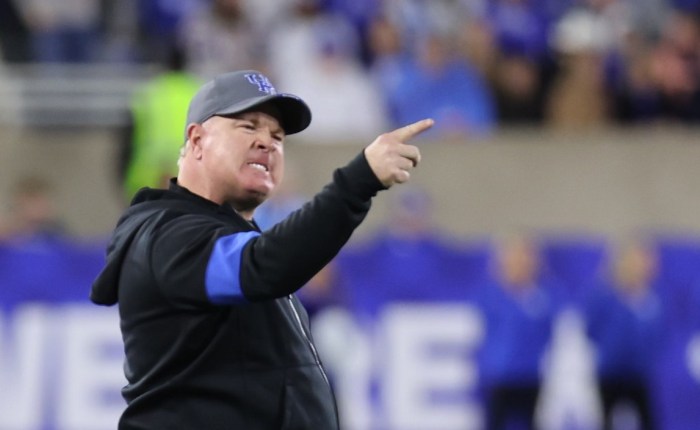
(LEXINGTON, Ky.) – Funny how one Saturday can change the entire temperature of the Bluegrass. Just a week ago, half of Big Blue Nation was ready to pack Mark Stoops’ bags for him. With Kentucky’s huge 38-7 victory over Florida on Saturday night, the path to bowl eligibility now becomes a whole lot clearer. Suddenly, the same folks who wanted Stoops’ head on a platter are out shopping for “In Stoops We Trust” T-shirts.

That’s life in the SEC—one minute you’re an overpaid underachiever, the next you’re the savior of the Commonwealth. But whether you were cheering Stoops before Florida or rediscovering your faith afterward, one thing remains constant: the man deserves to stay. Not because of one big win, but because of the foundation he’s built and the culture he’s created.

Let’s face it, the honeymoon was long over before tonight. The flowers had wilted, the champagne went flat, and the marriage between Mark Stoops and Big Blue Nation felt more like a 25-year-old couch—no longer comfortable, visibly soiled, and sagging in all the wrong places.

Everywhere you turned, folks were hollering for divorce. Social media was ablaze with “Fire Stoops” hashtags. Radio hosts were frothing at the mouth and ready to kick him to the curb and swipe right on someone—anyone—new.

Well, not anymore, my friend. Before we stick that “For Sale” sign in Stoops’ front yard, let’s take a deep breath, pour ourselves a glass of Kentucky bourbon, and think this through with a little perspective—and a dash of sanity.

For one, let’s talk dollars and sense. That buyout? Thirty-seven. Million. Dollars. That’s not a typo. That’s not Monopoly money. That kind of cash could fund an entire NIL war chest and keep Cutter Boley grinning for the next couple of years.

And let’s not forget history. Mark Stoops is the winningest coach in Kentucky football history. Think about that. More wins than Bear Bryant during his Kentucky days. More wins than Fran Curci, Jerry Claiborne, or Rich Brooks combined (well, close enough for rhetorical effect). Sure, some of those wins came against glorified high schools disguised as non-conference opponents, but they still count in the record book—and on the paycheck.

People forget how bleak it was before Stoops. Joker Phillips limped out the door with the fanbase howling. The program was a punchline, a perennial cellar dweller where bowl games were as rare as John Calipari NCAA wins post Covid. Stoops changed that. He brought stability. He brought hope. He brought swagger. And yes, he even brought us a ten-win season—twice! That’s not stale; that’s historic.

Now, I get it. Things felt stagnant the past couple of years. The offense sputtered forever, the defense gave up too many big plays, and the postgame pressers all sounded like reruns of Groundhog Day. Stoops kept saying, “We’ll clean it up; get back to work.” But it started feeling like the same spilled milk being mopped up year after year.

But let me ask the question that haunts every program stuck in the “fire him” cycle: Who you gonna get that’s better?

Seriously. Who?

Nick Saban’s busy counting his retirement checks. Kirby Smart’s not walking through that door. Urban Meyer? Please—he couldn’t even handle Jacksonville. And as much as people want to throw out names like Jon Sumrall or Will Stein, let’s pump the brakes. Sumrall’s a fine coach, but running Tulane isn’t the same as running an SEC program with boosters, egos, and ESPN cameras breathing down your neck. And Will Stein? He’s got promise, sure—but he’s barely had time to unpack at Oregon. Handing him the keys to Kentucky football right now would be like giving a 16-year-old your trusted Mercedes and hoping for the best.

Coaching transitions are messy. You could just as easily end up with the next hot coordinator who flames out in two seasons, leaving us all longing for the good ol’ days when Stoops at least got us to the Music City Bowl.

And here’s something people overlook: his players still believe in him. They play hard. They don’t quit. Even when the scoreboard turns ugly, they fight to the end. That’s not nothing. That’s culture—culture that Mark Stoops built brick by brick. You can’t fake that, and you certainly can’t buy it with NIL money. Remember when Kentucky teams used to fold faster than a lawn chair at a tailgate? Not anymore. This group—his group—competes, cares, and represents the program with pride. They don’t flinch. That’s his real legacy.

What Stoops provides—whether fans admit it or not—is stability. And in the volatile world of college football, stability is the rarest commodity. It’s not sexy. It’s not flashy. But it’s the bedrock on which long-term success is built. Programs like Iowa, Wisconsin, and Kansas State built entire identities on stability. They don’t panic after a bad season. They reload, recalibrate, and keep grinding.

And that’s what Stoops does best. He grinds. He builds men, not just football players. He develops two-star recruits into NFL draft picks. He preaches accountability, loyalty, and hard work. Those aren’t buzzwords; they’re virtues—spiritual ones, even.

Maybe that’s what this whole debate boils down to. We’ve lost our patience in a world of instant gratification. We want quick fixes, shiny new toys, and miracle seasons. But life—like faith—isn’t about the quick fix. It’s about perseverance through the dry spells. It’s about trust.

The Bible says in Galatians 6:9, “Let us not grow weary in doing good, for in due season we will reap, if we do not give up.” That’s not just good theology—it’s good football philosophy. Stoops has been sowing seeds in rocky soil for over a decade. He’s weathered storms, endured heartbreaks, and still kept this program relevant. That’s not a man you throw away. That’s a man you stand by.

So before you call the moving truck, Big Blue Nation, remember: the grass isn’t always bluer on the other side. Sometimes, the real victory is learning to bloom where you’re planted.

And if you don’t like that spiritual analogy, fine—think of it this way: $37 million buys a lot of forgiveness.

This article was originally written for distribution through Nolan Group Media publications.

Dr. John Huang is a retired orthodontist, military veteran, and award-winning author. Currently serving as a columnist for Nolan Group Media, he invites readers to follow him on social media @KYHuangs. Explore his latest, “Whining For Posterity,” and all his books at https://www.Amazon.com/stores/Dr.-John-Huang/author/B092RKJBRD
“Name, Image, and Mayhem: Kentucky’s NIL Cliffhanger”

“Name, Image, and Mayhem: Kentucky’s NIL Cliffhanger”

I’ll be the first to admit—I’m confused. Especially when listening to University of Kentucky Athletics Director Mitch Barnhart talk circles around himself.

In his interview with Matt Jones of Kentucky Sports Radio earlier today, Barnhart assured all the loyal BBN listeners that, even within this new landscape of college athletics, not only will UK not be cutting any sports, but he’s confident the university will be able to fund any new upcoming revenue share amounts.

Those are shockingly bold statements. The obvious retort is: How does Mitch know?

Because just moments earlier while addressing the media, Barnhart refused to disclose any specifics about the revenue sharing amounts, citing the “uncertainty” and “fluidity” of the entire new world order.

“We’re in the first month of this thing,” Barnhart told a roomful of attentive scribes thirsting after his every word. “Literally the first month. For anybody to sit in front of a group and say, ‘I’ve got all the answers after four weeks,’ good for you, good for you. I mean, we’ve talked about a decade’s worth of change that has happened in the last six to ten months of college athletics.”

“The change that has occurred has been massive,” he continued. “We don’t even have a governance structure in place really, to be honest with you.”  

I always knew college athletics was a cutthroat business. That’s why I titled my debut novel Name, Image, and Murder. It was a fictional whodunit loosely based on the chaotic new world of NIL—the Wild Wild West of amateur sports gone pro. But I’m starting to think fiction might be safer than what’s actually brewing behind the scenes in Lexington.

You see, the same school that gave us Adolph Rupp, Dan Issel, Anthony Davis, and eight national championships is now poised at the crossroads of an athletic identity crisis. Do we leverage our exalted status as the greatest tradition in college basketball? Or do we bow before the almighty dollar in a noble attempt to keep all our boats floating? NIL has officially graduated from “name, image, and likeness” to “nobody is listening”—at least when it comes to making choices regarding long-term sustainability.

And now, with the recent House v. NCAA settlement ushering in the brave new world of revenue sharing, UK Athletics is walking a tightrope strung between Rupp Arena, Kroger Field, Memorial Coliseum, and Kentucky Proud Park.

On paper, the new rules sound reasonable. Schools can now pay players directly—up to $20.5 million a year in shared revenue. Kentucky has fully committed to this model, even creating a snazzy new LLC called Champions Blue. Sounds like a superhero franchise, right? Champions Blue! Defenders of BBN! As technically a nonprofit organization, I’m not sure what to make of it. Cynics might call it a financial shell game that makes Enron look like Little League bookkeeping.

Here’s the problem. Paying players is expensive. Kentucky projects a $31 million deficit next year, even after slashing perks, borrowing from the university, and shaking every couch cushion from Pikeville to Paducah. And with the bulk of revenue earmarked for men’s basketball and football, you can kiss some non-revenue sports goodbye faster than a 2-seed getting bounced by Saint Peter’s—regardless of what Mitch promises.

But wait, there’s more! Earlier reports citing multiple reliable sources claim UK is devoting 45% of its revenue-sharing budget directly to Mark Pope’s team. Even though Mark Stoops debunked that statement as “absolutely untrue,” many won’t believe him. This is, after all, a basketball school. Except when the football team has ten-win seasons. Or when the volleyball team is hoisting SEC banners. Or when someone on the rifle squad or track team wins Olympic gold. You know, the other student-athletes, who apparently don’t get to eat from the same buffet.

That’s where the danger lies. Not in the fairness of it all—college athletics has never been fair—but in the fragility of it.

What happens when Title IX lawyers come knocking, wondering why the women’s soccer team is using 1997 cleats while the men’s basketball team is taking private flights to Maui (yes, remember Maui)? What happens when boosters get bored with writing six-figure checks for backups who never leave the bench? What happens when ticket prices go up again to cover costs, and the average fan can’t afford to sit in the rafters without taking out a second mortgage?

What happens when your favorite in-state walk-on is replaced by a five-star diva who’s demanding an exorbitant NIL deal, a YouTube series, and three coveted parking spaces on campus?

This is not just a UK problem. This is an everywhere problem. But here in the Bluegrass, where we measure time in Final Fours and football tailgates, we feel the tremors more than most. It’s hard to build “La Familia” when everyone’s negotiating like La Cosa Nostra.

And don’t get me wrong—I’m not anti-athlete. I’m all for players getting their fair slice of the billion-dollar pie. But when the pie crust is crumbling and the recipe keeps changing, it’s hard to know whether we’re baking a dynasty or our athletics director is just blowing hot air.

Champions Blue may turn out to be a genius model. Or it may be a cautionary tale studied by future ADs with degrees in both sports management and disaster response. In either case, the margin for error is thinner than Mitch Barnhart’s top button.

As for me, I’m thinking about writing a sequel. Name, Image, and Mayhem: The NIL Strikes Back. It’ll feature a fictional blue-blood program that tried to buy its way to the top, only to realize it couldn’t afford loyalty, chemistry, or the next contract buyout. Spoiler alert: the villain isn’t the athlete, the booster, or the NCAA.

It’s the system. A system we all helped create. A system now careening down a one-way road where amateurism is dead, loyalty is negotiable, and tradition is mocked and poo-pooed.

So buckle up, BBN. The real madness isn’t in March anymore. It’s happening right now—behind closed doors, in budget meetings, where the stakes are higher than a last-second Aaron Harrison three-point bomb.

May God have mercy on us all.


Dr. John Huang is a retired orthodontist, military veteran, and award-winning author of Name, Image, and Murder. He serves as a reporter and columnist for Nolan Group Media. Follow him @KYHuangs on social media and find his books, including the soon-to-be-bestselling Whining for Posterity, here: https://www.Amazon.com/stores/Dr.-John-Huang/author/B092RKJBRD

The Big Dog Defects: Loyalty Goes to the Dogs

The Big Dog Defects: Loyalty Goes to the Dogs

They say dogs are man’s best friend. They’re loyal to a fault and faithful to the end. But what happens when the Big Dog himself starts sniffing around another yard and decides the grass really is greener over in the Commonwealth’s least fashionable zip code?

Yes, Vince Marrow—Kentucky’s own gravelly voiced, Fritos munching recruiting wizard, tight ends coach extraordinaire, sideline spiritual advisor, and Mark Stoops’ trusty right-hand man—has defected to the enemy. And not just any enemy, mind you, but to Louisville. As in “Loo-a-vul.” As in red. As in the sworn arch-nemesis of all things blue and righteous. When I first heard the news, I didn’t know whether to weep, rage, or give Vince the one-finger salute on the way out.

For a dozen years, Big Dog barked loud and proud in Lexington. He wagged his tail at five-stars, howled with joy after bowl wins, and lifted the recruiting ceiling on a program that used to feast solely on moral victories and the occasional MAC pretender. Alongside Stoops, he turned UK Football into a respectable—and sometimes even feared—SEC contender. And now? Now he’s swapping out his blue windbreaker for a pair of Cardinal-red socks? Say it ain’t so, Vince.

To most of BBN, this is more than just a coaching move. This is betrayal at a Shakespearean level. This is Brutus plunging the knife into Caesar’s back or Larry Bird donning purple and gold.

Now before you tell me this is “just business,” spare me. That’s what everyone says nowadays. “It’s a business decision,” they mutter, as they pull up roots, ghost their friends, break their commitments, and leave their spouses for yoga instructors named Skyler. Somewhere along the way, loyalty became a punchline—something to scoff at, like Blockbuster Video or landline phones.

Marrow leaving Kentucky isn’t just a loss for Stoops. It’s a snapshot of society’s frayed relational fabric. Once upon a time, people stayed in one place, built deep roots, and grew old beside their neighbors and colleagues. These days, folks are constantly chasing “what’s next.” A few more dollars. A better title. More retweets. Less accountability. Like mice on a merry-go-round, we leap from opportunity to opportunity, always certain the next nut will be bigger and shinier.

Remember when a man’s word was his bond? When you could shake hands on something and actually mean it? I imagine Stoops and Marrow once made pacts in the bowels of Commonwealth Stadium. Pacts sealed not in ink, but in late-night film sessions and on recruiting trips to the barren fields of Ohio. You don’t just walk away from that history without leaving some blood on the blackboard.

Of course, I get it. Coaches leave. Programs evolve. People need to feed their families. Vince is free to make his own choices, just like I was free to leave my orthodontic practice to write books that don’t sell. Only Vince and Stoops really know what went on behind the scenes.

But can’t we still mourn the loss of something deeper? The erosion of loyalty. The death of staying power. The idea that you stick with your people—even when the wins are sparse and the haters are loud.

What hurts most is that we thought Vince was different. He wasn’t just a coach—he was our coach. He loved Big Blue Nation. He talked about “La Familia.” He posed with babies in Kroger parking lots. He always hinted that he’d “never wear red.” But you know how that goes—just ask Judas. Or LeBron. Or that youth pastor who used to lead worship and now sells crystals in Sedona.

And of all places… Louisville? That’s like Batman leaving Gotham to join the Joker’s henchmen. It’s like Colonel Sanders opening a Raising Cane’s. I fully expect Vince to start flashing the “L’s Up” and waxing poetic about the urban charm of the Gene Snyder Freeway.

So, what do we long-suffering UK football fans do now?

Well, we grieve. We rage. We write impassioned blog posts with overwrought metaphors. We take a HUGE breath…and then we go back to rooting for the name on the front of the jersey. Because at the end of the day, loyalty may be dying—but we don’t have to be part of the kill squad.

Let’s be loyal to our teams. To our friends. To our families. To our churches, our communities, and yes—even to the coaches who leave us for a shinier gig across enemy lines.

Maybe—just maybe—if we all doubled down on loyalty in our own little spheres, then someday, someone like Vince Marrow might actually stay.

But until then, let me make one thing perfectly clear: I will never, ever cheer for Louisville. Not for a player. Not for a coach. Not for a charity dunk contest versus Duke. Not even if Vince himself buys 500 copies of my newest book, Whining for Posterity, and hands them out at a Cardinal tailgate.

Because some of us still believe in loyalty. Even when the Big Dog runs away.

Dr. John Huang is a retired orthodontist, military veteran, and award-winning author. Currently serving as a columnist for Nolan Group Media, he invites readers to follow him on social media @KYHuangs. Explore his debut novel— “Name, Image, and Murder”—and all his books at https://www.Amazon.com/stores/Dr.-John-Huang/author/B092RKJBRD

From Omaha to Oh-Crap: Is this the Beginning of the End?

From Omaha to Oh-Crap: Is this the Beginning of the End?

(We all hoped at the time that Kentucky’s appearance at last year’s College World Series would become a watershed moment in UK Athletics.)

I’m not sure exactly when it happened. Maybe it was while I was loading up on barbecue brisket and burnt ends in Omaha last June. Or perhaps it was during that rare moment of peace when the volleyball team swept another conference foe and all felt right with the world. But somewhere along the way, I started to believe that Kentucky Athletics had turned a corner.

We weren’t just a basketball school anymore. We weren’t even just a basketball and football school. We had become a full-on athletic juggernaut. A Director’s Cup darling. A holistic haven of sporting excellence. We won national championships in Volleyball and Rifle. We fielded top-tier teams in Tennis, Gymnastics, and Soccer. We had superheroes like Sydney McLaughlin and Abby Steiner running Track.  And—oh yes—we made it to Omaha, the mythical mountaintop of college baseball, for the very first time.

That’s why Kentucky’s brutal season-ending defeat to West Virginia last night had me reaching for the Xanax. The Cats blew two five-run leads and lost 13 – 12 to the Mountaineers in the NCAA regional finals. If last year was a mountaintop moment, this year felt like hanging on to the ledge with one sweaty hand.

Now I know what you’re thinking. “John, chill out. We made the tournament. Coach Nick Mingione took a roster with thirty new players, fought through a rash of injuries, and survived one of the nation’s most difficult schedules to come within three wins of a return to Omaha.”

Sure, I get it. If it weren’t for bad luck, the Cats wouldn’t have any luck at all. In just this one season, the team lost 12 one-run ballgames for god’s sake. But let’s not gloss over the cold, hard fact that Kentucky Baseball finished just three rungs from the bottom of the conference ladder. That 13th place SEC finish makes you wonder if last year’s ascent was a fluke more than a foundation. In fact, is Kentucky’s decades-long ascension up the ladder of SEC respectability across all its sporting programs also entirely a fluke?

In an era where there’s so much speculation about trimming budgets and cutting out “minor” sports, that’s certainly a question worth pondering.

Let’s take a quick look at the 2024 – 25 conference standings that I pulled directly off the Southeastern Conference website, shall we? Kentucky’s rank among all our SEC brethren is probably lower than you realized.

  • Volleyball: 1st (okay, we’re off to a hot start. Go, Coach Skinner.)
  • Women’s Basketball: T4 (Kudos also to Coach Kenny Brooks in his first year at the helm.)
  • Men’s Basketball: 6 (What used to be a disaster, we now consider respectable.)
  • Gymnastics: 6 (meh)
  • Women’s Soccer: 8 (meh)
  • Women’s Outdoor Track & Field: 8 (meh)

Not bad so far, but now things drop quicker than Stoops’ offense on 3rd and 12.

  • Men’s Tennis: T8 (disappointing, especially after the previous championship near misses.)
  • Men’s Swimming & Diving: 9 (disappointing)
  • Women’s Indoor Track & Field: 10 (disappointing)
  • Men’s Cross Country: 10 (disappointing)
  • Women’s Tennis: 11 (disappointing)
  • Women’s Swimming & Diving: 11 (disappointing)
  • Women’s Golf: 11 (disappointing)
  • Men’s Indoor Track & Field: 12 (disappointing)
  • Men’s Outdoor Track & Field: 13 (disappointing)
  • Baseball: 13 (devastating)
  • Softball: 13 (devastating)
  • Football: 15 (disastrous)
  • Women’s Cross Country: 15 (disastrous)
  • Men’s Golf: 15 (disastrous)

Ladies and gentlemen, we’ve got a problem. Those results are concerning to me.

Look, I’m not just a sports fan. I’m a University of Kentucky sports fan. A proud, hopelessly devoted disciple of all things Blue and White. I watch Women’s Golf on the SEC Network. I know how many meters are in a 4×400 relay. I can name two people on the Tennis team without Googling. This is personal.

So, what in the name of Mitch Barnhart is going on?

We can’t blame COVID. That ship sailed a couple of years ago. And don’t go pointing fingers at NIL either. Every other SEC school is playing under the same unspoken “pay to play” rulebook. We’ve got the resources. We’ve got the facilities. We’ve got the best fans in the world. Coaching salaries? Let’s just say nobody’s clipping coupons. We give $100K raises to O-line coaches without batting an eye. So why do we suddenly look like we’re fielding club teams in a conference of powerhouses?

Could it be complacency? Bad luck? Poor hiring? Is it that Native American burial ground supposedly hidden under Kroger Field exacting revenge? Or maybe it’s just the cyclical nature of sports and our turn in the barrel has finally come (remember, even Tennessee and Florida sucked at football for a few years). I’m hoping it’s just a temporary blip.

Whatever the reason, it’s scary that the trend may not be our friend. We’re turning into Vanderbilt without the brains.

Feel free to whine and lament. The stark reality is that UK Athletics is simply not where we were a decade ago. A football team that won bowl games. A basketball team that hadn’t yet lost to Saint Peter’s. A damn good softball team. Life was good.

But now? Now we’re in danger of becoming the Power Five equivalent of a mid-major. Scrappy. Somewhat respectable. Occasionally dangerous—but mostly just hanging around. Maybe IT IS THE MONEY and the lack of big donors and corporate sponsorships after all.

I’m not trying to be overly dramatic. (Okay, maybe a little bit.) But when you love something as much as I love Kentucky sports, it’s hard not to mourn when it starts slipping away. And while I’ll always be proud of our athletes and grateful for the moments of magic they still provide, I can’t help but feel like the era of across-the-board Big Blue brilliance is in the rearview mirror.

Maybe Mark Pope resurrects the magic on the hardwood. Perhaps the football team surprises us all. Maybe…just maybe…Coach Skinner reloads and saves the day.

Or maybe, a boatload of NIL cash drops directly into our laps like manna from heaven.

We can always dream, can’t we?

Dr. John Huang is a retired orthodontist, military veteran, and award-winning author. Currently serving as a columnist for Nolan Group Media, he invites readers to follow him on social media @KYHuangs. Explore his debut novel— “Name, Image, and Murder”—and all his books at https://www.Amazon.com/stores/Dr.-John-Huang/author/B092RKJBRD
It Still Means Something”: Why the Kentucky Brand Isn’t Just a Jersey

It Still Means Something”: Why the Kentucky Brand Isn’t Just a Jersey

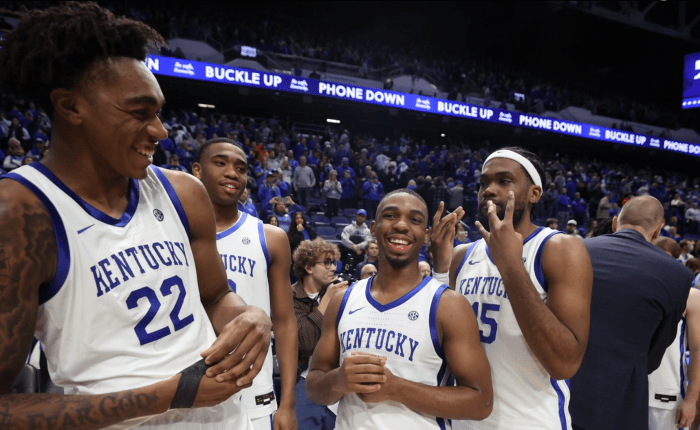
Kentucky players celebrating the name on the front of the jersey after their big 106-100 win over the eventual national champion, Florida Gators, in Rupp Arena on January 4, 2025.

(LEXINGTON, Ky.) – In an era where players are more likely to follow Benjamins than banners, where “NIL” has replaced “MVP” in the recruiting wars, and where the transfer portal spins faster than my dog doing zoomies, one might wonder—Does the name on the front of the jersey still matter anymore?

At his recent media conference held earlier this week, Kentucky Basketball head coach Mark Pope answered that question with a resounding, heartfelt yes. And this wasn’t just your typical lukewarm head nod. No, this was the type of yes that gives you chills. The kind that makes you want to lace up your Nikes, high five your portly neighbor, and run through the proverbial brick wall.

“It matters,” Pope said. “There’s nowhere like this.”

He’s not wrong. Kentucky Basketball isn’t just a brand. It’s the program with the greatest tradition in the history of the game. It’s a baptism together with a rite of passage wrapped up in eight NCAA championship banners, 61 NCAA Tournament appearances, and the most all-time wins of anybody still playing. It’s Joe B. and Jamal. It’s Wah Wah and Wall. It’s five national championships in five different decades and a fanbase that will passionately defend the honor of Farmer, Pelphrey, Feldhaus, and Woods like they’re…well…Unforgettable.

But in this new wild west of college hoops—where loyalty is traded for luxury and bluebloods can be outbid by programs with booster billionaires—it’s fair to ask: Does Kentucky still hold sway with this new generation of coddled, roundball mercenaries raised on highlight reels and endorsement deals?

Pope thinks it does. Scratch that—he knows it does. And surprise, surprise—his answer isn’t only about tradition for tradition’s sake. It’s about transformation, character, work ethic, and servant leadership. About what happens when you willingly pour yourself into something bigger.

“If you come in here not understanding or appreciating that,” Pope warns, “I think your chances of success are not very high.”

That’s not gatekeeping. That’s the gospel according to the Pope.

Because this place is different. It asks more of you. More than just your wingspan or your vertical or your TikTok follower count. It demands your heart. Your humility. Your willingness to dive for loose balls, to play through bruises, to pass up a good shot for a great one. To give your teammate the limelight just because he’s your teammate. It demands that you surrender just a little piece of yourself—not to lose your identity, but to elevate it.

And that’s where the magic happens.

“When you learn that concept—of if I give a little bit of myself, it actually elevates myself—that’s what’s great about this beautiful, brilliant team sport of basketball,” Pope said. “The pathway to become immortal is very different than this world wants to teach us.”

Mic. Drop.

Yes, kids today are soft. There, I said it. Many may be distracted by the siren song of short-term riches. But Pope isn’t recruiting kids who just want a wheelbarrow full of cash. He’s recruiting young men who want to matter and make a difference. Who’ll leave legacy footprints in the bluegrass that echo through the rafters long after they’re gone. People like Issel, and Goose, and Macy, and Walker, and Davis.

Think about it: Where else can you become immortal at the ripe age of nineteen? Where else does a walk-on get a standing ovation just for checking in? Where else can you go from obscurity to legendary in a single March weekend? Where can you be known simply for sporting a unibrow, girls kissing your car bumper, or wearing jorts for heaven’s sake?

That’s not marketing fluff put together by the suits at JMI. That’s lived experience. That’s legacy. And it’s now being passed down from generation to generation.

“Our guys last season set a beautiful, brilliant standard of what it means to be a Kentucky Basketball player,” Pope said. “We’re leaning on them a lot… their video, their outtakes, their clips, their comments—just to help understand that.”

Because—as former coach John Calipari famously said on so many occasions—Kentucky isn’t for everyone. And that’s precisely the point.

You can go be a great basketball player at a lot of places. Pope knows that. Heck, he’s played and coached in a few of them. But being great here? That’s a different kind of great. That’s statue-worthy great. That’s raise-your-jersey-to-the-rafters great. That’s can’t-walk-through-Kroger-without-grandma-taking-a-selfie great.

So yes, the name on the back may earn you the check. But the name on the front? That’s what earns you the chapter in Kentucky lore.

Mark Pope gets it. He lived it. And now, he’s preaching it. Loudly. Passionately. With a blend of fire and sincerity that makes you believe Kentucky Basketball hasn’t lost its way after all. It’s just waiting for the right kind of player to find theirs.

Because for all the bells, whistles, dollar signs, and distractions of this modern basketball age, one truth remains: This place is different.

And if you can understand that?

You’re going to be crazy successful.

Or immortal.

That’s the gospel truth. Sign me up, Coach!

Dr. John Huang is a retired orthodontist, military veteran, and award-winning author. Currently serving as a columnist for Nolan Group Media, he invites readers to follow him on social media @KYHuangs. Explore his debut novel— “Name, Image, and Murder”—and all his books at https://www.Amazon.com/stores/Dr.-John-Huang/author/B092RKJBRD

This blog posting was first submitted as a column for Nolan Group Media publications.

The Epic Return

The Epic Return

If Kentucky under Rick Pitino was Camelot—a kingdom of discipline, full-court pressure, and three-point barrages—then John Calipari’s Kentucky was Hollywood.

It was glitz, glamour, and one-and-done superstars walking the red carpet to the NBA. It was the biggest show in college basketball, headlined by a charismatic director who knew how to market his stars. There were blockbuster seasons (2010, 2012, 2015), shocking flops (Evansville, St. Peter’s, Oakland), and a script that, in the end, started feeling a little too familiar.

Like any Hollywood epic, it had its golden era, its sequels that didn’t quite measure up, and ultimately, an ending that unceremoniously flopped. But for over a decade, Big Blue Nation lived under the bright lights—forever in the hunt—hoping that every season could produce the next big championship hit.

Now, the cameras have moved on, the set has changed, and Calipari has left town. But on February 1, the former leading man returns to see if the audience still remembers his name.

Of course we remember. For 15 years, Coach Cal was the man in Lexington, patrolling the Kentucky sideline with designer suits, slicked-back hair, and a bottomless supply of “YOU PEOPLE ARE CRAZY” clichés. He promised the Big Blue Nation “we eat first,” and for a while, we did—four Final Fours, a national title, an undefeated regular season, and 25 NBA lottery picks will do that. But over time, the meals got smaller, the bill got bigger, and the chef started arguing with the waitstaff. When Mark Pope was handed the keys last April, many in the fan base felt relieved, a bit like ending a long-term relationship that had irreparably soured and gone stale.

But here’s the thing about breakups—closure is never real until you see them again.

So here comes Cal, rolling into town this weekend wearing red, looking like the guy who just bought a sports car after a midlife crisis. He won’t say it, but he’d love nothing more than to walk into Rupp, stick his hands in his pig-sooie pockets, and smugly strut out with a win.

The reception? Oh, it’s complicated.

If I were emperor of BBN, I would order a rousing standing ovation when Calipari is introduced. After all, the man deserves it. He’ll be in the rafters one day. The guy devoted 15 years of his life to the program, the university, and the community. Sure, he won a lot of ball games. But he also used his enormous platform to spearhead relief efforts wherever and whenever disasters hit, and people were hurting. On a personal level, he also wrote the foreword to two of my books. With the entire college basketball world looking on, how classy would it be if everyone stood and cheered.

There will be cheers because, let’s face it, he did bring home banner No. 8. There will also be boos, because 9, 10, and 11 never followed. Some fans will clap out of respect, others will heckle because they feel like the last four years were a hostage situation. And still others—perhaps the most honest among us—will feel an odd mix of nostalgia and irritation, like when you really enjoyed the movie but felt the ending royally sucked.

Tom Leach had a very insightful take when he appeared on the Round of Shots podcast earlier last week.

“He’ll get booed just like Rick did,” predicted the Voice of the Wildcats. “It’ll be a pretty strong chorus of boos I’d imagine. There’ll be some mixed emotions for Cal on that. If you’re in that situation and you’ve coached at Kentucky, you may be a little insulted if they didn’t boo you.”

With Calipari’s massive ego, that comment may just be spot on. So, let’s cheer at his intro. But as soon as the ball is tipped, we’ll boo until our heart’s content.

Whatever happens, one thing is for sure: February 1 is must-watch theater.

Because every Hollywood story gets a sequel—whether you want it or not.

Dr. John Huang is a retired orthodontist, military veteran, and award-winning author. Currently serving as a columnist for Nolan Group Media, he invites readers to follow him on social media @KYHuangs. Explore his debut novel— “Name, Image, and Murder”—and all his books at https://www.Amazon.com/stores/Dr.-John-Huang/author/B092RKJBRD
Cats’ Meow: Ole Miss Smackdown

Cats’ Meow: Ole Miss Smackdown

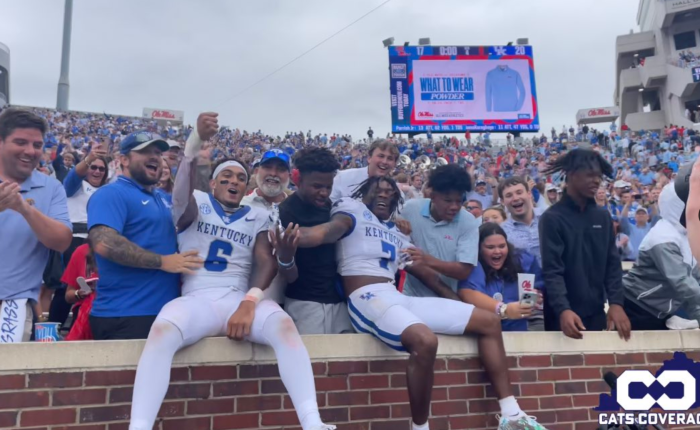
Dane Key (career-high eight catches for 105 yards) and Barion Brown (five catches for 88 yards) celebrate one of the most improbable upsets in Kentucky Football history. Photo Credit: Tres Terrell / Cats Coverage.

(ATLANTA, Ga.) – If you happened to hear some loud meowing coming from Oxford, Mississippi, this past Saturday, you weren’t mistaken. No, it wasn’t a new strain of southern Mississippi feline infestation—it was the Kentucky Wildcats who went prowling deep into Rebel territory and left with a purr-fectly thrilling 20-17 victory. And just like that, Big Blue Nation experienced the kind of upset that gives SEC elite sleepless nights and Wildcat fans reason to crowd surf and burn couches the rest of the week.

Okay, I have to come clean. I didn’t see the game. In fact, I couldn’t even keep up with it in real time. Ah, the joys of modern air travel. There I was, soaring above the clouds, trying to connect to the internet with the same desperation Mark Stoops mustered calling a 4th-and-7 deep in his own territory. My Wi-Fi was about as reliable as a Tennessee fan’s manners, buffering at every crucial moment. But even from 30,000 feet, the excitement of Kentucky’s monumental upset win over No. 6 Ole Miss somehow seeped through, giving me one of my top football fan moments of all time. I still think that Florida upset from a few years back was the biggest (I was there in person for that magical three-decade streak-buster). But this one—even in abstentia—comes in hot on its heels.

Rebel Yell Turned to Rebel Yawn

Here’s what I pieced together from my lofty perch in seat 16E. The stage was set for a party at the Grove. Ole Miss, the high-flying, swaggering Rebels, rolled in undefeated at 4-0, daring anyone to slow them down. They led the nation in scoring, they led in defense, they led in just about everything except humility—and let’s be honest, who needs that in football? But the Cats, sitting at a less-than-flashy 3-2, came to crash the party, with quarterback Brock Vandagriff in the starring role.

What Ole Miss hadn’t counted on was a night filled with bizarre twists and turns. The first possession went according to script with the Rebels slicing downfield like a hot knife through butter for a 7 – 0 lead. For Wildcat fans, this one was turning ugly early. But Vandagriff, who had previously been allergic to hot starts, responded in kind by leading Kentucky down the field on the Cats’ first possession, and what do you know? Points! A field goal to kick things off—a small victory that had many in BBN saying, “Not so fast, my friend.”

Kentucky’s Big Bet Pays Off

The rest of the game proceeded like a chess match, except Mark Stoops decided to channel his inner Lane Kiffin and go all riverboat gambler. With just over two minutes to go and the Cats facing 4th-and-7 from their own 20-yard line, Stoops said, “Why play it safe?” No more “Captain Conservative” label—he called the play to let it fly. Vandagriff did just that, connecting with Barion Brown on a stunning 63-yard bomb. A heave, a prayer, and suddenly, Kentucky had an opening.

Barion Brown—speedster extraordinaire—ran like he was tired of jet sweeps and with that one electrifying fly pattern, he set up the winning touchdown. Tight end Josh Kattus, atoning for a couple of previously dropped passes, grabbed a fumbled loose ball at the two-yard line and lunged into the end zone. It wasn’t exactly what you’d call textbook offense, but as every Kentucky fan knows, beauty in football is in the eye of the scoreboard.

Defense, Deliveries, and Desperation

Pay Brad White whatever he wants. The Rebels came into this matchup thinking they’d walk all over Kentucky, but instead, they got smacked in the mouth by a Wildcats defense that wasn’t having any of it. Octavious Oxendine roared like his namesake in the trenches, recording two huge sacks and living in the Rebels’ backfield rent-free. Then there was JQ Hardaway—he didn’t just come to play, he came to make life miserable for every Rebel who dared cross him, setting a career-high 11 tackles, and yes, forcing a fumble too. Deone Walker was Deone Walker—enough said.

Ole Miss was punting left and right, which is something they’re just not used to doing. Kentucky forced five punts on a team that had only punted four times in their previous four games combined. Can anyone say three-and out?

And speaking of kicking, there was Kentucky’s kicker Alex Raynor—Mr. Automatic—who’s quickly turning Kentucky into Field Goal U. Two more field goals extended his streak to a school-record 14 straight. Somewhere in the Bluegrass, Austin MacGinnis must have been raising a glass in salute.

Clutch Cats Close It Out

The game-winning drive had all the trappings of Kentucky drama—close calls, fumbles, and sheer, unfiltered joy. Kattus’ recovery and dive into the end zone with 2:25 left in regulation was the exclamation point. The kind of sentence that said, “Hell, yeah. Eat this, all you doubters who sold your season tickets after the South Carolina loss!” But with Ole Miss still breathing, it was J.J. Weaver, forever a fan-favorite and all-around game-wrecker, who had the final word, sacking Jaxson Dart and effectively shutting the door on Ole Miss’s hopes of a last-minute miracle. Their last-ditch field goal attempt shanked embarrassingly wide, and Vaught-Hemingway Stadium fell into a stunned silence—the same stunned silence pouring out from the heart of Athens when a Kirby Smart-coached defensive juggernaut falls behind by four touchdowns.

History and Context, Whimsical and Wild

This was Kentucky’s first win at Ole Miss since the glory days of 1978. You heard that right—disco, polyester, and a young Mark Stoops with plenty of hair and no pot belly. Now, some forty-six years later, Stoops orchestrated his magnum opus—beating a sixth-ranked Ole Miss squad in their own house when nobody gave him a chance. It was Kentucky’s highest-ranked road win at an SEC campus stadium ever. Not at No. 10 Vanderbilt in 1947, and not even over No. 1 Ole Miss in Jackson in 1964—it’s this one. And for Mark Stoops, who’s now in his 12th year and building a statue one giant win at a time, this was his 12th-ranked victory, his highest yet, and perhaps his most whimsical of all.

The critics may say Stoops can’t win the big one, but if upsetting No. 6 Ole Miss on the road isn’t a big one, what is? Since 2018, Kentucky is 12-16 against AP-ranked teams—not the kind of record that gets engraved in marble, but for a program once synonymous with SEC cellar-dwelling, it’s nothing short of a revelation.

Enjoy it Cat fans.

I’m still flying above the clouds.

Dr. John Huang is a retired orthodontist, military veteran, and award-winning author. He currently serves as a columnist for Nolan Group Media. You can follow him on social media @KYHuangs and check out his debut novel—“Name, Image, and Murder”—and all his books at https://www.Amazon.com/stores/Dr.-John-Huang/author/B092RKJBRD

This post appeared first as a column for Nolan Group Media publications.

Back to the Future

Back to the Future

Mark Pope and Coach Rick Pitino enjoying the good times after Kentucky’s 1996 Championship run (David Perry/Lexington Herald-Leader staff file photo).

(LEXINGTON, Ky.) – The old has gone, the new has come.

In his farewell video to Big Blue Nation, John Calipari graciously acknowledged that the Kentucky basketball program needed a change at the top. Many of you agreed with him. Postseason wins had dwindled. Fan morale was at an all-time low. After the disappointing results from the last four years, Coach Cal’s snarky quips and swaggy braggadocio had turned a bit stale for anyone still gullible enough to listen. It was indeed time for a new voice.

Exit Boss Hogg. Enter Mark Pope.

News that the 51-year-old former Wildcat was taking over as the grand pooh-bah of college basketball’s Roman empire first leaked out late on Thursday night. With Billy Donovan still considered a viable candidate, the quick decision caught many by surprise. In fact, the mere mention of Pope as a serious choice generated more outrage initially than any debate on gun control, abortion, or unisex bathrooms.

Twelve hours later, however, the mood magically shifted. Although a few dissenters stood firm—and the “fire Mitch Barnhart” sentiments remained as ubiquitous as ever—the rest of Big Blue Nation began buying in and circling the wagons. After all, Mark Pope was one of us—a product of the glory years of the mid-90s, when the name on the front of the jersey instilled an overwhelming sense of pride, accomplishment, and honor to anyone heard cheering in the commonwealth. Plus, unlike Dan Hurley and Scott Drew, the man wanted to be here. He coveted the job.

In addition, Pope could coach. His teams at BYU played an exciting brand of basketball that spread the floor, shot threes with impunity, and actually ran in-bounds plays. On top of that, Pope was smart—a Rhodes Scholar candidate who completed three arduous years of medical school before chucking it all to pursue his coaching passion. Who in their right mind does that?

Ringing character endorsements provided the crowning coup de gras. Former teammates dubbed Pope as the ultimate leader with an infectious positivity that could move mountains. His former college coach—known for a few scandalous indiscretions of his own—attested on video to Pope’s moral integrity and grit.

Through it all, one important question loomed: Could Pope recruit? Time will soon tell. But given the blue-blooded resources now at his disposal, I’d say the chances are excellent. A just-announced $4 million injection into the Big Blue NIL fund certainly makes success more probable. He’ll need every penny, though. After John Calipari flew the coop, the cupboard for next year is frighteningly bare.

Putting all that aside, here’s what’s most astounding to me. Pope’s hiring is more than just a changing of the guard. His blink-of-an-eye ascension to the throne has resulted in something extraordinary. It’s miraculously galvanized the entire fan base in one unexpected fell swoop, giving every citizen of Big Blue Nation a lifesaving shot of adrenaline just when they needed it the most. By handing Mark Pope the keys to the kingdom, we’ve reconnected with our glorious past and recaptured everything that was once true, right, noble, pure, and admirable about the program we all knew and loved.

Okay—I’ll admit it—I’ve undoubtedly tasted the blue Kool-Aid. But here’s the thing. I’m not quite swallowing it just yet. 

Ultimately, Mark Pope will be judged on one thing only—national championships. Adolph Rupp garnered four of them before being forced into retirement in 1972. Since then, four of Rupp’s successors, Joe B. Hall, Rick Pitino, Tubby Smith, and John Calipari have added additional national titles to Kentucky’s trophy case.

Will Mark Pope be the fifth?

It’s a daunting question for a new hire right out of the gate—especially to one who hasn’t won a single NCAA tournament game. But it’s also not unfair to ask it under the circumstances. Because the bar is always set unreasonably high in the Bluegrass. Mind you, the program with the greatest tradition in the history of college basketball doesn’t hang banners for Sweet 16s or Elite Eights. You won’t find participation trophies for Final Fours.

Mark Pope knows all that. And yet, he’s still willing to forsake the comforts of Provo, Utah—where expectations are much more pedestrian—to plunge willy nilly into the soul-sapping vortex that awaits him back in Lexington.

“UK changed my life forever as a human being,” Pope said in his introductory statement. “The love and passion I have for this program, this University and the people of the Commonwealth goes to the depth of my soul.”

For that reason alone, all Kentucky fans need to rally behind him. I’m all in for now. And for the sake of the kingdom, you should be too.

Dr. John Huang is a retired orthodontist, military veteran, and award-winning author. This blog post was originally written as a sports column for Nolan Group Media publications. You can follow Dr. Huang on social media @KYHuangs and check out all his books at https://www.Amazon.com/stores/Dr.-John-Huang/author/B092RKJBRD
A Legacy Renewed

A Legacy Renewed

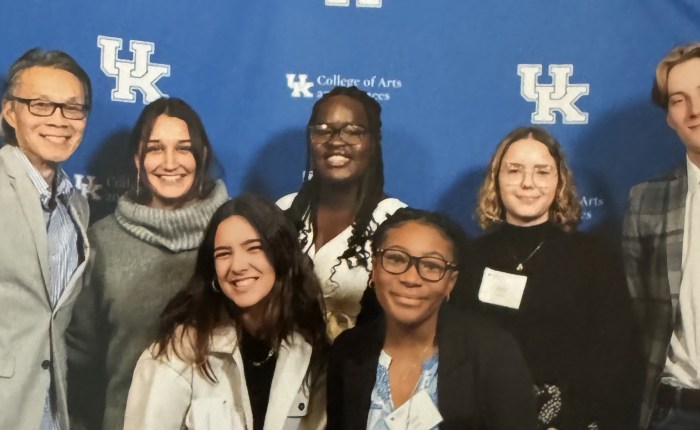
Me, with scholarship recipients at the recent Dean’s Circle Donors Luncheon sponsored by the UK College of Arts and Sciences.

I miss my dad. It’s hard to believe it’s already been over two years since he died. I think about him a lot—much more so it seems as the days slip away.

I find myself thinking also about his circle of influence. As his eldest-born son, his influence on me was meaningful and profound. But during his ninety-three years on the face of this earth, what legacy did he leave behind to the many others he encountered?

Come to think of it, what lasting legacies do any of us leave behind? The answer, I’m afraid, is slim to none. Most legacies fade away like yesterday’s news. Once you’re laid out on that cement slab, people quickly forget the things you’ve accomplished.

Just look at the great athletes of our generation. After Father Time catches up with them and their playing careers are kaput, no one remembers them anymore. They’re all distant memories, reduced to a small footnote in the annals of sports history.

An even better example are the legacies of U.S. presidents. Here you have people who at one time held the most powerful positions on the planet. And yet, other than George Washington, Abraham Lincoln, and Franklin Roosevelt, we can’t really recall any of their most significant achievements.

What did Zachary Taylor or Millard Fillmore ever do?

Here’s my point. My dad was not a transcendent athlete or famous political figure, but he was legacy smart. Before he left us, he directed a substantial part of his life savings towards scholarships at Centenary Church and at the University of Kentucky, knowing full well that education has a transformative and lasting impact.

I’ll admit I bristled a bit when I heard he was giving away my inheritance. But practically speaking, it made sense. Years from now, those scholarships would be worth a heck of a lot more than an African safari or a new Mercedes.

In that vein, I now present to you “Family Strong,” a memoir that my father meticulously crafted before his passing. It’s not just a book; it’s a beacon of hope, a reminder that our stories can create lasting impact for others in our own circle of influence. By purchasing the book, you not only gain insights into my dad’s remarkable life, but you also become a permanent part of the scholarships he established, furthering his legacy of belief in the transformative power of education and academic achievement.

“Family Strong” takes you on a journey from Fujian, China, to the heart of America, weaving together a tapestry of faith, love, and perseverance. My dad’s inspirational story embodies the American Dream in action, showcasing virtues like industriousness, honesty, humility, selflessness, and love. Through his vivid recollections, you’ll gain a unique perspective on the American immigrant experience during the 1950s and ’60s—all sprinkled with rich doses of humor, wisdom, and cultural insights.

This memoir, however, is not just my dad’s story told in his own words; it’s a celebration of love, faith, and family. As you explore his amazing life, you’ll also discover these similar narrative themes coming from us—his children and grandchildren—thus adding depth and warmth to the overall tale.

Moreover, the book pays homage to my dad’s legacy through the aforementioned Huang Family Scholarships. Established in June 2022, these scholarships inspire academic success, hard work, and a spirit of learning that transcends time.

Ultimately, “Family Strong” is an invitation to embark on a journey of faith, love, and the pursuit of your own dreams. My dad’s life, with all its trials and triumphs, serves as an inspiration for you to reflect on your own unique journey and the personal legacy you wish to leave behind.

Please join me in spreading the good word about “Family Strong” and be a part of preserving my dad’s legacy for generations to come. Remember, your purchase is not just a transaction—it’s a step towards ensuring that his story continues to inspire, motivate, and impact lives.

Click on the link below to purchase. Note that kindle, paperback, and hardcover versions are all available.

https://www.amazon.com/dp/B0CTD1ML8J

Once you’ve made a purchase, please let me know either through direct message or email (KYHuangs@aol.com) so that I can include your name as a permanent part of the scholarship legacy.

THANK YOU!

“From generation to generation – Dr Huang came to Kentucky and fulfilled an American dream for his children, their children and those who will follow in extending a legacy of goodness, kindness and a love for his colleagues, students and the Wildcats.”        

Dr. Eli Capilouto, University of Kentucky President

“As a pastor, I meet many people who are extremely kind, who are humble and who have accomplished great things. I’ve met very few who can be described in all three ways. Dr. Huang was a man of impressive achievement, yet he respected others and was a true witness of his deep, Christian faith. His autobiography is not only interesting but so very inspiring.”

—James Williams, Centenary Church Lead Pastor

“This book serves to witness that our Lord Jesus Christ is merciful, full of love and grace, and is a good Shepherd who always wants to find and save His lost sheep.”

—”Pete” Huang, author of Family Strong