Two Tournaments, Two Standards

Two Tournaments, Two Standards

(FT. WORTH, TX.) — I didn’t expect the food to be better. But it was. The people are friendlier, the hospitality warmer, and the administrators here at the Women’s NCAA Regional actually seem glad you showed up.

And for a moment, you start to wonder—why doesn’t this feel like a bigger deal?

And then the games start, and reality creeps back in.

It’s not one glaring flaw so much as a collection of small ones that add up. Fewer shuttles. Fewer people who can answer basic questions. Less coordination where it matters. It feels like an event that’s been carefully decorated but never fully constructed. The effort is obvious. The execution, not quite.

And then you look up during a marquee game—UConn Huskies women’s basketball taking the floor at Dickies Arena—and the arena is half full.

Half.

That’s the part you can’t dress up.

Now let me make this personal, because sometimes that’s the only way the truth really lands. At the men’s NCAA Tournament, I’m usually sitting two time zones away from the action, tucked into overflow media seating, craning my neck past a forest of national media and podcast setups just to follow the game. It’s crowded, chaotic, and, if I’m being honest, a little ridiculous.

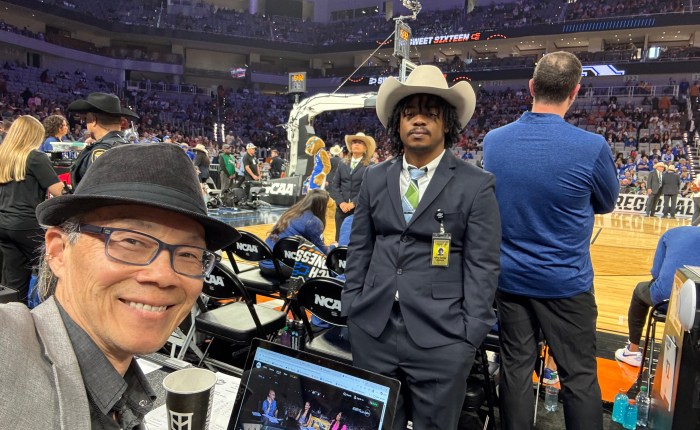
Here? I’ve got a great seat on press row. Front and center. Clear sightlines to the Kentucky bench. Easy access. The kind of seat you’d think I’d been lobbying for my entire career.

And instead of feeling like I’ve finally arrived, it feels like I’ve stumbled into the answer.

There’s space here.

There’s always space here.

Here’s the deal. If the Kentucky Wildcats men’s basketball team makes a regional, it’s not just different—it’s overwhelming. For fans and media alike, there’s no room to breathe. Every quote becomes doctrine. Every lineup decision gets debated like it’s a constitutional amendment. A throwaway comment in November turns into a full-blown philosophical argument by March.

We don’t just cover Kentucky basketball—we consume it. Obsess over it. Sometimes completely lose perspective over it.

And hovering over it all are the national big shots in their tailored suits, nodding knowingly, speaking in definitive tones—as if they alone have cracked the code the rest of us are still trying to understand.

That’s not just interest. That’s obsession.

And standing here, it’s hard not to ask—what would this place look like if even a fraction of that energy showed up?

Because the product here at the women’s tournament isn’t inferior. Spend any real time watching and you’ll see execution, toughness, and pride that hold up just fine. The reporters here are grinding, too—asking thoughtful questions, writing real stories, doing the job the right way. In many cases, they’re better prepared than the swarm that descends on the men’s tournament.

But that’s also the point.

These are the reporters who cover women’s basketball all year.

Where is everybody else?

Where’s the overflow, the national swarm, the sense that this matters on the same scale?

It’s not here. And that absence speaks louder than any press release about “investment.”

Because even Geno Auriemma—who has every reason to sell this game—finally sounded fed up. He rattled off the three-point shooting numbers from across the tournament, numbers that make you wince, and asked the obvious question about how you’re supposed to sell that to a paying audience. But then he went a step further and pointed directly at the system—6 a.m. shootarounds, disjointed practice schedules, logistical decisions that seem to ignore how basketball is actually played.

In other words, we’re asking the game to grow while quietly putting it in position to look worse than it is.

And then there’s the format itself, which feels like it was designed in a conference room without ever being lived in. This 8-team, double-regional setup is simply too cramped. Too many teams, too many obligations, too little space for anything to breathe. Access gets diluted, attention gets split, and instead of building momentum, everything flattens out into one long blur.

To make matters worse, we drop it right on top of the men’s tournament and ask the same audience to care about both at the exact same time. That’s not competition—it’s self-sabotage. You’re putting your product on the same stage as a machine you already know dominates the conversation, then acting surprised when it gets drowned out.

And then you hear Kenny Brooks.

Twenty-four years in the profession, and he’s still fighting for investment—not just financial, but emotional.

That word lingers, because it gets to the heart of what all of this really is.

You can renovate arenas. You can upgrade facilities. You can serve better food and print nicer credentials.

But you can’t manufacture emotional investment.

You either have it or you don’t.

Right now, we don’t. Not like we do on the men’s side, where we have almost too much of everything—too much attention, too much noise, too much manufactured urgency over games that sometimes don’t even deserve it.

Here with the women, it’s the opposite. Half-full arenas. Fewer voices. A quieter stage for a product that’s still being asked to prove itself while operating under conditions that make that task harder than it should be.

Same tournament. Same stakes. Two completely different realities.

One treated like a birthright.

The other treated like a suggestion.

And until that changes—until the investment, the execution, and, most importantly, the attention start pulling in the same direction—this gap isn’t going anywhere, no matter how good the basketball gets.

This article was originally written for distribution through Nolan Group Media publications.

Dr. John Huang is a retired orthodontist, military veteran, and award-winning author. Currently serving as a columnist for Nolan Group Media, he invites readers to follow him on social media @KYHuangs. Explore his latest, Whining for Posterity, and all his books at Amazon.
Is the Kentucky Standard Dead?

Is the Kentucky Standard Dead?

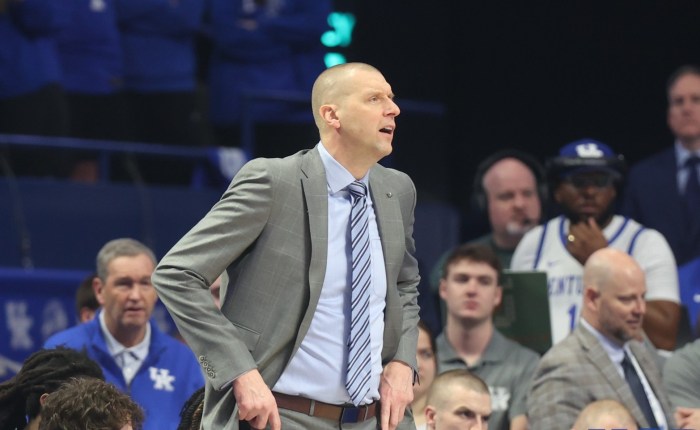
When Mark Pope was introduced as Kentucky’s head basketball coach in 2024, I’ll admit it—I bought in. After his introductory press conference, I felt sure the Cats had hired the right guy.

Not because I thought he had all the answers, but because he was one of us. He knew. He lived it. Pope didn’t need a roadmap or a glossary. He didn’t need someone whispering, “Hey, by the way, these people are a little intense.”

And in that moment, it felt like Kentucky zigged when everyone else was zagging. While the rest of college basketball sprinted toward collectives, contracts, and cap sheets, Kentucky leaned into something refreshingly old-fashioned—identity, tradition, the standard. It felt right. It felt pure. It felt…very 2012.

Which, as it turns out, might be the problem.

Because while Kentucky was busy rediscovering its soul, the rest of college basketball was busy monetizing theirs. And now here we are, trying to sell “there’s no place like this” in a marketplace where the first question isn’t “What makes this place special?” but “What’s the offer?”

Pope said it best—and maybe unintentionally most revealing—when he talked about finding guys who want to be at Kentucky because of what Kentucky is. That used to be the entire pitch. Now it’s the opening paragraph before the real conversation even starts.

Because the truth—the uncomfortable, no-one-wants-to-say-it-out-loud truth—is this: the name on the front of the jersey doesn’t close deals anymore. It might get you in the room. It might get you a nod of respect. It might even get you a nostalgic smile from a parent who remembers Jamal Mashburn. But it doesn’t win the bidding war.

And that’s where the Kentucky standard has taken its biggest hit. Not erased. Not destroyed. Just…neutralized. The playing field has leveled.

For decades, Kentucky walked into every recruiting battle holding a royal flush—history, exposure, fan base, NBA pipeline. Other programs were playing checkers while Kentucky played chess. Now everybody’s got chips. Some of them have more chips. And suddenly Kentucky’s greatest weapon—its tradition—feels less like a trump card and more like a really nice add-on feature.

“Comes with eight national championships and a passionate fan base.” Great. What else you got?

And here’s where the irony gets almost cruel. Mark Pope—the human embodiment of the Kentucky standard—arrived at the exact moment when the Kentucky standard stopped being a decisive advantage. Talk about bad timing.

In another era, Pope’s story was the recruiting pitch. “I sat in those seats. I wore that jersey. I won a title here.” That used to resonate like a sermon in Rupp. Now it sounds more like a really compelling documentary…that the kid might watch later, after he signs somewhere else.

That doesn’t make Pope wrong. It just means he’s arrived at exactly the wrong time. Because he’s trying to sell meaning in a marketplace driven by math.

And to be clear, there are still players who care about meaning—who want development, legacy, and the full Kentucky experience. But building a championship roster by relying on that group alone is like trying to win the Kentucky Derby on sentimentality. It’s admirable. It’s nostalgic. It’s probably not crossing the finish line first.

Now before you accuse me of shaking my fist at the NIL clouds, let me be clear—I’m not saying Kentucky is finished. This isn’t a funeral. It’s a reality check.

Because Kentucky still has everything you’d want if you were building a powerhouse from scratch: brand, resources, fan support, visibility. What it doesn’t have—at least not yet—is full alignment with how the modern game is actually evolving.

And that’s the part that’s readily fixable. But only if we stop pretending the old way still works on its own.

I’ll be honest—I went from excited to confident to…let’s just say cautiously skeptical. Not because I don’t believe in Pope, but because I’m not sure Kentucky, as an institution, has fully accepted what this era demands.

You can’t just be Kentucky anymore. You have to operate like everyone else AND be Kentucky.

That’s the new standard. It’s harder, less romantic, and a lot more expensive.

The good news? Kentucky can absolutely do it.

The bad news? It has to choose to do it.

Because if the strategy is still “they’ll come because this is Kentucky,” then we’re going to keep having the same conversations every March—just with slightly different opponents and slightly more frustration.

The Kentucky standard isn’t gone. It’s just no longer automatic. It doesn’t win on reputation anymore. It wins when it’s backed by execution, resources, and—yes—cold, hard cash.

Not exactly the stuff they put on the Rupp Arena banners.

But it’s the game now.

And if Kentucky embraces that—without losing its soul—then maybe, just maybe, those golden days aren’t gone.

They’re just waiting on Kentucky to catch up to the present.

Dr. John Huang is a retired orthodontist, military veteran, and award-winning author. Currently serving as a columnist for Nolan Group Media, he invites readers to follow him on social media @KYHuangs. Explore his latest, Whining for Posterity, and all his books at Amazon.
We Finally Got No. 9

We Finally Got No. 9

(LEXINGTON, KY.) – Since the beginning of last summer, Kentucky fans have been speaking reverently about the number nine.

Not the number nine as in a seed line. Not the number nine as in a placement somewhere in the middle of the SEC pack. No, this was the other nine—the one that was supposed to be hanging up in the rafters of Rupp Arena. The mythical, glorious ninth national championship Big Blue Nation has been chasing ever since 2012.

Instead, the Wildcats are headed to Nashville this week as the No. 9 seed in the SEC Tournament.

Nine—not quite the number anyone had in mind.

And they’ll begin their postseason journey at the ungodly hour of 12:30 p.m. Wednesday, which is the kind of tip time usually reserved for accountants on their lunch break or retired orthodontists dribbling soup down the sides of their mouth.

In other words, not exactly prime time in the Bluegrass.

It’s also the first time in program history Kentucky has entered the SEC Tournament as a nine seed. History is still being made in Lexington. Just not the kind they used to celebrate.

But before we rush to judgment—and Big Blue Nation is never in a rush to judge anything—let’s consider the great universal balm of sports misery:

What if.

What if Kentucky had simply stayed healthy?

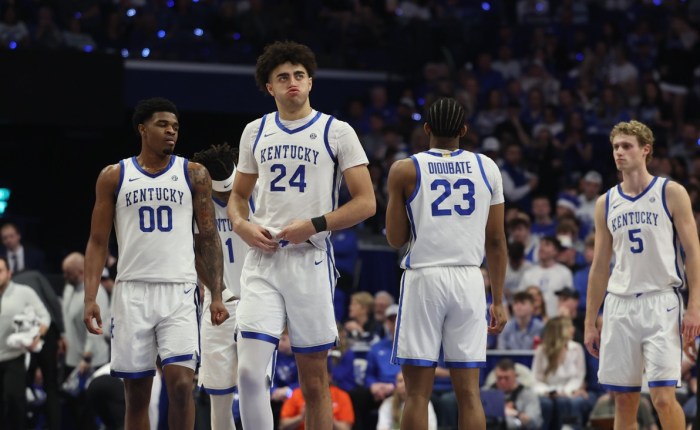
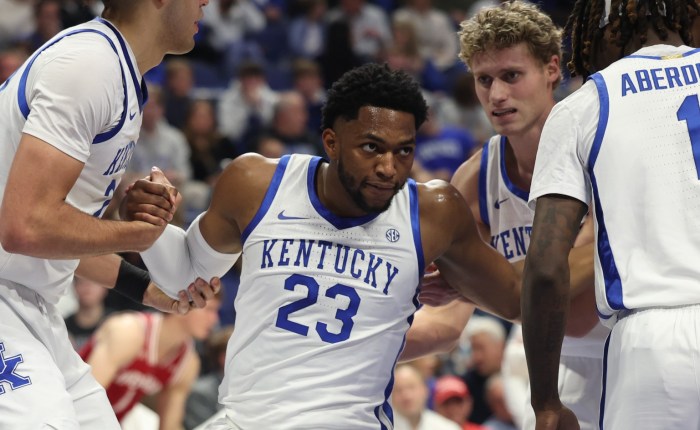
Basketball seasons tend to unravel when the trainer’s office starts looking like rush hour at the DMV. Kentucky lost Jaland Lowe to a shoulder, Kam Williams to a foot, while Jayden Quaintance’s ACL is apparently still swelling as we speak.

Take away three of the top players on just about any roster in America and see how that works out. The answer, more often than not, looks suspiciously like a No. 9 seed playing Wednesday afternoon.

What if Kentucky didn’t spend half the season digging out of first-half holes?

Against high-major opponents this year, the Wildcats have trailed at halftime in 15 of 24 games. That’s not a strategy so much as a lifestyle.

Falling behind by double digits early has become a recurring theme, followed by spirited second-half rallies that often come up just short—like a movie where the hero saves the day but still misses out on the girl he’s chasing.

What if Rupp Arena were still Rupp Arena?

Once upon a time, Missouri and Georgia walking into Lexington meant exactly one thing: an opponent shaking in their boots resulting in a comfortable twenty-point Kentucky win and fans planning their postgame dinner reservations by halftime.

This season, those games turned into home losses. Missouri. Georgia. For God’s sake. The Wildcats used to treat Rupp Arena like a fortress. Now it’s starting to feel more like a welcoming station—pillaged by traditional SEC doormats and also-rans.

Kentucky lost three home games last season. They lost four this year. Times change.

What if Trent Noah rediscovered his jumper—and Mo Dioubate discovered one in the first place?

Noah arrived in Lexington with the reputation of a marksman. At times this season, his patented jumper has been missing in action. He didn’t hit a single field goal in the entire month of February.

Dioubate, meanwhile, plays basketball like a bull in a china shop. You cannot fault the effort. The motor never stops. But when he decides he’s going to the basket, he is absolutely going to the basket. Whether the ball goes with him is sometimes a secondary consideration.

And yet here we are.

Kentucky finished the regular season 19–12 overall and 10–8 in the SEC, which might sound respectable until you remember where this program lives historically. It’s only the fourth time since 1990 the Wildcats have finished with fewer than 20 regular-season wins.

For most programs, 19 victories is a solid year. At Kentucky, it feels like a census report documenting population decline.

And the broader numbers paint an even darker picture. The Wildcats haven’t won the SEC regular season in six years. They haven’t won the SEC Tournament in seven years. Since the COVID shutdown, Kentucky has managed just four total postseason wins. Humiliating losses to Saint Peter’s and Oakland during that period simply add fuel to the fire.

For a program that once measured success in Final Fours and national titles, those realities land with a thud. The last national championship came in 2012. The last Final Four appearance was in 2015. Those seasons now feel like old photographs from a happier time—still vivid, but increasingly distant and fading fast.

And yet Big Blue Nation remains what it has always been: loud, passionate, and emotionally invested to an unhealthy degree. Some fans are still hopeful. They look at the injuries, the close losses, the flashes of brilliance, and they’re convinced Mark Pope is building something that just needs a little time to mature. March has a funny way of rewriting stories. Kentucky has lived that miracle before. Fans here know better than anyone how quickly a season can pivot.

Others in BBN are far less patient. A growing segment of the fan base already sounds like it’s preparing to run Pope out of town, hammering home the uncomfortable reality of what the numbers say: the losses at Rupp, the missed opportunities, the long droughts between championships and Final Fours that once seemed automatic, and—most importantly—the lack of elite recruits coming to the rescue.

That’s the strange tension surrounding this team as it heads to Nashville as the No. 9 seed—an outcome nobody predicted when fans were dreaming about the other No. 9 last summer.

Maybe the Wildcats catch fire.

Maybe the shots start falling.

Maybe the defense locks in.

Maybe Wednesday at 12:30 becomes the unlikely first chapter in the wonderful story Mark Pope keeps promising.

Stranger things have happened in March.

…Just maybe not starting from nine.

This article was originally written for distribution through Nolan Group Media publications.

Dr. John Huang is a retired orthodontist, military veteran, and award-winning author. He currently serves as a columnist for Nolan Group Media and invites readers to follow him on social media @KYHuangs. His latest book is Whining For Posterity, available on Amazon.

Kentucky’s March Fate: Banner or Bust?

Kentucky’s March Fate: Banner or Bust?

(LEXINGTON, Ky.) – “I’M DONE WITH UK BASKETBALL!”

Not really—I’ve said that nearly every time Kentucky has pulled a head-scratching stinker this year. And that 86-78 loss to Georgia last night at Rupp Arena stunk more than most.

What I’m really saying is this: I have no idea what to make of this Kentucky basketball team. That’s not analysis. That’s confession. Most of you are likely nodding your head in agreement.

On some nights, Mark Pope’s squad looks capable of beating anyone in America. The ball hums, the spacing makes sense, the defense locks in, and for stretches you can see a version of this team that nobody would volunteer to play in March. On other nights, they resemble a group still trying to figure out who sits where on the team bus. The inconsistency isn’t subtle. It’s jarring.

And yet, before we dismiss this season outright, we have to acknowledge the elephant in the training room: injuries to three key players. You can argue about rotations, execution, and late-game poise all you want—and those conversations are fair—but losing that kind of continuity matters. Chemistry is fragile. Roles shift. Confidence wavers. In a league like the SEC, that margin is the difference between a résumé-builder and the aforementioned head-scratcher.

Still, context doesn’t eliminate expectations. This is Kentucky. Nobody hangs banners for “would have been better if healthy.”

So let’s skip the short-term predictions and talk about the season-ending ceiling and floor.

If this team develops any consistent rhythm in the remaining five regular-season games, the ceiling is real. If they run the table down the stretch and make a serious run in the SEC Tournament, a 3 or 4 seed in the NCAA Tournament is absolutely within reach. That’s not fan fiction; it’s math combined with potential. The league is still strong. They’ve got enough quality wins on their résumé. When this team shares the ball and defends with purpose, the flashes are undeniable. You can see a version of them that could string together six good halves in March and suddenly everyone is asking, “Where did this come from?”

We’ve already seen that movie before in Lexington a couple of times this year.

The floor, however, is equally sobering. If the rotation questions continue and confidence erodes instead of builds, it is not unthinkable that this team could stumble badly enough to be sweating on Selection Sunday. Lose out, bow out early in the SEC Tournament, and the committee won’t care about what might have been. Momentum matters in February and March. Narrative matters. And there are enough hungry teams across the country ready to grab at-large spots.

That’s the emotional whiplash from the roller coaster we’ve all been riding. This team doesn’t live in comfortable middle ground. It oscillates between intriguing and alarming.

If we’re being honest—and that’s always a dangerous exercise in Big Blue Nation—the most probable outcome sits somewhere between those extremes. Win a few, drop a few, make the NCAA Tournament as a 7–10 seed, advance once, maybe twice. Perhaps second-round exits in both tournaments. Objectively, that’s not catastrophic. Plenty of programs would celebrate it.

Here at ground zero? It would feel hollow.

Kentucky basketball is not measured in participation trophies. It’s measured in the second weekend and beyond. It’s measured in whether your April calendar stays busy or whether you’re mowing your grass and walking your dog. A second-round loss might not qualify as a disaster on paper, but emotionally, in this fan base, it would land that way. If we’re truly honest with ourselves, it would feel like Armageddon.

This team has shown just enough to keep belief alive and just little enough to keep anxiety simmering. Their second-half comebacks have kept many cardiologists on speed dial. They can defend with ferocity for ten minutes and then lose focus for three critical possessions. They can move the ball beautifully and then revert to isolation when things tighten. They can look connected—until they don’t.

That unpredictability is exhausting, but it’s also why we haven’t given up on them. The upside hasn’t disappeared. It just hasn’t stayed long enough.

The truth is, we don’t know what will transpire. That’s uncomfortable in a program accustomed to plotting a straight line to March glory. There is no straight line this year—hasn’t really been for the past decade. There is, however, still possibility.

The ceiling is high enough to make you lean forward. The floor is low enough to make you brace yourself for impact. It’s maddening!

If I’m wrong, I’ll happily admit it. Run the table. Stay healthy. Win the SEC Tournament. Earn that 3-seed. Make all this hand-wringing look foolish. There would be no greater pleasure than writing the “I underestimated them” column in late March.

Until then, we sit in the tension—hopeful, skeptical, invested. In other words, exactly where Kentucky basketball always seems to place us when we care the most.

This article was originally written for distribution through Nolan Group Media publications.

Dr. John Huang is a retired orthodontist, military veteran, and award-winning author. Currently serving as a columnist for Nolan Group Media, he invites readers to follow him on social media @KYHuangs. Explore his latest, Whining For Posterity, and all his books at Amazon.
Storm the Court: It isn’t Disrespect—It’s Passion

Storm the Court: It isn’t Disrespect—It’s Passion

North Carolina—North Carolina—stormed the court the other night after beating Duke.

Let that marinate for a second.

A blue blood known as the wine and cheese crowd decided, collectively, “You know what? This matters.” And down they came. Elbows flying, phones held high, their bodies crashing onto the hallowed hardwood of the Dean Dome.

Meanwhile, back in Lexington, we clutched our pearls.

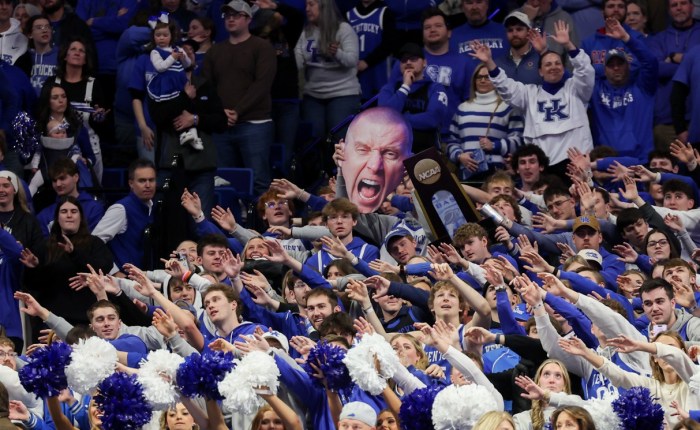
After all, Kentucky fans don’t storm the court at Rupp Arena. We don’t do that and will never do that. We are above such things. Our fan base is dignified, regal. We cheer, maybe occasionally stand, clap loudly, then file out like we’ve just finished a tasteful tour at The Prado.

And I’m here to say: BULLSH*T!

Storming the court isn’t beneath us—but pretending we’re above passion is.

Let’s get the obvious disclaimer out of the way before someone calls The Hammer: yes, people can get hurt. That matters. Player safety matters. Fan safety matters. Nobody wants a feel-good moment to turn into a trip to the ER. Those concerns are real, legitimate, and should be addressed with planning, security, and some common sense.

To be clear, I’m not advocating violating arena policies or putting players, officials, or fans at risk.

But court storming—when done right—isn’t chaos. It’s communion.

It’s the physical manifestation of “you had to be there.” It’s the release valve for years—sometimes decades—of pent-up emotion, expectation, and investment. It’s not about disrespecting the opponent; it’s about honoring the moment. It says this wasn’t just another Tuesday night—it was this special night.

As a college basketball blue blood, Kentucky prides itself on atmosphere, tradition, and passion. It’s hypocritical, then, that fans act offended when passion shows up spontaneously.

Here’s the dirty little secret: court storming actually helps programs.

It helps recruiting. Teenagers notice. Recruits don’t just watch games muted on their iPads—they feel the arena vibes. A stormed court tells a 17-year-old, “These people care.” It tells him or her, “If you hit a shot here, you will be remembered.” That matters in a world where players have choices and options and Instagram.

Likewise, court storming helps home-court advantage. Officials and opponents alike feel it. A building that looks capable of erupting at any moment is not a neutral environment—it’s easily five extra points on the final scoreboard tally.

And most importantly, court storming helps remind us why we fell in love with Kentucky basketball in the first place. It’s one of the last remaining unscripted moments defining our unbridled passion. No corporate sponsor. No halftime act. Just raw humanity spilling over the endlines in a tidal wave of pure joy.

“We act like we’ve been here before,” we say. Fine. But that phrase has become our emotional straightjacket.

Kentucky fans know this—because we lived it. Back in 1990, Rupp Arena should have exploded when the “Unforgettables” shocked Shaquille O’Neal’s LSU squad. That was a moment of defiance. The floor should have felt it.

And if there was ever a moment begging for spontaneous human eruption, it was Anthony Davis rising up to block John Henson’s last-second jumper in that memorable win over North Carolina. You remember where you were. You remember the gasp. That wasn’t just a defensive play—it was a coronation, one of the most iconic moments in Rupp Arena history. The students should have been pouring over the scorer’s table like water finding gravity.

You see, passion like that doesn’t cheapen tradition—it fuels it. All those banners didn’t hang themselves. They were born from moments when people lost their minds just a little. Big Blue Nation is passionate. We’re loud, emotional, and invested to an occasionally unhealthy degree. That’s our brand. Always has been.

And if moments like that have mattered enough to generations of Kentucky fans before us, then surely we can unclench long enough to admit that joy doesn’t make us small.

It makes us human.

Storm the court? Not every night. Not recklessly. Not without thought for safety.

But when the moment calls for it—when history taps you on the shoulder and says this one matters—don’t stand there pretending you’re too important to feel it.

Next time that happens at Rupp Arena, don’t be afraid to show you care.

Dr. John Huang is a retired orthodontist, military veteran, and award-winning author. He currently serves as a columnist for Nolan Group Media and invites readers to follow him on social media @KYHuangs. His latest book is Whining For Posterity, available on Amazon. The views expressed are his own.

The Scholarship Used to Be the Prize

The Scholarship Used to Be the Prize

(And Somewhere Along the Way, We Started Treating It Like a Coupon)

Let me get this out of the way early so nobody mistakes me for the guy yelling at clouds.

I know NIL is here to stay. I know players have always been paid. I know the system wasn’t pure, holy, or wrapped in a choir robe stitched by Sandy Bell in the UK Compliance office.

I’m not naïve. I’m just… disappointed. And there’s a difference.

Believe me, this isn’t about money. It’s about what money replaced.

Back in the day—cue the violin music, please—the scholarship was the prize. The scholarship was the golden ticket. It was the thing you earned, protected, and quietly understood could change the trajectory of your life.

Now? The sheepskin is an afterthought. A line item. Something you get thrown in after the collective wires the cash.

Wake up everyone! College sports didn’t just evolve. It inverted.

Players used to come to Kentucky for the name on the front of the jersey and hope—pray, even—that one day the name on the back might matter. Now the name on the back is everything, and the front is just a temporary billboard.

We’ve turned student-athletes into short-term mercenaries, and then we act surprised when loyalty evaporates faster than Vince Marrow’s blue wardrobe.

Again, I’m not anti-player. I’m anti-illusion. College sports has become all smoke and mirrors.

What bothers me isn’t that athletes are making money. It’s that we’ve somehow convinced them—and ourselves—that money is the point, not the fruit of hard-earned labor. We’ve normalized entitlement at warp speed. It no longer happens over multiple years of eligibilty. It’s now bestowed instantly.

A freshman hasn’t played a minute and already knows his “market value.” He doesn’t ask, How can I grow here? He asks, What’s my next leverage point? That’s not empowerment. That’s living one transaction at a time.

And the collateral damage of this lunacy? The college education—the very thing that was supposed to be the great equalizer—has been reduced to background noise.

Let me offer a confession from a man who looks suspiciously like a retired orthodontist with opinions.

My education made me rich. Not Warren Buffet-rich. Not even NIL-rich. But life-rich. It gave me a profession. It gave me options. It gave me the ability to fail and pivot and fail again without falling through the floorboards of society.

My college education wasn’t just about attending classes. It rewarded me with time—time to grow up, mess up, learn accountability, and figure out who I was when nobody was handing me a check. Let it be known that no booster ever Venmo’d me for showing up to Biology 101.

Now we’re telling kids—explicitly and implicitly—that education is optional, temporary, and secondary to their “brand.” That’s not progress. That’s negligent at best—and destructive at worst.

Here’s the part nobody wants to say out loud: If the scholarship no longer matters, the university no longer matters. And if the university no longer matters, then college sports becomes minor-league professional sports without contracts, guardrails, or accountability.

Which is exactly where we’re headed.

You can’t build culture on one-year leases.
You can’t preach loyalty while negotiating exits.
You can’t sell tradition to people shopping for the next upgrade.

And you certainly can’t pretend the system will hold when the foundation—education itself—has been hollowed out. When the value of the scholarship is cheapened, the value of the institution crumbles. When institutions crumble, so does the illusion that this was ever about anything more than money. And when the illusion dies, so does the sport we thought we loved.

I still watch. I still care. I still write. I still hope—perhaps foolishly—that the pendulum swings back toward balance instead of breaking loose entirely.

But make no mistake: this is doomsday not because athletes are getting paid—but because we’ve taught them that nothing else is worth valuing.

And when education becomes optional, everything downstream collapses. I don’t want to go backward. I want us to remember what was worth protecting as we move forward.

Happy New Year!
Now, please excuse me while I go ice my knee, check my blood pressure, and remind myself I’m not yelling at clouds.

I’m yelling at the future—because I still care about it.

This article was originally written for distribution through Nolan Group Media publications.
Dr. John Huang is a retired orthodontist, military veteran, and award-winning author. Currently serving as a columnist for Nolan Group Media, he invites readers to follow him on social media @KYHuangs. Explore his latest, Whining For Posterity, and all his books at Amazon.

When the Empire Crumbled in Nashville

When the Empire Crumbled in Nashville

Photo credit: KY INSIDER/Tristan Pharis

(NASHVILLE, Tn.) – Nobody died. Let’s be clear about that from the start. But walking out of Bridgestone Arena on that bleak December night, it sure felt like some small—but vital—part of me kicked the bucket. If grief truly comes in stages, Big Blue Nation skipped denial and bargaining entirely and hurtled straight into anger and depression. A 35-point blowout loss to Gonzaga will do that to you.

Thirty-five. Five touchdowns. A deficit so large you half-expected Diego Pavia to pad his Heisman stats by tossing one more.

The Cats shot 26% from the field—a number so pitiful you’d think they were tossing up prayer requests rather than basketballs. Meanwhile, Graham Ike—just one man, mind you—had more two-point field goals than the entire Kentucky roster. Let that sink in. One guy outscoring a blue-blood program in its own chosen sport. And not just any sport—the sport. The one woven into our DNA, passed down from grandparents to grandbabies like that sacred cloth Mark Pope keeps referencing.

This wasn’t just a loss. It was the fiber unraveling on holy ground—the third-most lopsided defeat in the shot clock era. We’ve known pain before. Saint Peter’s. Oakland. That 41-point thrashing from Vanderbilt—Vanderbilt!—that still wakes some of us with night sweats. Gardner Webb. Robert Morris in the NIT. Middle Tennessee State, if you really want to dig around in old wounds. But this… this seemed different. This was more visceral. This was more publicly humiliating. This was a blue mist turning into a funeral fog over Lower Broadway.

The boos rained down like I’ve never heard—sharp, heavy, and honest. Those weren’t spur-of-the-moment grumbles. Those were boos pulled from deep in the diaphragm—boos with ancestry.

And in the middle of it all stood Mark Pope. Clueless. Clutching his arms. Pacing. Staring. Hoping. Praying. Whatever offensive scheme existed remained locked in the bus. The defense was optional. The effort was zero. And the $22-million payroll—which should buy you at least a handful of competent dribbles—played like a group of guys who accidentally wandered in from the YMCA while looking for hot chicken.

Afterward, Pope sat there and took it. “All the boos we heard tonight were incredibly well deserved—mostly for me,” he acknowledged.

And credit where due—he’s right. BBN isn’t booing because we hate. BBN boos because we care too much. Because this program is stitched into our emotional circuitry. Because watching it flounder like this feels like watching a beloved family business collapse under the weight of mismanagement and market forces we don’t fully understand.

Because NIL—this new world we were forced into—feels like it’s quietly cannibalizing the very soul of Kentucky basketball.

Where do we go from here? That’s the question echoing from Lexington to London to Pikeville to Paducah. This program means so much—too much, maybe—and to see it decimated, hollowed out, and sold to the highest bidder leaves a taste in the mouth not unlike despair.

We’ve now lost six straight to AP Top 25 opponents. Six. That’s not a skid. That’s a full-blown car crash. Indiana comes calling next Saturday, carrying history and smugness in equal measure. I guarantee the Hoosiers are smelling fear the way sharks smell blood.

Pope keeps telling us he’s going to fix it. He says it every game, every press conference, every painful in-between: “We’ll fix it.”

But those words—once hopeful, once rousing—are starting to fall on ears that have gone numb from overuse. We’ve become the fanbase that cries wolf, except the wolves actually show up and chew our legs off every other week.

Nobody died. But something inside us sure felt like it did. The Empire may have crumbled in Nashville, but unlike the Romans, we don’t have the luxury of blaming the Visigoths. This collapse came from within—bad shots, bad schemes, bad chemistry, bad body language, bad vibes. The kind of decay you can’t just patch with a rah-rah press conference, a well-placed promise, or even a savior named Jayden Quaintance.

And here’s the uncomfortable truth that stings most of all—the one we don’t want to say out loud but feel gnawing at us anyway: we don’t know if this gets better. We don’t know if the fixes Pope keeps preaching about are real or wishful incantations. We don’t know if a program built on NIL money and one-year mercenaries can rediscover heart, pride, or purpose. We don’t know if next Saturday against Indiana is the first step back… or one more step into the void.

We don’t know. That’s the scary part.

Because for all our bluster and bravado, Big Blue Nation likes certainty. We like legacy. We like stability. We like knowing that no matter the chaos swirling through college hoops, Kentucky Basketball stands firm—unshakable, undeniable, eternal.

But standing outside Bridgestone Arena after that 35-point humiliation, looking into the hollow faces of fellow fans who traveled hundreds of miles for a beatdown they’ll never forget, it was impossible not to feel the ground shifting under our feet.

Maybe we rise from this. Maybe we don’t. Maybe this is rock bottom. Or maybe—we whisper it, barely audible—it’s a sign of something even more ominous.

Nobody died. But something has changed. And until this team proves otherwise, we’re left clinging to hope with one hand… and bracing for the worst with the other.

This article was originally written for distribution through Nolan Group Media publications.


Dr. John Huangis a retired orthodontist, military veteran, and award-winning author. Currently serving as a columnist for Nolan Group Media, he invites readers to follow him on social media @KYHuangs. Explore his latest, Whining For Posterity, and all his books at Amazon.

To Hell with the Standard (Champions Classic Edition)

To Hell with the Standard (Champions Classic Edition)

(LEXINGTON, KY.) – Mark Pope keeps telling us Kentucky didn’t “meet the standard,” but after that Michigan State demolition in the Champions Classic, I’m starting to think we’re comparing this team to the wrong standard entirely. Championship Number Nine? At this point, I’d settle for “don’t get pantsed on national television before halftime.”

You see, “the standard” sounds great when you’re at a booster dinner or a preseason pep rally. But when the Cats get embarrassed again in Madison Square Garden—when the defense leaks worse than a cheap umbrella and the chemistry looks like oil and vinegar—then the standard becomes a cruel, suffocating weight.

And surely you caught Pope’s postgame presser… ugh. The man looked like someone had just put his dog down. Depressed. Drained. Eyes sunken like he’d been up all night gathering data, crunching analytics, and questioning all his life decisions. This isn’t the buoyant, always-positive, program-resurrecting Pope we hoped for—this is a man preparing for a root canal without anesthesia.

Pope said his players weren’t ready for Louisville because of some “out-of-character” incident before the game. Well, what was the excuse against Michigan State? Nothing—nothing—about that latest performance looked in character for a team supposedly training every day under the ghostly shadow of the standard. At this point, the standard has morphed into a meaningless punchline.

And can we talk about the $22 million elephant in the room?
That’s right—this roster is collectively pulling in twenty-two million American dollars to play basketball. That’s not chump change.

And what are we getting for that hefty investment?

Poop. Absolute, unmitigated poop.

Defense? Poop.
Shot selection? Poop.
Effort? Poop.
Guys playing for an NBA audition instead of the name on the front of the jersey? Extra-strength poop with glitter.

Okay—I’ve vented enough. Let’s take a deep breath (maybe two) and accept the painful truth: Mark Pope inherited a proud tradition, but also a monster. Every coach who takes the Kentucky job eventually realizes the same terrifying thing—this fan base is passionately crazy. Anything less than a Final Four is failure. Anything short of cutting down the nets is unacceptable. That’s the gospel of Big Blue Nation.

But here’s the irony—we demand perfection from kids who can’t legally rent a car. We scream “UNACCEPTABLE!” into the Twitter void while eating buffalo wings in our recliners. We call for Pope’s head in November, then brag about our loyalty in March.

We’ve worshiped at the altar of the standard so long that we’ve forgotten why we fell in love with Kentucky basketball in the first place. It wasn’t just the championships—it was the magic. The tradition. The roar inside Rupp when some kid from Pikeville or Paducah drills a three. The way the team makes us feel like part of something larger than ourselves.

You can’t measure that with analytics. You can’t hang it from the rafters either. It’s a pulse. A heartbeat. And right now, that heartbeat’s faint—not because of the losses, but because we’ve forgotten how to simply enjoy the game.

So here’s my radical suggestion: to hell with the standard—for now.

Let’s stop counting banners and start counting moments. Let’s cheer the hustle play, the smart pass, the kid who dives on the floor when the game’s already out of reach. Let’s celebrate the little victories—the ones that don’t make SportsCenter but make us proud nonetheless.

Sure, this team may not be destined for the ninth championship banner. They may fumble away a few more games. The defense may still make you want to throw a shoe at your TV. But they’re our team. And if we can’t love them when they’re flawed and broken, we don’t deserve to love them when they’re flying high.

The sky isn’t really falling. It just feels that way because we’ve been staring upward too long, waiting for the next banner to drop.

Let’s stop pretending this is a title run and just… watch basketball. Enjoy the wild, maddening, forehead-smacking circus it becomes. Appreciate Pope trying to hold the universe together with bailing wire while the players try to remember how to guard a ball screen.

Because if you don’t laugh, you’ll cry. And if you don’t ditch the standard, you’ll be the one feeling the root canal.

Championship Nine isn’t walking through that door.
But maybe joy can.
If we let it.

And if this $22-million roster ever decides to stop playing like poop, well… we’ll call that manna from heaven.

This article was originally written for distribution through Nolan Group Media publications.

Dr. John Huang is a retired orthodontist, military veteran, and award-winning author. Currently serving as a columnist for Nolan Group Media, he invites readers to follow him on social media @KYHuangs. Explore his latest, “Whining For Posterity,” and all his books at https://www.Amazon.com/stores/Dr.-John-Huang/author/B092RKJBRD

Top of Form

Bottom of Form

Battle at the Yum: Brotherly Love, Bluegrass Style

Battle at the Yum: Brotherly Love, Bluegrass Style

(LEXINGTON, Ky.) – I’ve been to a lot of games at the KFC Yum! Center over the years, and one constant remains: somebody always spills beer on me. Maybe it’s the cramped seats, maybe it’s divine retribution for my unapologetic “L’s down,” or just that smug smirk when Kentucky pulls off that inevitable upset. But whatever the reason, it’s always the same warm, yeasty baptism by Yuengling. Welcome to the Kentucky–Louisville rivalry, friends—where good manners and mutual sportsmanship go to die.

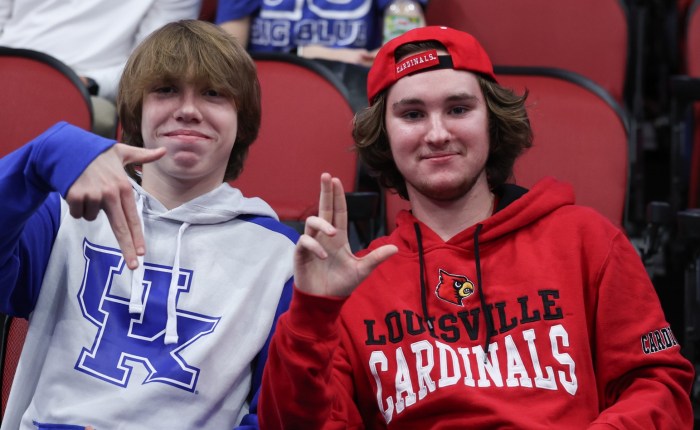
When Kentucky invades the Yum on Tuesday night, it won’t just be another non-conference matchup—it’ll be a civil war disguised as basketball. Don’t let the early date on the calendar fool you. Sure, the game won’t decide an SEC or ACC title, and yes, both programs are still figuring out rotations, chemistry, and playing through injuries. But if you think this one doesn’t matter, try telling that to the guy in the bird suit mugging for the cameras behind Kentucky’s bench.

Here’s the scary part. The Wildcats might not know what they’re walking into. Mark Pope’s shiny new roster—brimming with transfers, freshmen, and enthusiasm—hasn’t yet been immersed in the unholy water of this rivalry. You can study film all you want, but no amount of game tape or analytics prepares you for 22,000 red-clad fanatics who hate everything about you down to the shade of your underwear. This isn’t just basketball—it’s bragging rights and cultural warfare.

To the Louisville faithful, Kentucky is the privileged older brother, always hogging the spotlight, driving the fancy car, and bragging about his NBA friends. The Cardinals, meanwhile, are the petulant little sibling—scrappy, defiant, and perpetually insecure. They’ll do anything to get big brother’s attention, even if it means tossing a drink in his face or keying his Ferrari.

Speaking of Ferraris, Pope’s team is still learning to shift gears smoothly. We’ve seen flashes of brilliance—fast breaks that hum, defense that smothers, and a jaw-dropping Collin Chandler dunk—but also some of the sputtering you’d expect from a group still breaking in the new parts. Louisville, on the other hand, is in the midst of its own identity crisis under coach Pat Kelsey. Kelsey’s energy borders on cartoonish—think Red Bull-fueled pep rally meets evangelical tent revival. He and Pope are oddly similar in their intensity, their positivity, and their charming—but goofy—awkwardness.

If it weren’t for their height difference, these two might actually be long-lost twins separated at birth. Both are relentlessly upbeat. Both quote leadership manuals like scripture. And both probably wear out their assistants with midnight text chains about “culture” and “accountability.” The difference? Pope has the keys to the big blue mansion, while Kelsey’s still trying to get the plumbing fixed in the old red house down the street.

Then there’s last year’s dustup—when Pope put Kelsey in a friendly “headlock” during a midgame scrum. Add in the rumored “verbal altercation” outside a top recruit’s home, and you’ve got another colorful chapter in UK-UL lore. It’s all fun and games—until it’s not.

Expect some fireworks on Tuesday. Louisville will treat this like their Super Bowl, their one shining moment to prove they’re not entirely irrelevant. Kentucky, meanwhile, would like nothing more than to quiet the rowdy red masses and head back down I-64 with the smug satisfaction that only a rivalry win provides.

This particular game might not have the national stakes of years past. Remember, it’s happening way too early. Both teams are still under construction—a mix of promise and potential waiting for the right foundation. But pride, not perfection, will define the night. The winner gets the city for a year; the loser gets excuses.

And let’s be honest—Kentucky fans need this one. After the ups and downs of recent seasons, after the heartbreaks and early exits, Big Blue Nation wants tangible proof that Pope’s vision is more than just those “beautiful” slogans he’s been preaching since his arrival in Lexington. A win at the Yum would do wonders for morale, momentum, and those all-important selection committee resumes down the road.

Remember also that rivalries are less about rankings and more about respect—or, in this case, disrespect. You don’t beat Louisville for seeding; you beat Louisville because you can’t stand them.

So yes, I’ll make the trip again. I’ll brave the hecklers, dodge the popcorn, and pray the beer showers are light this year. Because there’s nothing quite like Kentucky versus Louisville—the noise, the tension, the mutual loathing wrapped in a shared love for basketball. It’s messy, it’s emotional, and it’s absolutely glorious.

This article was originally written for distribution through Nolan Group Media publications.

Dr. John Huang is a retired orthodontist, military veteran, and award-winning author. Currently serving as a columnist for Nolan Group Media, he invites readers to follow him on social media @KYHuangs. Explore his latest, “Whining For Posterity,” and all his books at https://www.Amazon.com/stores/Dr.-John-Huang/author/B092RKJBRD