Will Stein Wants You to Lose Your Mind

Will Stein Wants You to Lose Your Mind

Will Stein has a simple request for Kentucky fans Saturday.

Lose your minds.

Scream. Yell. Get to Kroger Field early. Forget the tailgate. Be in your seat for warmups. Make so much noise that Alabama quarterback Keelon Russell has to communicate using hand signals, smoke signals or perhaps divine intervention.

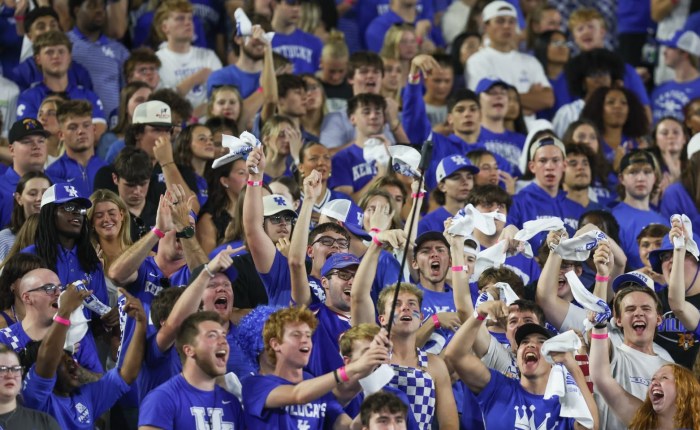
Stein wants 65,000 people watching his team warm up. He wants the loudest game in Kentucky football history.

“I want people’s voices hoarse when they leave here,” Stein said Tuesday. “They got to take off work on Monday because they can’t talk.”

Finally, a doctor’s excuse I can enthusiastically endorse.

There’s just one catch.

While Stein wants the rest of us behaving like complete lunatics, he wants his football team to remain approximately as emotional as a Bill Belichick press conference.

I’m not sure Kentucky fans can fathom that. After all, SEC Nation is coming to town. Alabama is paying a visit. Kentucky hasn’t beaten the Crimson Tide since 1997. The game is on national television. Surely there must be some benefit to harnessing all that emotion.

Nope.

“Emotions get you beat,” Stein said. “We want our fans to be emotional. We don’t want us, as players or coaches, to be emotional.”

I’m not sure I buy it. Not completely, anyway.

There is a difference between being emotional and being controlled by emotion. And if ever there were a Saturday when Kentucky could use a little extra juice, I’m guessing the one with Alabama standing on the opposite sideline might qualify.

Emotion can make you reckless. It can also make you run through somebody.

It can make you jump offsides. It can also make you chase a ball carrier another five yards.

It can make you try to be a hero. It can also convince you that the five-star guy lined up across from you isn’t nearly as intimidating as everybody spent all week telling you he was.

Surely Stein knows that. In fact, I suspect he knows it better than he’s letting on. Maybe “emotions get you beat” is exactly what a head coach should tell us on Tuesday. Maybe what gets said inside the Kentucky locker room at 3:20 Saturday afternoon sounds just a little different.

Wink, wink.

Because Stein himself is creating an emotional powder keg. He wants 65,000 people inside Kroger Field for warmups. He wants the place louder than it has ever been. He wants Kentucky fans screaming until they need sick leave. That’s an awful lot of gasoline to pour around the building if you don’t intend for your football team to feel any of the heat.

Stein has been preaching his thermostat-versus-thermometer analogy since he arrived. Thermometers react to their surroundings. Thermostats set the temperature.

Saturday may provide the ultimate laboratory experiment. Because the temperature inside Kroger Field figures to be 487 degrees.

Kentucky is 2–39–1 all-time against Alabama. The Wildcats haven’t beaten the Crimson Tide since 1997.

Stein was there.

He was seven or eight years old and remembers the tailgates and K House more than the actual football game.

Someone asked whether he planned to show his players highlights of that historic victory. Stein acknowledged that he probably should. Then he remembered something horrifying. None of his players were alive.

“I was asking a kid today,” Stein said. “I was like, ‘When were you born?’ In like 2004? I’m like, ‘Oh, shit.’”

There it was again.

For those keeping score at home, that’s two consecutive Stein press conferences with a mild profanity outbreak. After beating Youngstown State, he nearly dropped an F-bomb while explaining his plans to celebrate with a cold beer. This time, discovering that you’re old enough to coach people born in 2004 apparently did the trick.

Wait until somebody tells him they don’t remember Tim Tebow.

Stein insists Saturday isn’t a defining game.

“They’re all big,” he said. “Youngstown State last week was the biggest game of our season because that was the first game. Now we play Alabama.”

Come on, Coach. This one is bigger. SEC Nation isn’t setting up shop in Lexington because Kentucky is playing Youngstown State. ABC isn’t putting it on national television because it’s just another game. And 65,000 people aren’t being ordered into Kroger Field early because Stein desperately wants them to see stretching.

This is Alabama. Stein knows it. His players know it. Big Blue Nation certainly knows it.

The trick isn’t pretending Saturday is just another football game. It’s recognizing that it isn’t—and then playing like it is.

That’s where I think Stein is exactly right. Use the emotion. Don’t let the emotion use you.

So perhaps Saturday afternoon, somewhere behind those closed locker-room doors, the thermostat gets turned up just a notch. Maybe Stein reminds his players what opportunity is standing on the other side of that door. Maybe his voice gets a little louder. Maybe there’s even an adjective we aren’t allowed to print.

Then the doors open.

The players run out.

And everybody settles down.

Except us.

We’re supposed to lose our minds.

Dr. John Huang is a retired orthodontist, military veteran, and award-winning author. Currently serving as a columnist for Nolan Group Media, he invites readers to follow him on social media @KYHuangs. Explore his latest, Whining for Posterity, and all his books at Amazon.
A Face Full of Cake

A Face Full of Cake

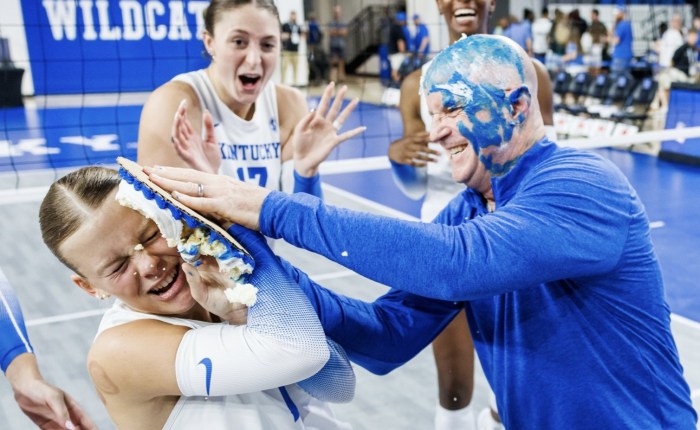
Craig Skinner and Trinity Ward square off in an epic cake battle celebrating Skinner’s 500th career victory (Photo Credit UK Athletics/Kentucky Volleyball).

(LEXINGTON, Ky.) — Craig Skinner won his 500th volleyball match Saturday night, which apparently earned him the traditional reward reserved for legendary coaches everywhere.

A face full of cake.

Kentucky swept South Florida at Historic Memorial Coliseum, setting off a postgame celebration that included video tributes, family congratulations, and Trinity Ward being entrusted with the cake.

Bad idea.

“I was like, ‘Do I get to throw it in his face?’” Ward said.

She did.

Skinner retaliated, Ward claimed she was “tapping out,” and everyone eventually survived long enough to discuss a considerably more impressive accomplishment.

Five hundred wins.

“The 500 thing is not on my radar,” Skinner said.

Maybe it should be. Five hundred victories don’t happen accidentally, particularly at a place where Skinner wasn’t exactly inheriting a volleyball dynasty when he arrived 22 years ago.

He left Nebraska as a career assistant coach without really knowing whether he could successfully run his own program. He and his wife, Megan, came to Kentucky figuring he would see what he could build and perhaps move along after three to five years.

“They’re at the bottom,” Skinner recalled thinking. “Let’s see what we can do.”

So much for the five-year plan.

Skinner stayed, and somewhere along the way Kentucky volleyball went from trying to become relevant to becoming one of the programs everybody else recognizes.

The Wildcats now compete for SEC and national championships, draw large crowds to Historic Memorial Coliseum and receive invitations to the kinds of events that would have sounded preposterous when Skinner arrived. They’ll play UCLA on Wednesday and then face Penn State next weekend at Wrigley Field.

Those aren’t the opportunities Skinner inherited.

They’re the opportunities he helped create.

The interesting part, however, is listening to him explain how.

After Kentucky swept Utah State on Friday night, Skinner talked about the difficult week of practice that followed an earlier loss to Pittsburgh. He thought his team had gotten a little too comfortable.

“Comfort is the enemy of great,” he said.

So practice became decidedly less comfortable.

Skinner doesn’t necessarily believe the old coaching cliché that you play exactly like you practice. Players make mistakes. Execution isn’t always perfect. Some practices are ugly.

What matters to him is the effort behind them.

“I think you play to the effort you give,” he said.

A night later, after victory No. 500 and another sweep—this time over South Florida—Skinner offered an additional glimpse into a philosophy that has served him pretty well for more than two decades.

“Coaches are teachers,” he said. “As soon as coaches lose sight of that, that’s typically when they go off the rails.”

His players seem to understand that part of him better than anybody.

When asked what makes Skinner effective as a teacher, they didn’t talk about sophisticated volleyball strategy or championship-level motivational speeches. They talked about patience. They talked about his willingness to explain something differently when a player doesn’t understand it the first time. They talked about his consistency and how he shows up for them the same way every day regardless of what might be happening in his own life.

They also revealed that he makes a mean risotto and can apparently perform a backflip off a diving board.

I didn’t see either of those accomplishments listed in his official UK bio.

But the number 500 wasn’t what made Skinner emotional Saturday night. Watching the video tributes from former players did.

He remembered what those players were like when they first arrived in Lexington and, more importantly, the people they had become by the time they left.

“That motivates me more than wins,” he said.

Don’t misunderstand him. Skinner likes winning just fine.

“Wins are great, and championships are great, and we all are striving to do that,” he said. “Don’t let people kid you when they say they’re not.”

He’s simply learned that the best way to accumulate victories isn’t necessarily to obsess over accumulating victories.

Teach players. Develop them. Demand effort. Get an entire group of people, as Skinner put it, “looking down the same tracks at the same time.”

Do that long enough and apparently the wins start piling up.

Five hundred of them, to be exact.

Saturday night was supposed to celebrate everything Craig Skinner has accomplished during his 22 years at Kentucky. Instead, it may have provided a pretty good explanation for how he accomplished it.

And when somebody tells you to take off your glasses for a team picture while Trinity Ward is standing nearby holding a cake, don’t fall for it.

Dr. John Huang is a retired orthodontist, military veteran, and award-winning author. He currently serves as a columnist for Nolan Group Media and invites readers to follow him on social media @KYHuangs. His latest book is Whining for Posterity, available on Amazon.

Welcome to the SEC, J. Batt. Greg Sankey Would Like a Word.

Welcome to the SEC, J. Batt. Greg Sankey Would Like a Word.

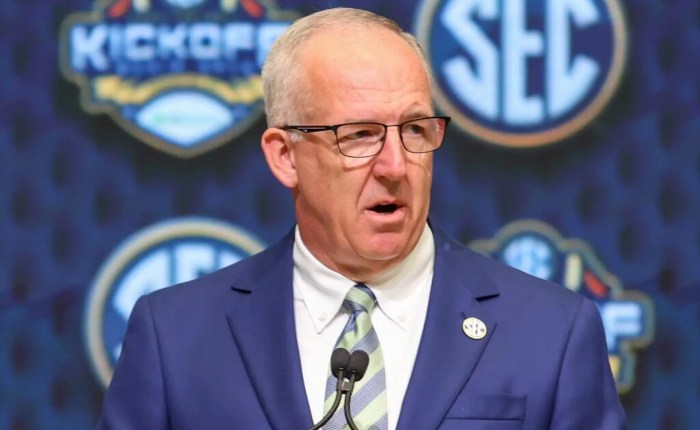
Greg Sankey, pictured at the SEC media day in July. Photo Credit: Jordan Godfree / Imagn Images

J. Batt has had a pretty good honeymoon.

Since arriving at Kentucky, the new athletics director has talked about listening to fans, improving their experience, and positioning the Wildcats to compete at the highest level. He has opened doors. Now we may find out whether he’s willing to kick one down.

Because Mark Mitchell’s eligibility has suddenly become about something much bigger than whether Kentucky adds another talented basketball player. It’s about power. And Greg Sankey and the SEC have plenty of it.

According to CBS Sports’ Matt Norlander, SEC presidents have reaffirmed conference rules that could prevent Mitchell from playing for Kentucky this season. Mitchell played at Missouri last year but didn’t enter the transfer portal during the spring window.

There’s a pretty good reason for that. He wasn’t eligible. Mitchell had exhausted his eligibility after four seasons of college basketball. There was no reason to enter the portal because, as far as everyone knew, there wasn’t another college season to play.

Then everything changed.

Mitchell and other players challenged the NCAA’s eligibility rules in court. A Jefferson County judge granted a temporary restraining order allowing Mitchell to pursue a fifth season. He entered the portal, committed to Kentucky, and suddenly Mark Pope had another experienced piece for a roster with championship aspirations.

Enter the SEC. According to Norlander, Mitchell is believed to fall under the SEC’s prohibition on intraconference transfers because he didn’t enter the portal during the designated window.

Rules are rules. Except when complying with them requires a time machine. How exactly was Mitchell supposed to enter the portal in April for a fifth season that didn’t exist? Unless Doc Brown and a DeLorean are somewhere in Kentucky’s NIL budget, I’m not sure how that was supposed to work.

That’s the question Kentucky should be asking forcefully.

The timing couldn’t be more interesting.

The SEC also just adopted severe penalties in a separate but related eligibility battle for schools that roster athletes who previously signed professional contracts or declared for professional drafts without properly withdrawing. Those penalties reportedly can include a half-season suspension for the head coach, massive financial penalties, and even the loss of conference voting privileges.

That’s not a slap on the wrist. That’s Sankey walking into the room carrying a sledgehammer.

There’s a reason for it.

The NCAA has spent years getting pummeled in court. Every time college sports’ governing bodies draw another line around amateurism, somebody seems to find a judge willing to erase it.

So the SEC is trying something different. Instead of punishing the player, punish the school. Make the consequences painful enough and nobody will dare test the rule.

That’s clever. Whether it survives a legal challenge is another matter. More immediately, we’ll see whether Kentucky is willing to push back.

This is where Batt comes in.

Batt’s early months have included plenty of popular decisions. Better concessions. More fan engagement. Open practices. Even an invitation for aging media members to risk orthopedic surgery playing basketball.

I’ve applauded all of it.

This, on the other hand, is different.

Kentucky isn’t fighting the NCAA from some distant outpost. It’s potentially challenging its own conference and arguably the most powerful commissioner in college athletics.

And Kentucky isn’t merely a victim of SEC governance, either. It’s a member. Its president sits at the same table as everybody else’s. The conference’s rules are ultimately the product of its own institutions.

That makes this situation complicated. It also makes it fascinating.

I’m not suggesting Kentucky should recklessly throw Mitchell onto the floor and dare Sankey to suspend Mark Pope.

There’s a difference between courage and stupidity.

But Kentucky should fight every reasonable fight for him.

Ask for the waiver. Challenge the interpretation. Support Mitchell’s legal efforts where appropriate. Make the SEC explain why a player should be punished for missing a deadline he had no conceivable reason to meet.

And if those avenues fail?

Then Batt has a decision to make.

Because there will be other Mark Mitchells. College athletics is changing too rapidly for there not to be. Courts will rule. Players will sue. Conferences will respond. Rules written six months earlier will collide with circumstances nobody anticipated.

Somebody eventually will discover exactly where the SEC’s authority ends. Kentucky doesn’t necessarily need to volunteer to be the guinea pig. LSU appears perfectly willing to handle that assignment. But Kentucky shouldn’t run from the laboratory, either.

Batt has spent his first few months telling Big Blue Nation that Kentucky intends to think bigger.

Good.

Here’s his chance.

Welcome to the SEC, J. Batt. Greg Sankey would like a word. Something tells me this meeting won’t be about concession prices.

Dr. John Huang is a retired orthodontist, military veteran, and award-winning author. He currently serves as a columnist for Nolan Group Media and invites readers to follow him on social media @KYHuangs. His latest book is Whining for Posterity, available on Amazon.

The Olympics, Immigration, and the Question We Avoid

The Olympics, Immigration, and the Question We Avoid

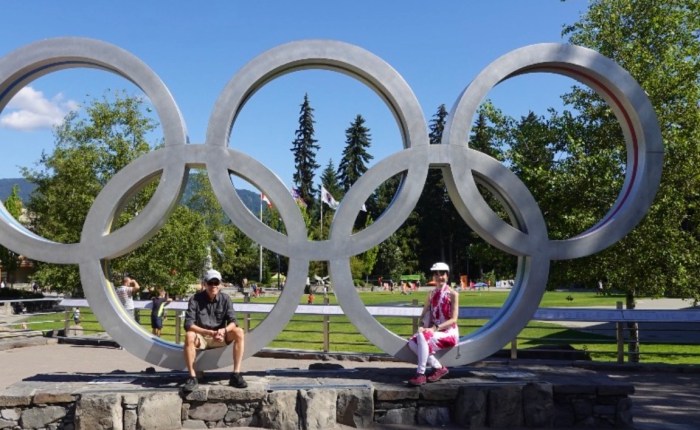
My sister, Mary, and I—both naturalized American citizens—with the Olympic rings in Whistler, British Columbia, the site of the 2010 Winter Olympics.

I’ve been thinking a lot about two things lately: the Olympics and immigration. They don’t seem connected—but in my life they are.

Watching athletes march behind flags has a way of stirring pride—and also stirring questions. Questions about belonging, about identity, and about who gets to wear a country’s colors and who is forever asked to explain themselves.

Somewhere between the opening ceremonies and the nightly news, those two worlds have been colliding in my head.

I’m a naturalized American citizen—but I didn’t take the test. My parents did. They filled out the forms. They stood in the lines. They navigated the system so I wouldn’t have to. My citizenship was inherited before it was understood, and respect for authority came with it.

Growing up as the only Asian kid in my elementary school, authority meant structure. Structure meant stability. And stability meant safety. My parents always told me to keep my nose out of trouble and not to make waves.

So yes, I stand for the anthem. I feel pride when the flag goes up.

But while we’re counting medals and celebrating national pride, immigration has been dominating the headlines again—raids, protests, tension, fear. And it’s made me uneasy in a way that’s hard to articulate.

Part of it is personal.

I joke sometimes—half joking—that I’m probably next on the list to be hauled away by ICE. It’s said half in humor, half in recognition of something many immigrants understand instinctively: that possessing the paperwork doesn’t always erase the perception.

Citizenship may be official, but belonging can still feel conditional.

And that’s where Olympic pride and immigration collide.

Let me say something plainly.

Criminals—especially violent criminals—should be deported. Who wants thugs around? Wanting safe streets doesn’t make you heartless. Communities have the right to protect themselves.

But immigration isn’t just a policy debate. We live it daily through personal relationships. There’s something different about the nanny who watches your kids. About the workers on the horse farms who show up before dawn and leave without applause. About the people who do the jobs no one else wants.

They aren’t abstractions. They’re faces and voices woven into daily life long before anyone asks where they’re from—or how they stay.

When I see immigration stories unfold, I don’t just see arguments. I see people who look like me. People who have been asked, “Where are you from?” enough times to know the follow-up is never innocent.

Citizenship didn’t erase that feeling. It just gave me the official paperwork.

Talking with my civic-minded friends has sharpened the tension. We look at the same issues and see different threats. I talk about order. They talk about liberty. One of them told me, “Protest is how liberties survive. If people don’t push back, they disappear.”

That sentence makes me uncomfortable. Because you can disagree with protest, debate enforcement, argue law and order endlessly. But at the very least, we should be able to agree on this: no one deserves to die for speaking up.

This is where the Olympics quietly teach us something.

Every athlete marches behind a flag, but the stories that move us most are personal ones. Refugees competing without a country. Athletes born somewhere else, representing a nation that gave them a chance. People who crossed borders not for glory, but for survival.

National pride, at its best, celebrates excellence without erasing humanity. At its worst, it tightens into something ugly and brutal.

Jesus lived under an empire that loved banners and authority. He respected order—but He never confused it with righteousness. He didn’t issue policy papers. He noticed who was hurting. He touched people others avoided. He stood with the vulnerable even when it complicated the story.

Christians don’t have to choose between loving their country and loving their neighbor. But we do have to choose which one shapes our tone.

I can believe criminals should be deported and still see dignity in the people who hold up daily life. I can stand for the anthem and sit with those who feel unseen. I can feel pride and practice humility.

My parents stood in line so I could belong. Others are still standing—sometimes quietly, sometimes fearfully, sometimes invisibly.

As flags rise and medals are awarded, maybe the most faithful posture is this: to hold pride and compassion in the same breath.

Jesus is still asking the same question—Olympics or not:

Who is my neighbor?

I love this country, and I’m grateful to stand for its flag.
But a nation worth standing for is one that still knows how to kneel.

Dr. John Huang is a retired orthodontist, military veteran, and award-winning author. He currently serves as a columnist for Nolan Group Media and invites readers to follow him on social media @KYHuangs. His latest book is Whining For Posterity, available on Amazon.

An Oak of Righteousness

An Oak of Righteousness

“But the wisdom that comes from heaven is first of all pure; then peace-loving, considerate, submissive, full of mercy and good fruit, impartial and sincere.” – James 3:17

You can read Dr. Tom Cooper’s obituary if you want the facts. https://www.milwardfuneral.com/obituaries/Dr-Thomas-M-Cooper?obId=46963575

You’ll learn where he studied, what he accomplished, how many students he taught, how many lives he touched in the official, measurable ways that look good on paper and sound impressive when read aloud. All of it is true. All of it matters.

But none of it explains why his passing yesterday saddened me in ways that words simply can’t adequately express.

Dr. Cooper was one of my mentors. In dental school, yes. But also in Sunday School, which, as it turns out, may have been the more important classroom. In both settings, he did something meaningful: he paid attention to people. Not just the impressive ones, nor the loud ones, nor the future rising stars—but to every ordinary Joe like me who showed up wanting to learn.

In dental school, it’s easy to think teaching is about brilliance—how much you know, how fast you can correct someone, how efficiently you can expose ignorance. Dr. Cooper never taught that way. He had an unhurried confidence, the kind that didn’t need to prove anything. When he spoke, you leaned in—not because he demanded attention, but because you were curious about what he had to say.

He didn’t just teach dentistry. He taught students.

And then there was Sunday School—where he taught life.

Long before I ever stood in front of a class or a congregation, I watched him do something deceptively simple and profoundly wise. He didn’t teach the lesson he wanted to teach. He taught the lesson we were ready to hear.

One Sunday, probably sensing my early, unpolished enthusiasm for teaching, he gave me a piece of advice that has followed me through every single speaking engagement—whether radio broadcast, packed classroom, or that awkward circle of folding chairs when only two people showed up:

“Take the class where they want to take you.”

It sounds almost too gentle to be revolutionary. But it is.

What he meant was this: teaching isn’t about dragging people to where you think they should be. It’s about honoring where they already are. It’s about listening long enough to hear the questions beneath the questions. It’s about understanding that people don’t need your brilliance nearly as much as they need your presence.

That lesson shaped me more than any syllabus ever could.

It kept me from preaching at people when I should have been walking with them.
It kept me from filling silence when I should have been letting it speak.
It kept me from confusing authority with influence.

Dr. Cooper never chased the spotlight. He didn’t need it. His faith was sturdy, quiet, and deeply rooted. The Bible calls that an “oak of righteousness, a planting of the Lord for the display of His splendor.” That phrase fits him perfectly—not flashy, not brittle, not swayed by every new wind of opinion.

Just solid. You leaned on Dr. Cooper without realizing it. And only when he’s gone do you feel how much weight he was carrying for others.

I don’t remember every lesson he taught. I don’t remember every Scripture he unpacked or every clinical pearl he dropped in passing. But I remember how he made me feel: seen, capable, invited.

That’s the kind of teaching that lasts.

If there’s a classroom in heaven, I suspect he’s there already, smiling patiently, waiting for the rest of us to catch up. And if I’m lucky, when I finally walk in, he’ll give me that same gentle reminder one more time:

“Take the class where they want to take you.”

Because that’s where the real learning happens.

Dr. John Huang is a retired orthodontist, military veteran, and award-winning author. Currently serving as a columnist for Nolan Group Media, he invites readers to follow him on social media @KYHuangs. Explore his latest, Whining For Posterity, and all his books at Amazon.
Discover his next scheduled teaching event here: Man Up – Men’s Ministry Retreat – St. Luke Church | Lexington, KY

Don’t Quit: A Kentucky Basketball Parable

Don’t Quit: A Kentucky Basketball Parable

Photo Credit: Chet White/UK Athletics

(LEXINGTON, Ky.) – Last night, during the first half of the Kentucky–LSU game, I learned something important about myself.

I am apparently one missed layup away from emotional bankruptcy.

When the Kentucky Wildcats fell behind the LSU Tigers by 18 points, social media did what social media always does: it declared the season dead, the coach clueless, and the program in urgent need of a full historical makeover.

The Cats weren’t just losing. According to X, this team had never played basketball together. Ever. Dribbling was new, passing was theoretical, and shotmaking was a distant rumor.

Coach Mark Pope went from “confused” to “fraudulent” in roughly six possessions. I saw posts that looked less like basketball analysis and more like grief counseling sessions—except no one wanted counseling. They wanted Pope’s head on a platter.

And then something deeply inconvenient happened.

Kentucky didn’t quit. They started making a run, chipping away at the lead.

The misfit parts didn’t suddenly become perfect. They didn’t magically turn into the ’96 “Untouchables.” They just… kept playing. Kept guarding. Kept taking shots that started finding their targets. Kept believing the game wasn’t over just because the internet said it was.

Slowly, painfully, improbably, the deficit continued to shrink. Hope tiptoed back in like a thief in the night. And just when everyone had emotionally hedged their bets, Malachi Moreno hit a buzzer-beater that flipped despair into delirium in one glorious, heart-stopping moment.

Same team, same coach, same players—but with a vastly different ending.

That’s when it hit me—this wasn’t just a basketball game. This was a metaphor for life—a sermon illustration delivered by way of a jump shot.

We fans are spectacularly bad at patience. We see a bad half and assume a bad season. We experience a bad season and assume a bad future. We mistake “right now” for “forever.” We confuse temporary struggle with eternal failure.

And when things don’t go according to plan, we rush to assign blame instead of framing perspective.

Spiritually speaking, we do this all the time.

We stumble out of the gate early—financially, relationally, emotionally—and decide the game is over. We stop running our offense. We quit boxing out. We panic and doom-scroll our way into despair. We forget that growth is rarely linear and redemption almost never arrives on our own schedule.

Last night, Kentucky reminded us of something simple and profound: momentum can change on a dime.

One stop. One run. One decision not to quit.

Twenty-four hours ago, Kentucky was being slotted into last place hypotheticals and tournament anxiety threads. This morning? They’re within a game of first place. Hope has returned. Faith in Pope is back. The same fans who were writing eulogies are now quoting analytics again.

Here’s the crazy thing. Lose in Knoxville on Saturday, and you’ll see the same cycle repeated.

The lesson isn’t “never criticize.” Believe me—I’ve made a second career out of constructive whining. The lesson is don’t confuse adversity with identity. Don’t bury something just because it’s struggling. And don’t assume God—or basketball seasons—are finished when the scoreboard looks ugly at halftime.

Whatever your current struggles—whether health, finances, or relationships—just persevere. Reach out for help when needed, hug your dog, and never quit.

Sometimes the miracle isn’t the buzzer-beater.

Sometimes the miracle is just staying in the game long enough for it to matter—because halftime is a terrible time to quit.

“Consider it pure joy, my brothers and sisters, whenever you face trials of many kinds, because you know that the testing of your faith produces perseverance. Let perseverance finish its work so that you may be mature and complete, not lacking anything.” –James 1:2-4

Dr. John Huang is a retired orthodontist, military veteran, and award-winning author. Currently serving as a columnist for Nolan Group Media, he invites readers to follow him on social media @KYHuangs. Explore his latest, Whining For Posterity, and all his books at Amazon.

Discover his next scheduled teaching event here: Man Up – Men’s Ministry Retreat – St. Luke Church | Lexington, KY

This Ain’t No Philosophy Seminar

This Ain’t No Philosophy Seminar

(LEXINGTON, Ky.) – When coaches are under fire, they usually don’t speak in riddles—they rant.

Jim Mora famously barked, “Playoffs?! Don’t talk about playoffs!”
Herm Edwards simplified the profession to its core: “You play to win the game.”
Mike Gundy, veins popping, yelled, “I’m a man! I’m 40!”

Those quotes didn’t require interpretation. They didn’t need a decoder ring. They landed because frustration stripped the message down to bone.

Which is why Mark Pope’s recent quote on his weekly coach’s show left so many Kentucky fans scratching their heads like they’d accidentally tuned into a philosophy podcast.

“What’s really important for us as coaches and as teammates is understanding the story that each of our guys and each member of our staff is telling themselves about what we’re going through right now…”

This is not a rant. It’s not normal coach-speak. It sounds more like a narrative symposium held in Ballroom A at the downtown Hyatt.

Before we dismiss it entirely—or turn it into a meme—let me explain why I might be uniquely qualified to translate what Pope was trying to say.

I spent decades as an orthodontist listening to people describe pain that wasn’t always where they thought it was. Patients told elaborate stories about one tooth when the real issue lived somewhere else entirely. My job wasn’t to validate the story. It was to identify the truth underneath it and fix the problem—whether the patient liked the diagnosis or not.

Coaching, at its best, works the same way.

So when Pope talks about “the story each guy is telling himself,” he’s really saying this:

Players are processing adversity differently. Some think it’s bad luck. Some think it’s their fault. Some think the system isn’t for them. Some think they should be playing more.

That part is reasonable, human, and accurate.

Then Pope says he wants to bring those stories back to two things: a point of truth and a point of common understanding.

Translation:
“We need everyone to stop lying to themselves—and agree on what we’re actually bad at.”

Still reasonable. Still logical. But strangely phrased for Kentucky basketball. It feels like Phil Jackson’s Zen without the structure—philosophy without the scoreboard support to justify it.

And that’s why it landed sideways.

Kentucky fans don’t need help understanding the story when the evidence is screaming:

• Slow starts
• Inconsistent effort
• Poor perimeter defense
• Questionable preparation

When you’ve had nearly two weeks to prepare and still fall behind by 21 points, the story doesn’t matter nearly as much as the symptoms. The frustration isn’t that Pope is wrong.

It’s that he’s explaining instead of commanding. At Kentucky, explanation often sounds like excuse—even when it’s not intended that way.

Fans are conditioned to expect blunt clarity in moments like this. Mora didn’t unpack emotional narratives. Edwards didn’t ask players how losing made them feel. Gundy didn’t workshop his truth.

They owned it.

That doesn’t mean Pope lacks intelligence or care. In fact, this quote suggests the opposite—he’s thoughtful, introspective, and trying to understand the human side of his team.

But this job isn’t graded on thoughtfulness. It’s graded on readiness—and ultimately wins and championships.

If every player is telling himself a different story, that’s not a literary problem. It’s a leadership one. Great programs don’t require narrative alignment sessions. They create roles so clear that internal monologues don’t matter.

At Kentucky, the story is supposed to be singular:

Defend.
Compete.
Earn minutes.
Win.

No subplots. No word-salad narratives from the coach. Kentucky basketball doesn’t need a narrator.

Pope’s quote might sound thoughtful in June. It sounds confusing in January.

And in January, Big Blue Nation is longing for something refreshingly old-school:

Less parable.
More accountability.

Let’s hope we get it.

This article was originally written for distribution through Nolan Group Media publications.

Dr. John Huang is a retired orthodontist, military veteran, and award-winning author. Currently serving as a columnist for Nolan Group Media, he invites readers to follow him on social media @KYHuangs. Explore his latest, Whining For Posterity, and all his books at Amazon.
I’m on to Kenny Brooks

I’m on to Kenny Brooks

(LEXINGTON, Ky.) – I’m on to Kenny Brooks. Not in a stop-the-presses, breaking news kind of way. It’s more like the quiet realization that the man has cracked a code most coaches spend a lifetime chasing. If you want sustained success in basketball—real, transferable, program-defining success—get yourself a generational point guard, teach her, empower her, and then get out of the way just enough to let her become herself.

He did it with Georgia Amoore. And now, unmistakably, he’s doing it again with Tonie Morgan.

Morgan’s résumé is already starting to read like folklore. A buzzer-beater that stunned LSU last Thursday, followed by another surgical stat line—18 points, 14 assists—in a composed, methodical 74–52 dismantling of Missouri. Flashy when needed. Surgical when required. And always, always in control.

But the numbers only tell you what she’s doing. They rarely explain why—or how.

That’s where Brooks leaned back, grinned, and gave us the real scouting report—one that had nothing to do with crossover moves or assist totals.

“I don’t know what football team is doing good without a good quarterback,” Brooks quipped. “Tonie, she’s been phenomenal all year long… her willingness to be coached. She never makes a face when she doesn’t agree with something… she’s consistently just welcoming any kind of feedback and she takes it.”

There it is. The overlooked superpower.

Be Teachable.

In an era where athletes are branded before they’re built, where confidence sometimes masquerades as infallibility, Morgan’s greatest strength might be her posture in a film room. She watches. She listens. She absorbs. And then—this is the key—she applies.

Brooks made something else clear early, almost defensively, as if to protect Morgan from lazy comparisons: she is not trying to fill Georgia Amoore’s shoes. She’s building her own footprint. Different stride—with the same authority.

And authority she has.

Morgan can do it all. She scores at all three levels. She goes downhill with intention, not chaos. She distributes with either hand like she’s ambidextrous by design. She can take her defender one-on-one when the offense stalls. She understands shot selection. And she defends—not the Instagram kind of defense, but the grind-it-out, make-you-work-for-air variety.

Most importantly, Brooks has empowered Morgan to run the offense. Not just initiate it. Not just survive it. But to run it.

That kind of trust doesn’t come from a box score. It comes from habits—and a heck of a lot of communication and connection between coach and player.

Morgan explained it simply, the way players who truly understand their role often do.

“I have the ball a lot, so it is very important that I take care of it,” said the 5-foot-9 senior transfer from Georgia Tech. “So, when I do turn it over, I just move on. It happens… I just want to take care of it.”

That’s not coach-speak. That’s emotional maturity. Ownership without self-flagellation. Accountability without paralysis.

Teachable players don’t crumble when corrected or sulk when challenged. They don’t confuse coaching with criticism. They see feedback as fuel, not as insult.

And that—far more than a step-back jumper or a no-look dime—is what separates good point guards from the kind that quietly define eras.

Brooks knows it. He’s lived it. He’s building around it again.

Every great coach has a calling card. For Brooks, it might be this: he doesn’t just recruit talent; he intentionally seeks out posture and fit. The willingness to be molded. The humility to learn. The confidence to adapt.

Put a player like that at the point, and suddenly everything else aligns. Spacing makes sense. Tempo settles. Teammates breathe easier. Coaches sleep better.

Morgan’s story is still being written, but the early chapters are already instructive—not just for basketball, but for life. Be skilled, yes. Be confident, absolutely. But remain teachable through it all.

Because the players who last, the leaders who endure, and the programs that matter most are built not on ego—but on the desire to learn and get better.

And if Kenny Brooks keeps finding point guards like this?

Well… I’m really on to him now.

This article was originally written for distribution through Nolan Group Media publications.

Dr. John Huang is a retired orthodontist, military veteran, and award-winning author. Currently serving as a columnist for Nolan Group Media, he invites readers to follow him on social media @KYHuangs. Explore his latest, Whining For Posterity, and all his books at Amazon.

To Hell with the Standard (Champions Classic Edition)

To Hell with the Standard (Champions Classic Edition)

(LEXINGTON, KY.) – Mark Pope keeps telling us Kentucky didn’t “meet the standard,” but after that Michigan State demolition in the Champions Classic, I’m starting to think we’re comparing this team to the wrong standard entirely. Championship Number Nine? At this point, I’d settle for “don’t get pantsed on national television before halftime.”

You see, “the standard” sounds great when you’re at a booster dinner or a preseason pep rally. But when the Cats get embarrassed again in Madison Square Garden—when the defense leaks worse than a cheap umbrella and the chemistry looks like oil and vinegar—then the standard becomes a cruel, suffocating weight.

And surely you caught Pope’s postgame presser… ugh. The man looked like someone had just put his dog down. Depressed. Drained. Eyes sunken like he’d been up all night gathering data, crunching analytics, and questioning all his life decisions. This isn’t the buoyant, always-positive, program-resurrecting Pope we hoped for—this is a man preparing for a root canal without anesthesia.

Pope said his players weren’t ready for Louisville because of some “out-of-character” incident before the game. Well, what was the excuse against Michigan State? Nothing—nothing—about that latest performance looked in character for a team supposedly training every day under the ghostly shadow of the standard. At this point, the standard has morphed into a meaningless punchline.

And can we talk about the $22 million elephant in the room?
That’s right—this roster is collectively pulling in twenty-two million American dollars to play basketball. That’s not chump change.

And what are we getting for that hefty investment?

Poop. Absolute, unmitigated poop.

Defense? Poop.
Shot selection? Poop.
Effort? Poop.
Guys playing for an NBA audition instead of the name on the front of the jersey? Extra-strength poop with glitter.

Okay—I’ve vented enough. Let’s take a deep breath (maybe two) and accept the painful truth: Mark Pope inherited a proud tradition, but also a monster. Every coach who takes the Kentucky job eventually realizes the same terrifying thing—this fan base is passionately crazy. Anything less than a Final Four is failure. Anything short of cutting down the nets is unacceptable. That’s the gospel of Big Blue Nation.

But here’s the irony—we demand perfection from kids who can’t legally rent a car. We scream “UNACCEPTABLE!” into the Twitter void while eating buffalo wings in our recliners. We call for Pope’s head in November, then brag about our loyalty in March.

We’ve worshiped at the altar of the standard so long that we’ve forgotten why we fell in love with Kentucky basketball in the first place. It wasn’t just the championships—it was the magic. The tradition. The roar inside Rupp when some kid from Pikeville or Paducah drills a three. The way the team makes us feel like part of something larger than ourselves.

You can’t measure that with analytics. You can’t hang it from the rafters either. It’s a pulse. A heartbeat. And right now, that heartbeat’s faint—not because of the losses, but because we’ve forgotten how to simply enjoy the game.

So here’s my radical suggestion: to hell with the standard—for now.

Let’s stop counting banners and start counting moments. Let’s cheer the hustle play, the smart pass, the kid who dives on the floor when the game’s already out of reach. Let’s celebrate the little victories—the ones that don’t make SportsCenter but make us proud nonetheless.

Sure, this team may not be destined for the ninth championship banner. They may fumble away a few more games. The defense may still make you want to throw a shoe at your TV. But they’re our team. And if we can’t love them when they’re flawed and broken, we don’t deserve to love them when they’re flying high.

The sky isn’t really falling. It just feels that way because we’ve been staring upward too long, waiting for the next banner to drop.

Let’s stop pretending this is a title run and just… watch basketball. Enjoy the wild, maddening, forehead-smacking circus it becomes. Appreciate Pope trying to hold the universe together with bailing wire while the players try to remember how to guard a ball screen.

Because if you don’t laugh, you’ll cry. And if you don’t ditch the standard, you’ll be the one feeling the root canal.

Championship Nine isn’t walking through that door.
But maybe joy can.
If we let it.

And if this $22-million roster ever decides to stop playing like poop, well… we’ll call that manna from heaven.

This article was originally written for distribution through Nolan Group Media publications.

Dr. John Huang is a retired orthodontist, military veteran, and award-winning author. Currently serving as a columnist for Nolan Group Media, he invites readers to follow him on social media @KYHuangs. Explore his latest, “Whining For Posterity,” and all his books at https://www.Amazon.com/stores/Dr.-John-Huang/author/B092RKJBRD

Top of Form

Bottom of Form