Why Kentucky Didn’t Want Another Mitch Barnhart

Why Kentucky Didn’t Want Another Mitch Barnhart

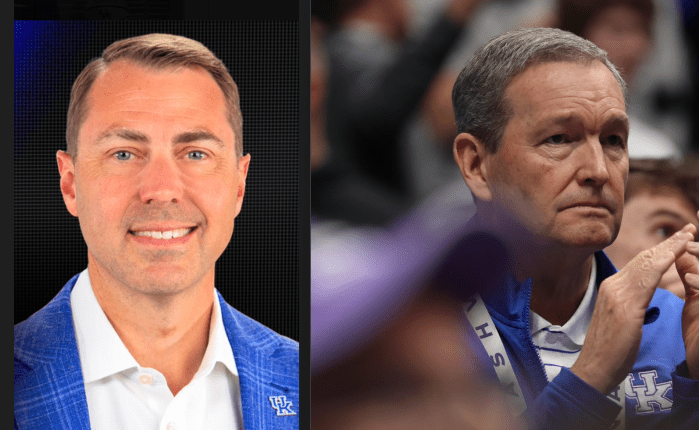
The easiest way to understand Kentucky’s hiring of J Batt is to stop thinking about Mitch Barnhart. In fact, the farther away you get from Mitch Barnhart, the closer you get to understanding why Kentucky made this hire.

That’s not criticism. It’s reality.

For twenty-three years, Mitch Barnhart was exactly what Kentucky needed. He was steady, measured, patient, and dependable—all necessary traits for the head honcho in charge.

If Mitch Barnhart were a vehicle, he would have been a Toyota Camry. He wasn’t flashy. He wasn’t loud. He wasn’t constantly reminding you how innovative he was. He simply started every morning and got you where you needed to go.

For more than two decades, that was a tremendous asset. The problem, however, isn’t that Barnhart changed. The problem is that college athletics did.

The world Mitch Barnhart mastered no longer exists.

When Barnhart arrived in Lexington, players couldn’t transfer freely. NIL wasn’t a thing. Revenue sharing wasn’t a thing. Athletic departments weren’t competing against professional franchises for attention. Nobody was discussing private equity investments in college sports. Most fans had never heard the words “collective” or “portal.”

Back then, an athletics director hired coaches, built facilities, balanced budgets, and tried not to make national headlines. Today? Today an athletics director needs to be part CEO, part fundraiser, part lawyer, part economist, part politician, and part crisis manager. Somewhere along the way, college athletics stopped being a department and became an industry.

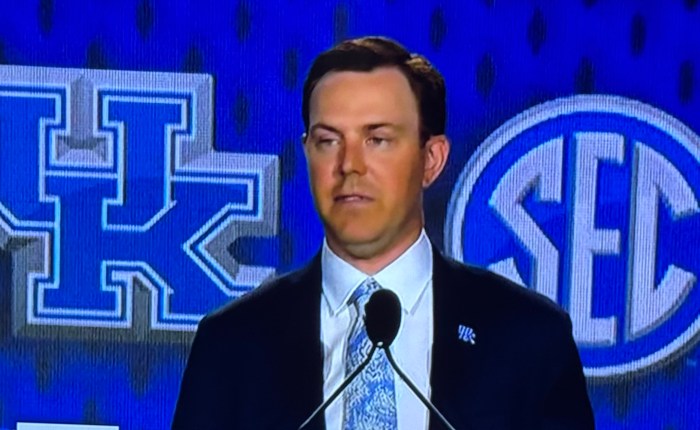
That’s why Kentucky’s hiring of J Batt feels so significant.

Kentucky wasn’t looking for the next Mitch Barnhart.

Kentucky was looking for Mitch Barnhart’s opposite.

Again, that’s not an insult. It’s a recognition that the job description has fundamentally changed.

Barnhart represented stability. Mitch Barnhart ran Kentucky athletics the way your favorite small-town banker used to run a bank. He knew people. He remembered names. He understood that relationships mattered. You got the sense he could walk through a student-athlete dining hall and recognize half the room.

J Batt inherits a world where the athletics director is less small-town banker and more hedge fund manager. The challenge isn’t remembering everyone’s name. The challenge is making sure the balance sheet survives long enough for there to be a team wearing the jersey.

Barnhart spent years carefully building Kentucky athletics.

J Batt arrives at a time when the entire structure of college sports seems to change on a monthly basis.

One man was built for certainty.

The other was hired for chaos.

And make no mistake—chaos is exactly what college athletics has become. Schools are paying players. Players are changing schools. Conferences are expanding. Conferences are disappearing. Lawsuits are flying. Revenue-sharing models are being rewritten. Television contracts are driving decisions that would have seemed absurd a decade ago.

The sport isn’t evolving. It’s mutating. Which is why I find Kentucky’s hire so fascinating. The university didn’t simply replace an athletics director. It acknowledged reality.

For years, Kentucky’s greatest advantages were tradition, facilities, fan support, and resources. Those things still matter. But they no longer guarantee anything. Today, success depends on navigating a constantly shifting landscape where the rules seem to change faster than the scoreboards.

The modern athletics director isn’t simply protecting an institution. He’s repositioning it. That’s a different skill set. It’s also a different personality.

Mitch Barnhart always felt like a caretaker.

J Batt feels more like a venture capitalist.

One was entrusted with preserving what Kentucky had built.

The other is being asked to figure out what Kentucky must become.

Those are very different assignments. And that’s why this hire feels bigger than many fans realize.

Most people will judge J Batt by wins and losses. That’s understandable. Fans should care about wins and losses. But his biggest challenge may have nothing to do with scoreboards. His challenge is ensuring Kentucky remains Kentucky while college athletics transforms into something none of us fully recognize.

That’s not easy. In some ways, it’s impossible. Because the truth is that the college sports many of us grew up loving are already gone.

The amateur model is gone.

The old recruiting model is gone.

The old roster-building model is gone.

The old business model is gone.

What’s replacing them remains a work in progress.

Which brings us back to J Batt. Kentucky didn’t hire him because Mitch Barnhart failed. Kentucky hired him because the world Mitch Barnhart mastered disappeared.

The next decade won’t be about protecting the past. It will be about surviving the future.

And that may be the most important hire Kentucky has made in years.

Dr. John Huang is a retired orthodontist, military veteran, and award-winning author. He currently serves as a columnist for Nolan Group Media and invites readers to follow him on social media @KYHuangs. His latest book is Whining for Posterity, available on Amazon.
Seven Million Dollars? Have We Completely Lost Our Minds?

Seven Million Dollars? Have We Completely Lost Our Minds?

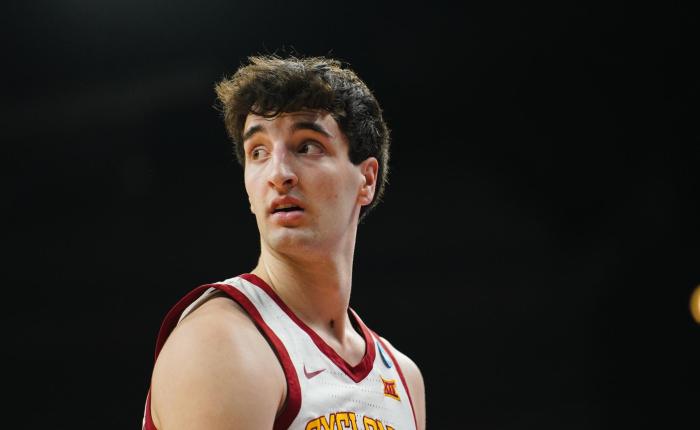
Milan Momcilovic/ photo courtesy Jacob Rice/ Iowa State Daily

I have a confession to make. When I first heard the reported figure Kentucky allegedly paid Milan Momcilovic to come to Lexington, I assumed somebody had misplaced a decimal point.

Seven million dollars? Are you kidding me?

I immediately began searching for clarification. Surely they meant seven hundred thousand. Maybe 1.7 million. Perhaps even 2.7 million. After all, NIL has changed everything. But seven million dollars for one college basketball player? That number sounds less like a recruiting budget and more like something you would pay to acquire a small Caribbean island.

Before anyone accuses me of criticizing Momcilovic, let me make something perfectly clear. This isn’t about him.

I wanted more than anything for Kentucky to land him.

I think he’s exactly the kind of player Mark Pope needed. Kentucky lacked consistent perimeter shooting last season. Momcilovic is one of the best shooters in college basketball and immediately makes the Wildcats better in so many different ways. Not only will he score, but he’ll automatically spread the floor, allow his teammates to create, and open up the lanes for a bunch of easy baskets. If Coach Mark Pope wanted him, I wanted him. That’s not the issue.

The issue is the number.

Maybe I’m showing my age, but I grew up in an era when Kentucky fans debated whether a coach was worth a million-dollar contract. I can still remember when coaching salaries themselves seemed outrageous. Today, we’re discussing the possibility of paying a college basketball player seven times that amount.

Think about the names that have passed through Lexington.

Dan Issel.

Jack Givens.

Kyle Macy.

Jamal Mashburn.

Anthony Davis.

John Wall.

Shai Gilgeous-Alexander.

None of them made anything remotely approaching seven million dollars while wearing Kentucky blue. Heck, Coach Adolph Rupp most likely didn’t make seven million dollars in his entire forty-year career.

Yet here we are.

What fascinates me isn’t necessarily the amount itself. What fascinates me is how quickly we’ve become numb to numbers that would have seemed absurd only a few years ago. If somebody had predicted ten years ago that Kentucky fans would be casually discussing whether a player was worth seven million dollars, we would have laughed them out of the room. That’s a lot of twenty-dollar handshakes.

Today the reaction is often, “Well, that’s just what it costs.”

Maybe that’s true.

In fact, that’s the uncomfortable part of this conversation. If Kentucky wants to compete for championships, perhaps this really is what it costs. Perhaps the market has spoken. Perhaps this is simply the new reality of major college athletics.

If that’s the case, then we should at least be honest about what we’ve become.

For years the argument was that players deserved compensation. I didn’t always agree. I felt the free tuition and associated amenities were more than a fair tradeoff.

But I’ve since relented a bit. Universities, television networks, apparel companies, and coaches were making fortunes while the players generated much of the product. I’ll admit the old system wasn’t fair.

But somewhere along the way, college athletics stopped evolving and started mutating.

Today we have free agency, bidding wars, contract negotiations, agents, revenue sharing, NIL collectives, and transfer portals. The jerseys still say Kentucky across the front, but increasingly the sport resembles professional basketball with pep bands and mascots.

I don’t blame the players.

In fact, if someone offered me seven million dollars when I was nineteen years old, I would have sprinted toward the nearest signature line before they could change their minds.

The players didn’t create this marketplace. The adults did. The schools did. The boosters did. The television networks did. And yes, the fans did.

For years, fans demanded that their schools spare no expense. We demanded elite recruits. We demanded Final Fours. We demanded championships. We demanded that our programs do whatever it took to stay ahead of the competition.

Well, apparently somebody listened.

Now we’re seeing what “whatever it takes” actually looks like.

Of course, all of this leads to the obvious question.

Is any college basketball player worth seven million dollars?

My answer is simple.

No.

Nobody is worth seven million dollars. Not John Wall. Not Anthony Davis. Not Cooper Flagg. Not anybody.

Unless…they win Number Nine.

That’s the standard at Kentucky.

At seven million dollars, we’re no longer talking about potential. We’re no longer discussing upside, projections, or recruiting rankings. We’re discussing results only. We’re discussing banners. We’re discussing championships.

Fair or unfair, a number that large creates expectations that are equally large.

If Kentucky wins a national championship, nobody will care what Momcilovic cost. Fans will call it a bargain. They’ll call it money well spent. They’ll celebrate the investment the same way businesses celebrate a successful acquisition.

But if Kentucky falls short, that number won’t disappear. It will hover over every loss, every missed shot, every disappointing March exit. That’s simply the reality of attaching professional-level money to college-level expectations.

Perhaps that’s what bothers me most.

The old connection between fans and players was built largely around shared identity. Players came to Kentucky because they wanted to be Wildcats. Fans embraced them because they represented Kentucky. Today, many players come because Kentucky assembled the most competitive financial package.

Again, I don’t blame them. Most of us would do exactly the same thing. But let’s not pretend the relationship hasn’t changed.

Maybe that’s progress. Maybe it’s inevitable. Maybe it’s even fair. I honestly don’t know.

But every once in a while, I hear a number like seven million dollars and find myself wondering whether we’ve mistaken evolution for absurdity.

And then I remind myself of one final truth.

If Banner Number Nine is hanging in Rupp Arena next April, nobody will remember the price.

Until then, however, I reserve the right to stare at that reported number and wonder whether college basketball has finally lost its mind.

Dr. John Huang is a retired orthodontist, military veteran, and award-winning author. He currently serves as a columnist for Nolan Group Media and invites readers to follow him on social media @KYHuangs. His latest book is Whining for Posterity, available on Amazon.
NIL, APR, and Other Fairy Tales

NIL, APR, and Other Fairy Tales

The University of Kentucky Athletic Department proudly announced this week that UK student-athletes achieved a combined 3.471 GPA this spring, marking the 28th straight semester above a 3.0.

Twenty-eight straight semesters. That’s a mark of unparalleled consistency.

The release was filled with impressive numbers. Four hundred fifty-nine athletes above a 3.0. One hundred thirty-six with perfect 4.0 GPAs. Volleyball leading the way with a staggering 3.865 GPA. Men’s basketball posting a sparkling 3.59. Football climbing above a 3.0. Eight teams earning perfect APR scores.

And honestly, those accomplishments deserve recognition. A lot of these athletes work incredibly hard balancing travel, practices, media obligations, workouts, NIL appearances, social media branding, and actual coursework. The academic support staffs deserve medals for somehow keeping all the trains running on time in an environment that increasingly resembles free agency with mascots.

Still, forgive me if I chuckled while reading the release.

Because while UK is celebrating APR scores and graduation rates, the rest of college athletics now operates like a bizarre hybrid of the NFL, Wall Street, and reality television. Revenue sharing has arrived with a vengeance. NIL collectives function like salary-cap departments. Boosters debate roster construction with the intensity of Fortune 500 executives discussing quarterly earnings. Coaches talk openly about roster retention costs while fans stalk transfer portal announcements like day traders watching stock tickers.

Yet every spring, universities still release these glowing academic reports with the warm sincerity of a church bulletin.

“At Kentucky, the educational mission remains central,” Mitch Barnhart said in the release.

And I actually believe he believes that. I do.

But the contrast is impossible to ignore.

One minute, fans are screaming online about the desperate need for a seven-foot rim protector who can defend ball screens and shoot 38 percent from three. The next minute, the university puts out an APR graphic like educational outcomes are all that matter.

That’s what makes modern college athletics such magnificent theater.

We’ve created a world where a freshman quarterback can earn more money before his sophomore year than several university professors combined, yet schools still expect us to become emotionally moved over cumulative GPA announcements.

Again, this isn’t anti-education. Quite the opposite. I still genuinely love universities. My family funds scholarships. I spent decades in healthcare and education-related environments. I’m one of the few media people who asks academically related questions and questions APR outcomes. I believe academics matter deeply.

Which is precisely why this whole charade fascinates me so much.

The NCAA still unveils APR scores every year with all the drama of sacred scripture being lowered from the mountaintop. The Academic Progress Rate remains one of those phrases that sounds incredibly important while simultaneously causing most fans’ eyes to glaze over instantly.

We all understand that the average fan is far more concerned about whether Kentucky has enough NIL money to keep a backup guard from transferring to Arkansas next Tuesday.

At this point, “student-athlete” feels less like a meaningful description and more like a nostalgic phrase from another era. Like “video rental store” or “collect call.”

I especially enjoyed seeing men’s basketball post a 3.59 GPA. A 3.59 at Kentucky, no less. That’s genuinely impressive considering half the fan base spent the offseason demanding more “dudes” and another year of eligibility for Otega Oweh.

The real heroes in all this may honestly be the academic counselors. Somewhere inside the Joe Craft Center, an exhausted advisor is probably trying to have a serious discussion about long-term educational development with a teenager whose NIL valuation already exceeds the salary of multiple associate professors combined. The fact those conversations happen with straight faces is one of the true miracles of modern college athletics.

And maybe that’s why these academic numbers feel so strange now. Not fake. Not meaningless. Just disconnected from what college sports has become.

A 3.471 GPA in the NIL and revenue-sharing era simply does not carry the same context it once did. Not with online coursework, massive institutional support systems, and billions of dollars floating around the enterprise. College athletics has evolved into a professional entertainment business carefully wrapped inside educational branding, and everybody involved knows it.

The schools know it.

The coaches know it.

The players know it.

The fans absolutely know it.

We just keep pretending otherwise because “student-athlete” sounds far more wholesome than “young entertainment employee with a Maserati and a meal plan.”

So yes, congratulations to UK Athletics. The accomplishments are real, and the work behind them deserves praise.

But every time I read one of these glowing academic press releases, I still can’t help but picture some wealthy booster proudly nodding at the 3.471 GPA announcement while simultaneously texting a collective representative:

“Wonderful. Now how much for that five-star offensive tackle?”

Dr. John Huang is a retired orthodontist, military veteran, and award-winning author. He currently serves as a columnist for Nolan Group Media and invites readers to follow him on social media @KYHuangs. His latest book is Whining for Posterity, available on Amazon.
Please , Sir, I Want Some More!

Please , Sir, I Want Some More!

If 68 teams are good, then more must be better, right?

That seems to be the guiding philosophy behind the latest push to expand the NCAA Division I Men’s Basketball Tournament. Because when something works beautifully, the natural instinct—apparently—is to stretch it and squeeze it. We’re like Oliver Twist, always pleading for more porridge.

Why stop at 68? Let’s go full buffet line. Ninety-six. One hundred twenty-eight. Let’s invite your neighbor’s rec league champion and the entire KSR bowling team while we’re at it.

Sadly, this is where we are.

The inevitable expansion isn’t really about competitive balance—despite what analysts like Seth Greenberg will tell you between commercial breaks. It makes for a great soundbite. It just doesn’t happen to be true.

Honestly, the choice isn’t about inclusion. It’s not even about giving that plucky mid-major a better shot at glory. This is about money—cold, hard, TV-contract, inventory-filling money.

And yes, before someone sends me a strongly worded email with 17 bullet points and a KenPom chart, I understand the arguments. More access, more Cinderella stories, more games, more reason to retain coaches, more content for media.

More.

That word should make you nervous. Because in college athletics, “more” rarely means better. It usually means diluted, bloated, and harder to care about.

Sixty-eight teams already felt like we were pushing the limits. We’ve got First Four games that feel like play-in games to the play-in games. We’re asking fans to invest emotionally in teams that, in many cases, barely proved they belonged in the field to begin with.

And now the solution is to… add more?

At some point, you don’t have a tournament. You have participation trophies with a TV schedule.

The beauty of Selection Sunday has always been its tension—the idea that you earned your shot through the grind of a long season. Expand the field, and you cheapen that accomplishment. Why even play the regular season?

And let’s not pretend this is being driven by some noble mission to “grow the game.” The game is doing just fine. The arenas are packed. The ratings are strong. The brackets—those glorious, chaotic brackets—are already a national obsession.

This is about squeezing more out of something that’s already near perfect.

It’s the classic mistake: taking a great product and over-engineering it in the name of revenue. Like adding extra endings to a movie that didn’t need one. Or turning a tight 90-minute thriller into a bloated three-hour director’s cut because you can.

The NCAA sees inventory. Networks see programming. Advertisers see eyeballs.

Fans? We get a longer, messier tournament that asks for more of our time while giving us less of what made it special.

And here’s the irony: expanding the field doesn’t really help the teams it claims to help.

Those fringe teams? They’re still long shots. They’re still walking into a buzzsaw against better, deeper, more talented programs. The difference now is we’re pretending their inclusion is meaningful when it’s mostly symbolic.

Congratulations. You made it. Here’s your one shining moment.

Now please exit quietly after your 20-point loss. You shouldn’t have been here anyway.

Meanwhile, the top seeds get an even easier path. More mismatches. More tune-up games disguised as tournament contests. The rich get richer, and the rest get a slightly nicer seat at the table before being asked to leave.

That’s not equity. That’s optics.

And let’s talk about the fan experience for a second. The bracket—arguably the greatest interactive element in all of sports—is already a delicate, maddening puzzle. It’s what pulls in casual fans, office pools, and that one friend who hasn’t watched a game all year but suddenly becomes a bracketologist.

Now we’re going to complicate it further?

More teams means more variables, more confusion, and frankly, less fun. There’s a tipping point where complexity stops being engaging and starts being exhausting.

We’re flirting with that line.

Look, I’m not naïve. College sports has been on this trajectory for years. Conference realignment, NIL deals, transfer portal chaos—it’s all part of the same ecosystem. The business side has been winning for a long time.

But this one feels different because it messes with something that didn’t need fixing.

March Madness wasn’t broken.

It was one of the few things in sports that felt universally loved, reliably unpredictable, and beautifully simple at its core: win or go home.

Now it’s starting to feel like: win… or maybe you still get in.

And maybe that’s not just a tournament problem.

But hey, what do I know?

I’ve never won a bracket.

Now it’ll be even harder.

Dr. John Huang is a retired orthodontist, military veteran, and award-winning author. He currently serves as a columnist for Nolan Group Media and invites readers to follow him on social media @KYHuangs. His latest book is Whining for Posterity, available on Amazon.
BLUEprint for Winning?

BLUEprint for Winning?

When I first saw Kentucky’s announcement about this new “BLUEprint” system, my initial reaction was the same as a lot of yours.

What is this BS?

Another buzzword. Another corporate-sounding initiative. Another step away from anything that once felt familiar.

But the more I sat with it, the more uncomfortable the realization became.

This isn’t BS. It’s reality. And maybe—whether I like it or not—it’s progress.

Because what Kentucky rolled out this week isn’t just some fancy database. BLUEprint is a centralized, analytics-driven platform designed to evaluate players across football, basketball, volleyball—every revenue sport—not just by how they perform, but by what they’re worth. It pulls together performance data, financial considerations, and roster projections into one system that helps decision-makers build teams with precision.

In plain terms, Kentucky has built itself a professional front office, the kind you’d expect in the National Football League, not on a college campus. And for the first time, Kentucky isn’t even trying to pretend otherwise.

And that’s where I really struggle.

Because I’ve spent a lot of time—probably too much time—writing about what Kentucky used to be. The tradition, the standard, the idea that this place meant something beyond wins and losses. That players came here not just because of opportunity, but because of identity.

But let’s be real—this pie-in-the-sky idealism didn’t die this week. It’s been fading for years. All BLUEprint does is put structure and a name to what has already replaced it.

And if the only thing that matters—if the bottom line—is winning, then I can’t sit here and tell you this is the wrong move. In fact, it might be the smartest thing Kentucky has done in years. Because the game has changed, and not adjusting isn’t noble—it’s negligent. You can’t compete in a marketplace driven by NIL dollars, transfer portal movement, and constant roster churn with gut instinct and nostalgia. You need structure. You need discipline. You need something that tells you not just who a player is, but what he’s actually worth to your program.

That’s what this is. It’s not about building a team anymore. It’s about managing a portfolio.

And frankly, that’s what Kentucky has been missing.

The last few seasons haven’t fallen short because of effort or pride. They’ve fallen short because the pieces didn’t fit—because the roster construction didn’t match the expectations, and because we were still operating like it was 2015 while everyone else had already moved on.

BLUEprint is an acknowledgment of that—a quiet admission that guessing isn’t good enough anymore.

But here’s the part I can’t shake—and I don’t think you should either.

There’s a cost to this. There always is.

Because once you start assigning value to players in a system like this, it inevitably changes how you see them. Not all at once, not in some dramatic, heartless way—but gradually, subtly. Development becomes projection. Loyalty becomes leverage. And that kid, like Dominique Hawkins or Derek Willis, who might have taken three years to grow into something special becomes harder to justify—and eventually, impossible to keep—when the numbers say someone else offers a better return right now.

That’s not evil.

It’s just efficient.

And efficiency doesn’t care about sentiment, pedigree, or passion—it just cares about return.

So when we talk about “Kentucky guys,” about culture, about the things that once separated the program with the greatest tradition in the history of college basketball from everyone else, we have to be honest about what we’re risking. Those things don’t disappear overnight—but they do get squeezed, marginalized, and replaced, piece by piece, by a system that rewards production over patience.

And maybe that’s what it takes now.

Maybe this is the price of competing at the highest level again.

I don’t like it. But I also don’t like watching Kentucky struggle to keep up in a world that has clearly moved on.

So here we are—not clinging to the past, not fully comfortable with the future, but standing somewhere in between, trying to convince ourselves this is still the same program we fell in love with—and cried over.

It’s not.

And maybe the most honest thing Kentucky did this week wasn’t launching BLUEprint. It was admitting—without actually saying it—that winning now requires becoming something different.

The question isn’t whether this works. It probably will. The real question is whether we’re willing to accept what Kentucky has to become for it to work.

Kentucky didn’t sell its soul. It just realized—too late—that it already had. And now, with BLUEprint, it’s trying to buy it back.

Not with tradition.

Not with loyalty.

But with numbers…and, hopefully, more wins.

Dr. John Huang is a retired orthodontist, military veteran, and award-winning author. Currently serving as a columnist for Nolan Group Media, he invites readers to follow him on social media @KYHuangs. Explore his latest, Whining For Posterity, and all his books at Amazon.

Two Tournaments, Two Standards

Two Tournaments, Two Standards

(FT. WORTH, TX.) — I didn’t expect the food to be better. But it was. The people are friendlier, the hospitality warmer, and the administrators here at the Women’s NCAA Regional actually seem glad you showed up.

And for a moment, you start to wonder—why doesn’t this feel like a bigger deal?

And then the games start, and reality creeps back in.

It’s not one glaring flaw so much as a collection of small ones that add up. Fewer shuttles. Fewer people who can answer basic questions. Less coordination where it matters. It feels like an event that’s been carefully decorated but never fully constructed. The effort is obvious. The execution, not quite.

And then you look up during a marquee game—UConn Huskies women’s basketball taking the floor at Dickies Arena—and the arena is half full.

Half.

That’s the part you can’t dress up.

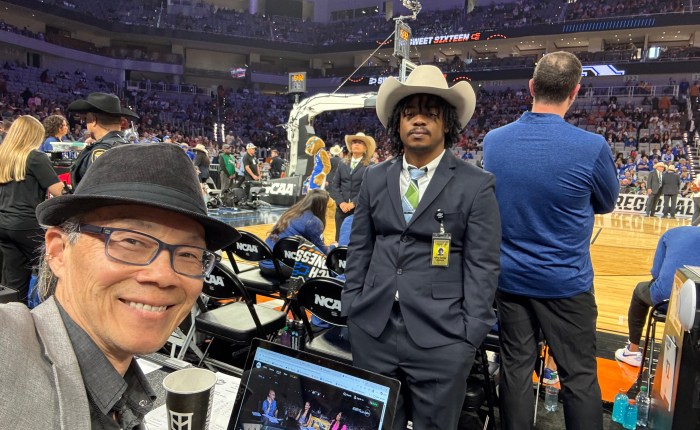
Now let me make this personal, because sometimes that’s the only way the truth really lands. At the men’s NCAA Tournament, I’m usually sitting two time zones away from the action, tucked into overflow media seating, craning my neck past a forest of national media and podcast setups just to follow the game. It’s crowded, chaotic, and, if I’m being honest, a little ridiculous.

Here? I’ve got a great seat on press row. Front and center. Clear sightlines to the Kentucky bench. Easy access. The kind of seat you’d think I’d been lobbying for my entire career.

And instead of feeling like I’ve finally arrived, it feels like I’ve stumbled into the answer.

There’s space here.

There’s always space here.

Here’s the deal. If the Kentucky Wildcats men’s basketball team makes a regional, it’s not just different—it’s overwhelming. For fans and media alike, there’s no room to breathe. Every quote becomes doctrine. Every lineup decision gets debated like it’s a constitutional amendment. A throwaway comment in November turns into a full-blown philosophical argument by March.

We don’t just cover Kentucky basketball—we consume it. Obsess over it. Sometimes completely lose perspective over it.

And hovering over it all are the national big shots in their tailored suits, nodding knowingly, speaking in definitive tones—as if they alone have cracked the code the rest of us are still trying to understand.

That’s not just interest. That’s obsession.

And standing here, it’s hard not to ask—what would this place look like if even a fraction of that energy showed up?

Because the product here at the women’s tournament isn’t inferior. Spend any real time watching and you’ll see execution, toughness, and pride that hold up just fine. The reporters here are grinding, too—asking thoughtful questions, writing real stories, doing the job the right way. In many cases, they’re better prepared than the swarm that descends on the men’s tournament.

But that’s also the point.

These are the reporters who cover women’s basketball all year.

Where is everybody else?

Where’s the overflow, the national swarm, the sense that this matters on the same scale?

It’s not here. And that absence speaks louder than any press release about “investment.”

Because even Geno Auriemma—who has every reason to sell this game—finally sounded fed up. He rattled off the three-point shooting numbers from across the tournament, numbers that make you wince, and asked the obvious question about how you’re supposed to sell that to a paying audience. But then he went a step further and pointed directly at the system—6 a.m. shootarounds, disjointed practice schedules, logistical decisions that seem to ignore how basketball is actually played.

In other words, we’re asking the game to grow while quietly putting it in position to look worse than it is.

And then there’s the format itself, which feels like it was designed in a conference room without ever being lived in. This 8-team, double-regional setup is simply too cramped. Too many teams, too many obligations, too little space for anything to breathe. Access gets diluted, attention gets split, and instead of building momentum, everything flattens out into one long blur.

To make matters worse, we drop it right on top of the men’s tournament and ask the same audience to care about both at the exact same time. That’s not competition—it’s self-sabotage. You’re putting your product on the same stage as a machine you already know dominates the conversation, then acting surprised when it gets drowned out.

And then you hear Kenny Brooks.

Twenty-four years in the profession, and he’s still fighting for investment—not just financial, but emotional.

That word lingers, because it gets to the heart of what all of this really is.

You can renovate arenas. You can upgrade facilities. You can serve better food and print nicer credentials.

But you can’t manufacture emotional investment.

You either have it or you don’t.

Right now, we don’t. Not like we do on the men’s side, where we have almost too much of everything—too much attention, too much noise, too much manufactured urgency over games that sometimes don’t even deserve it.

Here with the women, it’s the opposite. Half-full arenas. Fewer voices. A quieter stage for a product that’s still being asked to prove itself while operating under conditions that make that task harder than it should be.

Same tournament. Same stakes. Two completely different realities.

One treated like a birthright.

The other treated like a suggestion.

And until that changes—until the investment, the execution, and, most importantly, the attention start pulling in the same direction—this gap isn’t going anywhere, no matter how good the basketball gets.

This article was originally written for distribution through Nolan Group Media publications.

Dr. John Huang is a retired orthodontist, military veteran, and award-winning author. Currently serving as a columnist for Nolan Group Media, he invites readers to follow him on social media @KYHuangs. Explore his latest, Whining for Posterity, and all his books at Amazon.

Is the Kentucky Standard Dead?

Is the Kentucky Standard Dead?

When Mark Pope was introduced as Kentucky’s head basketball coach in 2024, I’ll admit it—I bought in. After his introductory press conference, I felt sure the Cats had hired the right guy.

Not because I thought he had all the answers, but because he was one of us. He knew. He lived it. Pope didn’t need a roadmap or a glossary. He didn’t need someone whispering, “Hey, by the way, these people are a little intense.”

And in that moment, it felt like Kentucky zigged when everyone else was zagging. While the rest of college basketball sprinted toward collectives, contracts, and cap sheets, Kentucky leaned into something refreshingly old-fashioned—identity, tradition, the standard. It felt right. It felt pure. It felt…very 2012.

Which, as it turns out, might be the problem.

Because while Kentucky was busy rediscovering its soul, the rest of college basketball was busy monetizing theirs. And now here we are, trying to sell “there’s no place like this” in a marketplace where the first question isn’t “What makes this place special?” but “What’s the offer?”

Pope said it best—and maybe unintentionally most revealing—when he talked about finding guys who want to be at Kentucky because of what Kentucky is. That used to be the entire pitch. Now it’s the opening paragraph before the real conversation even starts.

Because the truth—the uncomfortable, no-one-wants-to-say-it-out-loud truth—is this: the name on the front of the jersey doesn’t close deals anymore. It might get you in the room. It might get you a nod of respect. It might even get you a nostalgic smile from a parent who remembers Jamal Mashburn. But it doesn’t win the bidding war.

And that’s where the Kentucky standard has taken its biggest hit. Not erased. Not destroyed. Just…neutralized. The playing field has leveled.

For decades, Kentucky walked into every recruiting battle holding a royal flush—history, exposure, fan base, NBA pipeline. Other programs were playing checkers while Kentucky played chess. Now everybody’s got chips. Some of them have more chips. And suddenly Kentucky’s greatest weapon—its tradition—feels less like a trump card and more like a really nice add-on feature.

“Comes with eight national championships and a passionate fan base.” Great. What else you got?

And here’s where the irony gets almost cruel. Mark Pope—the human embodiment of the Kentucky standard—arrived at the exact moment when the Kentucky standard stopped being a decisive advantage. Talk about bad timing.

In another era, Pope’s story was the recruiting pitch. “I sat in those seats. I wore that jersey. I won a title here.” That used to resonate like a sermon in Rupp. Now it sounds more like a really compelling documentary…that the kid might watch later, after he signs somewhere else.

That doesn’t make Pope wrong. It just means he’s arrived at exactly the wrong time. Because he’s trying to sell meaning in a marketplace driven by math.

And to be clear, there are still players who care about meaning—who want development, legacy, and the full Kentucky experience. But building a championship roster by relying on that group alone is like trying to win the Kentucky Derby on sentimentality. It’s admirable. It’s nostalgic. It’s probably not crossing the finish line first.

Now before you accuse me of shaking my fist at the NIL clouds, let me be clear—I’m not saying Kentucky is finished. This isn’t a funeral. It’s a reality check.

Because Kentucky still has everything you’d want if you were building a powerhouse from scratch: brand, resources, fan support, visibility. What it doesn’t have—at least not yet—is full alignment with how the modern game is actually evolving.

And that’s the part that’s readily fixable. But only if we stop pretending the old way still works on its own.

I’ll be honest—I went from excited to confident to…let’s just say cautiously skeptical. Not because I don’t believe in Pope, but because I’m not sure Kentucky, as an institution, has fully accepted what this era demands.

You can’t just be Kentucky anymore. You have to operate like everyone else AND be Kentucky.

That’s the new standard. It’s harder, less romantic, and a lot more expensive.

The good news? Kentucky can absolutely do it.

The bad news? It has to choose to do it.

Because if the strategy is still “they’ll come because this is Kentucky,” then we’re going to keep having the same conversations every March—just with slightly different opponents and slightly more frustration.

The Kentucky standard isn’t gone. It’s just no longer automatic. It doesn’t win on reputation anymore. It wins when it’s backed by execution, resources, and—yes—cold, hard cash.

Not exactly the stuff they put on the Rupp Arena banners.

But it’s the game now.

And if Kentucky embraces that—without losing its soul—then maybe, just maybe, those golden days aren’t gone.

They’re just waiting on Kentucky to catch up to the present.

Dr. John Huang is a retired orthodontist, military veteran, and award-winning author. Currently serving as a columnist for Nolan Group Media, he invites readers to follow him on social media @KYHuangs. Explore his latest, Whining for Posterity, and all his books at Amazon.

Bracketology for the Chronically Delusional

Bracketology for the Chronically Delusional

(LEXINGTON, KY.) – Every March, millions of Americans suddenly become experts on college basketball.

It starts innocently enough. We open the bracket. We glance at a few analytics charts. Maybe we listen to a podcast or two. Suddenly we’re throwing around phrases like adjusted offensive efficiency and KenPom rankings like we’re assistant coaches on Coach Mark Pope’s staff.

Then we submit our bracket.

Two hours later, a 13-seed beats a 4-seed and the whole thing looks like it was filled out by my Boston Terrier walking across the keyboard.

And yet every year we try again. Hope springs eternal—especially in Lexington, where Kentucky fans used to treat March Madness the way British royalty treats coronations: haughty, entitled, and patronizingly supercilious.

Back then, filling out a bracket meant one thing: figuring out who Kentucky would beat in the Final Four.

Now?

Now we’re a 7-seed squinting nervously at Santa Clara, while national analysts talk about the Wildcats the way zoologists talk about endangered species.

“Interesting program… historically dominant… but rarely seen in the wild anymore.”

Nothing humbles a fan base quite like hearing its team described in the past tense.

Still, the beauty of March Madness is that nobody really knows anything. Not the analysts. Not the algorithms. And certainly not the guy writing a blog called Huang’s Whinings.

So let’s dive into this year’s bracket and pretend we do.

The East: Blueblood Traffic Jam

The East region looks like a family reunion of college basketball aristocracy.

Duke. Kansas. UConn. Michigan State.

If you’ve been watching the sport for more than five minutes, you’ve probably seen all of them cutting down nets at some point.

Duke sits at the top of the region and the analytics people absolutely love them. Their efficiency numbers are ridiculous. Their roster is loaded. Their freshmen probably have NBA agents lurking somewhere in the parking lot already.

Which means they’re a trendy pick to win it all.

That’s usually the moment Duke fans should start sweating.

Even with a couple of injuries to key players, the Blue Devils probably survive the early rounds, although I do like 12-seed Northern Iowa knocking off St. John’s. Every tournament needs one mid-major that shoots like the rim is the size of a hula hoop. And Rick Pitino needs his ego deflated before his head expands another inch.

Kansas lurks. UConn lurks. But eventually talent wins.

Prediction: Duke survives the East.

The West: Where Brackets Go to Die

Arizona headlines the West region, and on paper the Wildcats look terrific.

Which immediately makes me suspicious.

Because the West also features Gonzaga, Purdue, and about six teams capable of blowing up America’s office pools.

First upset alert: 14-seed Kennesaw State over Gonzaga.

Every March there’s a moment when a national power suddenly realizes the other team’s guards are faster and hungrier. This could be that moment.

Then there’s 10-seed Missouri knocking off Miami, which I’m predicting purely because Dennis Gates looks so good in a suit.

Arizona probably survives the chaos, but not before giving their fans a mild cardiac episode.

Prediction: Arizona wins the West.

The Midwest: Kentucky’s Nervous Corner

Now we arrive at the portion of the bracket that has Kentucky fans clutching their bourbon glasses and rosary beads simultaneously.

Kentucky vs. Santa Clara.

Twenty years ago, that matchup would have produced a polite chuckle in Lexington. Now every national analyst seems to be whispering the same sentence:

“Santa Clara is a very dangerous mid-major.”

Translation: Kentucky better not mess this up. Santa Clara shoots well, moves the ball, and has absolutely nothing to lose — which makes them exactly the type of team that ruins blueblood reputations.

Still, I think Kentucky escapes the first round.

Not comfortably.

Not convincingly.

But enough.

After that, things get tricky.

I’ve got 11-seed SMU upsetting Tennessee, mostly because Tennessee never makes it past the Elite Eight. This year—to the delight of BBN—the Volunteers go out in the first round. We can all dream, can’t we?

Contrary to popular opinion, Kentucky’s real problem isn’t Santa Clara or Iowa State or Virgina for that matter. It’s Michigan. The Wolverines are balanced, disciplined, and unfortunately very good.

Prediction: Michigan beats Kentucky in the Elite Eight and wins the Midwest.

If you’re laughing hysterically at that prediction, I suggest referring back to the title of this blog.

The South: The Rock Fight Region

Florida sits atop this region as the defending national champion. But Houston is lurking like the final boss in a video game. The Cougars defend everything, rebound everything, and turn games into ugly wrestling matches where nobody scores for three minutes at a time.

That style travels well in March. And everybody suddenly loves Kelvin Sampson. “Forgive and forget” they say.

Meanwhile, I like 12-seed McNeese over Vanderbilt as another early upset. Guards win tournament games, and McNeese has them.

Eventually, however, the region comes down to Florida and Houston. And I’m taking the Cougars to ruin Todd Golden’s repeat.

Prediction: Houston wins the South.

The Final Four

After two weeks of buzzer beaters, busted brackets, and emotional trauma, we arrive in Indianapolis with four survivors:

  • Duke
  • Arizona
  • Michigan
  • Houston

Michigan edges Arizona in a tight one while Duke overwhelms Houston with too much Cameron Boozer.

As much as I hate to say it, Duke takes down Michigan for their sixth national championship.

Prediction: Duke wins the national championship.

Final Thought

Of course, everything I just wrote will probably be wrong by Thursday afternoon. A 13-seed will shock someone. A mid-major will become America’s darling. And somewhere in America a Kentucky fan will stare at their destroyed bracket and mutter the same phrase we’ve all said for decades:

“Next year… we’ll do much better.”

Which, if you’re a Kentucky fan, isn’t just optimism.

It’s tradition.

And occasionally… it’s delusion.

This article was originally written for distribution through Nolan Group Media publications.

Dr. John Huang is a retired orthodontist, military veteran, and award-winning author. Currently serving as a columnist for Nolan Group Media, he invites readers to follow him on social media @KYHuangs. Explore his latest, Whining for Posterity, and all his books at Amazon.

We Finally Got No. 9

We Finally Got No. 9

(LEXINGTON, KY.) – Since the beginning of last summer, Kentucky fans have been speaking reverently about the number nine.

Not the number nine as in a seed line. Not the number nine as in a placement somewhere in the middle of the SEC pack. No, this was the other nine—the one that was supposed to be hanging up in the rafters of Rupp Arena. The mythical, glorious ninth national championship Big Blue Nation has been chasing ever since 2012.

Instead, the Wildcats are headed to Nashville this week as the No. 9 seed in the SEC Tournament.

Nine—not quite the number anyone had in mind.

And they’ll begin their postseason journey at the ungodly hour of 12:30 p.m. Wednesday, which is the kind of tip time usually reserved for accountants on their lunch break or retired orthodontists dribbling soup down the sides of their mouth.

In other words, not exactly prime time in the Bluegrass.

It’s also the first time in program history Kentucky has entered the SEC Tournament as a nine seed. History is still being made in Lexington. Just not the kind they used to celebrate.

But before we rush to judgment—and Big Blue Nation is never in a rush to judge anything—let’s consider the great universal balm of sports misery:

What if.

What if Kentucky had simply stayed healthy?

Basketball seasons tend to unravel when the trainer’s office starts looking like rush hour at the DMV. Kentucky lost Jaland Lowe to a shoulder, Kam Williams to a foot, while Jayden Quaintance’s ACL is apparently still swelling as we speak.

Take away three of the top players on just about any roster in America and see how that works out. The answer, more often than not, looks suspiciously like a No. 9 seed playing Wednesday afternoon.

What if Kentucky didn’t spend half the season digging out of first-half holes?

Against high-major opponents this year, the Wildcats have trailed at halftime in 15 of 24 games. That’s not a strategy so much as a lifestyle.

Falling behind by double digits early has become a recurring theme, followed by spirited second-half rallies that often come up just short—like a movie where the hero saves the day but still misses out on the girl he’s chasing.

What if Rupp Arena were still Rupp Arena?

Once upon a time, Missouri and Georgia walking into Lexington meant exactly one thing: an opponent shaking in their boots resulting in a comfortable twenty-point Kentucky win and fans planning their postgame dinner reservations by halftime.

This season, those games turned into home losses. Missouri. Georgia. For God’s sake. The Wildcats used to treat Rupp Arena like a fortress. Now it’s starting to feel more like a welcoming station—pillaged by traditional SEC doormats and also-rans.

Kentucky lost three home games last season. They lost four this year. Times change.

What if Trent Noah rediscovered his jumper—and Mo Dioubate discovered one in the first place?

Noah arrived in Lexington with the reputation of a marksman. At times this season, his patented jumper has been missing in action. He didn’t hit a single field goal in the entire month of February.

Dioubate, meanwhile, plays basketball like a bull in a china shop. You cannot fault the effort. The motor never stops. But when he decides he’s going to the basket, he is absolutely going to the basket. Whether the ball goes with him is sometimes a secondary consideration.

And yet here we are.

Kentucky finished the regular season 19–12 overall and 10–8 in the SEC, which might sound respectable until you remember where this program lives historically. It’s only the fourth time since 1990 the Wildcats have finished with fewer than 20 regular-season wins.

For most programs, 19 victories is a solid year. At Kentucky, it feels like a census report documenting population decline.

And the broader numbers paint an even darker picture. The Wildcats haven’t won the SEC regular season in six years. They haven’t won the SEC Tournament in seven years. Since the COVID shutdown, Kentucky has managed just four total postseason wins. Humiliating losses to Saint Peter’s and Oakland during that period simply add fuel to the fire.

For a program that once measured success in Final Fours and national titles, those realities land with a thud. The last national championship came in 2012. The last Final Four appearance was in 2015. Those seasons now feel like old photographs from a happier time—still vivid, but increasingly distant and fading fast.

And yet Big Blue Nation remains what it has always been: loud, passionate, and emotionally invested to an unhealthy degree. Some fans are still hopeful. They look at the injuries, the close losses, the flashes of brilliance, and they’re convinced Mark Pope is building something that just needs a little time to mature. March has a funny way of rewriting stories. Kentucky has lived that miracle before. Fans here know better than anyone how quickly a season can pivot.

Others in BBN are far less patient. A growing segment of the fan base already sounds like it’s preparing to run Pope out of town, hammering home the uncomfortable reality of what the numbers say: the losses at Rupp, the missed opportunities, the long droughts between championships and Final Fours that once seemed automatic, and—most importantly—the lack of elite recruits coming to the rescue.

That’s the strange tension surrounding this team as it heads to Nashville as the No. 9 seed—an outcome nobody predicted when fans were dreaming about the other No. 9 last summer.

Maybe the Wildcats catch fire.

Maybe the shots start falling.

Maybe the defense locks in.

Maybe Wednesday at 12:30 becomes the unlikely first chapter in the wonderful story Mark Pope keeps promising.

Stranger things have happened in March.

…Just maybe not starting from nine.

This article was originally written for distribution through Nolan Group Media publications.

Dr. John Huang is a retired orthodontist, military veteran, and award-winning author. He currently serves as a columnist for Nolan Group Media and invites readers to follow him on social media @KYHuangs. His latest book is Whining For Posterity, available on Amazon.