When the Empire Crumbled in Nashville

When the Empire Crumbled in Nashville

Photo credit: KY INSIDER/Tristan Pharis

(NASHVILLE, Tn.) – Nobody died. Let’s be clear about that from the start. But walking out of Bridgestone Arena on that bleak December night, it sure felt like some small—but vital—part of me kicked the bucket. If grief truly comes in stages, Big Blue Nation skipped denial and bargaining entirely and hurtled straight into anger and depression. A 35-point blowout loss to Gonzaga will do that to you.

Thirty-five. Five touchdowns. A deficit so large you half-expected Diego Pavia to pad his Heisman stats by tossing one more.

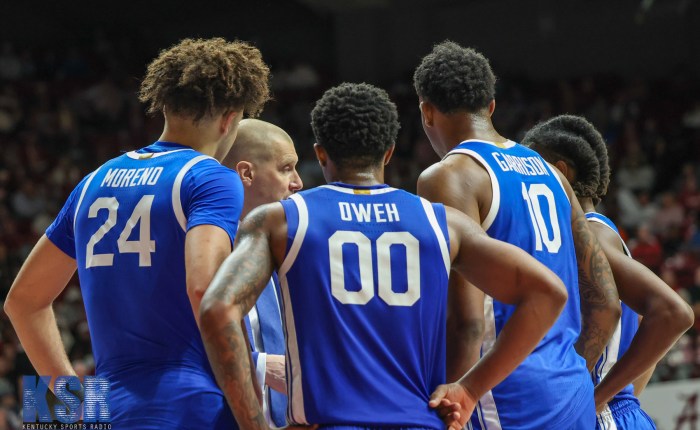
The Cats shot 26% from the field—a number so pitiful you’d think they were tossing up prayer requests rather than basketballs. Meanwhile, Graham Ike—just one man, mind you—had more two-point field goals than the entire Kentucky roster. Let that sink in. One guy outscoring a blue-blood program in its own chosen sport. And not just any sport—the sport. The one woven into our DNA, passed down from grandparents to grandbabies like that sacred cloth Mark Pope keeps referencing.

This wasn’t just a loss. It was the fiber unraveling on holy ground—the third-most lopsided defeat in the shot clock era. We’ve known pain before. Saint Peter’s. Oakland. That 41-point thrashing from Vanderbilt—Vanderbilt!—that still wakes some of us with night sweats. Gardner Webb. Robert Morris in the NIT. Middle Tennessee State, if you really want to dig around in old wounds. But this… this seemed different. This was more visceral. This was more publicly humiliating. This was a blue mist turning into a funeral fog over Lower Broadway.

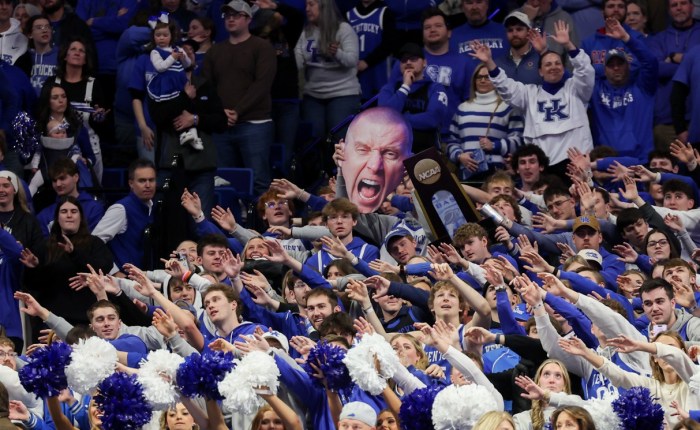
The boos rained down like I’ve never heard—sharp, heavy, and honest. Those weren’t spur-of-the-moment grumbles. Those were boos pulled from deep in the diaphragm—boos with ancestry.

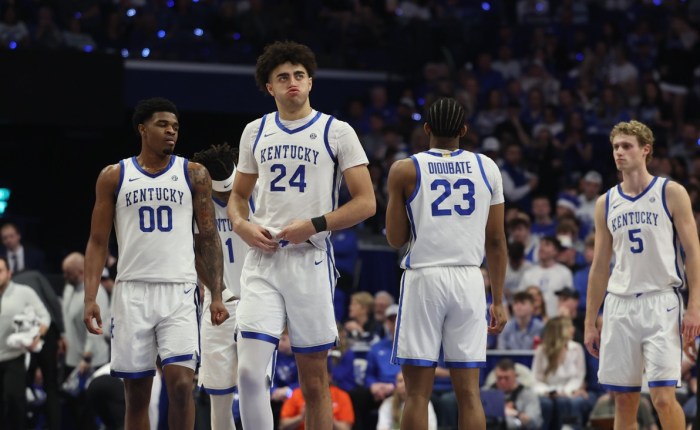
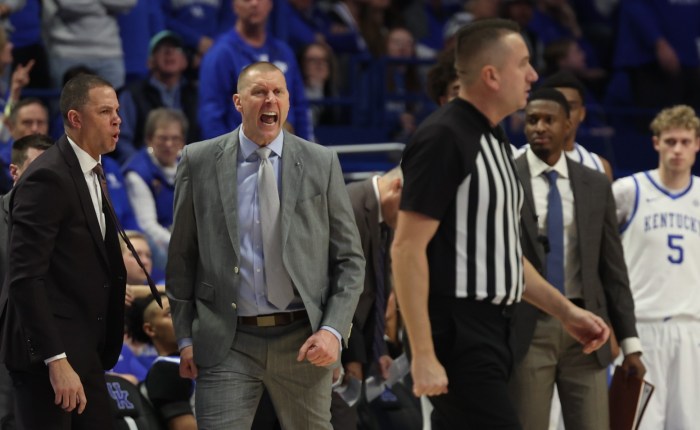
And in the middle of it all stood Mark Pope. Clueless. Clutching his arms. Pacing. Staring. Hoping. Praying. Whatever offensive scheme existed remained locked in the bus. The defense was optional. The effort was zero. And the $22-million payroll—which should buy you at least a handful of competent dribbles—played like a group of guys who accidentally wandered in from the YMCA while looking for hot chicken.

Afterward, Pope sat there and took it. “All the boos we heard tonight were incredibly well deserved—mostly for me,” he acknowledged.

And credit where due—he’s right. BBN isn’t booing because we hate. BBN boos because we care too much. Because this program is stitched into our emotional circuitry. Because watching it flounder like this feels like watching a beloved family business collapse under the weight of mismanagement and market forces we don’t fully understand.

Because NIL—this new world we were forced into—feels like it’s quietly cannibalizing the very soul of Kentucky basketball.

Where do we go from here? That’s the question echoing from Lexington to London to Pikeville to Paducah. This program means so much—too much, maybe—and to see it decimated, hollowed out, and sold to the highest bidder leaves a taste in the mouth not unlike despair.

We’ve now lost six straight to AP Top 25 opponents. Six. That’s not a skid. That’s a full-blown car crash. Indiana comes calling next Saturday, carrying history and smugness in equal measure. I guarantee the Hoosiers are smelling fear the way sharks smell blood.

Pope keeps telling us he’s going to fix it. He says it every game, every press conference, every painful in-between: “We’ll fix it.”

But those words—once hopeful, once rousing—are starting to fall on ears that have gone numb from overuse. We’ve become the fanbase that cries wolf, except the wolves actually show up and chew our legs off every other week.

Nobody died. But something inside us sure felt like it did. The Empire may have crumbled in Nashville, but unlike the Romans, we don’t have the luxury of blaming the Visigoths. This collapse came from within—bad shots, bad schemes, bad chemistry, bad body language, bad vibes. The kind of decay you can’t just patch with a rah-rah press conference, a well-placed promise, or even a savior named Jayden Quaintance.

And here’s the uncomfortable truth that stings most of all—the one we don’t want to say out loud but feel gnawing at us anyway: we don’t know if this gets better. We don’t know if the fixes Pope keeps preaching about are real or wishful incantations. We don’t know if a program built on NIL money and one-year mercenaries can rediscover heart, pride, or purpose. We don’t know if next Saturday against Indiana is the first step back… or one more step into the void.

We don’t know. That’s the scary part.

Because for all our bluster and bravado, Big Blue Nation likes certainty. We like legacy. We like stability. We like knowing that no matter the chaos swirling through college hoops, Kentucky Basketball stands firm—unshakable, undeniable, eternal.

But standing outside Bridgestone Arena after that 35-point humiliation, looking into the hollow faces of fellow fans who traveled hundreds of miles for a beatdown they’ll never forget, it was impossible not to feel the ground shifting under our feet.

Maybe we rise from this. Maybe we don’t. Maybe this is rock bottom. Or maybe—we whisper it, barely audible—it’s a sign of something even more ominous.

Nobody died. But something has changed. And until this team proves otherwise, we’re left clinging to hope with one hand… and bracing for the worst with the other.

This article was originally written for distribution through Nolan Group Media publications.


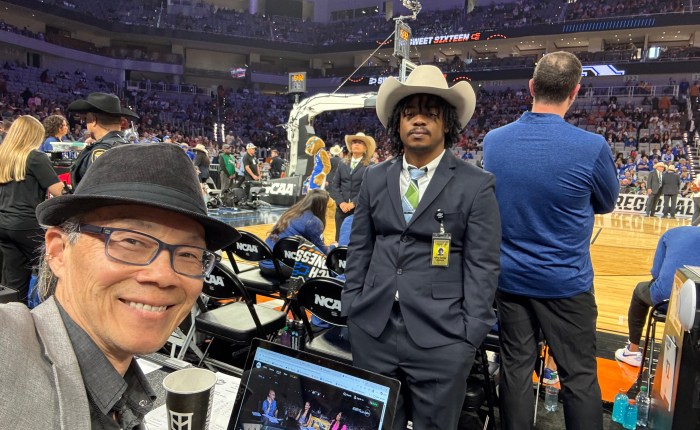
Dr. John Huangis a retired orthodontist, military veteran, and award-winning author. Currently serving as a columnist for Nolan Group Media, he invites readers to follow him on social media @KYHuangs. Explore his latest, Whining For Posterity, and all his books at Amazon.
“Name, Image, and Mayhem: Kentucky’s NIL Cliffhanger”

“Name, Image, and Mayhem: Kentucky’s NIL Cliffhanger”

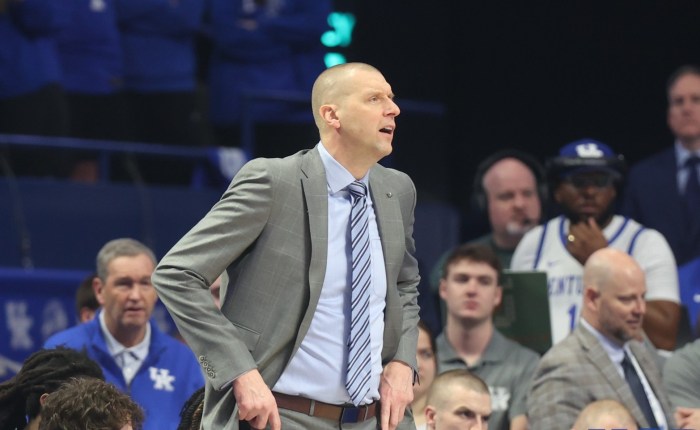
I’ll be the first to admit—I’m confused. Especially when listening to University of Kentucky Athletics Director Mitch Barnhart talk circles around himself.

In his interview with Matt Jones of Kentucky Sports Radio earlier today, Barnhart assured all the loyal BBN listeners that, even within this new landscape of college athletics, not only will UK not be cutting any sports, but he’s confident the university will be able to fund any new upcoming revenue share amounts.

Those are shockingly bold statements. The obvious retort is: How does Mitch know?

Because just moments earlier while addressing the media, Barnhart refused to disclose any specifics about the revenue sharing amounts, citing the “uncertainty” and “fluidity” of the entire new world order.

“We’re in the first month of this thing,” Barnhart told a roomful of attentive scribes thirsting after his every word. “Literally the first month. For anybody to sit in front of a group and say, ‘I’ve got all the answers after four weeks,’ good for you, good for you. I mean, we’ve talked about a decade’s worth of change that has happened in the last six to ten months of college athletics.”

“The change that has occurred has been massive,” he continued. “We don’t even have a governance structure in place really, to be honest with you.”  

I always knew college athletics was a cutthroat business. That’s why I titled my debut novel Name, Image, and Murder. It was a fictional whodunit loosely based on the chaotic new world of NIL—the Wild Wild West of amateur sports gone pro. But I’m starting to think fiction might be safer than what’s actually brewing behind the scenes in Lexington.

You see, the same school that gave us Adolph Rupp, Dan Issel, Anthony Davis, and eight national championships is now poised at the crossroads of an athletic identity crisis. Do we leverage our exalted status as the greatest tradition in college basketball? Or do we bow before the almighty dollar in a noble attempt to keep all our boats floating? NIL has officially graduated from “name, image, and likeness” to “nobody is listening”—at least when it comes to making choices regarding long-term sustainability.

And now, with the recent House v. NCAA settlement ushering in the brave new world of revenue sharing, UK Athletics is walking a tightrope strung between Rupp Arena, Kroger Field, Memorial Coliseum, and Kentucky Proud Park.

On paper, the new rules sound reasonable. Schools can now pay players directly—up to $20.5 million a year in shared revenue. Kentucky has fully committed to this model, even creating a snazzy new LLC called Champions Blue. Sounds like a superhero franchise, right? Champions Blue! Defenders of BBN! As technically a nonprofit organization, I’m not sure what to make of it. Cynics might call it a financial shell game that makes Enron look like Little League bookkeeping.

Here’s the problem. Paying players is expensive. Kentucky projects a $31 million deficit next year, even after slashing perks, borrowing from the university, and shaking every couch cushion from Pikeville to Paducah. And with the bulk of revenue earmarked for men’s basketball and football, you can kiss some non-revenue sports goodbye faster than a 2-seed getting bounced by Saint Peter’s—regardless of what Mitch promises.

But wait, there’s more! Earlier reports citing multiple reliable sources claim UK is devoting 45% of its revenue-sharing budget directly to Mark Pope’s team. Even though Mark Stoops debunked that statement as “absolutely untrue,” many won’t believe him. This is, after all, a basketball school. Except when the football team has ten-win seasons. Or when the volleyball team is hoisting SEC banners. Or when someone on the rifle squad or track team wins Olympic gold. You know, the other student-athletes, who apparently don’t get to eat from the same buffet.

That’s where the danger lies. Not in the fairness of it all—college athletics has never been fair—but in the fragility of it.

What happens when Title IX lawyers come knocking, wondering why the women’s soccer team is using 1997 cleats while the men’s basketball team is taking private flights to Maui (yes, remember Maui)? What happens when boosters get bored with writing six-figure checks for backups who never leave the bench? What happens when ticket prices go up again to cover costs, and the average fan can’t afford to sit in the rafters without taking out a second mortgage?

What happens when your favorite in-state walk-on is replaced by a five-star diva who’s demanding an exorbitant NIL deal, a YouTube series, and three coveted parking spaces on campus?

This is not just a UK problem. This is an everywhere problem. But here in the Bluegrass, where we measure time in Final Fours and football tailgates, we feel the tremors more than most. It’s hard to build “La Familia” when everyone’s negotiating like La Cosa Nostra.

And don’t get me wrong—I’m not anti-athlete. I’m all for players getting their fair slice of the billion-dollar pie. But when the pie crust is crumbling and the recipe keeps changing, it’s hard to know whether we’re baking a dynasty or our athletics director is just blowing hot air.

Champions Blue may turn out to be a genius model. Or it may be a cautionary tale studied by future ADs with degrees in both sports management and disaster response. In either case, the margin for error is thinner than Mitch Barnhart’s top button.

As for me, I’m thinking about writing a sequel. Name, Image, and Mayhem: The NIL Strikes Back. It’ll feature a fictional blue-blood program that tried to buy its way to the top, only to realize it couldn’t afford loyalty, chemistry, or the next contract buyout. Spoiler alert: the villain isn’t the athlete, the booster, or the NCAA.

It’s the system. A system we all helped create. A system now careening down a one-way road where amateurism is dead, loyalty is negotiable, and tradition is mocked and poo-pooed.

So buckle up, BBN. The real madness isn’t in March anymore. It’s happening right now—behind closed doors, in budget meetings, where the stakes are higher than a last-second Aaron Harrison three-point bomb.

May God have mercy on us all.


Dr. John Huang is a retired orthodontist, military veteran, and award-winning author of Name, Image, and Murder. He serves as a reporter and columnist for Nolan Group Media. Follow him @KYHuangs on social media and find his books, including the soon-to-be-bestselling Whining for Posterity, here: https://www.Amazon.com/stores/Dr.-John-Huang/author/B092RKJBRD

It Still Means Something”: Why the Kentucky Brand Isn’t Just a Jersey

It Still Means Something”: Why the Kentucky Brand Isn’t Just a Jersey

Kentucky players celebrating the name on the front of the jersey after their big 106-100 win over the eventual national champion, Florida Gators, in Rupp Arena on January 4, 2025.

(LEXINGTON, Ky.) – In an era where players are more likely to follow Benjamins than banners, where “NIL” has replaced “MVP” in the recruiting wars, and where the transfer portal spins faster than my dog doing zoomies, one might wonder—Does the name on the front of the jersey still matter anymore?

At his recent media conference held earlier this week, Kentucky Basketball head coach Mark Pope answered that question with a resounding, heartfelt yes. And this wasn’t just your typical lukewarm head nod. No, this was the type of yes that gives you chills. The kind that makes you want to lace up your Nikes, high five your portly neighbor, and run through the proverbial brick wall.

“It matters,” Pope said. “There’s nowhere like this.”

He’s not wrong. Kentucky Basketball isn’t just a brand. It’s the program with the greatest tradition in the history of the game. It’s a baptism together with a rite of passage wrapped up in eight NCAA championship banners, 61 NCAA Tournament appearances, and the most all-time wins of anybody still playing. It’s Joe B. and Jamal. It’s Wah Wah and Wall. It’s five national championships in five different decades and a fanbase that will passionately defend the honor of Farmer, Pelphrey, Feldhaus, and Woods like they’re…well…Unforgettable.

But in this new wild west of college hoops—where loyalty is traded for luxury and bluebloods can be outbid by programs with booster billionaires—it’s fair to ask: Does Kentucky still hold sway with this new generation of coddled, roundball mercenaries raised on highlight reels and endorsement deals?

Pope thinks it does. Scratch that—he knows it does. And surprise, surprise—his answer isn’t only about tradition for tradition’s sake. It’s about transformation, character, work ethic, and servant leadership. About what happens when you willingly pour yourself into something bigger.

“If you come in here not understanding or appreciating that,” Pope warns, “I think your chances of success are not very high.”

That’s not gatekeeping. That’s the gospel according to the Pope.

Because this place is different. It asks more of you. More than just your wingspan or your vertical or your TikTok follower count. It demands your heart. Your humility. Your willingness to dive for loose balls, to play through bruises, to pass up a good shot for a great one. To give your teammate the limelight just because he’s your teammate. It demands that you surrender just a little piece of yourself—not to lose your identity, but to elevate it.

And that’s where the magic happens.

“When you learn that concept—of if I give a little bit of myself, it actually elevates myself—that’s what’s great about this beautiful, brilliant team sport of basketball,” Pope said. “The pathway to become immortal is very different than this world wants to teach us.”

Mic. Drop.

Yes, kids today are soft. There, I said it. Many may be distracted by the siren song of short-term riches. But Pope isn’t recruiting kids who just want a wheelbarrow full of cash. He’s recruiting young men who want to matter and make a difference. Who’ll leave legacy footprints in the bluegrass that echo through the rafters long after they’re gone. People like Issel, and Goose, and Macy, and Walker, and Davis.

Think about it: Where else can you become immortal at the ripe age of nineteen? Where else does a walk-on get a standing ovation just for checking in? Where else can you go from obscurity to legendary in a single March weekend? Where can you be known simply for sporting a unibrow, girls kissing your car bumper, or wearing jorts for heaven’s sake?

That’s not marketing fluff put together by the suits at JMI. That’s lived experience. That’s legacy. And it’s now being passed down from generation to generation.

“Our guys last season set a beautiful, brilliant standard of what it means to be a Kentucky Basketball player,” Pope said. “We’re leaning on them a lot… their video, their outtakes, their clips, their comments—just to help understand that.”

Because—as former coach John Calipari famously said on so many occasions—Kentucky isn’t for everyone. And that’s precisely the point.

You can go be a great basketball player at a lot of places. Pope knows that. Heck, he’s played and coached in a few of them. But being great here? That’s a different kind of great. That’s statue-worthy great. That’s raise-your-jersey-to-the-rafters great. That’s can’t-walk-through-Kroger-without-grandma-taking-a-selfie great.

So yes, the name on the back may earn you the check. But the name on the front? That’s what earns you the chapter in Kentucky lore.

Mark Pope gets it. He lived it. And now, he’s preaching it. Loudly. Passionately. With a blend of fire and sincerity that makes you believe Kentucky Basketball hasn’t lost its way after all. It’s just waiting for the right kind of player to find theirs.

Because for all the bells, whistles, dollar signs, and distractions of this modern basketball age, one truth remains: This place is different.

And if you can understand that?

You’re going to be crazy successful.

Or immortal.

That’s the gospel truth. Sign me up, Coach!

Dr. John Huang is a retired orthodontist, military veteran, and award-winning author. Currently serving as a columnist for Nolan Group Media, he invites readers to follow him on social media @KYHuangs. Explore his debut novel— “Name, Image, and Murder”—and all his books at https://www.Amazon.com/stores/Dr.-John-Huang/author/B092RKJBRD

This blog posting was first submitted as a column for Nolan Group Media publications.

Dear Duke Basketball

Dear Duke Basketball

We feel your pain. Really, we do.

After all, as die-hard Kentucky fans—we’ve been there. We’re all too familiar with having our national title hopes strewn like shattered glass across the Final Four floor. We’ve seen the movie several times before—the one where the best team, with the best players, and all the media hype in the world, suddenly and shockingly crumbles into a tragic heap of nightmarish disbelief.

So many times, we’ve also been anointed prematurely. Crowned before the coronation. Celebrated before the ceremony. And then left to watch—stunned and slack-jawed, humiliated and embarrassed—as the dream slipped away and the rest of the world rejoiced.

So yes, we feel for you, Duke fans.
But make no mistake—we’re also laughing at you this morning. At least just a little.

Because it couldn’t have happened to a more deserving program.

Oh, I know. That’s petty. That’s small. That’s un-Christian. “You’re living rent-free in our heads,” you say.

That may all be true.
But c’mon—this is Duke University we’re talking about.

Ever since Laettner hit the shot, you’ve been the villain in our college hoops drama. You stole our titles back in 2010 and 2015. You—with your haughty, self-righteous air of academic superiority—deserve exactly what you’re getting. Your smug alumni looking down from their elitist Gothic towers in Durham while we wallow in our fried chicken, cigarettes, and toothless grins.

And now this.

Comfortably up by 14 points with eight minutes to go, and you manage just one field goal the rest of the game—losing to Houston 70–67 in the national semifinals. The laughingstock. The punchline. The greatest Final Four choke of all time.

So what now?

You mope about. You avoid ESPN. You dread “One Shining Moment” and try to convince yourselves that next year will be your year.

(Spoiler: It won’t be.)

But take heart, for this too shall pass. Time, as they say, cures all wounds.

We know the feeling. The second-half shooting debacle versus Georgetown in 1984? We’re coping. The shot-clock violations versus Wisconsin in 2015? Scarred, but functional. Saint Peter’s and Jack Gohlke? Perplexed, but no longer in despair.

So join us, Duke. Come sit beside us on this broken, blue-blooded bench of cold-hearted misery. Let’s swap stories about what might have been. We’ll tell you about 2015 if you tell us about 2025.

You see, for all your Ivy League aspirations and smug superiority, you’re not so different from us after all. Blue bloods with blue uniforms. Blue tears. Blue language from angry fans. And now, an equally blue postseason résumé.

The only real difference?

We’ve got eight championship rings.
You still have only five.

Respectfully,
BBN

Zvonimir’s Jaw-Dropping Debut

Zvonimir’s Jaw-Dropping Debut

(LEXINGTON, Ky.) – Attention College Basketball World: We interrupt your current season to bring you this special announcement. The program with the greatest tradition in the history of college basketball just delivered another “you’ve got to be kidding me” moment.

Considering the grand tradition that is Kentucky Basketball, you’d think these announcements might amount to a dime a dozen. But these declarations—manifested as iconic moments—are by definition few and far between. Because iconic moments are just that—archetypal, quintessential, seminal—occurring only once every decade or so.

Hatton’s halfcourt prayer, James Lee’s thunderous dunk, Padgett from the top of the key, Tayshawn from ten feet yonder. Full names and dates and descriptions not needed because the events themselves transcend the details. They’re all moments where we remember exactly where we were and what we were doing when Claude or Cawood or Tom described them so vividly.

And now add this one to your treasured archives: Zvonimir’s behind the back pass leading up to that glorious, mythical, magical, “THIS HAS TO GO IN” three-pointer by Antonio Reeves. Store it in there tight. Preserve it at all costs on your Mount Rushmore of Kentucky Basketball memories. Don’t let it ever dissipate or dissolve because you’ll repeatedly share that precious moment—through your own mist-filled eyes—with your children and grandchildren. You’ll nostalgically relive with friends and loved ones the joy and passion unique to us as privileged citizens residing in a proud and unified Big Blue Nation.

For those in winter hibernation who have no earthly idea what all this ruckus is about, I present to you Zvonimir Ivišić. Kentucky’s 7-foot-2 freshman took the floor for the first time and helped the eighth-ranked Wildcats cruise to a 105 – 96 smackdown of the visiting Georgia Bulldogs.

By the time the final horn sounded, Zvonimir (or Big Z as he’s affectionately known) had stuffed the stat sheet. The rising star from Croatia scored 13 points (on 5-of-7 shooting, 3-for-4 from behind the arc), grabbed five rebounds, had two assists, three blocks, and two steals in just 16 minutes of action. But it was the interminable delay in becoming eligible to even play that added to the overall magnitude of his heroics on the court.

For you see, Big Z waited patiently for nearly five whole months from the time he committed to play for the University of Kentucky before the big bad NCAA finally granted him clearance. The announcement, which came suddenly through an email from the clandestine smoke-filled back rooms of the NCAA compliance office, was met with joyful relief by everyone, including those in the Ivišić clan back home in Vodice.

“They were just too happy for me,” Zvonimir acknowledged after the game. “They couldn’t wait for me to play. They were praying to God every day that this day came.”

God answered their prayers with one of the greatest debuts I’ve ever witnessed in Rupp Arena. But historically speaking, where will we ultimately rank it?  

Iconic moments are laudable and noteworthy because they represent something far greater than the play on the court. As fantastic as Big Z’s debut turned out, is it possible we’ll only elevate it into the pantheon of UK Basketball’s greatest moments if Kentucky wins a national championship?

I would say that’s debatable. Does anyone care that Tayshawn’s five three-pointers against North Carolina took place in a season that ended at the Sweet Sixteen? Do fans dismiss the lovable Oscar Tshiebwe and all his other-worldly rebounding feats of grandeur because his team got Saint Petered? Do we wipe out the accomplishments of Kentucky’s 1983 – 84 team—one of my personal all-time favorites—simply because they had one horrific half of shooting?

We all agree that iconic moments represent more than just a statistic or a final score. They’re compilations of multiple factors coming to a head. They take into account the stories behind the story—the relentless practices, the team camaraderie, the sacrifices involved in striving to be that championship caliber team.  

But even more than that, these moments are deemed iconic because we as fans grant them iconic status. We get to be judge and jury, our feelings and emotions and participation in the moment every bit as important as the moment itself. Only time will tell. History will judge.  

For the time being, then, let’s just all bask in Big Z’s iconic debut. For the time being, let’s watch it again and again on YouTube, replay it over and over in our minds. Let’s cheer, scream, and jump up and down like idiots as we all did in real time.

For the time being, let’s all eat, drink, and be merry. Dismiss those worries regarding Final Four droughts, defensive lapses, or mysterious “general soreness” injuries that linger.

And for the time being, just relish and enjoy every game…and thank God for answered prayers. Because for a couple of fleeting moments smack dab in the middle of college basketball season, Zvonimir Ivišić gave Kentucky Basketball fans a glimpse of heaven on earth.

Dr. John Huang is a retired orthodontist, military veteran, and the award-winning author of Kentucky Passion. He currently serves as a reporter and sports columnist for Nolan Group Media. You can follow Dr. Huang on social media @KYHuangs and check out all his books at https://www.Amazon.com/stores/Dr.-John-Huang/author/B092RKJBRD