Pope’s Report Card is in—and it’s Telling

Pope’s Report Card is in—and it’s Telling

(LEXINGTON, Ky). – At the halfway point of the college basketball regular season, the midterm grades invariably come rolling in.

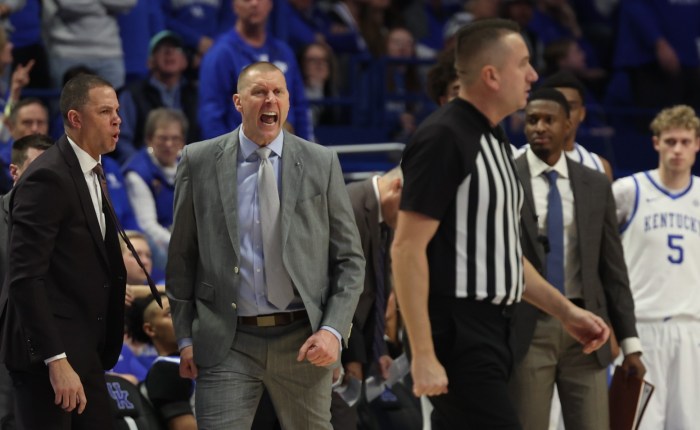
Recently, Isaac Trotter of CBS Sports essentially handed Mark Pope a midterm grade. His assessment wasn’t cruel or dramatic. It was purely academic.

A “D.”

Not dismissal or detention, but the kind of grade that comes with a quiet warning: You’re capable of more than this.

Trotter’s core point was simple. Pope understands Kentucky basketball. He knows the standard. He knows this isn’t it. And yet, nearly two seasons in, Kentucky is hovering around average on the floor while swimming in resources. The Sweet 16 run last year bought a lot of goodwill. This year’s results are washing away all the equity.

If this were a class, Kentucky isn’t failing—but it’s not honoring the syllabus.

Permit me to continue with this academic theme.

I was an A student for most of my life. Straight A’s through college and dental school. Not because I was the smartest in the room—but because I understood what my parents expected of me. Hence, it’s thoroughly frustrating watching someone clearly intelligent like Mark Pope struggle to translate knowledge into performance.

Pope is smart. That’s not debatable. He’s articulate, reflective, and overly analytical. He speaks like someone who actually read the assignment.

But here’s the disconnect: intelligence alone doesn’t earn grades. Outcomes do. Results matter.

Pope has acknowledged he’s considering “dumbing down” the offense for his players. In academic terms, that’s the moment a gifted professor realizes the class isn’t tracking and lowers the material. Sometimes that’s compassionate. Sometimes necessary. But at a place like Kentucky, it’s also risky.

Kentucky basketball is not remedial coursework.

When I asked Pope about the “D” grade—give him credit—he didn’t argue the point. In fact, he leaned into it. He acknowledged that Kentucky isn’t meeting expectations. Not emotionally or philosophically—but factually. An 0–2 start in SEC play is an objective data point.

“If you told me the Kentucky coach started 0–2 in the SEC, a ‘D’ might be generous,” he stated bluntly.

That matters because Pope didn’t blame fans. He didn’t hide behind context. He didn’t suggest the grading was unfair. He framed it like how sports—and academics—actually work: you earn your score.

What Pope articulated well was this distinction: emotions can be messy, but outcomes aren’t. You don’t debate the final score. You don’t negotiate the grade. You own it.

While all that’s well and good for a season flirting with disaster, it’s remains the right thing to say. Any good coach can have an outlier of a bad year as far as their won/loss record.

Where concern still lingers is in the larger picture Trotter raised—and Pope didn’t fully address. Kentucky’s issues aren’t limited to a slow SEC start. The recruiting trail has gone quiet at a time when elite freshmen are choosing other destinations. Kentucky, historically, doesn’t miss on all of them.

In academic terms, that’s when top students stop enrolling because they’re unsure the program is still elite. In their minds, it’s no longer about nostalgia. It’s about trajectory.

Pope talked about not running from the “messy middle.” About digging in. About believing the ending will be good—but only if you acknowledge the poor start.

That’s encouraging rhetoric. Necessary rhetoric.

But at Kentucky, belief is never the final exam.

Results are.

This program doesn’t grade on effort, intent, or intelligence. It grades on preparation, clarity, and execution. You don’t grade on a curve in this class. You meet the standard—or you repeat the course.

Mark Pope clearly understands that.

The question now is whether understanding will translate into improvement—on the floor, on the recruiting trail, and ultimately on the transcript that matters most.

Because at Kentucky, a “D” isn’t destiny. It’s a dire warning.

Especially when the only acceptable grade is an “A.”

This article was originally written for distribution through Nolan Group Media publications.

Dr. John Huang is a retired orthodontist, military veteran, and award-winning author. Currently serving as a columnist for Nolan Group Media, he invites readers to follow him on social media @KYHuangs. Explore his latest, Whining For Posterity, and all his books at Amazon.

When the Empire Crumbled in Nashville

When the Empire Crumbled in Nashville

Photo credit: KY INSIDER/Tristan Pharis

(NASHVILLE, Tn.) – Nobody died. Let’s be clear about that from the start. But walking out of Bridgestone Arena on that bleak December night, it sure felt like some small—but vital—part of me kicked the bucket. If grief truly comes in stages, Big Blue Nation skipped denial and bargaining entirely and hurtled straight into anger and depression. A 35-point blowout loss to Gonzaga will do that to you.

Thirty-five. Five touchdowns. A deficit so large you half-expected Diego Pavia to pad his Heisman stats by tossing one more.

The Cats shot 26% from the field—a number so pitiful you’d think they were tossing up prayer requests rather than basketballs. Meanwhile, Graham Ike—just one man, mind you—had more two-point field goals than the entire Kentucky roster. Let that sink in. One guy outscoring a blue-blood program in its own chosen sport. And not just any sport—the sport. The one woven into our DNA, passed down from grandparents to grandbabies like that sacred cloth Mark Pope keeps referencing.

This wasn’t just a loss. It was the fiber unraveling on holy ground—the third-most lopsided defeat in the shot clock era. We’ve known pain before. Saint Peter’s. Oakland. That 41-point thrashing from Vanderbilt—Vanderbilt!—that still wakes some of us with night sweats. Gardner Webb. Robert Morris in the NIT. Middle Tennessee State, if you really want to dig around in old wounds. But this… this seemed different. This was more visceral. This was more publicly humiliating. This was a blue mist turning into a funeral fog over Lower Broadway.

The boos rained down like I’ve never heard—sharp, heavy, and honest. Those weren’t spur-of-the-moment grumbles. Those were boos pulled from deep in the diaphragm—boos with ancestry.

And in the middle of it all stood Mark Pope. Clueless. Clutching his arms. Pacing. Staring. Hoping. Praying. Whatever offensive scheme existed remained locked in the bus. The defense was optional. The effort was zero. And the $22-million payroll—which should buy you at least a handful of competent dribbles—played like a group of guys who accidentally wandered in from the YMCA while looking for hot chicken.

Afterward, Pope sat there and took it. “All the boos we heard tonight were incredibly well deserved—mostly for me,” he acknowledged.

And credit where due—he’s right. BBN isn’t booing because we hate. BBN boos because we care too much. Because this program is stitched into our emotional circuitry. Because watching it flounder like this feels like watching a beloved family business collapse under the weight of mismanagement and market forces we don’t fully understand.

Because NIL—this new world we were forced into—feels like it’s quietly cannibalizing the very soul of Kentucky basketball.

Where do we go from here? That’s the question echoing from Lexington to London to Pikeville to Paducah. This program means so much—too much, maybe—and to see it decimated, hollowed out, and sold to the highest bidder leaves a taste in the mouth not unlike despair.

We’ve now lost six straight to AP Top 25 opponents. Six. That’s not a skid. That’s a full-blown car crash. Indiana comes calling next Saturday, carrying history and smugness in equal measure. I guarantee the Hoosiers are smelling fear the way sharks smell blood.

Pope keeps telling us he’s going to fix it. He says it every game, every press conference, every painful in-between: “We’ll fix it.”

But those words—once hopeful, once rousing—are starting to fall on ears that have gone numb from overuse. We’ve become the fanbase that cries wolf, except the wolves actually show up and chew our legs off every other week.

Nobody died. But something inside us sure felt like it did. The Empire may have crumbled in Nashville, but unlike the Romans, we don’t have the luxury of blaming the Visigoths. This collapse came from within—bad shots, bad schemes, bad chemistry, bad body language, bad vibes. The kind of decay you can’t just patch with a rah-rah press conference, a well-placed promise, or even a savior named Jayden Quaintance.

And here’s the uncomfortable truth that stings most of all—the one we don’t want to say out loud but feel gnawing at us anyway: we don’t know if this gets better. We don’t know if the fixes Pope keeps preaching about are real or wishful incantations. We don’t know if a program built on NIL money and one-year mercenaries can rediscover heart, pride, or purpose. We don’t know if next Saturday against Indiana is the first step back… or one more step into the void.

We don’t know. That’s the scary part.

Because for all our bluster and bravado, Big Blue Nation likes certainty. We like legacy. We like stability. We like knowing that no matter the chaos swirling through college hoops, Kentucky Basketball stands firm—unshakable, undeniable, eternal.

But standing outside Bridgestone Arena after that 35-point humiliation, looking into the hollow faces of fellow fans who traveled hundreds of miles for a beatdown they’ll never forget, it was impossible not to feel the ground shifting under our feet.

Maybe we rise from this. Maybe we don’t. Maybe this is rock bottom. Or maybe—we whisper it, barely audible—it’s a sign of something even more ominous.

Nobody died. But something has changed. And until this team proves otherwise, we’re left clinging to hope with one hand… and bracing for the worst with the other.

This article was originally written for distribution through Nolan Group Media publications.


Dr. John Huangis a retired orthodontist, military veteran, and award-winning author. Currently serving as a columnist for Nolan Group Media, he invites readers to follow him on social media @KYHuangs. Explore his latest, Whining For Posterity, and all his books at Amazon.
The House Always Wins

The House Always Wins

What good is it for someone to gain the whole world, yet forfeit their soul?

Remember when the worst thing to happen in a basketball game was Perry Stevenson goaltending a free throw or Christian Laettner stomping on someone’s chest? Those were simpler times. Now we’ve got Chauncey Billups and Terry Rozier being investigated for sports gambling.

Welp, shame on us. We got what we asked for.

When we opened the floodgates to legalized sports betting, we were told it would be harmless fun—a way to “enhance fan engagement.” The marketing geniuses promised us responsible wagering, clean oversight, and a little extra tax revenue for our schools. What we actually got was a nation of addicts-in-training, daily fantasy junkies, and people screaming at their phones during the fourth quarter of a meaningless midweek NBA game because they needed one more rebound to hit the over.

And yes, I get it. Gambling itself isn’t inherently evil. It’s not like betting on Kentucky to cover the spread automatically condemns your soul to perdition. But let’s not pretend we didn’t invite the devil in when we started normalizing this stuff as if it were just another harmless hobby.

I know because I’m wired that way myself. I’ve got an addictive personality. Always have. I still remember the euphoric rush of winning my first NCAA tournament bracket—strutting around like Einstein in sneakers because I had correctly predicted some 11-seed Cinderella run to the Sweet 16. Then came fantasy football. Oh, the sweet taste of victory on Monday night! I’d sit there with one player left in the lineup, calculating yards and touchdowns like a Wall Street trader watching his stock portfolio. When my guy scored, I’d practically levitate off the couch.

You see, that’s the problem. It’s never enough. You always want a little more action, a little bigger hit of adrenaline, the proverbial dopamine rush. For people like me, that’s a slippery slope. One day you’re betting a friendly five bucks with your buddies; the next day you’re mortgaging the house because the Bengals can’t possibly blow another lead.

The truth is, gambling can ruin lives. It destroys families, wrecks bank accounts, and turns decent people into liars and thieves. It feeds on desperation and ego—the belief that you can beat the odds, that you’re smarter than the system or your neighbor down the street, that this next parlay will finally get you even. Spoiler alert: the house always wins.

And when that “house” happens to be tied to the integrity of our sports, that’s when things really go south. If you can’t watch a game without wondering whether the ref’s call was clean, or whether the player missed that shot on purpose, what are we even cheering for? The beauty of sports has always been its purity—hard work, skill, competition. Gambling muddies that. It injects suspicion where there should instead be joy.

Money, of course, is the root of it all. It always is. Money draws in the riff raff, the hustlers, and the shadowy figures waiting in the alleys of every major sports scandal. Organized crime didn’t just disappear when we legalized betting; it just put on a nicer suit and opened an app. The lure of easy cash will always attract those looking to exploit the system—and sadly, some of those people will have locker room access.

When I was growing up, sports were an escape from the mess of the world—a pure and noble pursuit of excellence. Now they’re just another line item in somebody’s betting portfolio. Every pitch, every possession, every field goal attempt is a potential profit or loss. Even the broadcasters can’t resist dropping the over/under like it’s part of the game itself.

And while we’re pointing fingers, let’s not forget the sports radio guys who spend half their shows preaching about “responsible gambling” while the other half reading ad copy for the very apps causing the mess. Spare me the sanctimony. You can’t sermonize about integrity one minute and then tell me to “hammer the over” with a promo code the next.

I’m not naïve. I know you can’t unring the bell. Gambling is here to stay. The toothpaste is out of the tube, and no amount of moral handwringing is going to put it back. But we can at least be honest about what it’s doing to us. For every “responsible gamer” out there treating it like entertainment, there are dozens more suckers sinking deeper into the quicksand.

I suppose it’s fine if you know your limits—if you can place a small wager and walk away without checking your phone every five minutes. But for most people, those limits blur over time. The lines between fun and fixation disappear, and before long, you’re chasing losses like Calipari after Covid.

So yeah, when I hear about Chauncey Billups and Terry Rozier getting tangled in the gambling web, I’m not shocked—I’m sad. Sad for them, sad for the sport, sad for the fans who still believe in fair play. Because the more this stuff spreads, the more we risk losing what made us fall in love with sports in the first place.

I’m not preaching here. Like I said, I’m as susceptible as anyone. If gambling apps had been around when I was younger, I might have been one of those guys refreshing DraftKings under the table during Sunday service. (I’m joking… mostly.) But maybe that’s why I’m so wary of it now. I know how easy it is to get hooked, how quickly something innocent can become destructive.

So as these investigations unfold, I’ll be watching—not for the point spreads or the odds, but for the soul of the game itself. Because if we keep going down this road, if we keep letting money and manipulation call the shots, one day we might wake up and realize the thrill is gone. The joy’s been replaced by suspicion, and the purity of the game by the price of the bet.

And when that happens, it won’t matter who wins or loses. The house will have already won.

Dr. John Huang is a retired orthodontist, military veteran, and award-winning author. Currently serving as a columnist for Nolan Group Media, he invites readers to follow him on social media @KYHuangs. Explore his latest, “Whining For Posterity,” and all his books at https://www.Amazon.com/stores/Dr.-John-Huang/author/B092RKJBRD

It Still Means Something”: Why the Kentucky Brand Isn’t Just a Jersey

It Still Means Something”: Why the Kentucky Brand Isn’t Just a Jersey

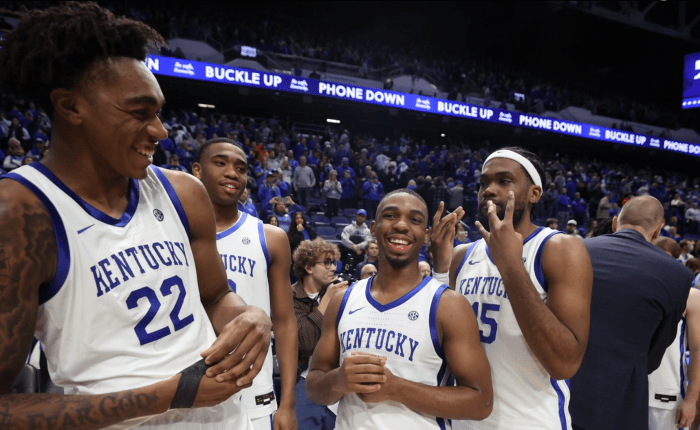
Kentucky players celebrating the name on the front of the jersey after their big 106-100 win over the eventual national champion, Florida Gators, in Rupp Arena on January 4, 2025.

(LEXINGTON, Ky.) – In an era where players are more likely to follow Benjamins than banners, where “NIL” has replaced “MVP” in the recruiting wars, and where the transfer portal spins faster than my dog doing zoomies, one might wonder—Does the name on the front of the jersey still matter anymore?

At his recent media conference held earlier this week, Kentucky Basketball head coach Mark Pope answered that question with a resounding, heartfelt yes. And this wasn’t just your typical lukewarm head nod. No, this was the type of yes that gives you chills. The kind that makes you want to lace up your Nikes, high five your portly neighbor, and run through the proverbial brick wall.

“It matters,” Pope said. “There’s nowhere like this.”

He’s not wrong. Kentucky Basketball isn’t just a brand. It’s the program with the greatest tradition in the history of the game. It’s a baptism together with a rite of passage wrapped up in eight NCAA championship banners, 61 NCAA Tournament appearances, and the most all-time wins of anybody still playing. It’s Joe B. and Jamal. It’s Wah Wah and Wall. It’s five national championships in five different decades and a fanbase that will passionately defend the honor of Farmer, Pelphrey, Feldhaus, and Woods like they’re…well…Unforgettable.

But in this new wild west of college hoops—where loyalty is traded for luxury and bluebloods can be outbid by programs with booster billionaires—it’s fair to ask: Does Kentucky still hold sway with this new generation of coddled, roundball mercenaries raised on highlight reels and endorsement deals?

Pope thinks it does. Scratch that—he knows it does. And surprise, surprise—his answer isn’t only about tradition for tradition’s sake. It’s about transformation, character, work ethic, and servant leadership. About what happens when you willingly pour yourself into something bigger.

“If you come in here not understanding or appreciating that,” Pope warns, “I think your chances of success are not very high.”

That’s not gatekeeping. That’s the gospel according to the Pope.

Because this place is different. It asks more of you. More than just your wingspan or your vertical or your TikTok follower count. It demands your heart. Your humility. Your willingness to dive for loose balls, to play through bruises, to pass up a good shot for a great one. To give your teammate the limelight just because he’s your teammate. It demands that you surrender just a little piece of yourself—not to lose your identity, but to elevate it.

And that’s where the magic happens.

“When you learn that concept—of if I give a little bit of myself, it actually elevates myself—that’s what’s great about this beautiful, brilliant team sport of basketball,” Pope said. “The pathway to become immortal is very different than this world wants to teach us.”

Mic. Drop.

Yes, kids today are soft. There, I said it. Many may be distracted by the siren song of short-term riches. But Pope isn’t recruiting kids who just want a wheelbarrow full of cash. He’s recruiting young men who want to matter and make a difference. Who’ll leave legacy footprints in the bluegrass that echo through the rafters long after they’re gone. People like Issel, and Goose, and Macy, and Walker, and Davis.

Think about it: Where else can you become immortal at the ripe age of nineteen? Where else does a walk-on get a standing ovation just for checking in? Where else can you go from obscurity to legendary in a single March weekend? Where can you be known simply for sporting a unibrow, girls kissing your car bumper, or wearing jorts for heaven’s sake?

That’s not marketing fluff put together by the suits at JMI. That’s lived experience. That’s legacy. And it’s now being passed down from generation to generation.

“Our guys last season set a beautiful, brilliant standard of what it means to be a Kentucky Basketball player,” Pope said. “We’re leaning on them a lot… their video, their outtakes, their clips, their comments—just to help understand that.”

Because—as former coach John Calipari famously said on so many occasions—Kentucky isn’t for everyone. And that’s precisely the point.

You can go be a great basketball player at a lot of places. Pope knows that. Heck, he’s played and coached in a few of them. But being great here? That’s a different kind of great. That’s statue-worthy great. That’s raise-your-jersey-to-the-rafters great. That’s can’t-walk-through-Kroger-without-grandma-taking-a-selfie great.

So yes, the name on the back may earn you the check. But the name on the front? That’s what earns you the chapter in Kentucky lore.

Mark Pope gets it. He lived it. And now, he’s preaching it. Loudly. Passionately. With a blend of fire and sincerity that makes you believe Kentucky Basketball hasn’t lost its way after all. It’s just waiting for the right kind of player to find theirs.

Because for all the bells, whistles, dollar signs, and distractions of this modern basketball age, one truth remains: This place is different.

And if you can understand that?

You’re going to be crazy successful.

Or immortal.

That’s the gospel truth. Sign me up, Coach!

Dr. John Huang is a retired orthodontist, military veteran, and award-winning author. Currently serving as a columnist for Nolan Group Media, he invites readers to follow him on social media @KYHuangs. Explore his debut novel— “Name, Image, and Murder”—and all his books at https://www.Amazon.com/stores/Dr.-John-Huang/author/B092RKJBRD

This blog posting was first submitted as a column for Nolan Group Media publications.