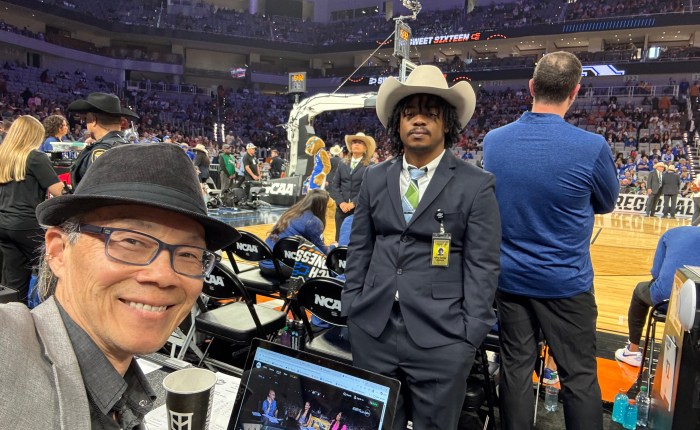
We Finally Got No. 9

We Finally Got No. 9

(LEXINGTON, KY.) – Since the beginning of last summer, Kentucky fans have been speaking reverently about the number nine.

Not the number nine as in a seed line. Not the number nine as in a placement somewhere in the middle of the SEC pack. No, this was the other nine—the one that was supposed to be hanging up in the rafters of Rupp Arena. The mythical, glorious ninth national championship Big Blue Nation has been chasing ever since 2012.

Instead, the Wildcats are headed to Nashville this week as the No. 9 seed in the SEC Tournament.

Nine—not quite the number anyone had in mind.

And they’ll begin their postseason journey at the ungodly hour of 12:30 p.m. Wednesday, which is the kind of tip time usually reserved for accountants on their lunch break or retired orthodontists dribbling soup down the sides of their mouth.

In other words, not exactly prime time in the Bluegrass.

It’s also the first time in program history Kentucky has entered the SEC Tournament as a nine seed. History is still being made in Lexington. Just not the kind they used to celebrate.

But before we rush to judgment—and Big Blue Nation is never in a rush to judge anything—let’s consider the great universal balm of sports misery:

What if.

What if Kentucky had simply stayed healthy?

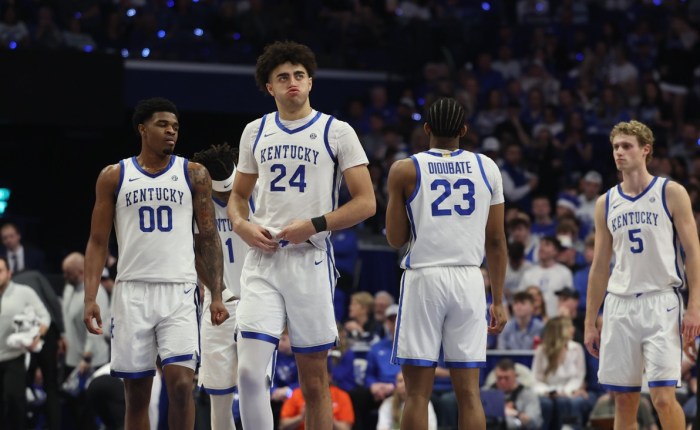
Basketball seasons tend to unravel when the trainer’s office starts looking like rush hour at the DMV. Kentucky lost Jaland Lowe to a shoulder, Kam Williams to a foot, while Jayden Quaintance’s ACL is apparently still swelling as we speak.

Take away three of the top players on just about any roster in America and see how that works out. The answer, more often than not, looks suspiciously like a No. 9 seed playing Wednesday afternoon.

What if Kentucky didn’t spend half the season digging out of first-half holes?

Against high-major opponents this year, the Wildcats have trailed at halftime in 15 of 24 games. That’s not a strategy so much as a lifestyle.

Falling behind by double digits early has become a recurring theme, followed by spirited second-half rallies that often come up just short—like a movie where the hero saves the day but still misses out on the girl he’s chasing.

What if Rupp Arena were still Rupp Arena?

Once upon a time, Missouri and Georgia walking into Lexington meant exactly one thing: an opponent shaking in their boots resulting in a comfortable twenty-point Kentucky win and fans planning their postgame dinner reservations by halftime.

This season, those games turned into home losses. Missouri. Georgia. For God’s sake. The Wildcats used to treat Rupp Arena like a fortress. Now it’s starting to feel more like a welcoming station—pillaged by traditional SEC doormats and also-rans.

Kentucky lost three home games last season. They lost four this year. Times change.

What if Trent Noah rediscovered his jumper—and Mo Dioubate discovered one in the first place?

Noah arrived in Lexington with the reputation of a marksman. At times this season, his patented jumper has been missing in action. He didn’t hit a single field goal in the entire month of February.

Dioubate, meanwhile, plays basketball like a bull in a china shop. You cannot fault the effort. The motor never stops. But when he decides he’s going to the basket, he is absolutely going to the basket. Whether the ball goes with him is sometimes a secondary consideration.

And yet here we are.

Kentucky finished the regular season 19–12 overall and 10–8 in the SEC, which might sound respectable until you remember where this program lives historically. It’s only the fourth time since 1990 the Wildcats have finished with fewer than 20 regular-season wins.

For most programs, 19 victories is a solid year. At Kentucky, it feels like a census report documenting population decline.

And the broader numbers paint an even darker picture. The Wildcats haven’t won the SEC regular season in six years. They haven’t won the SEC Tournament in seven years. Since the COVID shutdown, Kentucky has managed just four total postseason wins. Humiliating losses to Saint Peter’s and Oakland during that period simply add fuel to the fire.

For a program that once measured success in Final Fours and national titles, those realities land with a thud. The last national championship came in 2012. The last Final Four appearance was in 2015. Those seasons now feel like old photographs from a happier time—still vivid, but increasingly distant and fading fast.

And yet Big Blue Nation remains what it has always been: loud, passionate, and emotionally invested to an unhealthy degree. Some fans are still hopeful. They look at the injuries, the close losses, the flashes of brilliance, and they’re convinced Mark Pope is building something that just needs a little time to mature. March has a funny way of rewriting stories. Kentucky has lived that miracle before. Fans here know better than anyone how quickly a season can pivot.

Others in BBN are far less patient. A growing segment of the fan base already sounds like it’s preparing to run Pope out of town, hammering home the uncomfortable reality of what the numbers say: the losses at Rupp, the missed opportunities, the long droughts between championships and Final Fours that once seemed automatic, and—most importantly—the lack of elite recruits coming to the rescue.

That’s the strange tension surrounding this team as it heads to Nashville as the No. 9 seed—an outcome nobody predicted when fans were dreaming about the other No. 9 last summer.

Maybe the Wildcats catch fire.

Maybe the shots start falling.

Maybe the defense locks in.

Maybe Wednesday at 12:30 becomes the unlikely first chapter in the wonderful story Mark Pope keeps promising.

Stranger things have happened in March.

…Just maybe not starting from nine.

This article was originally written for distribution through Nolan Group Media publications.

Dr. John Huang is a retired orthodontist, military veteran, and award-winning author. He currently serves as a columnist for Nolan Group Media and invites readers to follow him on social media @KYHuangs. His latest book is Whining For Posterity, available on Amazon.

Dear Duke Basketball

Dear Duke Basketball

We feel your pain. Really, we do.

After all, as die-hard Kentucky fans—we’ve been there. We’re all too familiar with having our national title hopes strewn like shattered glass across the Final Four floor. We’ve seen the movie several times before—the one where the best team, with the best players, and all the media hype in the world, suddenly and shockingly crumbles into a tragic heap of nightmarish disbelief.

So many times, we’ve also been anointed prematurely. Crowned before the coronation. Celebrated before the ceremony. And then left to watch—stunned and slack-jawed, humiliated and embarrassed—as the dream slipped away and the rest of the world rejoiced.

So yes, we feel for you, Duke fans.
But make no mistake—we’re also laughing at you this morning. At least just a little.

Because it couldn’t have happened to a more deserving program.

Oh, I know. That’s petty. That’s small. That’s un-Christian. “You’re living rent-free in our heads,” you say.

That may all be true.
But c’mon—this is Duke University we’re talking about.

Ever since Laettner hit the shot, you’ve been the villain in our college hoops drama. You stole our titles back in 2010 and 2015. You—with your haughty, self-righteous air of academic superiority—deserve exactly what you’re getting. Your smug alumni looking down from their elitist Gothic towers in Durham while we wallow in our fried chicken, cigarettes, and toothless grins.

And now this.

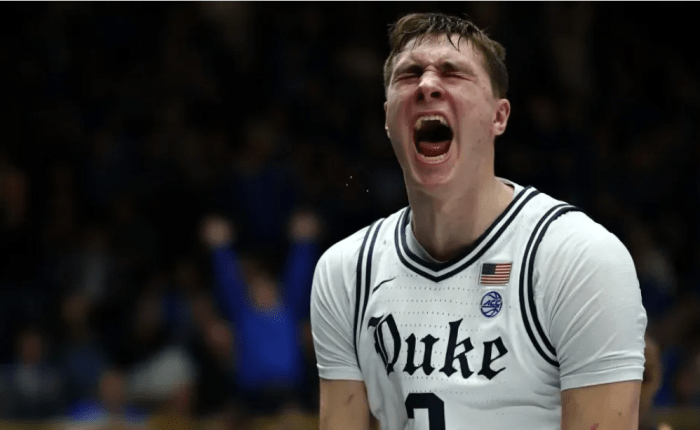
Comfortably up by 14 points with eight minutes to go, and you manage just one field goal the rest of the game—losing to Houston 70–67 in the national semifinals. The laughingstock. The punchline. The greatest Final Four choke of all time.

So what now?

You mope about. You avoid ESPN. You dread “One Shining Moment” and try to convince yourselves that next year will be your year.

(Spoiler: It won’t be.)

But take heart, for this too shall pass. Time, as they say, cures all wounds.

We know the feeling. The second-half shooting debacle versus Georgetown in 1984? We’re coping. The shot-clock violations versus Wisconsin in 2015? Scarred, but functional. Saint Peter’s and Jack Gohlke? Perplexed, but no longer in despair.

So join us, Duke. Come sit beside us on this broken, blue-blooded bench of cold-hearted misery. Let’s swap stories about what might have been. We’ll tell you about 2015 if you tell us about 2025.

You see, for all your Ivy League aspirations and smug superiority, you’re not so different from us after all. Blue bloods with blue uniforms. Blue tears. Blue language from angry fans. And now, an equally blue postseason résumé.

The only real difference?

We’ve got eight championship rings.
You still have only five.

Respectfully,
BBN

United We Stand, Divided We Fall

United We Stand, Divided We Fall

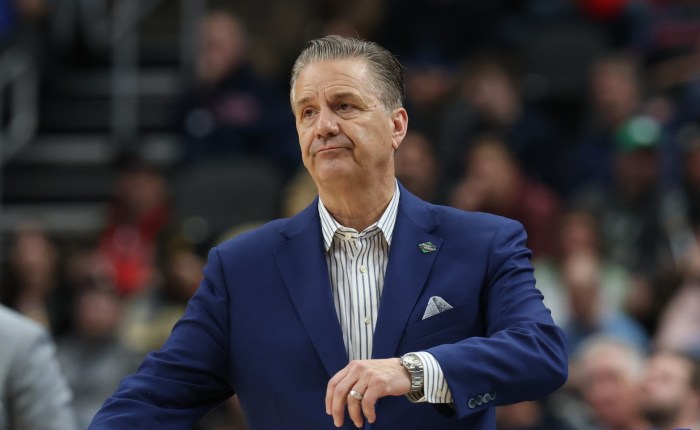
It’s high time for John Calipari to do the honorable thing (Dr. Michael Huang Photo).

(LEXINGTON, Ky.) – A house divided cannot stand.

Whether attributed to Abraham Lincoln or Jesus Christ, those are wise words—and Big Blue Nation should take heed.

After another demoralizing and embarrassing first-round flameout in this year’s NCAA tournament, the Roman Empire of college basketball finds itself hopelessly divided, poised on the precipice of a potential epic collapse.

In one corner are the staunch “Fire Calipari” proponents, claiming that the Hall of Fame coach has lost his fastball. The worst regular season in program history (9 – 16 in 2021), the worst postseason losses in program history (Saint Peters in 2022 and now Oakland in 2024), and one paltry NCAA tournament win in the last five years does not the Gold Standard make.

In the other corner are the loyal Coach Cal stalwarts. Despite the lack of recent postseason success, he’s still the best person for the job. Four Final Fours and a National Championship builds you a lot of equity. The man is still one of the best recruiters out there. Plus, look at all the charitable work he’s done for the community. Who’re you going to get that’s better?

So, we’re at a virtual impasse—hopelessly divided, right? A $33.3 million buyout of Calipari’s lifetime contract only adds to the existing quagmire. That’s not chump change, and the University of Kentucky—even if generous boosters come up with the goods—cannot afford to squander that amount of money just to cover up Mitch Barnhart’s horrific boo-boo.

How, then, do we unify and rally the fanbase? If Calipari stays on as coach, I’m afraid that simply wouldn’t be possible. From what I’ve gleaned in talking to fans and media alike, the atmosphere is just way too toxic. Expecting him to change his polarizing methods at this stage is simply wishful thinking on our part. Who’s coaching at Kentucky next year is a topic for another time. It just can’t be John Calipari.

The honorable thing would be for Calipari to graciously step down. When you’ve tarnished the empire’s reputation, it’s time to fall on your sword. But we know he’s way too proud and stubborn to do that. Plus, that wouldn’t be really fair to him. Both parties agreed to the financial terms in advance. Calipari loves money, and I doubt he’d settle for a penny less to just walk away.

Upon further review, perhaps the buyout isn’t as daunting as it first appears.

First of all, there’s an offset in the contract, meaning that if Calipari would get another coaching job somewhere else, his new salary would count toward the buyout. Even at 65 years old, I don’t think Coach Cal is ready to retire to his private island, watch Alaska shows, and play with his dogs all day long.

Secondly, we’re not talking about a lump sum payment. The buyout would be paid in monthly installments over the next five years. That’s certainly manageable in the university’s $6.8 billion mega budget.

The key, then, is to find a good compromise, one that allows both parties to save face and walk away feeling good. The university can’t be seen as pissing money away in an irresponsible fashion, while Calipari can’t lose out on the cash he thinks he was promised and deserves. In addition, any boosters paying Calipari to go away also expect and demand a good return on their investment.

What if the university or the boosters pay Calipari the full buyout amount and then Calipari agrees to donate a portion of it over to whatever charitable cause he wishes? That way, the university feels that money was actually put to good use—which it would be. Calipari gets what he’s owed, further enhances his charitable legacy, and rides off into whatever sunset he chooses under the good graces of a forever thankful UK fan base.

What distinguishes that UK fan base from all the other pretenders is our unbridled passion. What binds us together is our like-minded heritage and culture. We derive deep pleasure and satisfaction in having our identity tied in with the program—the program with the greatest tradition in the history of college basketball.

That tradition is slowly slipping away. It’s time for Mitch Barnhart and John Calipari to stop the bleeding. Lock yourselves in a room and either sing kumbaya or punch each other silly. But don’t come out until you’ve reached a tenable solution.

As die-hard Kentucky fans, the onus is on us also. Whatever Barnhart and Calipari decide, it’s important for Big Blue Nation to stick together, to circle the wagons, and to come back next year more passionate than ever.

“United we stand, divided we fall” is our state motto.

Now the legacy of our basketball empire depends on it also.

Dr. John Huang is a retired orthodontist, military veteran, and award-winning author. This blog post was originally written as a sports column for Nolan Group Media publications. You can follow Dr. Huang on social media @KYHuangs and check out all his books at https://www.Amazon.com/stores/Dr.-John-Huang/author/B092RKJBRD