Blue Lights, Dim Bulbs: Kentucky Basketball’s Alarming Drift

Blue Lights, Dim Bulbs: Kentucky Basketball’s Alarming Drift

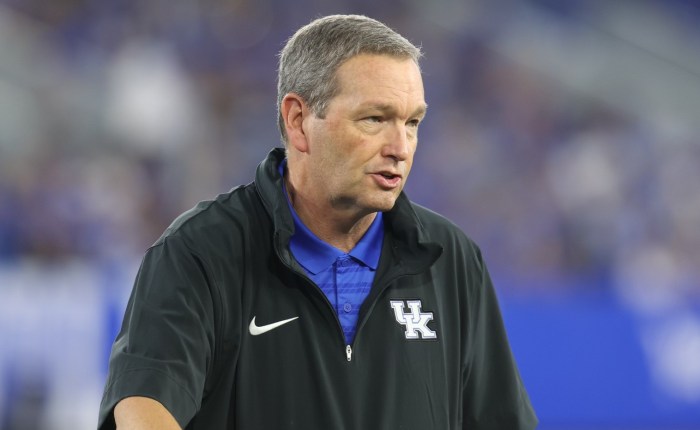
Photo Credit: Mont Dawson/Kentucky Sports Radio

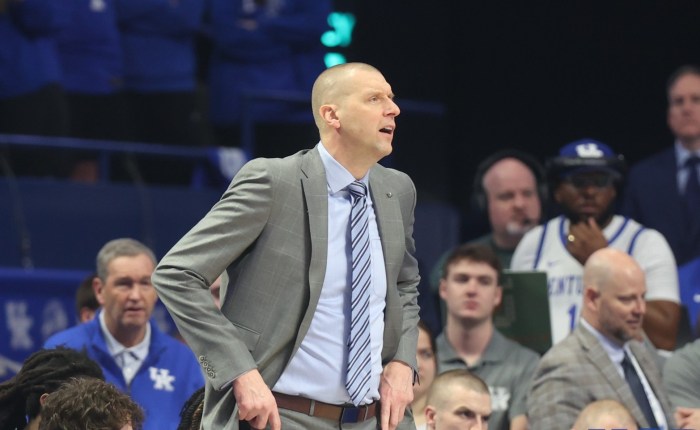
(LEXINGTON, Ky.) – There are losses, and then there are losses that linger. Kentucky’s 89–74 faceplant against Alabama wasn’t just another road hiccup or a “good learning experience” wrapped in coach-speak. It was the kind of loss that stares back at you and asks uncomfortable questions—about identity, preparation, leadership, and where exactly this thing is headed under Mark Pope.

Let me say this clearly before anyone starts torching me: I am not ready to give up on Pope. Not even close. But I am ready to admit that the trends are troubling—and Big Blue Nation has earned the right to be uneasy.

We were promised a Ferrari. What we’re driving right now feels suspiciously like a refurbished rental.

At BYU, Pope sold us on a high-powered, creative, free-flowing offense. Pace. Spacing. Ball movement. Thirty-five threes a game. What we’re seeing instead is a half-court offense that too often feels like it was designed during a layover in Omaha. There are long stretches where Kentucky looks unsure and—this hurts to type—disinterested.

Part of that is personnel, yes. This team has no dependable shooters. None. Zip. Zero. You can’t run a modern offense without the threat of the three. Defenses sag. Lanes disappear. Alabama didn’t guard Kentucky shooters—they just waited for them to miss. And when you combine that with shaky perimeter defense on the other end, you get the same result Nick Saban just witnessed courtside in Tuscaloosa.

Alabama hit a bunch of open shots. Kentucky mostly chased shadows behind the arc.

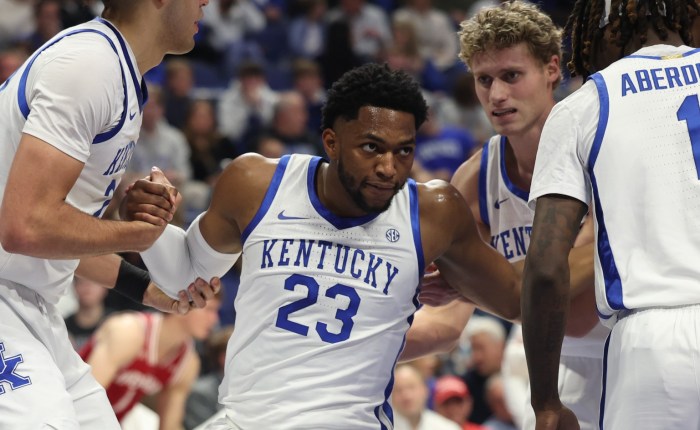
Here’s where my inner orthodontist starts grinding his teeth. Pope seems overly cautious with his best players, particularly Jaland Lowe and Jayden Quaintance. Development is important. Trust is important. A player’s future health is certainly important. But at some point, your best players have to play. Long enough to find rhythm. Long enough to lead. Long enough to play their way into shape and respond. Watching Kentucky tiptoe through their starting lineup feels less like strategy and more like risk aversion.

To add insult to injury, I’ve sensed a maddening lack of consistent effort with this team. It occasionally has flashes. “Beautiful ones” against overmatched teams like Bellarmine. But then—poof—it evaporates against quality competition. Loose balls become optional. Closeouts become suggestions.

And physicality? Fuhgeddaboudit!  

That’s not talent. That’s not scheme. That’s culture. And culture starts at the top.

Now for the big one. The one that makes me want to hit “delete.”

Preparation.

Kentucky had nearly two weeks to get ready for this game. Two weeks. And the Cats still fell behind by 21 points like they’d just been introduced to Alabama in the parking lot. That’s not about shots falling. That’s not about poor matchups. That’s not bad luck. That’s a flashing neon warning light.

Hey folks, the résumé is crumbling before our eyes. Quadrant opportunities are slipping away in a league that eats its own.

Worse yet, there’s the creeping fear that the entire empire might collapse if things don’t change—because Pope, fair or not, hasn’t yet shown he can recruit at the level this job demands. Kentucky doesn’t win on system alone—it wins when elite players choose it.

Everyone knows that Kentucky basketball is not a rebuild-and-hope program. It’s a reload-or-else one. If the talent pipeline doesn’t improve, the margin for error disappears entirely.

The bulbs are dimming. The optics are already bad. Kentucky falling behind by double digits in marquee games is happening way too often. Opponents make adjustments. Pope’s teams don’t. His timeouts feel reactive. His in-game answers elusive. And Pope’s postgame demeanor? Let’s just say “sore loser” is not the brand Big Blue Nation expects. This job requires accountability, humility, and leadership in front of a camera when things go sideways.

Kentucky basketball isn’t just a team. It’s an institution. A standard. A mirror we all see ourselves in, for better or worse.

I still believe Pope can get this right. But belief without course correction is just stubbornness dressed up as loyalty. The concerns are real. The trends are real. And if they aren’t addressed—soon, the dimming lights at Rupp won’t just be temporary.

They’ll be structural.

And that, my friends, is not something any of us signed up for.

This article was originally written for distribution through Nolan Group Media publications.

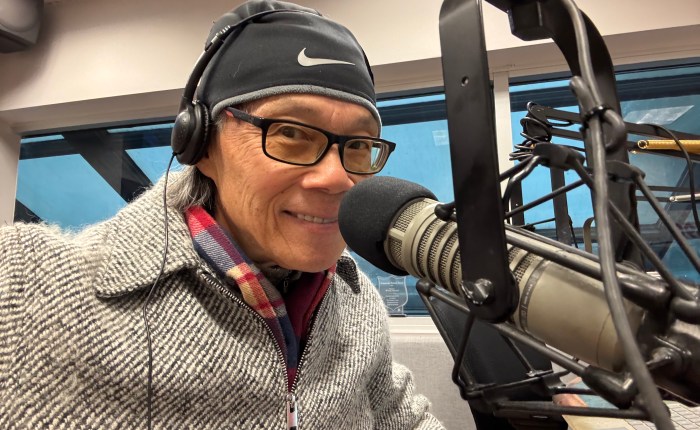
Dr. John Huang is a retired orthodontist, military veteran, and award-winning author. Currently serving as a columnist for Nolan Group Media, he invites readers to follow him on social media @KYHuangs. Explore his latest, Whining For Posterity, and all his books at Amazon.
The Scholarship Used to Be the Prize

The Scholarship Used to Be the Prize

(And Somewhere Along the Way, We Started Treating It Like a Coupon)

Let me get this out of the way early so nobody mistakes me for the guy yelling at clouds.

I know NIL is here to stay. I know players have always been paid. I know the system wasn’t pure, holy, or wrapped in a choir robe stitched by Sandy Bell in the UK Compliance office.

I’m not naïve. I’m just… disappointed. And there’s a difference.

Believe me, this isn’t about money. It’s about what money replaced.

Back in the day—cue the violin music, please—the scholarship was the prize. The scholarship was the golden ticket. It was the thing you earned, protected, and quietly understood could change the trajectory of your life.

Now? The sheepskin is an afterthought. A line item. Something you get thrown in after the collective wires the cash.

Wake up everyone! College sports didn’t just evolve. It inverted.

Players used to come to Kentucky for the name on the front of the jersey and hope—pray, even—that one day the name on the back might matter. Now the name on the back is everything, and the front is just a temporary billboard.

We’ve turned student-athletes into short-term mercenaries, and then we act surprised when loyalty evaporates faster than Vince Marrow’s blue wardrobe.

Again, I’m not anti-player. I’m anti-illusion. College sports has become all smoke and mirrors.

What bothers me isn’t that athletes are making money. It’s that we’ve somehow convinced them—and ourselves—that money is the point, not the fruit of hard-earned labor. We’ve normalized entitlement at warp speed. It no longer happens over multiple years of eligibilty. It’s now bestowed instantly.

A freshman hasn’t played a minute and already knows his “market value.” He doesn’t ask, How can I grow here? He asks, What’s my next leverage point? That’s not empowerment. That’s living one transaction at a time.

And the collateral damage of this lunacy? The college education—the very thing that was supposed to be the great equalizer—has been reduced to background noise.

Let me offer a confession from a man who looks suspiciously like a retired orthodontist with opinions.

My education made me rich. Not Warren Buffet-rich. Not even NIL-rich. But life-rich. It gave me a profession. It gave me options. It gave me the ability to fail and pivot and fail again without falling through the floorboards of society.

My college education wasn’t just about attending classes. It rewarded me with time—time to grow up, mess up, learn accountability, and figure out who I was when nobody was handing me a check. Let it be known that no booster ever Venmo’d me for showing up to Biology 101.

Now we’re telling kids—explicitly and implicitly—that education is optional, temporary, and secondary to their “brand.” That’s not progress. That’s negligent at best—and destructive at worst.

Here’s the part nobody wants to say out loud: If the scholarship no longer matters, the university no longer matters. And if the university no longer matters, then college sports becomes minor-league professional sports without contracts, guardrails, or accountability.

Which is exactly where we’re headed.

You can’t build culture on one-year leases.
You can’t preach loyalty while negotiating exits.
You can’t sell tradition to people shopping for the next upgrade.

And you certainly can’t pretend the system will hold when the foundation—education itself—has been hollowed out. When the value of the scholarship is cheapened, the value of the institution crumbles. When institutions crumble, so does the illusion that this was ever about anything more than money. And when the illusion dies, so does the sport we thought we loved.

I still watch. I still care. I still write. I still hope—perhaps foolishly—that the pendulum swings back toward balance instead of breaking loose entirely.

But make no mistake: this is doomsday not because athletes are getting paid—but because we’ve taught them that nothing else is worth valuing.

And when education becomes optional, everything downstream collapses. I don’t want to go backward. I want us to remember what was worth protecting as we move forward.

Happy New Year!
Now, please excuse me while I go ice my knee, check my blood pressure, and remind myself I’m not yelling at clouds.

I’m yelling at the future—because I still care about it.

This article was originally written for distribution through Nolan Group Media publications.
Dr. John Huang is a retired orthodontist, military veteran, and award-winning author. Currently serving as a columnist for Nolan Group Media, he invites readers to follow him on social media @KYHuangs. Explore his latest, Whining For Posterity, and all his books at Amazon.
“Name, Image, and Mayhem: Kentucky’s NIL Cliffhanger”

“Name, Image, and Mayhem: Kentucky’s NIL Cliffhanger”

I’ll be the first to admit—I’m confused. Especially when listening to University of Kentucky Athletics Director Mitch Barnhart talk circles around himself.

In his interview with Matt Jones of Kentucky Sports Radio earlier today, Barnhart assured all the loyal BBN listeners that, even within this new landscape of college athletics, not only will UK not be cutting any sports, but he’s confident the university will be able to fund any new upcoming revenue share amounts.

Those are shockingly bold statements. The obvious retort is: How does Mitch know?

Because just moments earlier while addressing the media, Barnhart refused to disclose any specifics about the revenue sharing amounts, citing the “uncertainty” and “fluidity” of the entire new world order.

“We’re in the first month of this thing,” Barnhart told a roomful of attentive scribes thirsting after his every word. “Literally the first month. For anybody to sit in front of a group and say, ‘I’ve got all the answers after four weeks,’ good for you, good for you. I mean, we’ve talked about a decade’s worth of change that has happened in the last six to ten months of college athletics.”

“The change that has occurred has been massive,” he continued. “We don’t even have a governance structure in place really, to be honest with you.”  

I always knew college athletics was a cutthroat business. That’s why I titled my debut novel Name, Image, and Murder. It was a fictional whodunit loosely based on the chaotic new world of NIL—the Wild Wild West of amateur sports gone pro. But I’m starting to think fiction might be safer than what’s actually brewing behind the scenes in Lexington.

You see, the same school that gave us Adolph Rupp, Dan Issel, Anthony Davis, and eight national championships is now poised at the crossroads of an athletic identity crisis. Do we leverage our exalted status as the greatest tradition in college basketball? Or do we bow before the almighty dollar in a noble attempt to keep all our boats floating? NIL has officially graduated from “name, image, and likeness” to “nobody is listening”—at least when it comes to making choices regarding long-term sustainability.

And now, with the recent House v. NCAA settlement ushering in the brave new world of revenue sharing, UK Athletics is walking a tightrope strung between Rupp Arena, Kroger Field, Memorial Coliseum, and Kentucky Proud Park.

On paper, the new rules sound reasonable. Schools can now pay players directly—up to $20.5 million a year in shared revenue. Kentucky has fully committed to this model, even creating a snazzy new LLC called Champions Blue. Sounds like a superhero franchise, right? Champions Blue! Defenders of BBN! As technically a nonprofit organization, I’m not sure what to make of it. Cynics might call it a financial shell game that makes Enron look like Little League bookkeeping.

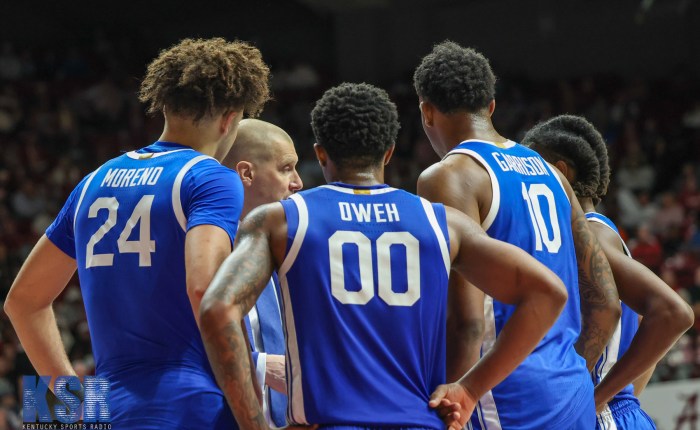
Here’s the problem. Paying players is expensive. Kentucky projects a $31 million deficit next year, even after slashing perks, borrowing from the university, and shaking every couch cushion from Pikeville to Paducah. And with the bulk of revenue earmarked for men’s basketball and football, you can kiss some non-revenue sports goodbye faster than a 2-seed getting bounced by Saint Peter’s—regardless of what Mitch promises.

But wait, there’s more! Earlier reports citing multiple reliable sources claim UK is devoting 45% of its revenue-sharing budget directly to Mark Pope’s team. Even though Mark Stoops debunked that statement as “absolutely untrue,” many won’t believe him. This is, after all, a basketball school. Except when the football team has ten-win seasons. Or when the volleyball team is hoisting SEC banners. Or when someone on the rifle squad or track team wins Olympic gold. You know, the other student-athletes, who apparently don’t get to eat from the same buffet.

That’s where the danger lies. Not in the fairness of it all—college athletics has never been fair—but in the fragility of it.

What happens when Title IX lawyers come knocking, wondering why the women’s soccer team is using 1997 cleats while the men’s basketball team is taking private flights to Maui (yes, remember Maui)? What happens when boosters get bored with writing six-figure checks for backups who never leave the bench? What happens when ticket prices go up again to cover costs, and the average fan can’t afford to sit in the rafters without taking out a second mortgage?

What happens when your favorite in-state walk-on is replaced by a five-star diva who’s demanding an exorbitant NIL deal, a YouTube series, and three coveted parking spaces on campus?

This is not just a UK problem. This is an everywhere problem. But here in the Bluegrass, where we measure time in Final Fours and football tailgates, we feel the tremors more than most. It’s hard to build “La Familia” when everyone’s negotiating like La Cosa Nostra.

And don’t get me wrong—I’m not anti-athlete. I’m all for players getting their fair slice of the billion-dollar pie. But when the pie crust is crumbling and the recipe keeps changing, it’s hard to know whether we’re baking a dynasty or our athletics director is just blowing hot air.

Champions Blue may turn out to be a genius model. Or it may be a cautionary tale studied by future ADs with degrees in both sports management and disaster response. In either case, the margin for error is thinner than Mitch Barnhart’s top button.

As for me, I’m thinking about writing a sequel. Name, Image, and Mayhem: The NIL Strikes Back. It’ll feature a fictional blue-blood program that tried to buy its way to the top, only to realize it couldn’t afford loyalty, chemistry, or the next contract buyout. Spoiler alert: the villain isn’t the athlete, the booster, or the NCAA.

It’s the system. A system we all helped create. A system now careening down a one-way road where amateurism is dead, loyalty is negotiable, and tradition is mocked and poo-pooed.

So buckle up, BBN. The real madness isn’t in March anymore. It’s happening right now—behind closed doors, in budget meetings, where the stakes are higher than a last-second Aaron Harrison three-point bomb.

May God have mercy on us all.


Dr. John Huang is a retired orthodontist, military veteran, and award-winning author of Name, Image, and Murder. He serves as a reporter and columnist for Nolan Group Media. Follow him @KYHuangs on social media and find his books, including the soon-to-be-bestselling Whining for Posterity, here: https://www.Amazon.com/stores/Dr.-John-Huang/author/B092RKJBRD

Cats’ Meow: Ole Miss Smackdown

Cats’ Meow: Ole Miss Smackdown

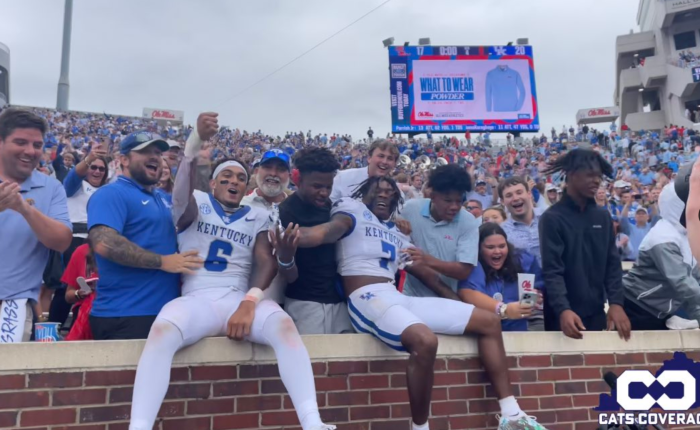
Dane Key (career-high eight catches for 105 yards) and Barion Brown (five catches for 88 yards) celebrate one of the most improbable upsets in Kentucky Football history. Photo Credit: Tres Terrell / Cats Coverage.

(ATLANTA, Ga.) – If you happened to hear some loud meowing coming from Oxford, Mississippi, this past Saturday, you weren’t mistaken. No, it wasn’t a new strain of southern Mississippi feline infestation—it was the Kentucky Wildcats who went prowling deep into Rebel territory and left with a purr-fectly thrilling 20-17 victory. And just like that, Big Blue Nation experienced the kind of upset that gives SEC elite sleepless nights and Wildcat fans reason to crowd surf and burn couches the rest of the week.

Okay, I have to come clean. I didn’t see the game. In fact, I couldn’t even keep up with it in real time. Ah, the joys of modern air travel. There I was, soaring above the clouds, trying to connect to the internet with the same desperation Mark Stoops mustered calling a 4th-and-7 deep in his own territory. My Wi-Fi was about as reliable as a Tennessee fan’s manners, buffering at every crucial moment. But even from 30,000 feet, the excitement of Kentucky’s monumental upset win over No. 6 Ole Miss somehow seeped through, giving me one of my top football fan moments of all time. I still think that Florida upset from a few years back was the biggest (I was there in person for that magical three-decade streak-buster). But this one—even in abstentia—comes in hot on its heels.

Rebel Yell Turned to Rebel Yawn

Here’s what I pieced together from my lofty perch in seat 16E. The stage was set for a party at the Grove. Ole Miss, the high-flying, swaggering Rebels, rolled in undefeated at 4-0, daring anyone to slow them down. They led the nation in scoring, they led in defense, they led in just about everything except humility—and let’s be honest, who needs that in football? But the Cats, sitting at a less-than-flashy 3-2, came to crash the party, with quarterback Brock Vandagriff in the starring role.

What Ole Miss hadn’t counted on was a night filled with bizarre twists and turns. The first possession went according to script with the Rebels slicing downfield like a hot knife through butter for a 7 – 0 lead. For Wildcat fans, this one was turning ugly early. But Vandagriff, who had previously been allergic to hot starts, responded in kind by leading Kentucky down the field on the Cats’ first possession, and what do you know? Points! A field goal to kick things off—a small victory that had many in BBN saying, “Not so fast, my friend.”

Kentucky’s Big Bet Pays Off

The rest of the game proceeded like a chess match, except Mark Stoops decided to channel his inner Lane Kiffin and go all riverboat gambler. With just over two minutes to go and the Cats facing 4th-and-7 from their own 20-yard line, Stoops said, “Why play it safe?” No more “Captain Conservative” label—he called the play to let it fly. Vandagriff did just that, connecting with Barion Brown on a stunning 63-yard bomb. A heave, a prayer, and suddenly, Kentucky had an opening.

Barion Brown—speedster extraordinaire—ran like he was tired of jet sweeps and with that one electrifying fly pattern, he set up the winning touchdown. Tight end Josh Kattus, atoning for a couple of previously dropped passes, grabbed a fumbled loose ball at the two-yard line and lunged into the end zone. It wasn’t exactly what you’d call textbook offense, but as every Kentucky fan knows, beauty in football is in the eye of the scoreboard.

Defense, Deliveries, and Desperation

Pay Brad White whatever he wants. The Rebels came into this matchup thinking they’d walk all over Kentucky, but instead, they got smacked in the mouth by a Wildcats defense that wasn’t having any of it. Octavious Oxendine roared like his namesake in the trenches, recording two huge sacks and living in the Rebels’ backfield rent-free. Then there was JQ Hardaway—he didn’t just come to play, he came to make life miserable for every Rebel who dared cross him, setting a career-high 11 tackles, and yes, forcing a fumble too. Deone Walker was Deone Walker—enough said.

Ole Miss was punting left and right, which is something they’re just not used to doing. Kentucky forced five punts on a team that had only punted four times in their previous four games combined. Can anyone say three-and out?

And speaking of kicking, there was Kentucky’s kicker Alex Raynor—Mr. Automatic—who’s quickly turning Kentucky into Field Goal U. Two more field goals extended his streak to a school-record 14 straight. Somewhere in the Bluegrass, Austin MacGinnis must have been raising a glass in salute.

Clutch Cats Close It Out

The game-winning drive had all the trappings of Kentucky drama—close calls, fumbles, and sheer, unfiltered joy. Kattus’ recovery and dive into the end zone with 2:25 left in regulation was the exclamation point. The kind of sentence that said, “Hell, yeah. Eat this, all you doubters who sold your season tickets after the South Carolina loss!” But with Ole Miss still breathing, it was J.J. Weaver, forever a fan-favorite and all-around game-wrecker, who had the final word, sacking Jaxson Dart and effectively shutting the door on Ole Miss’s hopes of a last-minute miracle. Their last-ditch field goal attempt shanked embarrassingly wide, and Vaught-Hemingway Stadium fell into a stunned silence—the same stunned silence pouring out from the heart of Athens when a Kirby Smart-coached defensive juggernaut falls behind by four touchdowns.

History and Context, Whimsical and Wild

This was Kentucky’s first win at Ole Miss since the glory days of 1978. You heard that right—disco, polyester, and a young Mark Stoops with plenty of hair and no pot belly. Now, some forty-six years later, Stoops orchestrated his magnum opus—beating a sixth-ranked Ole Miss squad in their own house when nobody gave him a chance. It was Kentucky’s highest-ranked road win at an SEC campus stadium ever. Not at No. 10 Vanderbilt in 1947, and not even over No. 1 Ole Miss in Jackson in 1964—it’s this one. And for Mark Stoops, who’s now in his 12th year and building a statue one giant win at a time, this was his 12th-ranked victory, his highest yet, and perhaps his most whimsical of all.

The critics may say Stoops can’t win the big one, but if upsetting No. 6 Ole Miss on the road isn’t a big one, what is? Since 2018, Kentucky is 12-16 against AP-ranked teams—not the kind of record that gets engraved in marble, but for a program once synonymous with SEC cellar-dwelling, it’s nothing short of a revelation.

Enjoy it Cat fans.

I’m still flying above the clouds.

Dr. John Huang is a retired orthodontist, military veteran, and award-winning author. He currently serves as a columnist for Nolan Group Media. You can follow him on social media @KYHuangs and check out his debut novel—“Name, Image, and Murder”—and all his books at https://www.Amazon.com/stores/Dr.-John-Huang/author/B092RKJBRD

This post appeared first as a column for Nolan Group Media publications.

Heart Versus Head

Heart Versus Head

Will Kentucky Football deliver fans a dream season or a heartbreaker? The heart thinks Coach Mark Stoops is headed for a magical ten-win campaign. The head says they’ll most likely hover around .500 (Photo Credit Dr. Michael Huang).

(LEXINGTON, Ky.) – It’s finally the end of August. Mercifully, for all the die-hard Kentucky football fans in the Commonwealth and beyond, that means talking season is over. Time for Stoops and crew to put up or shut up—to put behind them all the vacated wins, the “pony up” NIL comments, and the ill-advised courtship down in Aggieland—and start gearing up for another season of rampant expectations and stone-cold reality.

The coup-de-gras of talking season always involves bold and daring predictions about how the season will go. I’m no different in that regard. But this year, instead of plowing forward with prognostications from my big blue heart, I thought I’d also include those from my worry-addled head. It’s amazing how divergent the two can be.

Southern Miss, Ohio, Murray State, and Vanderbilt

These are the four teams on the schedule that both the heart and head readily agree on. Referred to by many as the “stinky” teams, they’re pretty much automatic wins. The heart thinks that Kentucky will win easily by thirty-point blowouts against all of them. The head is a little more cautious. After all, the Cats might let up a bit against inferior competition. And remember, Kentucky always manages to pull a stinker of their own every year. Nevertheless, all four of these games should be stat-padding confidence building wins for the boys wearing blue.

South Carolina, Louisville

These are two teams Kentucky should also be able to beat. They both take place in the friendly confines of Kroger Field against teams with comparable talent. The head fears that both opposing head coaches have a bit more to gain by taking down the Wildcats, but the heart is convinced that the home field advantage will be the ultimate difference maker. Fear not, then—Shane Beamer and Jeff Brohm be damned—both heart and head are predicting wins on these two critical swing games.

Tennessee, Texas

On the other end of the spectrum, both the heart and the head agree that the odds of pulling off victories in Knoxville and Austin are slim to none this year. As far as the Vols are concerned, Kentucky has only won once on the orange checkerboards in the last forty years. Some may say they’re long overdue. The heart and the head both say, “Nope.” Long suffering UK football fans understand it’s simply not going to happen.

As for the Longhorns, they’re the new sheriff in town. They’ll be ramped up for anyone sporting the SEC logo on their uniforms. Steve Sarkisian can coach, the game-day atmosphere will be off the charts, and the next to last regular season game most likely indicates the Cats will be limping to the finish line. Time to put both of these games in the loss column.

Georgia, Mississippi, Florida, Auburn

Here’s where the head and heart take radically different paths.

Most pundits have already anointed Georgia as league champs. Not so fast says the heart. It’s easier to get to the top than to stay on top. Plus, Brock Vandagriff will have something to prove against his former teammates. If the wonder-boy transfer is as good as they claim, September 14 will be the day the legend begins. KENTUCKY IN A MONUMENTAL UPSET. The head on the other hand says, “You’re nuts!” Kentucky has lost 14 in a row to Georgia, and Mark Stoops has never sniffed a victory against the Bulldogs in his lifetime. Not going to happen this year.

The Ole Miss game is certainly winnable, and the heart predicts a huge road conquest in Oxford. Kentucky nearly did it last time they paid a visit to The Grove. Unfortunately—says the head—Lane Kiffin’s squad will be better than advertised. They return a boatload of offensive firepower combined with one of the best transfer classes in the country. Enjoy the tailgating because you’re not leaving the Magnolia State with a “W.”

Kentucky has gained the upper hand on the Gators recently, winning four out of the last six. Coach Billy Napier’s hot seat will explode when the Cats make it five out of seven—thinks the heart. “Not going to happen,” says the head. Just like they say in the stock market—past performance is no indicator for future success. The atmosphere in The Swamp will be too hot to handle. According to the head, it’s heartbreak hotel for Kentucky fans making the trip.

This isn’t your daddy’s Auburn team—claims the heart. In fact, it’s not even close in regard to talent. Bo Jackson and Cam Newton are not walking through that door. Throw in a rabid home crowd and you should see some happy home revelers in the Bluegrass as Halloween approaches. But Auburn is still Auburn—cautions the head. Tradition matters. Plus, this has the makings of the aforementioned stinker game. It’s a huge letdown as the thump, thump, thump of basketballs reverberates and takes over.

So, there you have it. The heart claims 10 – 2 and a spot in the twelve-team playoffs. The head fears 6 – 6 and a consolation invitation to the Independence Bowl.

Whether it’s a magical playoff run all the way to Atlanta or a mundane trip to Shreveport, one thing’s for sure—Kentucky football fans will have plenty of reasons to keep their cardiologists (and psychiatrists) on speed dial. Buckle up BBN, it’s going to be one exciting ride.

See you along the way.

Dr. John Huang is a retired orthodontist, military veteran, and award-winning author. You can follow him on social media @KYHuangs and check out his debut novel, “Name, Image, and Murder” and all his books at https://www.Amazon.com/stores/Dr.-John-Huang/author/B092RKJBRD

This blog posting first appeared as part of Nolan Group Media publications.