
An Oak of Righteousness

An Oak of Righteousness

“But the wisdom that comes from heaven is first of all pure; then peace-loving, considerate, submissive, full of mercy and good fruit, impartial and sincere.” – James 3:17

You can read Dr. Tom Cooper’s obituary if you want the facts. https://www.milwardfuneral.com/obituaries/Dr-Thomas-M-Cooper?obId=46963575

You’ll learn where he studied, what he accomplished, how many students he taught, how many lives he touched in the official, measurable ways that look good on paper and sound impressive when read aloud. All of it is true. All of it matters.

But none of it explains why his passing yesterday saddened me in ways that words simply can’t adequately express.

Dr. Cooper was one of my mentors. In dental school, yes. But also in Sunday School, which, as it turns out, may have been the more important classroom. In both settings, he did something meaningful: he paid attention to people. Not just the impressive ones, nor the loud ones, nor the future rising stars—but to every ordinary Joe like me who showed up wanting to learn.

In dental school, it’s easy to think teaching is about brilliance—how much you know, how fast you can correct someone, how efficiently you can expose ignorance. Dr. Cooper never taught that way. He had an unhurried confidence, the kind that didn’t need to prove anything. When he spoke, you leaned in—not because he demanded attention, but because you were curious about what he had to say.

He didn’t just teach dentistry. He taught students.

And then there was Sunday School—where he taught life.

Long before I ever stood in front of a class or a congregation, I watched him do something deceptively simple and profoundly wise. He didn’t teach the lesson he wanted to teach. He taught the lesson we were ready to hear.

One Sunday, probably sensing my early, unpolished enthusiasm for teaching, he gave me a piece of advice that has followed me through every single speaking engagement—whether radio broadcast, packed classroom, or that awkward circle of folding chairs when only two people showed up:

“Take the class where they want to take you.”

It sounds almost too gentle to be revolutionary. But it is.

What he meant was this: teaching isn’t about dragging people to where you think they should be. It’s about honoring where they already are. It’s about listening long enough to hear the questions beneath the questions. It’s about understanding that people don’t need your brilliance nearly as much as they need your presence.

That lesson shaped me more than any syllabus ever could.

It kept me from preaching at people when I should have been walking with them.
It kept me from filling silence when I should have been letting it speak.
It kept me from confusing authority with influence.

Dr. Cooper never chased the spotlight. He didn’t need it. His faith was sturdy, quiet, and deeply rooted. The Bible calls that an “oak of righteousness, a planting of the Lord for the display of His splendor.” That phrase fits him perfectly—not flashy, not brittle, not swayed by every new wind of opinion.

Just solid. You leaned on Dr. Cooper without realizing it. And only when he’s gone do you feel how much weight he was carrying for others.

I don’t remember every lesson he taught. I don’t remember every Scripture he unpacked or every clinical pearl he dropped in passing. But I remember how he made me feel: seen, capable, invited.

That’s the kind of teaching that lasts.

If there’s a classroom in heaven, I suspect he’s there already, smiling patiently, waiting for the rest of us to catch up. And if I’m lucky, when I finally walk in, he’ll give me that same gentle reminder one more time:

“Take the class where they want to take you.”

Because that’s where the real learning happens.

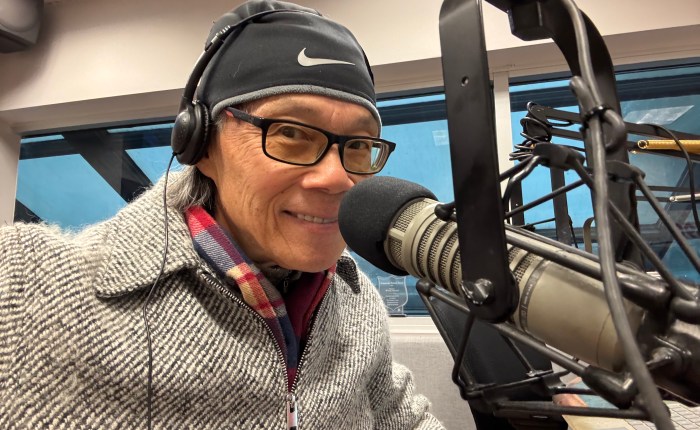
Dr. John Huang is a retired orthodontist, military veteran, and award-winning author. Currently serving as a columnist for Nolan Group Media, he invites readers to follow him on social media @KYHuangs. Explore his latest, Whining For Posterity, and all his books at Amazon.

Discover his next scheduled teaching event here: Man Up – Men’s Ministry Retreat – St. Luke Church | Lexington, KY
The Scholarship Used to Be the Prize

The Scholarship Used to Be the Prize

(And Somewhere Along the Way, We Started Treating It Like a Coupon)

Let me get this out of the way early so nobody mistakes me for the guy yelling at clouds.

I know NIL is here to stay. I know players have always been paid. I know the system wasn’t pure, holy, or wrapped in a choir robe stitched by Sandy Bell in the UK Compliance office.

I’m not naïve. I’m just… disappointed. And there’s a difference.

Believe me, this isn’t about money. It’s about what money replaced.

Back in the day—cue the violin music, please—the scholarship was the prize. The scholarship was the golden ticket. It was the thing you earned, protected, and quietly understood could change the trajectory of your life.

Now? The sheepskin is an afterthought. A line item. Something you get thrown in after the collective wires the cash.

Wake up everyone! College sports didn’t just evolve. It inverted.

Players used to come to Kentucky for the name on the front of the jersey and hope—pray, even—that one day the name on the back might matter. Now the name on the back is everything, and the front is just a temporary billboard.

We’ve turned student-athletes into short-term mercenaries, and then we act surprised when loyalty evaporates faster than Vince Marrow’s blue wardrobe.

Again, I’m not anti-player. I’m anti-illusion. College sports has become all smoke and mirrors.

What bothers me isn’t that athletes are making money. It’s that we’ve somehow convinced them—and ourselves—that money is the point, not the fruit of hard-earned labor. We’ve normalized entitlement at warp speed. It no longer happens over multiple years of eligibilty. It’s now bestowed instantly.

A freshman hasn’t played a minute and already knows his “market value.” He doesn’t ask, How can I grow here? He asks, What’s my next leverage point? That’s not empowerment. That’s living one transaction at a time.

And the collateral damage of this lunacy? The college education—the very thing that was supposed to be the great equalizer—has been reduced to background noise.

Let me offer a confession from a man who looks suspiciously like a retired orthodontist with opinions.

My education made me rich. Not Warren Buffet-rich. Not even NIL-rich. But life-rich. It gave me a profession. It gave me options. It gave me the ability to fail and pivot and fail again without falling through the floorboards of society.

My college education wasn’t just about attending classes. It rewarded me with time—time to grow up, mess up, learn accountability, and figure out who I was when nobody was handing me a check. Let it be known that no booster ever Venmo’d me for showing up to Biology 101.

Now we’re telling kids—explicitly and implicitly—that education is optional, temporary, and secondary to their “brand.” That’s not progress. That’s negligent at best—and destructive at worst.

Here’s the part nobody wants to say out loud: If the scholarship no longer matters, the university no longer matters. And if the university no longer matters, then college sports becomes minor-league professional sports without contracts, guardrails, or accountability.

Which is exactly where we’re headed.

You can’t build culture on one-year leases.
You can’t preach loyalty while negotiating exits.
You can’t sell tradition to people shopping for the next upgrade.

And you certainly can’t pretend the system will hold when the foundation—education itself—has been hollowed out. When the value of the scholarship is cheapened, the value of the institution crumbles. When institutions crumble, so does the illusion that this was ever about anything more than money. And when the illusion dies, so does the sport we thought we loved.

I still watch. I still care. I still write. I still hope—perhaps foolishly—that the pendulum swings back toward balance instead of breaking loose entirely.

But make no mistake: this is doomsday not because athletes are getting paid—but because we’ve taught them that nothing else is worth valuing.

And when education becomes optional, everything downstream collapses. I don’t want to go backward. I want us to remember what was worth protecting as we move forward.

Happy New Year!
Now, please excuse me while I go ice my knee, check my blood pressure, and remind myself I’m not yelling at clouds.

I’m yelling at the future—because I still care about it.

This article was originally written for distribution through Nolan Group Media publications.
Dr. John Huang is a retired orthodontist, military veteran, and award-winning author. Currently serving as a columnist for Nolan Group Media, he invites readers to follow him on social media @KYHuangs. Explore his latest, Whining For Posterity, and all his books at Amazon.

Don’t You Dare Trash Our UK Degrees

Don’t You Dare Trash Our UK Degrees

Today was a big day.

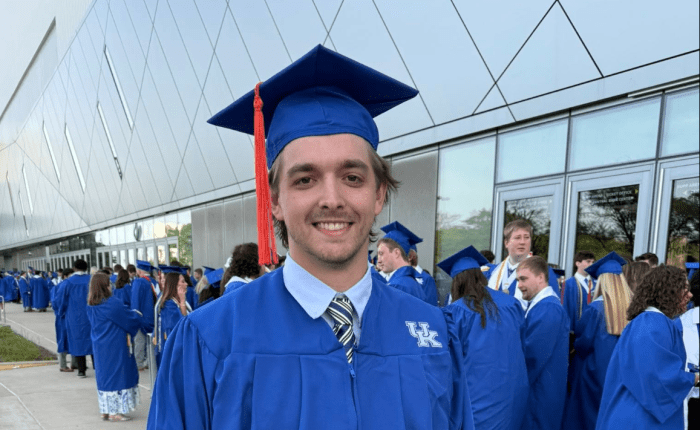
My nephew, Griffin Shively, walked across the stage at the University of Kentucky commencement ceremonies. Not only did he officially extend the growing line of Huang Family academic nerds, but he also followed in the hallowed footsteps of my dear old dad with a coveted engineering degree. Needless to say, the whole family is quite proud of Griffin.

There’s been a lot of talk over the years about the value of a college education—especially one from the University of Kentucky. As someone who spent eleven years chasing after a bachelor’s, master’s, and doctorate degree from my beloved alma mater, I feel uniquely qualified to set the record straight.

Remember when former Wake Forest center Olivier Sarr was considering a transfer to Kentucky? Demon Deacon head coach Steve Forbes started a firestorm by posing the question, “Why would you want to go to Wake for three years and then graduate from a place like Kentucky?”

Of course, Forbes was just trying to be cute…and I thought his quip was humorous. Unfortunately, it just wasn’t true.

During my decade in the military, I worked side by side with individuals with degrees from all different institutions of higher learning, and I’ll put my UK diplomas up against any of theirs. My education at the University of Kentucky served me as well or better than anything Wake Forest, Duke, or any of the Ivy League schools could dish up for that matter. When you throw in the value my parents received for in-state tuition, an argument could be made that I finished head and shoulders above any of those elitist snobs.

For athletes headed for professional glory, where they get their degrees really won’t matter. After all, they’ve got their sights set on that lucrative NBA or NFL contract. But for the rest of us—for the hardworking students and student-athletes who graduated this week—that University of Kentucky degree represents years of sweat equity and life-changing opportunity.

In the high-profile college sports of basketball and football, the value of an athletic scholarship frequently gets taken for granted. A half million dollars’ worth of room and board, books, top-flight medical care, academic counseling, first-class travel, fancy hotels, and gourmet food can easily get lost against the backdrop of potential money gained from name, image, and likeness. Throw in future earnings at the next level—and for someone like Otega Oweh and his rising basketball superstardom—the world truly is their oyster.

But for the rest of us regular folk, a college degree can make all the difference between financial success or failure. I don’t care how fast you can run or how high you can jump, student-athletes who remain serious about academic performance and grades will ultimately be rewarded seventy times seven.

Despite all the hullabaloo surrounding NIL and Pay-for-Play, my UK degrees remain my life’s most valuable assets.

So, congratulations are in order for all the UK students and student-athletes receiving their degrees during this academic year. They’re all in possession now of that treasured blue sheepskin.

Each and every one of them graduating from “a place like Kentucky.”

Well, I’ve got news for Coach Forbes. As one of my dental school instructors used to tell me, “It doesn’t matter which bus you ride, it’s the destination that’s important.”

We all punched our ticket on the Big Blue Bus. Griffin and I plan to keep riding for a long, long time.

Dr. John Huang is a retired orthodontist, military veteran, and award-winning author. Currently serving as a columnist for Nolan Group Media, he invites readers to follow him on social media @KYHuangs. For more whimsical and opinionated posts like this, be sure to check out his latest book project, “Whining for Posterity.” Explore his debut novel— “Name, Image, and Murder”—and all his books at https://www.Amazon.com/stores/Dr.-John-Huang/author/B092RKJBRD