Two Tournaments, Two Standards

Two Tournaments, Two Standards

(FT. WORTH, TX.) — I didn’t expect the food to be better. But it was. The people are friendlier, the hospitality warmer, and the administrators here at the Women’s NCAA Regional actually seem glad you showed up.

And for a moment, you start to wonder—why doesn’t this feel like a bigger deal?

And then the games start, and reality creeps back in.

It’s not one glaring flaw so much as a collection of small ones that add up. Fewer shuttles. Fewer people who can answer basic questions. Less coordination where it matters. It feels like an event that’s been carefully decorated but never fully constructed. The effort is obvious. The execution, not quite.

And then you look up during a marquee game—UConn Huskies women’s basketball taking the floor at Dickies Arena—and the arena is half full.

Half.

That’s the part you can’t dress up.

Now let me make this personal, because sometimes that’s the only way the truth really lands. At the men’s NCAA Tournament, I’m usually sitting two time zones away from the action, tucked into overflow media seating, craning my neck past a forest of national media and podcast setups just to follow the game. It’s crowded, chaotic, and, if I’m being honest, a little ridiculous.

Here? I’ve got a great seat on press row. Front and center. Clear sightlines to the Kentucky bench. Easy access. The kind of seat you’d think I’d been lobbying for my entire career.

And instead of feeling like I’ve finally arrived, it feels like I’ve stumbled into the answer.

There’s space here.

There’s always space here.

Here’s the deal. If the Kentucky Wildcats men’s basketball team makes a regional, it’s not just different—it’s overwhelming. For fans and media alike, there’s no room to breathe. Every quote becomes doctrine. Every lineup decision gets debated like it’s a constitutional amendment. A throwaway comment in November turns into a full-blown philosophical argument by March.

We don’t just cover Kentucky basketball—we consume it. Obsess over it. Sometimes completely lose perspective over it.

And hovering over it all are the national big shots in their tailored suits, nodding knowingly, speaking in definitive tones—as if they alone have cracked the code the rest of us are still trying to understand.

That’s not just interest. That’s obsession.

And standing here, it’s hard not to ask—what would this place look like if even a fraction of that energy showed up?

Because the product here at the women’s tournament isn’t inferior. Spend any real time watching and you’ll see execution, toughness, and pride that hold up just fine. The reporters here are grinding, too—asking thoughtful questions, writing real stories, doing the job the right way. In many cases, they’re better prepared than the swarm that descends on the men’s tournament.

But that’s also the point.

These are the reporters who cover women’s basketball all year.

Where is everybody else?

Where’s the overflow, the national swarm, the sense that this matters on the same scale?

It’s not here. And that absence speaks louder than any press release about “investment.”

Because even Geno Auriemma—who has every reason to sell this game—finally sounded fed up. He rattled off the three-point shooting numbers from across the tournament, numbers that make you wince, and asked the obvious question about how you’re supposed to sell that to a paying audience. But then he went a step further and pointed directly at the system—6 a.m. shootarounds, disjointed practice schedules, logistical decisions that seem to ignore how basketball is actually played.

In other words, we’re asking the game to grow while quietly putting it in position to look worse than it is.

And then there’s the format itself, which feels like it was designed in a conference room without ever being lived in. This 8-team, double-regional setup is simply too cramped. Too many teams, too many obligations, too little space for anything to breathe. Access gets diluted, attention gets split, and instead of building momentum, everything flattens out into one long blur.

To make matters worse, we drop it right on top of the men’s tournament and ask the same audience to care about both at the exact same time. That’s not competition—it’s self-sabotage. You’re putting your product on the same stage as a machine you already know dominates the conversation, then acting surprised when it gets drowned out.

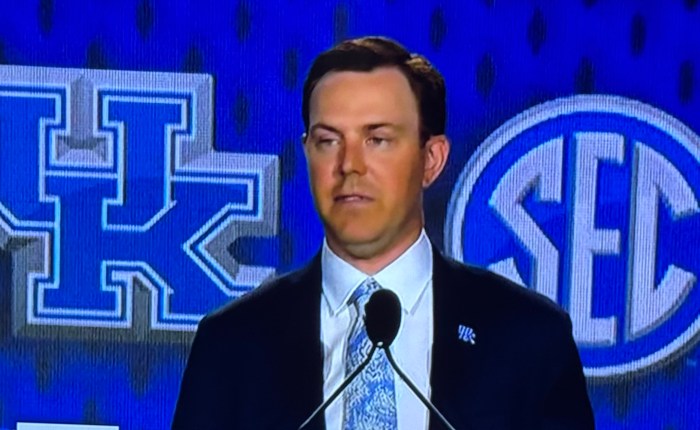
And then you hear Kenny Brooks.

Twenty-four years in the profession, and he’s still fighting for investment—not just financial, but emotional.

That word lingers, because it gets to the heart of what all of this really is.

You can renovate arenas. You can upgrade facilities. You can serve better food and print nicer credentials.

But you can’t manufacture emotional investment.

You either have it or you don’t.

Right now, we don’t. Not like we do on the men’s side, where we have almost too much of everything—too much attention, too much noise, too much manufactured urgency over games that sometimes don’t even deserve it.

Here with the women, it’s the opposite. Half-full arenas. Fewer voices. A quieter stage for a product that’s still being asked to prove itself while operating under conditions that make that task harder than it should be.

Same tournament. Same stakes. Two completely different realities.

One treated like a birthright.

The other treated like a suggestion.

And until that changes—until the investment, the execution, and, most importantly, the attention start pulling in the same direction—this gap isn’t going anywhere, no matter how good the basketball gets.

This article was originally written for distribution through Nolan Group Media publications.

Dr. John Huang is a retired orthodontist, military veteran, and award-winning author. Currently serving as a columnist for Nolan Group Media, he invites readers to follow him on social media @KYHuangs. Explore his latest, Whining for Posterity, and all his books at Amazon.
Is the Kentucky Standard Dead?

Is the Kentucky Standard Dead?

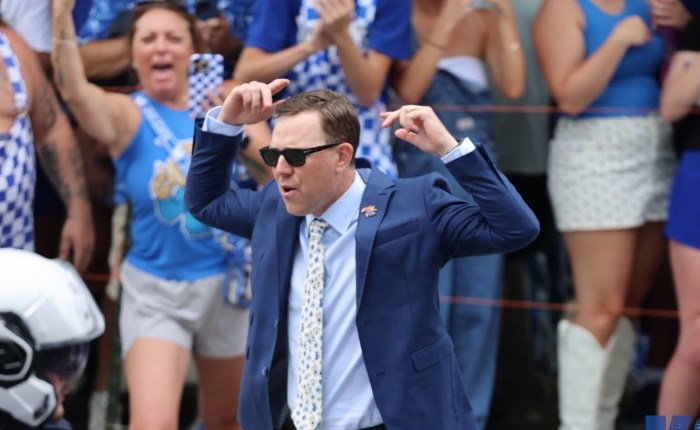
When Mark Pope was introduced as Kentucky’s head basketball coach in 2024, I’ll admit it—I bought in. After his introductory press conference, I felt sure the Cats had hired the right guy.

Not because I thought he had all the answers, but because he was one of us. He knew. He lived it. Pope didn’t need a roadmap or a glossary. He didn’t need someone whispering, “Hey, by the way, these people are a little intense.”

And in that moment, it felt like Kentucky zigged when everyone else was zagging. While the rest of college basketball sprinted toward collectives, contracts, and cap sheets, Kentucky leaned into something refreshingly old-fashioned—identity, tradition, the standard. It felt right. It felt pure. It felt…very 2012.

Which, as it turns out, might be the problem.

Because while Kentucky was busy rediscovering its soul, the rest of college basketball was busy monetizing theirs. And now here we are, trying to sell “there’s no place like this” in a marketplace where the first question isn’t “What makes this place special?” but “What’s the offer?”

Pope said it best—and maybe unintentionally most revealing—when he talked about finding guys who want to be at Kentucky because of what Kentucky is. That used to be the entire pitch. Now it’s the opening paragraph before the real conversation even starts.

Because the truth—the uncomfortable, no-one-wants-to-say-it-out-loud truth—is this: the name on the front of the jersey doesn’t close deals anymore. It might get you in the room. It might get you a nod of respect. It might even get you a nostalgic smile from a parent who remembers Jamal Mashburn. But it doesn’t win the bidding war.

And that’s where the Kentucky standard has taken its biggest hit. Not erased. Not destroyed. Just…neutralized. The playing field has leveled.

For decades, Kentucky walked into every recruiting battle holding a royal flush—history, exposure, fan base, NBA pipeline. Other programs were playing checkers while Kentucky played chess. Now everybody’s got chips. Some of them have more chips. And suddenly Kentucky’s greatest weapon—its tradition—feels less like a trump card and more like a really nice add-on feature.

“Comes with eight national championships and a passionate fan base.” Great. What else you got?

And here’s where the irony gets almost cruel. Mark Pope—the human embodiment of the Kentucky standard—arrived at the exact moment when the Kentucky standard stopped being a decisive advantage. Talk about bad timing.

In another era, Pope’s story was the recruiting pitch. “I sat in those seats. I wore that jersey. I won a title here.” That used to resonate like a sermon in Rupp. Now it sounds more like a really compelling documentary…that the kid might watch later, after he signs somewhere else.

That doesn’t make Pope wrong. It just means he’s arrived at exactly the wrong time. Because he’s trying to sell meaning in a marketplace driven by math.

And to be clear, there are still players who care about meaning—who want development, legacy, and the full Kentucky experience. But building a championship roster by relying on that group alone is like trying to win the Kentucky Derby on sentimentality. It’s admirable. It’s nostalgic. It’s probably not crossing the finish line first.

Now before you accuse me of shaking my fist at the NIL clouds, let me be clear—I’m not saying Kentucky is finished. This isn’t a funeral. It’s a reality check.

Because Kentucky still has everything you’d want if you were building a powerhouse from scratch: brand, resources, fan support, visibility. What it doesn’t have—at least not yet—is full alignment with how the modern game is actually evolving.

And that’s the part that’s readily fixable. But only if we stop pretending the old way still works on its own.

I’ll be honest—I went from excited to confident to…let’s just say cautiously skeptical. Not because I don’t believe in Pope, but because I’m not sure Kentucky, as an institution, has fully accepted what this era demands.

You can’t just be Kentucky anymore. You have to operate like everyone else AND be Kentucky.

That’s the new standard. It’s harder, less romantic, and a lot more expensive.

The good news? Kentucky can absolutely do it.

The bad news? It has to choose to do it.

Because if the strategy is still “they’ll come because this is Kentucky,” then we’re going to keep having the same conversations every March—just with slightly different opponents and slightly more frustration.

The Kentucky standard isn’t gone. It’s just no longer automatic. It doesn’t win on reputation anymore. It wins when it’s backed by execution, resources, and—yes—cold, hard cash.

Not exactly the stuff they put on the Rupp Arena banners.

But it’s the game now.

And if Kentucky embraces that—without losing its soul—then maybe, just maybe, those golden days aren’t gone.

They’re just waiting on Kentucky to catch up to the present.

Dr. John Huang is a retired orthodontist, military veteran, and award-winning author. Currently serving as a columnist for Nolan Group Media, he invites readers to follow him on social media @KYHuangs. Explore his latest, Whining for Posterity, and all his books at Amazon.
Bracketology for the Chronically Delusional

Bracketology for the Chronically Delusional

(LEXINGTON, KY.) – Every March, millions of Americans suddenly become experts on college basketball.

It starts innocently enough. We open the bracket. We glance at a few analytics charts. Maybe we listen to a podcast or two. Suddenly we’re throwing around phrases like adjusted offensive efficiency and KenPom rankings like we’re assistant coaches on Coach Mark Pope’s staff.

Then we submit our bracket.

Two hours later, a 13-seed beats a 4-seed and the whole thing looks like it was filled out by my Boston Terrier walking across the keyboard.

And yet every year we try again. Hope springs eternal—especially in Lexington, where Kentucky fans used to treat March Madness the way British royalty treats coronations: haughty, entitled, and patronizingly supercilious.

Back then, filling out a bracket meant one thing: figuring out who Kentucky would beat in the Final Four.

Now?

Now we’re a 7-seed squinting nervously at Santa Clara, while national analysts talk about the Wildcats the way zoologists talk about endangered species.

“Interesting program… historically dominant… but rarely seen in the wild anymore.”

Nothing humbles a fan base quite like hearing its team described in the past tense.

Still, the beauty of March Madness is that nobody really knows anything. Not the analysts. Not the algorithms. And certainly not the guy writing a blog called Huang’s Whinings.

So let’s dive into this year’s bracket and pretend we do.

The East: Blueblood Traffic Jam

The East region looks like a family reunion of college basketball aristocracy.

Duke. Kansas. UConn. Michigan State.

If you’ve been watching the sport for more than five minutes, you’ve probably seen all of them cutting down nets at some point.

Duke sits at the top of the region and the analytics people absolutely love them. Their efficiency numbers are ridiculous. Their roster is loaded. Their freshmen probably have NBA agents lurking somewhere in the parking lot already.

Which means they’re a trendy pick to win it all.

That’s usually the moment Duke fans should start sweating.

Even with a couple of injuries to key players, the Blue Devils probably survive the early rounds, although I do like 12-seed Northern Iowa knocking off St. John’s. Every tournament needs one mid-major that shoots like the rim is the size of a hula hoop. And Rick Pitino needs his ego deflated before his head expands another inch.

Kansas lurks. UConn lurks. But eventually talent wins.

Prediction: Duke survives the East.

The West: Where Brackets Go to Die

Arizona headlines the West region, and on paper the Wildcats look terrific.

Which immediately makes me suspicious.

Because the West also features Gonzaga, Purdue, and about six teams capable of blowing up America’s office pools.

First upset alert: 14-seed Kennesaw State over Gonzaga.

Every March there’s a moment when a national power suddenly realizes the other team’s guards are faster and hungrier. This could be that moment.

Then there’s 10-seed Missouri knocking off Miami, which I’m predicting purely because Dennis Gates looks so good in a suit.

Arizona probably survives the chaos, but not before giving their fans a mild cardiac episode.

Prediction: Arizona wins the West.

The Midwest: Kentucky’s Nervous Corner

Now we arrive at the portion of the bracket that has Kentucky fans clutching their bourbon glasses and rosary beads simultaneously.

Kentucky vs. Santa Clara.

Twenty years ago, that matchup would have produced a polite chuckle in Lexington. Now every national analyst seems to be whispering the same sentence:

“Santa Clara is a very dangerous mid-major.”

Translation: Kentucky better not mess this up. Santa Clara shoots well, moves the ball, and has absolutely nothing to lose — which makes them exactly the type of team that ruins blueblood reputations.

Still, I think Kentucky escapes the first round.

Not comfortably.

Not convincingly.

But enough.

After that, things get tricky.

I’ve got 11-seed SMU upsetting Tennessee, mostly because Tennessee never makes it past the Elite Eight. This year—to the delight of BBN—the Volunteers go out in the first round. We can all dream, can’t we?

Contrary to popular opinion, Kentucky’s real problem isn’t Santa Clara or Iowa State or Virgina for that matter. It’s Michigan. The Wolverines are balanced, disciplined, and unfortunately very good.

Prediction: Michigan beats Kentucky in the Elite Eight and wins the Midwest.

If you’re laughing hysterically at that prediction, I suggest referring back to the title of this blog.

The South: The Rock Fight Region

Florida sits atop this region as the defending national champion. But Houston is lurking like the final boss in a video game. The Cougars defend everything, rebound everything, and turn games into ugly wrestling matches where nobody scores for three minutes at a time.

That style travels well in March. And everybody suddenly loves Kelvin Sampson. “Forgive and forget” they say.

Meanwhile, I like 12-seed McNeese over Vanderbilt as another early upset. Guards win tournament games, and McNeese has them.

Eventually, however, the region comes down to Florida and Houston. And I’m taking the Cougars to ruin Todd Golden’s repeat.

Prediction: Houston wins the South.

The Final Four

After two weeks of buzzer beaters, busted brackets, and emotional trauma, we arrive in Indianapolis with four survivors:

  • Duke
  • Arizona
  • Michigan
  • Houston

Michigan edges Arizona in a tight one while Duke overwhelms Houston with too much Cameron Boozer.

As much as I hate to say it, Duke takes down Michigan for their sixth national championship.

Prediction: Duke wins the national championship.

Final Thought

Of course, everything I just wrote will probably be wrong by Thursday afternoon. A 13-seed will shock someone. A mid-major will become America’s darling. And somewhere in America a Kentucky fan will stare at their destroyed bracket and mutter the same phrase we’ve all said for decades:

“Next year… we’ll do much better.”

Which, if you’re a Kentucky fan, isn’t just optimism.

It’s tradition.

And occasionally… it’s delusion.

This article was originally written for distribution through Nolan Group Media publications.

Dr. John Huang is a retired orthodontist, military veteran, and award-winning author. Currently serving as a columnist for Nolan Group Media, he invites readers to follow him on social media @KYHuangs. Explore his latest, Whining for Posterity, and all his books at Amazon.
We Finally Got No. 9

We Finally Got No. 9

(LEXINGTON, KY.) – Since the beginning of last summer, Kentucky fans have been speaking reverently about the number nine.

Not the number nine as in a seed line. Not the number nine as in a placement somewhere in the middle of the SEC pack. No, this was the other nine—the one that was supposed to be hanging up in the rafters of Rupp Arena. The mythical, glorious ninth national championship Big Blue Nation has been chasing ever since 2012.

Instead, the Wildcats are headed to Nashville this week as the No. 9 seed in the SEC Tournament.

Nine—not quite the number anyone had in mind.

And they’ll begin their postseason journey at the ungodly hour of 12:30 p.m. Wednesday, which is the kind of tip time usually reserved for accountants on their lunch break or retired orthodontists dribbling soup down the sides of their mouth.

In other words, not exactly prime time in the Bluegrass.

It’s also the first time in program history Kentucky has entered the SEC Tournament as a nine seed. History is still being made in Lexington. Just not the kind they used to celebrate.

But before we rush to judgment—and Big Blue Nation is never in a rush to judge anything—let’s consider the great universal balm of sports misery:

What if.

What if Kentucky had simply stayed healthy?

Basketball seasons tend to unravel when the trainer’s office starts looking like rush hour at the DMV. Kentucky lost Jaland Lowe to a shoulder, Kam Williams to a foot, while Jayden Quaintance’s ACL is apparently still swelling as we speak.

Take away three of the top players on just about any roster in America and see how that works out. The answer, more often than not, looks suspiciously like a No. 9 seed playing Wednesday afternoon.

What if Kentucky didn’t spend half the season digging out of first-half holes?

Against high-major opponents this year, the Wildcats have trailed at halftime in 15 of 24 games. That’s not a strategy so much as a lifestyle.

Falling behind by double digits early has become a recurring theme, followed by spirited second-half rallies that often come up just short—like a movie where the hero saves the day but still misses out on the girl he’s chasing.

What if Rupp Arena were still Rupp Arena?

Once upon a time, Missouri and Georgia walking into Lexington meant exactly one thing: an opponent shaking in their boots resulting in a comfortable twenty-point Kentucky win and fans planning their postgame dinner reservations by halftime.

This season, those games turned into home losses. Missouri. Georgia. For God’s sake. The Wildcats used to treat Rupp Arena like a fortress. Now it’s starting to feel more like a welcoming station—pillaged by traditional SEC doormats and also-rans.

Kentucky lost three home games last season. They lost four this year. Times change.

What if Trent Noah rediscovered his jumper—and Mo Dioubate discovered one in the first place?

Noah arrived in Lexington with the reputation of a marksman. At times this season, his patented jumper has been missing in action. He didn’t hit a single field goal in the entire month of February.

Dioubate, meanwhile, plays basketball like a bull in a china shop. You cannot fault the effort. The motor never stops. But when he decides he’s going to the basket, he is absolutely going to the basket. Whether the ball goes with him is sometimes a secondary consideration.

And yet here we are.

Kentucky finished the regular season 19–12 overall and 10–8 in the SEC, which might sound respectable until you remember where this program lives historically. It’s only the fourth time since 1990 the Wildcats have finished with fewer than 20 regular-season wins.

For most programs, 19 victories is a solid year. At Kentucky, it feels like a census report documenting population decline.

And the broader numbers paint an even darker picture. The Wildcats haven’t won the SEC regular season in six years. They haven’t won the SEC Tournament in seven years. Since the COVID shutdown, Kentucky has managed just four total postseason wins. Humiliating losses to Saint Peter’s and Oakland during that period simply add fuel to the fire.

For a program that once measured success in Final Fours and national titles, those realities land with a thud. The last national championship came in 2012. The last Final Four appearance was in 2015. Those seasons now feel like old photographs from a happier time—still vivid, but increasingly distant and fading fast.

And yet Big Blue Nation remains what it has always been: loud, passionate, and emotionally invested to an unhealthy degree. Some fans are still hopeful. They look at the injuries, the close losses, the flashes of brilliance, and they’re convinced Mark Pope is building something that just needs a little time to mature. March has a funny way of rewriting stories. Kentucky has lived that miracle before. Fans here know better than anyone how quickly a season can pivot.

Others in BBN are far less patient. A growing segment of the fan base already sounds like it’s preparing to run Pope out of town, hammering home the uncomfortable reality of what the numbers say: the losses at Rupp, the missed opportunities, the long droughts between championships and Final Fours that once seemed automatic, and—most importantly—the lack of elite recruits coming to the rescue.

That’s the strange tension surrounding this team as it heads to Nashville as the No. 9 seed—an outcome nobody predicted when fans were dreaming about the other No. 9 last summer.

Maybe the Wildcats catch fire.

Maybe the shots start falling.

Maybe the defense locks in.

Maybe Wednesday at 12:30 becomes the unlikely first chapter in the wonderful story Mark Pope keeps promising.

Stranger things have happened in March.

…Just maybe not starting from nine.

This article was originally written for distribution through Nolan Group Media publications.

Dr. John Huang is a retired orthodontist, military veteran, and award-winning author. He currently serves as a columnist for Nolan Group Media and invites readers to follow him on social media @KYHuangs. His latest book is Whining For Posterity, available on Amazon.

Kentucky’s March Fate: Banner or Bust?

Kentucky’s March Fate: Banner or Bust?

(LEXINGTON, Ky.) – “I’M DONE WITH UK BASKETBALL!”

Not really—I’ve said that nearly every time Kentucky has pulled a head-scratching stinker this year. And that 86-78 loss to Georgia last night at Rupp Arena stunk more than most.

What I’m really saying is this: I have no idea what to make of this Kentucky basketball team. That’s not analysis. That’s confession. Most of you are likely nodding your head in agreement.

On some nights, Mark Pope’s squad looks capable of beating anyone in America. The ball hums, the spacing makes sense, the defense locks in, and for stretches you can see a version of this team that nobody would volunteer to play in March. On other nights, they resemble a group still trying to figure out who sits where on the team bus. The inconsistency isn’t subtle. It’s jarring.

And yet, before we dismiss this season outright, we have to acknowledge the elephant in the training room: injuries to three key players. You can argue about rotations, execution, and late-game poise all you want—and those conversations are fair—but losing that kind of continuity matters. Chemistry is fragile. Roles shift. Confidence wavers. In a league like the SEC, that margin is the difference between a résumé-builder and the aforementioned head-scratcher.

Still, context doesn’t eliminate expectations. This is Kentucky. Nobody hangs banners for “would have been better if healthy.”

So let’s skip the short-term predictions and talk about the season-ending ceiling and floor.

If this team develops any consistent rhythm in the remaining five regular-season games, the ceiling is real. If they run the table down the stretch and make a serious run in the SEC Tournament, a 3 or 4 seed in the NCAA Tournament is absolutely within reach. That’s not fan fiction; it’s math combined with potential. The league is still strong. They’ve got enough quality wins on their résumé. When this team shares the ball and defends with purpose, the flashes are undeniable. You can see a version of them that could string together six good halves in March and suddenly everyone is asking, “Where did this come from?”

We’ve already seen that movie before in Lexington a couple of times this year.

The floor, however, is equally sobering. If the rotation questions continue and confidence erodes instead of builds, it is not unthinkable that this team could stumble badly enough to be sweating on Selection Sunday. Lose out, bow out early in the SEC Tournament, and the committee won’t care about what might have been. Momentum matters in February and March. Narrative matters. And there are enough hungry teams across the country ready to grab at-large spots.

That’s the emotional whiplash from the roller coaster we’ve all been riding. This team doesn’t live in comfortable middle ground. It oscillates between intriguing and alarming.

If we’re being honest—and that’s always a dangerous exercise in Big Blue Nation—the most probable outcome sits somewhere between those extremes. Win a few, drop a few, make the NCAA Tournament as a 7–10 seed, advance once, maybe twice. Perhaps second-round exits in both tournaments. Objectively, that’s not catastrophic. Plenty of programs would celebrate it.

Here at ground zero? It would feel hollow.

Kentucky basketball is not measured in participation trophies. It’s measured in the second weekend and beyond. It’s measured in whether your April calendar stays busy or whether you’re mowing your grass and walking your dog. A second-round loss might not qualify as a disaster on paper, but emotionally, in this fan base, it would land that way. If we’re truly honest with ourselves, it would feel like Armageddon.

This team has shown just enough to keep belief alive and just little enough to keep anxiety simmering. Their second-half comebacks have kept many cardiologists on speed dial. They can defend with ferocity for ten minutes and then lose focus for three critical possessions. They can move the ball beautifully and then revert to isolation when things tighten. They can look connected—until they don’t.

That unpredictability is exhausting, but it’s also why we haven’t given up on them. The upside hasn’t disappeared. It just hasn’t stayed long enough.

The truth is, we don’t know what will transpire. That’s uncomfortable in a program accustomed to plotting a straight line to March glory. There is no straight line this year—hasn’t really been for the past decade. There is, however, still possibility.

The ceiling is high enough to make you lean forward. The floor is low enough to make you brace yourself for impact. It’s maddening!

If I’m wrong, I’ll happily admit it. Run the table. Stay healthy. Win the SEC Tournament. Earn that 3-seed. Make all this hand-wringing look foolish. There would be no greater pleasure than writing the “I underestimated them” column in late March.

Until then, we sit in the tension—hopeful, skeptical, invested. In other words, exactly where Kentucky basketball always seems to place us when we care the most.

This article was originally written for distribution through Nolan Group Media publications.

Dr. John Huang is a retired orthodontist, military veteran, and award-winning author. Currently serving as a columnist for Nolan Group Media, he invites readers to follow him on social media @KYHuangs. Explore his latest, Whining For Posterity, and all his books at Amazon.
Storm the Court: It isn’t Disrespect—It’s Passion

Storm the Court: It isn’t Disrespect—It’s Passion

North Carolina—North Carolina—stormed the court the other night after beating Duke.

Let that marinate for a second.

A blue blood known as the wine and cheese crowd decided, collectively, “You know what? This matters.” And down they came. Elbows flying, phones held high, their bodies crashing onto the hallowed hardwood of the Dean Dome.

Meanwhile, back in Lexington, we clutched our pearls.

After all, Kentucky fans don’t storm the court at Rupp Arena. We don’t do that and will never do that. We are above such things. Our fan base is dignified, regal. We cheer, maybe occasionally stand, clap loudly, then file out like we’ve just finished a tasteful tour at The Prado.

And I’m here to say: BULLSH*T!

Storming the court isn’t beneath us—but pretending we’re above passion is.

Let’s get the obvious disclaimer out of the way before someone calls The Hammer: yes, people can get hurt. That matters. Player safety matters. Fan safety matters. Nobody wants a feel-good moment to turn into a trip to the ER. Those concerns are real, legitimate, and should be addressed with planning, security, and some common sense.

To be clear, I’m not advocating violating arena policies or putting players, officials, or fans at risk.

But court storming—when done right—isn’t chaos. It’s communion.

It’s the physical manifestation of “you had to be there.” It’s the release valve for years—sometimes decades—of pent-up emotion, expectation, and investment. It’s not about disrespecting the opponent; it’s about honoring the moment. It says this wasn’t just another Tuesday night—it was this special night.

As a college basketball blue blood, Kentucky prides itself on atmosphere, tradition, and passion. It’s hypocritical, then, that fans act offended when passion shows up spontaneously.

Here’s the dirty little secret: court storming actually helps programs.

It helps recruiting. Teenagers notice. Recruits don’t just watch games muted on their iPads—they feel the arena vibes. A stormed court tells a 17-year-old, “These people care.” It tells him or her, “If you hit a shot here, you will be remembered.” That matters in a world where players have choices and options and Instagram.

Likewise, court storming helps home-court advantage. Officials and opponents alike feel it. A building that looks capable of erupting at any moment is not a neutral environment—it’s easily five extra points on the final scoreboard tally.

And most importantly, court storming helps remind us why we fell in love with Kentucky basketball in the first place. It’s one of the last remaining unscripted moments defining our unbridled passion. No corporate sponsor. No halftime act. Just raw humanity spilling over the endlines in a tidal wave of pure joy.

“We act like we’ve been here before,” we say. Fine. But that phrase has become our emotional straightjacket.

Kentucky fans know this—because we lived it. Back in 1990, Rupp Arena should have exploded when the “Unforgettables” shocked Shaquille O’Neal’s LSU squad. That was a moment of defiance. The floor should have felt it.

And if there was ever a moment begging for spontaneous human eruption, it was Anthony Davis rising up to block John Henson’s last-second jumper in that memorable win over North Carolina. You remember where you were. You remember the gasp. That wasn’t just a defensive play—it was a coronation, one of the most iconic moments in Rupp Arena history. The students should have been pouring over the scorer’s table like water finding gravity.

You see, passion like that doesn’t cheapen tradition—it fuels it. All those banners didn’t hang themselves. They were born from moments when people lost their minds just a little. Big Blue Nation is passionate. We’re loud, emotional, and invested to an occasionally unhealthy degree. That’s our brand. Always has been.

And if moments like that have mattered enough to generations of Kentucky fans before us, then surely we can unclench long enough to admit that joy doesn’t make us small.

It makes us human.

Storm the court? Not every night. Not recklessly. Not without thought for safety.

But when the moment calls for it—when history taps you on the shoulder and says this one matters—don’t stand there pretending you’re too important to feel it.

Next time that happens at Rupp Arena, don’t be afraid to show you care.

Dr. John Huang is a retired orthodontist, military veteran, and award-winning author. He currently serves as a columnist for Nolan Group Media and invites readers to follow him on social media @KYHuangs. His latest book is Whining For Posterity, available on Amazon. The views expressed are his own.

Don’t Quit: A Kentucky Basketball Parable

Don’t Quit: A Kentucky Basketball Parable

Photo Credit: Chet White/UK Athletics

(LEXINGTON, Ky.) – Last night, during the first half of the Kentucky–LSU game, I learned something important about myself.

I am apparently one missed layup away from emotional bankruptcy.

When the Kentucky Wildcats fell behind the LSU Tigers by 18 points, social media did what social media always does: it declared the season dead, the coach clueless, and the program in urgent need of a full historical makeover.

The Cats weren’t just losing. According to X, this team had never played basketball together. Ever. Dribbling was new, passing was theoretical, and shotmaking was a distant rumor.

Coach Mark Pope went from “confused” to “fraudulent” in roughly six possessions. I saw posts that looked less like basketball analysis and more like grief counseling sessions—except no one wanted counseling. They wanted Pope’s head on a platter.

And then something deeply inconvenient happened.

Kentucky didn’t quit. They started making a run, chipping away at the lead.

The misfit parts didn’t suddenly become perfect. They didn’t magically turn into the ’96 “Untouchables.” They just… kept playing. Kept guarding. Kept taking shots that started finding their targets. Kept believing the game wasn’t over just because the internet said it was.

Slowly, painfully, improbably, the deficit continued to shrink. Hope tiptoed back in like a thief in the night. And just when everyone had emotionally hedged their bets, Malachi Moreno hit a buzzer-beater that flipped despair into delirium in one glorious, heart-stopping moment.

Same team, same coach, same players—but with a vastly different ending.

That’s when it hit me—this wasn’t just a basketball game. This was a metaphor for life—a sermon illustration delivered by way of a jump shot.

We fans are spectacularly bad at patience. We see a bad half and assume a bad season. We experience a bad season and assume a bad future. We mistake “right now” for “forever.” We confuse temporary struggle with eternal failure.

And when things don’t go according to plan, we rush to assign blame instead of framing perspective.

Spiritually speaking, we do this all the time.

We stumble out of the gate early—financially, relationally, emotionally—and decide the game is over. We stop running our offense. We quit boxing out. We panic and doom-scroll our way into despair. We forget that growth is rarely linear and redemption almost never arrives on our own schedule.

Last night, Kentucky reminded us of something simple and profound: momentum can change on a dime.

One stop. One run. One decision not to quit.

Twenty-four hours ago, Kentucky was being slotted into last place hypotheticals and tournament anxiety threads. This morning? They’re within a game of first place. Hope has returned. Faith in Pope is back. The same fans who were writing eulogies are now quoting analytics again.

Here’s the crazy thing. Lose in Knoxville on Saturday, and you’ll see the same cycle repeated.

The lesson isn’t “never criticize.” Believe me—I’ve made a second career out of constructive whining. The lesson is don’t confuse adversity with identity. Don’t bury something just because it’s struggling. And don’t assume God—or basketball seasons—are finished when the scoreboard looks ugly at halftime.

Whatever your current struggles—whether health, finances, or relationships—just persevere. Reach out for help when needed, hug your dog, and never quit.

Sometimes the miracle isn’t the buzzer-beater.

Sometimes the miracle is just staying in the game long enough for it to matter—because halftime is a terrible time to quit.

“Consider it pure joy, my brothers and sisters, whenever you face trials of many kinds, because you know that the testing of your faith produces perseverance. Let perseverance finish its work so that you may be mature and complete, not lacking anything.” –James 1:2-4

Dr. John Huang is a retired orthodontist, military veteran, and award-winning author. Currently serving as a columnist for Nolan Group Media, he invites readers to follow him on social media @KYHuangs. Explore his latest, Whining For Posterity, and all his books at Amazon.
Discover his next scheduled teaching event here: Man Up – Men’s Ministry Retreat – St. Luke Church | Lexington, KY

Pope’s Report Card is in—and it’s Telling

Pope’s Report Card is in—and it’s Telling

(LEXINGTON, Ky). – At the halfway point of the college basketball regular season, the midterm grades invariably come rolling in.

Recently, Isaac Trotter of CBS Sports essentially handed Mark Pope a midterm grade. His assessment wasn’t cruel or dramatic. It was purely academic.

A “D.”

Not dismissal or detention, but the kind of grade that comes with a quiet warning: You’re capable of more than this.

Trotter’s core point was simple. Pope understands Kentucky basketball. He knows the standard. He knows this isn’t it. And yet, nearly two seasons in, Kentucky is hovering around average on the floor while swimming in resources. The Sweet 16 run last year bought a lot of goodwill. This year’s results are washing away all the equity.

If this were a class, Kentucky isn’t failing—but it’s not honoring the syllabus.

Permit me to continue with this academic theme.

I was an A student for most of my life. Straight A’s through college and dental school. Not because I was the smartest in the room—but because I understood what my parents expected of me. Hence, it’s thoroughly frustrating watching someone clearly intelligent like Mark Pope struggle to translate knowledge into performance.

Pope is smart. That’s not debatable. He’s articulate, reflective, and overly analytical. He speaks like someone who actually read the assignment.

But here’s the disconnect: intelligence alone doesn’t earn grades. Outcomes do. Results matter.

Pope has acknowledged he’s considering “dumbing down” the offense for his players. In academic terms, that’s the moment a gifted professor realizes the class isn’t tracking and lowers the material. Sometimes that’s compassionate. Sometimes necessary. But at a place like Kentucky, it’s also risky.

Kentucky basketball is not remedial coursework.

When I asked Pope about the “D” grade—give him credit—he didn’t argue the point. In fact, he leaned into it. He acknowledged that Kentucky isn’t meeting expectations. Not emotionally or philosophically—but factually. An 0–2 start in SEC play is an objective data point.

“If you told me the Kentucky coach started 0–2 in the SEC, a ‘D’ might be generous,” he stated bluntly.

That matters because Pope didn’t blame fans. He didn’t hide behind context. He didn’t suggest the grading was unfair. He framed it like how sports—and academics—actually work: you earn your score.

What Pope articulated well was this distinction: emotions can be messy, but outcomes aren’t. You don’t debate the final score. You don’t negotiate the grade. You own it.

While all that’s well and good for a season flirting with disaster, it’s remains the right thing to say. Any good coach can have an outlier of a bad year as far as their won/loss record.

Where concern still lingers is in the larger picture Trotter raised—and Pope didn’t fully address. Kentucky’s issues aren’t limited to a slow SEC start. The recruiting trail has gone quiet at a time when elite freshmen are choosing other destinations. Kentucky, historically, doesn’t miss on all of them.

In academic terms, that’s when top students stop enrolling because they’re unsure the program is still elite. In their minds, it’s no longer about nostalgia. It’s about trajectory.

Pope talked about not running from the “messy middle.” About digging in. About believing the ending will be good—but only if you acknowledge the poor start.

That’s encouraging rhetoric. Necessary rhetoric.

But at Kentucky, belief is never the final exam.

Results are.

This program doesn’t grade on effort, intent, or intelligence. It grades on preparation, clarity, and execution. You don’t grade on a curve in this class. You meet the standard—or you repeat the course.

Mark Pope clearly understands that.

The question now is whether understanding will translate into improvement—on the floor, on the recruiting trail, and ultimately on the transcript that matters most.

Because at Kentucky, a “D” isn’t destiny. It’s a dire warning.

Especially when the only acceptable grade is an “A.”

This article was originally written for distribution through Nolan Group Media publications.

Dr. John Huang is a retired orthodontist, military veteran, and award-winning author. Currently serving as a columnist for Nolan Group Media, he invites readers to follow him on social media @KYHuangs. Explore his latest, Whining For Posterity, and all his books at Amazon.
This Ain’t No Philosophy Seminar

This Ain’t No Philosophy Seminar

(LEXINGTON, Ky.) – When coaches are under fire, they usually don’t speak in riddles—they rant.

Jim Mora famously barked, “Playoffs?! Don’t talk about playoffs!”
Herm Edwards simplified the profession to its core: “You play to win the game.”
Mike Gundy, veins popping, yelled, “I’m a man! I’m 40!”

Those quotes didn’t require interpretation. They didn’t need a decoder ring. They landed because frustration stripped the message down to bone.

Which is why Mark Pope’s recent quote on his weekly coach’s show left so many Kentucky fans scratching their heads like they’d accidentally tuned into a philosophy podcast.

“What’s really important for us as coaches and as teammates is understanding the story that each of our guys and each member of our staff is telling themselves about what we’re going through right now…”

This is not a rant. It’s not normal coach-speak. It sounds more like a narrative symposium held in Ballroom A at the downtown Hyatt.

Before we dismiss it entirely—or turn it into a meme—let me explain why I might be uniquely qualified to translate what Pope was trying to say.

I spent decades as an orthodontist listening to people describe pain that wasn’t always where they thought it was. Patients told elaborate stories about one tooth when the real issue lived somewhere else entirely. My job wasn’t to validate the story. It was to identify the truth underneath it and fix the problem—whether the patient liked the diagnosis or not.

Coaching, at its best, works the same way.

So when Pope talks about “the story each guy is telling himself,” he’s really saying this:

Players are processing adversity differently. Some think it’s bad luck. Some think it’s their fault. Some think the system isn’t for them. Some think they should be playing more.

That part is reasonable, human, and accurate.

Then Pope says he wants to bring those stories back to two things: a point of truth and a point of common understanding.

Translation:
“We need everyone to stop lying to themselves—and agree on what we’re actually bad at.”

Still reasonable. Still logical. But strangely phrased for Kentucky basketball. It feels like Phil Jackson’s Zen without the structure—philosophy without the scoreboard support to justify it.

And that’s why it landed sideways.

Kentucky fans don’t need help understanding the story when the evidence is screaming:

• Slow starts
• Inconsistent effort
• Poor perimeter defense
• Questionable preparation

When you’ve had nearly two weeks to prepare and still fall behind by 21 points, the story doesn’t matter nearly as much as the symptoms. The frustration isn’t that Pope is wrong.

It’s that he’s explaining instead of commanding. At Kentucky, explanation often sounds like excuse—even when it’s not intended that way.

Fans are conditioned to expect blunt clarity in moments like this. Mora didn’t unpack emotional narratives. Edwards didn’t ask players how losing made them feel. Gundy didn’t workshop his truth.

They owned it.

That doesn’t mean Pope lacks intelligence or care. In fact, this quote suggests the opposite—he’s thoughtful, introspective, and trying to understand the human side of his team.

But this job isn’t graded on thoughtfulness. It’s graded on readiness—and ultimately wins and championships.

If every player is telling himself a different story, that’s not a literary problem. It’s a leadership one. Great programs don’t require narrative alignment sessions. They create roles so clear that internal monologues don’t matter.

At Kentucky, the story is supposed to be singular:

Defend.
Compete.
Earn minutes.
Win.

No subplots. No word-salad narratives from the coach. Kentucky basketball doesn’t need a narrator.

Pope’s quote might sound thoughtful in June. It sounds confusing in January.

And in January, Big Blue Nation is longing for something refreshingly old-school:

Less parable.
More accountability.

Let’s hope we get it.

This article was originally written for distribution through Nolan Group Media publications.

Dr. John Huang is a retired orthodontist, military veteran, and award-winning author. Currently serving as a columnist for Nolan Group Media, he invites readers to follow him on social media @KYHuangs. Explore his latest, Whining For Posterity, and all his books at Amazon.