An Oak of Righteousness

An Oak of Righteousness

“But the wisdom that comes from heaven is first of all pure; then peace-loving, considerate, submissive, full of mercy and good fruit, impartial and sincere.” – James 3:17

You can read Dr. Tom Cooper’s obituary if you want the facts. https://www.milwardfuneral.com/obituaries/Dr-Thomas-M-Cooper?obId=46963575

You’ll learn where he studied, what he accomplished, how many students he taught, how many lives he touched in the official, measurable ways that look good on paper and sound impressive when read aloud. All of it is true. All of it matters.

But none of it explains why his passing yesterday saddened me in ways that words simply can’t adequately express.

Dr. Cooper was one of my mentors. In dental school, yes. But also in Sunday School, which, as it turns out, may have been the more important classroom. In both settings, he did something meaningful: he paid attention to people. Not just the impressive ones, nor the loud ones, nor the future rising stars—but to every ordinary Joe like me who showed up wanting to learn.

In dental school, it’s easy to think teaching is about brilliance—how much you know, how fast you can correct someone, how efficiently you can expose ignorance. Dr. Cooper never taught that way. He had an unhurried confidence, the kind that didn’t need to prove anything. When he spoke, you leaned in—not because he demanded attention, but because you were curious about what he had to say.

He didn’t just teach dentistry. He taught students.

And then there was Sunday School—where he taught life.

Long before I ever stood in front of a class or a congregation, I watched him do something deceptively simple and profoundly wise. He didn’t teach the lesson he wanted to teach. He taught the lesson we were ready to hear.

One Sunday, probably sensing my early, unpolished enthusiasm for teaching, he gave me a piece of advice that has followed me through every single speaking engagement—whether radio broadcast, packed classroom, or that awkward circle of folding chairs when only two people showed up:

“Take the class where they want to take you.”

It sounds almost too gentle to be revolutionary. But it is.

What he meant was this: teaching isn’t about dragging people to where you think they should be. It’s about honoring where they already are. It’s about listening long enough to hear the questions beneath the questions. It’s about understanding that people don’t need your brilliance nearly as much as they need your presence.

That lesson shaped me more than any syllabus ever could.

It kept me from preaching at people when I should have been walking with them.
It kept me from filling silence when I should have been letting it speak.
It kept me from confusing authority with influence.

Dr. Cooper never chased the spotlight. He didn’t need it. His faith was sturdy, quiet, and deeply rooted. The Bible calls that an “oak of righteousness, a planting of the Lord for the display of His splendor.” That phrase fits him perfectly—not flashy, not brittle, not swayed by every new wind of opinion.

Just solid. You leaned on Dr. Cooper without realizing it. And only when he’s gone do you feel how much weight he was carrying for others.

I don’t remember every lesson he taught. I don’t remember every Scripture he unpacked or every clinical pearl he dropped in passing. But I remember how he made me feel: seen, capable, invited.

That’s the kind of teaching that lasts.

If there’s a classroom in heaven, I suspect he’s there already, smiling patiently, waiting for the rest of us to catch up. And if I’m lucky, when I finally walk in, he’ll give me that same gentle reminder one more time:

“Take the class where they want to take you.”

Because that’s where the real learning happens.

Dr. John Huang is a retired orthodontist, military veteran, and award-winning author. Currently serving as a columnist for Nolan Group Media, he invites readers to follow him on social media @KYHuangs. Explore his latest, Whining For Posterity, and all his books at Amazon.
Discover his next scheduled teaching event here: Man Up – Men’s Ministry Retreat – St. Luke Church | Lexington, KY

Don’t Quit: A Kentucky Basketball Parable

Don’t Quit: A Kentucky Basketball Parable

Photo Credit: Chet White/UK Athletics

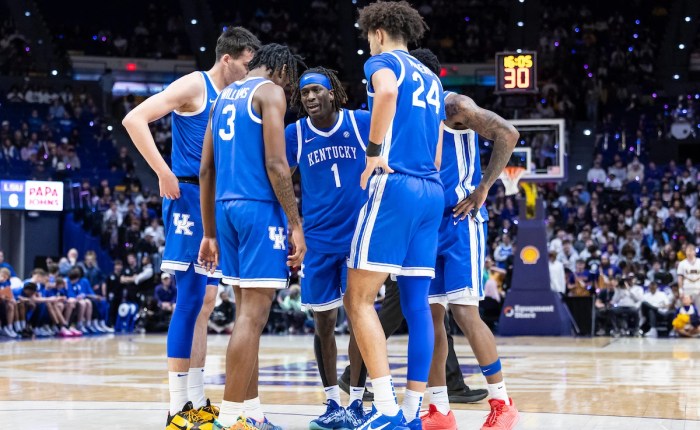
(LEXINGTON, Ky.) – Last night, during the first half of the Kentucky–LSU game, I learned something important about myself.

I am apparently one missed layup away from emotional bankruptcy.

When the Kentucky Wildcats fell behind the LSU Tigers by 18 points, social media did what social media always does: it declared the season dead, the coach clueless, and the program in urgent need of a full historical makeover.

The Cats weren’t just losing. According to X, this team had never played basketball together. Ever. Dribbling was new, passing was theoretical, and shotmaking was a distant rumor.

Coach Mark Pope went from “confused” to “fraudulent” in roughly six possessions. I saw posts that looked less like basketball analysis and more like grief counseling sessions—except no one wanted counseling. They wanted Pope’s head on a platter.

And then something deeply inconvenient happened.

Kentucky didn’t quit. They started making a run, chipping away at the lead.

The misfit parts didn’t suddenly become perfect. They didn’t magically turn into the ’96 “Untouchables.” They just… kept playing. Kept guarding. Kept taking shots that started finding their targets. Kept believing the game wasn’t over just because the internet said it was.

Slowly, painfully, improbably, the deficit continued to shrink. Hope tiptoed back in like a thief in the night. And just when everyone had emotionally hedged their bets, Malachi Moreno hit a buzzer-beater that flipped despair into delirium in one glorious, heart-stopping moment.

Same team, same coach, same players—but with a vastly different ending.

That’s when it hit me—this wasn’t just a basketball game. This was a metaphor for life—a sermon illustration delivered by way of a jump shot.

We fans are spectacularly bad at patience. We see a bad half and assume a bad season. We experience a bad season and assume a bad future. We mistake “right now” for “forever.” We confuse temporary struggle with eternal failure.

And when things don’t go according to plan, we rush to assign blame instead of framing perspective.

Spiritually speaking, we do this all the time.

We stumble out of the gate early—financially, relationally, emotionally—and decide the game is over. We stop running our offense. We quit boxing out. We panic and doom-scroll our way into despair. We forget that growth is rarely linear and redemption almost never arrives on our own schedule.

Last night, Kentucky reminded us of something simple and profound: momentum can change on a dime.

One stop. One run. One decision not to quit.

Twenty-four hours ago, Kentucky was being slotted into last place hypotheticals and tournament anxiety threads. This morning? They’re within a game of first place. Hope has returned. Faith in Pope is back. The same fans who were writing eulogies are now quoting analytics again.

Here’s the crazy thing. Lose in Knoxville on Saturday, and you’ll see the same cycle repeated.

The lesson isn’t “never criticize.” Believe me—I’ve made a second career out of constructive whining. The lesson is don’t confuse adversity with identity. Don’t bury something just because it’s struggling. And don’t assume God—or basketball seasons—are finished when the scoreboard looks ugly at halftime.

Whatever your current struggles—whether health, finances, or relationships—just persevere. Reach out for help when needed, hug your dog, and never quit.

Sometimes the miracle isn’t the buzzer-beater.

Sometimes the miracle is just staying in the game long enough for it to matter—because halftime is a terrible time to quit.

“Consider it pure joy, my brothers and sisters, whenever you face trials of many kinds, because you know that the testing of your faith produces perseverance. Let perseverance finish its work so that you may be mature and complete, not lacking anything.” –James 1:2-4

Dr. John Huang is a retired orthodontist, military veteran, and award-winning author. Currently serving as a columnist for Nolan Group Media, he invites readers to follow him on social media @KYHuangs. Explore his latest, Whining For Posterity, and all his books at Amazon.
Discover his next scheduled teaching event here: Man Up – Men’s Ministry Retreat – St. Luke Church | Lexington, KY

Pope’s Report Card is in—and it’s Telling

Pope’s Report Card is in—and it’s Telling

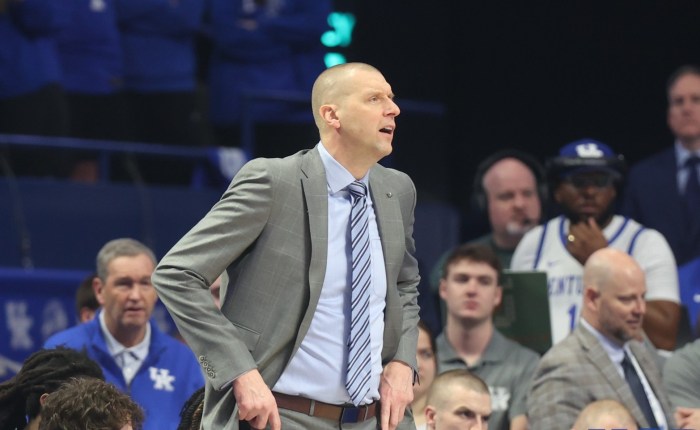
(LEXINGTON, Ky). – At the halfway point of the college basketball regular season, the midterm grades invariably come rolling in.

Recently, Isaac Trotter of CBS Sports essentially handed Mark Pope a midterm grade. His assessment wasn’t cruel or dramatic. It was purely academic.

A “D.”

Not dismissal or detention, but the kind of grade that comes with a quiet warning: You’re capable of more than this.

Trotter’s core point was simple. Pope understands Kentucky basketball. He knows the standard. He knows this isn’t it. And yet, nearly two seasons in, Kentucky is hovering around average on the floor while swimming in resources. The Sweet 16 run last year bought a lot of goodwill. This year’s results are washing away all the equity.

If this were a class, Kentucky isn’t failing—but it’s not honoring the syllabus.

Permit me to continue with this academic theme.

I was an A student for most of my life. Straight A’s through college and dental school. Not because I was the smartest in the room—but because I understood what my parents expected of me. Hence, it’s thoroughly frustrating watching someone clearly intelligent like Mark Pope struggle to translate knowledge into performance.

Pope is smart. That’s not debatable. He’s articulate, reflective, and overly analytical. He speaks like someone who actually read the assignment.

But here’s the disconnect: intelligence alone doesn’t earn grades. Outcomes do. Results matter.

Pope has acknowledged he’s considering “dumbing down” the offense for his players. In academic terms, that’s the moment a gifted professor realizes the class isn’t tracking and lowers the material. Sometimes that’s compassionate. Sometimes necessary. But at a place like Kentucky, it’s also risky.

Kentucky basketball is not remedial coursework.

When I asked Pope about the “D” grade—give him credit—he didn’t argue the point. In fact, he leaned into it. He acknowledged that Kentucky isn’t meeting expectations. Not emotionally or philosophically—but factually. An 0–2 start in SEC play is an objective data point.

“If you told me the Kentucky coach started 0–2 in the SEC, a ‘D’ might be generous,” he stated bluntly.

That matters because Pope didn’t blame fans. He didn’t hide behind context. He didn’t suggest the grading was unfair. He framed it like how sports—and academics—actually work: you earn your score.

What Pope articulated well was this distinction: emotions can be messy, but outcomes aren’t. You don’t debate the final score. You don’t negotiate the grade. You own it.

While all that’s well and good for a season flirting with disaster, it’s remains the right thing to say. Any good coach can have an outlier of a bad year as far as their won/loss record.

Where concern still lingers is in the larger picture Trotter raised—and Pope didn’t fully address. Kentucky’s issues aren’t limited to a slow SEC start. The recruiting trail has gone quiet at a time when elite freshmen are choosing other destinations. Kentucky, historically, doesn’t miss on all of them.

In academic terms, that’s when top students stop enrolling because they’re unsure the program is still elite. In their minds, it’s no longer about nostalgia. It’s about trajectory.

Pope talked about not running from the “messy middle.” About digging in. About believing the ending will be good—but only if you acknowledge the poor start.

That’s encouraging rhetoric. Necessary rhetoric.

But at Kentucky, belief is never the final exam.

Results are.

This program doesn’t grade on effort, intent, or intelligence. It grades on preparation, clarity, and execution. You don’t grade on a curve in this class. You meet the standard—or you repeat the course.

Mark Pope clearly understands that.

The question now is whether understanding will translate into improvement—on the floor, on the recruiting trail, and ultimately on the transcript that matters most.

Because at Kentucky, a “D” isn’t destiny. It’s a dire warning.

Especially when the only acceptable grade is an “A.”

This article was originally written for distribution through Nolan Group Media publications.

Dr. John Huang is a retired orthodontist, military veteran, and award-winning author. Currently serving as a columnist for Nolan Group Media, he invites readers to follow him on social media @KYHuangs. Explore his latest, Whining For Posterity, and all his books at Amazon.
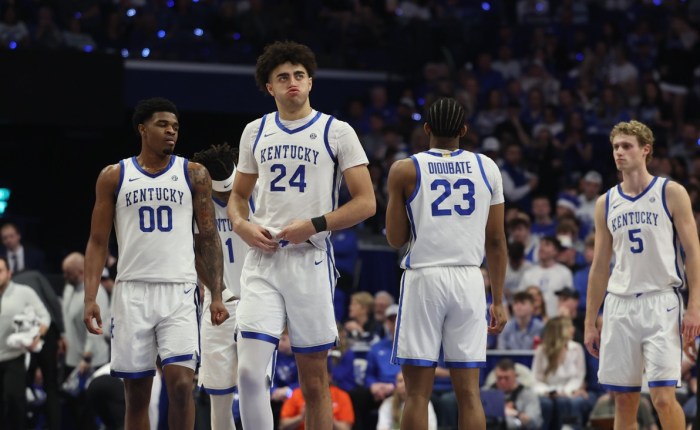
This Ain’t No Philosophy Seminar

This Ain’t No Philosophy Seminar

(LEXINGTON, Ky.) – When coaches are under fire, they usually don’t speak in riddles—they rant.

Jim Mora famously barked, “Playoffs?! Don’t talk about playoffs!”
Herm Edwards simplified the profession to its core: “You play to win the game.”
Mike Gundy, veins popping, yelled, “I’m a man! I’m 40!”

Those quotes didn’t require interpretation. They didn’t need a decoder ring. They landed because frustration stripped the message down to bone.

Which is why Mark Pope’s recent quote on his weekly coach’s show left so many Kentucky fans scratching their heads like they’d accidentally tuned into a philosophy podcast.

“What’s really important for us as coaches and as teammates is understanding the story that each of our guys and each member of our staff is telling themselves about what we’re going through right now…”

This is not a rant. It’s not normal coach-speak. It sounds more like a narrative symposium held in Ballroom A at the downtown Hyatt.

Before we dismiss it entirely—or turn it into a meme—let me explain why I might be uniquely qualified to translate what Pope was trying to say.

I spent decades as an orthodontist listening to people describe pain that wasn’t always where they thought it was. Patients told elaborate stories about one tooth when the real issue lived somewhere else entirely. My job wasn’t to validate the story. It was to identify the truth underneath it and fix the problem—whether the patient liked the diagnosis or not.

Coaching, at its best, works the same way.

So when Pope talks about “the story each guy is telling himself,” he’s really saying this:

Players are processing adversity differently. Some think it’s bad luck. Some think it’s their fault. Some think the system isn’t for them. Some think they should be playing more.

That part is reasonable, human, and accurate.

Then Pope says he wants to bring those stories back to two things: a point of truth and a point of common understanding.

Translation:
“We need everyone to stop lying to themselves—and agree on what we’re actually bad at.”

Still reasonable. Still logical. But strangely phrased for Kentucky basketball. It feels like Phil Jackson’s Zen without the structure—philosophy without the scoreboard support to justify it.

And that’s why it landed sideways.

Kentucky fans don’t need help understanding the story when the evidence is screaming:

• Slow starts
• Inconsistent effort
• Poor perimeter defense
• Questionable preparation

When you’ve had nearly two weeks to prepare and still fall behind by 21 points, the story doesn’t matter nearly as much as the symptoms. The frustration isn’t that Pope is wrong.

It’s that he’s explaining instead of commanding. At Kentucky, explanation often sounds like excuse—even when it’s not intended that way.

Fans are conditioned to expect blunt clarity in moments like this. Mora didn’t unpack emotional narratives. Edwards didn’t ask players how losing made them feel. Gundy didn’t workshop his truth.

They owned it.

That doesn’t mean Pope lacks intelligence or care. In fact, this quote suggests the opposite—he’s thoughtful, introspective, and trying to understand the human side of his team.

But this job isn’t graded on thoughtfulness. It’s graded on readiness—and ultimately wins and championships.

If every player is telling himself a different story, that’s not a literary problem. It’s a leadership one. Great programs don’t require narrative alignment sessions. They create roles so clear that internal monologues don’t matter.

At Kentucky, the story is supposed to be singular:

Defend.
Compete.
Earn minutes.
Win.

No subplots. No word-salad narratives from the coach. Kentucky basketball doesn’t need a narrator.

Pope’s quote might sound thoughtful in June. It sounds confusing in January.

And in January, Big Blue Nation is longing for something refreshingly old-school:

Less parable.
More accountability.

Let’s hope we get it.

This article was originally written for distribution through Nolan Group Media publications.

Dr. John Huang is a retired orthodontist, military veteran, and award-winning author. Currently serving as a columnist for Nolan Group Media, he invites readers to follow him on social media @KYHuangs. Explore his latest, Whining For Posterity, and all his books at Amazon.
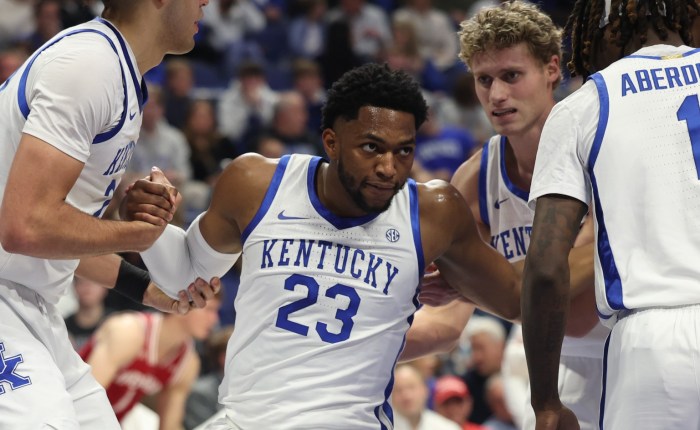
I’m on to Kenny Brooks

I’m on to Kenny Brooks

(LEXINGTON, Ky.) – I’m on to Kenny Brooks. Not in a stop-the-presses, breaking news kind of way. It’s more like the quiet realization that the man has cracked a code most coaches spend a lifetime chasing. If you want sustained success in basketball—real, transferable, program-defining success—get yourself a generational point guard, teach her, empower her, and then get out of the way just enough to let her become herself.

He did it with Georgia Amoore. And now, unmistakably, he’s doing it again with Tonie Morgan.

Morgan’s résumé is already starting to read like folklore. A buzzer-beater that stunned LSU last Thursday, followed by another surgical stat line—18 points, 14 assists—in a composed, methodical 74–52 dismantling of Missouri. Flashy when needed. Surgical when required. And always, always in control.

But the numbers only tell you what she’s doing. They rarely explain why—or how.

That’s where Brooks leaned back, grinned, and gave us the real scouting report—one that had nothing to do with crossover moves or assist totals.

“I don’t know what football team is doing good without a good quarterback,” Brooks quipped. “Tonie, she’s been phenomenal all year long… her willingness to be coached. She never makes a face when she doesn’t agree with something… she’s consistently just welcoming any kind of feedback and she takes it.”

There it is. The overlooked superpower.

Be Teachable.

In an era where athletes are branded before they’re built, where confidence sometimes masquerades as infallibility, Morgan’s greatest strength might be her posture in a film room. She watches. She listens. She absorbs. And then—this is the key—she applies.

Brooks made something else clear early, almost defensively, as if to protect Morgan from lazy comparisons: she is not trying to fill Georgia Amoore’s shoes. She’s building her own footprint. Different stride—with the same authority.

And authority she has.

Morgan can do it all. She scores at all three levels. She goes downhill with intention, not chaos. She distributes with either hand like she’s ambidextrous by design. She can take her defender one-on-one when the offense stalls. She understands shot selection. And she defends—not the Instagram kind of defense, but the grind-it-out, make-you-work-for-air variety.

Most importantly, Brooks has empowered Morgan to run the offense. Not just initiate it. Not just survive it. But to run it.

That kind of trust doesn’t come from a box score. It comes from habits—and a heck of a lot of communication and connection between coach and player.

Morgan explained it simply, the way players who truly understand their role often do.

“I have the ball a lot, so it is very important that I take care of it,” said the 5-foot-9 senior transfer from Georgia Tech. “So, when I do turn it over, I just move on. It happens… I just want to take care of it.”

That’s not coach-speak. That’s emotional maturity. Ownership without self-flagellation. Accountability without paralysis.

Teachable players don’t crumble when corrected or sulk when challenged. They don’t confuse coaching with criticism. They see feedback as fuel, not as insult.

And that—far more than a step-back jumper or a no-look dime—is what separates good point guards from the kind that quietly define eras.

Brooks knows it. He’s lived it. He’s building around it again.

Every great coach has a calling card. For Brooks, it might be this: he doesn’t just recruit talent; he intentionally seeks out posture and fit. The willingness to be molded. The humility to learn. The confidence to adapt.

Put a player like that at the point, and suddenly everything else aligns. Spacing makes sense. Tempo settles. Teammates breathe easier. Coaches sleep better.

Morgan’s story is still being written, but the early chapters are already instructive—not just for basketball, but for life. Be skilled, yes. Be confident, absolutely. But remain teachable through it all.

Because the players who last, the leaders who endure, and the programs that matter most are built not on ego—but on the desire to learn and get better.

And if Kenny Brooks keeps finding point guards like this?

Well… I’m really on to him now.

This article was originally written for distribution through Nolan Group Media publications.

Dr. John Huang is a retired orthodontist, military veteran, and award-winning author. Currently serving as a columnist for Nolan Group Media, he invites readers to follow him on social media @KYHuangs. Explore his latest, Whining For Posterity, and all his books at Amazon.
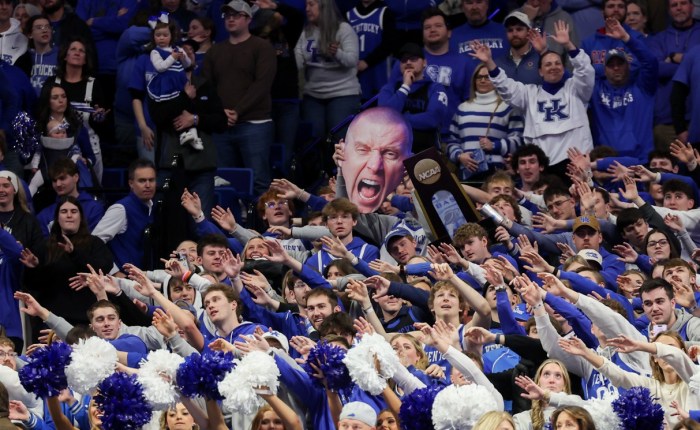
Blue Lights, Dim Bulbs: Kentucky Basketball’s Alarming Drift

Blue Lights, Dim Bulbs: Kentucky Basketball’s Alarming Drift

Photo Credit: Mont Dawson/Kentucky Sports Radio

(LEXINGTON, Ky.) – There are losses, and then there are losses that linger. Kentucky’s 89–74 faceplant against Alabama wasn’t just another road hiccup or a “good learning experience” wrapped in coach-speak. It was the kind of loss that stares back at you and asks uncomfortable questions—about identity, preparation, leadership, and where exactly this thing is headed under Mark Pope.

Let me say this clearly before anyone starts torching me: I am not ready to give up on Pope. Not even close. But I am ready to admit that the trends are troubling—and Big Blue Nation has earned the right to be uneasy.

We were promised a Ferrari. What we’re driving right now feels suspiciously like a refurbished rental.

At BYU, Pope sold us on a high-powered, creative, free-flowing offense. Pace. Spacing. Ball movement. Thirty-five threes a game. What we’re seeing instead is a half-court offense that too often feels like it was designed during a layover in Omaha. There are long stretches where Kentucky looks unsure and—this hurts to type—disinterested.

Part of that is personnel, yes. This team has no dependable shooters. None. Zip. Zero. You can’t run a modern offense without the threat of the three. Defenses sag. Lanes disappear. Alabama didn’t guard Kentucky shooters—they just waited for them to miss. And when you combine that with shaky perimeter defense on the other end, you get the same result Nick Saban just witnessed courtside in Tuscaloosa.

Alabama hit a bunch of open shots. Kentucky mostly chased shadows behind the arc.

Here’s where my inner orthodontist starts grinding his teeth. Pope seems overly cautious with his best players, particularly Jaland Lowe and Jayden Quaintance. Development is important. Trust is important. A player’s future health is certainly important. But at some point, your best players have to play. Long enough to find rhythm. Long enough to lead. Long enough to play their way into shape and respond. Watching Kentucky tiptoe through their starting lineup feels less like strategy and more like risk aversion.

To add insult to injury, I’ve sensed a maddening lack of consistent effort with this team. It occasionally has flashes. “Beautiful ones” against overmatched teams like Bellarmine. But then—poof—it evaporates against quality competition. Loose balls become optional. Closeouts become suggestions.

And physicality? Fuhgeddaboudit!  

That’s not talent. That’s not scheme. That’s culture. And culture starts at the top.

Now for the big one. The one that makes me want to hit “delete.”

Preparation.

Kentucky had nearly two weeks to get ready for this game. Two weeks. And the Cats still fell behind by 21 points like they’d just been introduced to Alabama in the parking lot. That’s not about shots falling. That’s not about poor matchups. That’s not bad luck. That’s a flashing neon warning light.

Hey folks, the résumé is crumbling before our eyes. Quadrant opportunities are slipping away in a league that eats its own.

Worse yet, there’s the creeping fear that the entire empire might collapse if things don’t change—because Pope, fair or not, hasn’t yet shown he can recruit at the level this job demands. Kentucky doesn’t win on system alone—it wins when elite players choose it.

Everyone knows that Kentucky basketball is not a rebuild-and-hope program. It’s a reload-or-else one. If the talent pipeline doesn’t improve, the margin for error disappears entirely.

The bulbs are dimming. The optics are already bad. Kentucky falling behind by double digits in marquee games is happening way too often. Opponents make adjustments. Pope’s teams don’t. His timeouts feel reactive. His in-game answers elusive. And Pope’s postgame demeanor? Let’s just say “sore loser” is not the brand Big Blue Nation expects. This job requires accountability, humility, and leadership in front of a camera when things go sideways.

Kentucky basketball isn’t just a team. It’s an institution. A standard. A mirror we all see ourselves in, for better or worse.

I still believe Pope can get this right. But belief without course correction is just stubbornness dressed up as loyalty. The concerns are real. The trends are real. And if they aren’t addressed—soon, the dimming lights at Rupp won’t just be temporary.

They’ll be structural.

And that, my friends, is not something any of us signed up for.

This article was originally written for distribution through Nolan Group Media publications.

Dr. John Huang is a retired orthodontist, military veteran, and award-winning author. Currently serving as a columnist for Nolan Group Media, he invites readers to follow him on social media @KYHuangs. Explore his latest, Whining For Posterity, and all his books at Amazon.
The Scholarship Used to Be the Prize

The Scholarship Used to Be the Prize

(And Somewhere Along the Way, We Started Treating It Like a Coupon)

Let me get this out of the way early so nobody mistakes me for the guy yelling at clouds.

I know NIL is here to stay. I know players have always been paid. I know the system wasn’t pure, holy, or wrapped in a choir robe stitched by Sandy Bell in the UK Compliance office.

I’m not naïve. I’m just… disappointed. And there’s a difference.

Believe me, this isn’t about money. It’s about what money replaced.

Back in the day—cue the violin music, please—the scholarship was the prize. The scholarship was the golden ticket. It was the thing you earned, protected, and quietly understood could change the trajectory of your life.

Now? The sheepskin is an afterthought. A line item. Something you get thrown in after the collective wires the cash.

Wake up everyone! College sports didn’t just evolve. It inverted.

Players used to come to Kentucky for the name on the front of the jersey and hope—pray, even—that one day the name on the back might matter. Now the name on the back is everything, and the front is just a temporary billboard.

We’ve turned student-athletes into short-term mercenaries, and then we act surprised when loyalty evaporates faster than Vince Marrow’s blue wardrobe.

Again, I’m not anti-player. I’m anti-illusion. College sports has become all smoke and mirrors.

What bothers me isn’t that athletes are making money. It’s that we’ve somehow convinced them—and ourselves—that money is the point, not the fruit of hard-earned labor. We’ve normalized entitlement at warp speed. It no longer happens over multiple years of eligibilty. It’s now bestowed instantly.

A freshman hasn’t played a minute and already knows his “market value.” He doesn’t ask, How can I grow here? He asks, What’s my next leverage point? That’s not empowerment. That’s living one transaction at a time.

And the collateral damage of this lunacy? The college education—the very thing that was supposed to be the great equalizer—has been reduced to background noise.

Let me offer a confession from a man who looks suspiciously like a retired orthodontist with opinions.

My education made me rich. Not Warren Buffet-rich. Not even NIL-rich. But life-rich. It gave me a profession. It gave me options. It gave me the ability to fail and pivot and fail again without falling through the floorboards of society.

My college education wasn’t just about attending classes. It rewarded me with time—time to grow up, mess up, learn accountability, and figure out who I was when nobody was handing me a check. Let it be known that no booster ever Venmo’d me for showing up to Biology 101.

Now we’re telling kids—explicitly and implicitly—that education is optional, temporary, and secondary to their “brand.” That’s not progress. That’s negligent at best—and destructive at worst.

Here’s the part nobody wants to say out loud: If the scholarship no longer matters, the university no longer matters. And if the university no longer matters, then college sports becomes minor-league professional sports without contracts, guardrails, or accountability.

Which is exactly where we’re headed.

You can’t build culture on one-year leases.
You can’t preach loyalty while negotiating exits.
You can’t sell tradition to people shopping for the next upgrade.

And you certainly can’t pretend the system will hold when the foundation—education itself—has been hollowed out. When the value of the scholarship is cheapened, the value of the institution crumbles. When institutions crumble, so does the illusion that this was ever about anything more than money. And when the illusion dies, so does the sport we thought we loved.

I still watch. I still care. I still write. I still hope—perhaps foolishly—that the pendulum swings back toward balance instead of breaking loose entirely.

But make no mistake: this is doomsday not because athletes are getting paid—but because we’ve taught them that nothing else is worth valuing.

And when education becomes optional, everything downstream collapses. I don’t want to go backward. I want us to remember what was worth protecting as we move forward.

Happy New Year!
Now, please excuse me while I go ice my knee, check my blood pressure, and remind myself I’m not yelling at clouds.

I’m yelling at the future—because I still care about it.

This article was originally written for distribution through Nolan Group Media publications.
Dr. John Huang is a retired orthodontist, military veteran, and award-winning author. Currently serving as a columnist for Nolan Group Media, he invites readers to follow him on social media @KYHuangs. Explore his latest, Whining For Posterity, and all his books at Amazon.
When Words Wound

When Words Wound

“The words of the reckless pierce like swords,
but the tongue of the wise brings healing.”

Proverbs 12:18

I was raised to believe that the presidency matters. Not necessarily the man occupying it at any given moment, but the office itself. It is bigger than personality, bigger than party, and often bigger even than policy. The presidency is one of the few remaining civic institutions that still carries moral weight—at least, it should. When the president speaks, the country listens. When the president stumbles, the consequences echo far beyond a 24-hour news cycle.

That conviction shapes how I view politics, and it shaped my reaction this week to the brutal deaths of filmmaker Rob Reiner and his wife. A double homicide is the kind of tragedy that should still our arguments, even briefly. Death has a way of reminding us that before we are voters or ideologues, we are human beings.

And yet, almost immediately, words were spoken that did not heal.

President Donald Trump’s public response to the Reiner tragedy did not center on condolences or restraint. Instead, it reframed the deaths through a political lens—speculating about psychological torment and ideological obsession, and implying, without evidence, that political animus somehow mattered in the moment of loss. Whatever one thinks of Rob Reiner’s politics—and he was outspoken and combative—this was not a moment for diagnosis or deflection. It was a moment for dignity.

Proverbs would call such speech reckless.

I want to be clear about my posture. I did not put Donald Trump in office. As a naturalized citizen, I cannot run for president myself, which perhaps gives me an added reverence for the institution. I love this country. I respect the presidency deeply. I appreciate secure borders. I admit—somewhat selfishly—that I like seeing a strong stock market. I even admire, at times, the president’s willingness to speak plainly rather than hide behind political correctness.

Respecting the office, however, does not require blind loyalty to the occupant. In fact, true respect for the presidency demands moral accountability.

Scripture does not evaluate leaders only by what they accomplish. It weighs how they speak.

The issue here is not policy. It is posture.

As a writer, author, and frequent radio guest, I’m very mindful of the difference between speaking one’s mind and wielding one’s tongue like a weapon. Proverbs warns that reckless words pierce. They cut deeper than intended. They leave wounds long after the speaker has moved on. When such words come from the presidency, they do more than wound individuals—they shape the moral atmosphere of the nation.

This is the tension many thoughtful citizens feel. We want candor without cruelty. Honesty without hatred. Conviction without contempt. These are not incompatible virtues, but they require wisdom—and wisdom is precisely what Proverbs elevates above raw power.

“The tongue of the wise brings healing.”

Healing does not mean agreement. It does not mean pretending differences don’t matter. It does not even mean withholding criticism. It means recognizing when a moment calls for restraint rather than rhetoric. It means knowing that grief is not a platform and death is not a talking point.

Rob Reiner was a fierce critic of Donald Trump. He was relentless, provocative, and unapologetic. But even fierce opponents deserve dignity in death. If “hate the sin, love the sinner” is more than a slogan, it must apply most clearly when someone can no longer answer back.

We live in a culture that rewards outrage and mistakes humility for weakness. Social media trains us to respond instantly, not wisely. But presidents are not influencers. They are stewards—not only of power, but of language. The words spoken from that office carry disproportionate weight. They can calm a nation or inflame it. They can heal or they can pierce.

And swords, Scripture reminds us, always cut deeper than expected.

Donald Trump has often cast himself as a defender of those who feel unheard. That role carries moral gravity. It also carries responsibility. One cannot champion dignity for some while dismissing it for others, especially in moments of irreversible loss.

This is not about hating Donald Trump. It is not about loving him either. It is about loving the presidency enough to say: this mattered. Words mattered. The moment mattered. The office mattered.

A nation can survive bad policies. It can recover from flawed leadership. What it cannot tolerate is the erosion of empathy from the highest office in the land.

Proverbs 12:18 leaves us with a choice. We can pierce, or we can heal. We can speak quickly, or we can speak wisely. We can cheapen the presidency—or we can honor it by demanding better from those who hold it.

I still believe the office means something.

That is precisely why this moment did too.

Dr. John Huang is a retired orthodontist, military veteran, and award-winning author. Currently serving as a columnist for Nolan Group Media, he invites readers to follow him on social media @KYHuangs. Explore his latest, “Whining For Posterity,” and all his books at https://www.Amazon.com/stores/Dr.-John-Huang/author/B092RKJBRD

When the Empire Crumbled in Nashville

When the Empire Crumbled in Nashville

Photo credit: KY INSIDER/Tristan Pharis

(NASHVILLE, Tn.) – Nobody died. Let’s be clear about that from the start. But walking out of Bridgestone Arena on that bleak December night, it sure felt like some small—but vital—part of me kicked the bucket. If grief truly comes in stages, Big Blue Nation skipped denial and bargaining entirely and hurtled straight into anger and depression. A 35-point blowout loss to Gonzaga will do that to you.

Thirty-five. Five touchdowns. A deficit so large you half-expected Diego Pavia to pad his Heisman stats by tossing one more.

The Cats shot 26% from the field—a number so pitiful you’d think they were tossing up prayer requests rather than basketballs. Meanwhile, Graham Ike—just one man, mind you—had more two-point field goals than the entire Kentucky roster. Let that sink in. One guy outscoring a blue-blood program in its own chosen sport. And not just any sport—the sport. The one woven into our DNA, passed down from grandparents to grandbabies like that sacred cloth Mark Pope keeps referencing.

This wasn’t just a loss. It was the fiber unraveling on holy ground—the third-most lopsided defeat in the shot clock era. We’ve known pain before. Saint Peter’s. Oakland. That 41-point thrashing from Vanderbilt—Vanderbilt!—that still wakes some of us with night sweats. Gardner Webb. Robert Morris in the NIT. Middle Tennessee State, if you really want to dig around in old wounds. But this… this seemed different. This was more visceral. This was more publicly humiliating. This was a blue mist turning into a funeral fog over Lower Broadway.

The boos rained down like I’ve never heard—sharp, heavy, and honest. Those weren’t spur-of-the-moment grumbles. Those were boos pulled from deep in the diaphragm—boos with ancestry.

And in the middle of it all stood Mark Pope. Clueless. Clutching his arms. Pacing. Staring. Hoping. Praying. Whatever offensive scheme existed remained locked in the bus. The defense was optional. The effort was zero. And the $22-million payroll—which should buy you at least a handful of competent dribbles—played like a group of guys who accidentally wandered in from the YMCA while looking for hot chicken.

Afterward, Pope sat there and took it. “All the boos we heard tonight were incredibly well deserved—mostly for me,” he acknowledged.

And credit where due—he’s right. BBN isn’t booing because we hate. BBN boos because we care too much. Because this program is stitched into our emotional circuitry. Because watching it flounder like this feels like watching a beloved family business collapse under the weight of mismanagement and market forces we don’t fully understand.

Because NIL—this new world we were forced into—feels like it’s quietly cannibalizing the very soul of Kentucky basketball.

Where do we go from here? That’s the question echoing from Lexington to London to Pikeville to Paducah. This program means so much—too much, maybe—and to see it decimated, hollowed out, and sold to the highest bidder leaves a taste in the mouth not unlike despair.

We’ve now lost six straight to AP Top 25 opponents. Six. That’s not a skid. That’s a full-blown car crash. Indiana comes calling next Saturday, carrying history and smugness in equal measure. I guarantee the Hoosiers are smelling fear the way sharks smell blood.

Pope keeps telling us he’s going to fix it. He says it every game, every press conference, every painful in-between: “We’ll fix it.”

But those words—once hopeful, once rousing—are starting to fall on ears that have gone numb from overuse. We’ve become the fanbase that cries wolf, except the wolves actually show up and chew our legs off every other week.

Nobody died. But something inside us sure felt like it did. The Empire may have crumbled in Nashville, but unlike the Romans, we don’t have the luxury of blaming the Visigoths. This collapse came from within—bad shots, bad schemes, bad chemistry, bad body language, bad vibes. The kind of decay you can’t just patch with a rah-rah press conference, a well-placed promise, or even a savior named Jayden Quaintance.

And here’s the uncomfortable truth that stings most of all—the one we don’t want to say out loud but feel gnawing at us anyway: we don’t know if this gets better. We don’t know if the fixes Pope keeps preaching about are real or wishful incantations. We don’t know if a program built on NIL money and one-year mercenaries can rediscover heart, pride, or purpose. We don’t know if next Saturday against Indiana is the first step back… or one more step into the void.

We don’t know. That’s the scary part.

Because for all our bluster and bravado, Big Blue Nation likes certainty. We like legacy. We like stability. We like knowing that no matter the chaos swirling through college hoops, Kentucky Basketball stands firm—unshakable, undeniable, eternal.

But standing outside Bridgestone Arena after that 35-point humiliation, looking into the hollow faces of fellow fans who traveled hundreds of miles for a beatdown they’ll never forget, it was impossible not to feel the ground shifting under our feet.

Maybe we rise from this. Maybe we don’t. Maybe this is rock bottom. Or maybe—we whisper it, barely audible—it’s a sign of something even more ominous.

Nobody died. But something has changed. And until this team proves otherwise, we’re left clinging to hope with one hand… and bracing for the worst with the other.

This article was originally written for distribution through Nolan Group Media publications.


Dr. John Huangis a retired orthodontist, military veteran, and award-winning author. Currently serving as a columnist for Nolan Group Media, he invites readers to follow him on social media @KYHuangs. Explore his latest, Whining For Posterity, and all his books at Amazon.