Taiwan, Democracy, and the Ghosts of My Father’s Generation

Taiwan, Democracy, and the Ghosts of My Father’s Generation

There are certain geopolitical conflicts you can debate casually from the comfort of your recliner while angrily wolfing down popcorn. China versus Taiwan is not one of them. At least not for me.

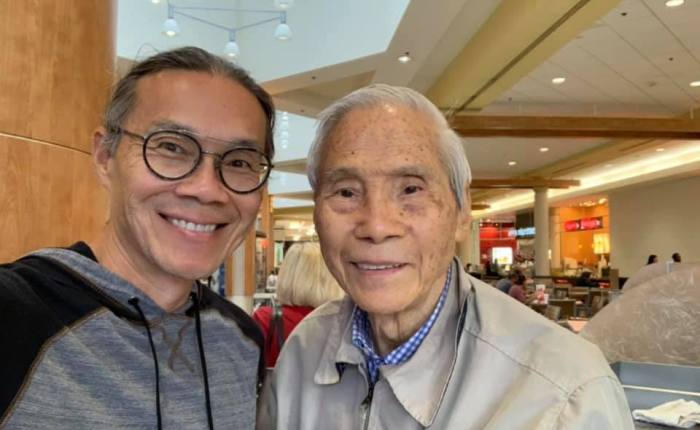
My late father was born in China in 1927. He lived through war, revolution, displacement, uncertainty, and eventually escaped to Taiwan before Communist rule took over mainland China. Years later, he immigrated alone to America with little more than faith, grit, and enough courage to make the rest of us look soft by comparison. So when politicians casually toss around phrases like “strategic ambiguity,” “reunification,” or “regional tensions,” I don’t hear abstract foreign policy jargon. I hear family history. I hear the echoes of people who lost homes, identities, and connections with loved ones overnight.

That’s why President Donald Trump’s visit to China matters. And depending on what is said — or not said — about Taiwan, it could matter enormously.

Before everybody on social media loses their collective minds, let me say this clearly: I understand the “One China” position emotionally. My father probably believed some version of it himself. Many older Chinese who fled to Taiwan never stopped viewing themselves as culturally Chinese. I refer to myself as Chinese—not Taiwanese. Taiwan was not originally envisioned as a separate civilization to those like my dad who fled. It was refuge. Survival. A temporary sanctuary during a civil war that never technically ended. That nuance gets lost today.

The truth is that history is complicated. Identity is complicated. Family loyalty is complicated. And yet, despite understanding all of that emotionally, I still arrive at a different conclusion politically. Democracy must be defended. Especially when Chinese people freely choose it.

Taiwan today is not merely a historical leftover from the Chinese Civil War. It has evolved into a thriving democracy with free elections, free speech, economic innovation, religious liberty, and the right to criticize its own leaders without fearing a knock on the door in the middle of the night. Those freedoms matter. America — regardless of whether the president is named Trump, Biden, Obama, or Reagan — should not casually negotiate away the future of 23 million people simply because a superpower demands it loudly enough.

At the same time, this is where the conversation becomes uncomfortable. Democracy is worth defending, but how exactly do you defend it without stumbling into catastrophic war? That’s the question nobody seems willing to wrestle with honestly anymore. On one side are those who sound eager for confrontation despite never experiencing conflict themselves. On the other are those who believe peace can always be purchased through accommodation and appeasement. History suggests both extremes are dangerous.

My father’s generation understood something we often forget: war is not a movie script. It destroys families, scatters generations, and leaves emotional wreckage that lasts for decades. The answer cannot be reckless provocation or chest-thumping social media bravado. But neither can the answer be quietly pressuring Taiwan into surrender under the banner of “stability.” Real leadership requires strength without arrogance, and diplomacy that doesn’t abandon core principles. That balancing act is extraordinarily difficult for any leader navigating a conflict with stakes this high.

President Trump should know that many immigrants who escaped authoritarian systems often appreciate freedom more deeply than Americans born into it. My father certainly did. He loved America fiercely — not because it was perfect, but because it gave him opportunity, dignity, and the ability to build a future his children never could have imagined. That perspective shaped me more than I realized growing up.

Even now, however, I still wrestle with the tension. Part of me understands the ancient pull of Chinese unity and heritage. After all, I cheered proudly for Yao Ming, Jeremy Lin, and Michael Chang. But another part of me looks at Taiwan and sees something profoundly worth protecting: freedom, self-determination, democracy, and the right of people to determine their own future without coercion. I suspect many older immigrants who publicly embraced “One China” quietly admired Taiwan’s freedoms more than they ever admitted out loud.

President Trump’s visit to China will generate endless hot takes from cable news warriors who couldn’t find Taiwan on a map if you circled it with a Sharpie. But beneath the politics lies something deeply human: families divided by history, people carrying multiple identities at once, and descendants like me trying to reconcile respect for our parents’ worldview with the realities of the modern world.

My father taught me many things — work hard, stay humble, keep your word, value faith and family. But perhaps the greatest lesson came indirectly through his journey itself: never take freedom for granted once you’ve seen what life looks like without it.

Dr. John Huang is a retired orthodontist, military veteran, and award-winning author. He currently serves as a columnist for Nolan Group Media and invites readers to follow him on social media @KYHuangs. His latest book is Whining for Posterity, available on Amazon.

When Words Wound

When Words Wound

“The words of the reckless pierce like swords,
but the tongue of the wise brings healing.”

Proverbs 12:18

I was raised to believe that the presidency matters. Not necessarily the man occupying it at any given moment, but the office itself. It is bigger than personality, bigger than party, and often bigger even than policy. The presidency is one of the few remaining civic institutions that still carries moral weight—at least, it should. When the president speaks, the country listens. When the president stumbles, the consequences echo far beyond a 24-hour news cycle.

That conviction shapes how I view politics, and it shaped my reaction this week to the brutal deaths of filmmaker Rob Reiner and his wife. A double homicide is the kind of tragedy that should still our arguments, even briefly. Death has a way of reminding us that before we are voters or ideologues, we are human beings.

And yet, almost immediately, words were spoken that did not heal.

President Donald Trump’s public response to the Reiner tragedy did not center on condolences or restraint. Instead, it reframed the deaths through a political lens—speculating about psychological torment and ideological obsession, and implying, without evidence, that political animus somehow mattered in the moment of loss. Whatever one thinks of Rob Reiner’s politics—and he was outspoken and combative—this was not a moment for diagnosis or deflection. It was a moment for dignity.

Proverbs would call such speech reckless.

I want to be clear about my posture. I did not put Donald Trump in office. As a naturalized citizen, I cannot run for president myself, which perhaps gives me an added reverence for the institution. I love this country. I respect the presidency deeply. I appreciate secure borders. I admit—somewhat selfishly—that I like seeing a strong stock market. I even admire, at times, the president’s willingness to speak plainly rather than hide behind political correctness.

Respecting the office, however, does not require blind loyalty to the occupant. In fact, true respect for the presidency demands moral accountability.

Scripture does not evaluate leaders only by what they accomplish. It weighs how they speak.

The issue here is not policy. It is posture.

As a writer, author, and frequent radio guest, I’m very mindful of the difference between speaking one’s mind and wielding one’s tongue like a weapon. Proverbs warns that reckless words pierce. They cut deeper than intended. They leave wounds long after the speaker has moved on. When such words come from the presidency, they do more than wound individuals—they shape the moral atmosphere of the nation.

This is the tension many thoughtful citizens feel. We want candor without cruelty. Honesty without hatred. Conviction without contempt. These are not incompatible virtues, but they require wisdom—and wisdom is precisely what Proverbs elevates above raw power.

“The tongue of the wise brings healing.”

Healing does not mean agreement. It does not mean pretending differences don’t matter. It does not even mean withholding criticism. It means recognizing when a moment calls for restraint rather than rhetoric. It means knowing that grief is not a platform and death is not a talking point.

Rob Reiner was a fierce critic of Donald Trump. He was relentless, provocative, and unapologetic. But even fierce opponents deserve dignity in death. If “hate the sin, love the sinner” is more than a slogan, it must apply most clearly when someone can no longer answer back.

We live in a culture that rewards outrage and mistakes humility for weakness. Social media trains us to respond instantly, not wisely. But presidents are not influencers. They are stewards—not only of power, but of language. The words spoken from that office carry disproportionate weight. They can calm a nation or inflame it. They can heal or they can pierce.

And swords, Scripture reminds us, always cut deeper than expected.

Donald Trump has often cast himself as a defender of those who feel unheard. That role carries moral gravity. It also carries responsibility. One cannot champion dignity for some while dismissing it for others, especially in moments of irreversible loss.

This is not about hating Donald Trump. It is not about loving him either. It is about loving the presidency enough to say: this mattered. Words mattered. The moment mattered. The office mattered.

A nation can survive bad policies. It can recover from flawed leadership. What it cannot tolerate is the erosion of empathy from the highest office in the land.

Proverbs 12:18 leaves us with a choice. We can pierce, or we can heal. We can speak quickly, or we can speak wisely. We can cheapen the presidency—or we can honor it by demanding better from those who hold it.

I still believe the office means something.

That is precisely why this moment did too.

Dr. John Huang is a retired orthodontist, military veteran, and award-winning author. Currently serving as a columnist for Nolan Group Media, he invites readers to follow him on social media @KYHuangs. Explore his latest, “Whining For Posterity,” and all his books at https://www.Amazon.com/stores/Dr.-John-Huang/author/B092RKJBRD