Taiwan, Democracy, and the Ghosts of My Father’s Generation

Taiwan, Democracy, and the Ghosts of My Father’s Generation

There are certain geopolitical conflicts you can debate casually from the comfort of your recliner while angrily wolfing down popcorn. China versus Taiwan is not one of them. At least not for me.

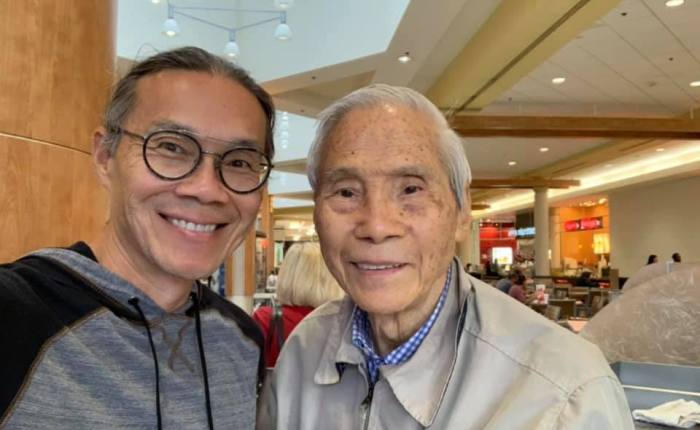
My late father was born in China in 1927. He lived through war, revolution, displacement, uncertainty, and eventually escaped to Taiwan before Communist rule took over mainland China. Years later, he immigrated alone to America with little more than faith, grit, and enough courage to make the rest of us look soft by comparison. So when politicians casually toss around phrases like “strategic ambiguity,” “reunification,” or “regional tensions,” I don’t hear abstract foreign policy jargon. I hear family history. I hear the echoes of people who lost homes, identities, and connections with loved ones overnight.

That’s why President Donald Trump’s visit to China matters. And depending on what is said — or not said — about Taiwan, it could matter enormously.

Before everybody on social media loses their collective minds, let me say this clearly: I understand the “One China” position emotionally. My father probably believed some version of it himself. Many older Chinese who fled to Taiwan never stopped viewing themselves as culturally Chinese. I refer to myself as Chinese—not Taiwanese. Taiwan was not originally envisioned as a separate civilization to those like my dad who fled. It was refuge. Survival. A temporary sanctuary during a civil war that never technically ended. That nuance gets lost today.

The truth is that history is complicated. Identity is complicated. Family loyalty is complicated. And yet, despite understanding all of that emotionally, I still arrive at a different conclusion politically. Democracy must be defended. Especially when Chinese people freely choose it.

Taiwan today is not merely a historical leftover from the Chinese Civil War. It has evolved into a thriving democracy with free elections, free speech, economic innovation, religious liberty, and the right to criticize its own leaders without fearing a knock on the door in the middle of the night. Those freedoms matter. America — regardless of whether the president is named Trump, Biden, Obama, or Reagan — should not casually negotiate away the future of 23 million people simply because a superpower demands it loudly enough.

At the same time, this is where the conversation becomes uncomfortable. Democracy is worth defending, but how exactly do you defend it without stumbling into catastrophic war? That’s the question nobody seems willing to wrestle with honestly anymore. On one side are those who sound eager for confrontation despite never experiencing conflict themselves. On the other are those who believe peace can always be purchased through accommodation and appeasement. History suggests both extremes are dangerous.

My father’s generation understood something we often forget: war is not a movie script. It destroys families, scatters generations, and leaves emotional wreckage that lasts for decades. The answer cannot be reckless provocation or chest-thumping social media bravado. But neither can the answer be quietly pressuring Taiwan into surrender under the banner of “stability.” Real leadership requires strength without arrogance, and diplomacy that doesn’t abandon core principles. That balancing act is extraordinarily difficult for any leader navigating a conflict with stakes this high.

President Trump should know that many immigrants who escaped authoritarian systems often appreciate freedom more deeply than Americans born into it. My father certainly did. He loved America fiercely — not because it was perfect, but because it gave him opportunity, dignity, and the ability to build a future his children never could have imagined. That perspective shaped me more than I realized growing up.

Even now, however, I still wrestle with the tension. Part of me understands the ancient pull of Chinese unity and heritage. After all, I cheered proudly for Yao Ming, Jeremy Lin, and Michael Chang. But another part of me looks at Taiwan and sees something profoundly worth protecting: freedom, self-determination, democracy, and the right of people to determine their own future without coercion. I suspect many older immigrants who publicly embraced “One China” quietly admired Taiwan’s freedoms more than they ever admitted out loud.

President Trump’s visit to China will generate endless hot takes from cable news warriors who couldn’t find Taiwan on a map if you circled it with a Sharpie. But beneath the politics lies something deeply human: families divided by history, people carrying multiple identities at once, and descendants like me trying to reconcile respect for our parents’ worldview with the realities of the modern world.

My father taught me many things — work hard, stay humble, keep your word, value faith and family. But perhaps the greatest lesson came indirectly through his journey itself: never take freedom for granted once you’ve seen what life looks like without it.

Dr. John Huang is a retired orthodontist, military veteran, and award-winning author. He currently serves as a columnist for Nolan Group Media and invites readers to follow him on social media @KYHuangs. His latest book is Whining for Posterity, available on Amazon.
A Legacy Renewed

A Legacy Renewed

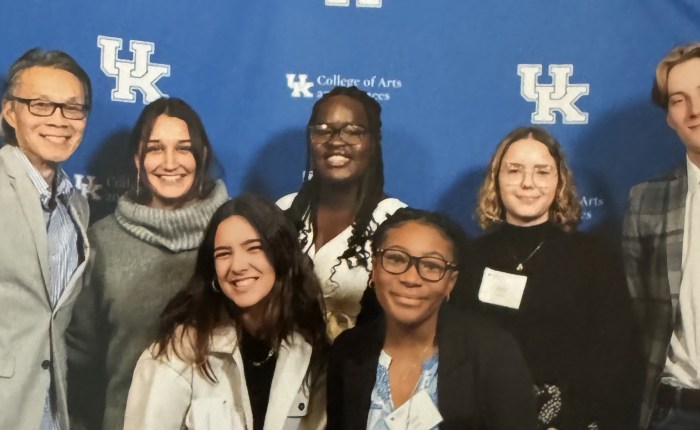
Me, with scholarship recipients at the recent Dean’s Circle Donors Luncheon sponsored by the UK College of Arts and Sciences.

I miss my dad. It’s hard to believe it’s already been over two years since he died. I think about him a lot—much more so it seems as the days slip away.

I find myself thinking also about his circle of influence. As his eldest-born son, his influence on me was meaningful and profound. But during his ninety-three years on the face of this earth, what legacy did he leave behind to the many others he encountered?

Come to think of it, what lasting legacies do any of us leave behind? The answer, I’m afraid, is slim to none. Most legacies fade away like yesterday’s news. Once you’re laid out on that cement slab, people quickly forget the things you’ve accomplished.

Just look at the great athletes of our generation. After Father Time catches up with them and their playing careers are kaput, no one remembers them anymore. They’re all distant memories, reduced to a small footnote in the annals of sports history.

An even better example are the legacies of U.S. presidents. Here you have people who at one time held the most powerful positions on the planet. And yet, other than George Washington, Abraham Lincoln, and Franklin Roosevelt, we can’t really recall any of their most significant achievements.

What did Zachary Taylor or Millard Fillmore ever do?

Here’s my point. My dad was not a transcendent athlete or famous political figure, but he was legacy smart. Before he left us, he directed a substantial part of his life savings towards scholarships at Centenary Church and at the University of Kentucky, knowing full well that education has a transformative and lasting impact.

I’ll admit I bristled a bit when I heard he was giving away my inheritance. But practically speaking, it made sense. Years from now, those scholarships would be worth a heck of a lot more than an African safari or a new Mercedes.

In that vein, I now present to you “Family Strong,” a memoir that my father meticulously crafted before his passing. It’s not just a book; it’s a beacon of hope, a reminder that our stories can create lasting impact for others in our own circle of influence. By purchasing the book, you not only gain insights into my dad’s remarkable life, but you also become a permanent part of the scholarships he established, furthering his legacy of belief in the transformative power of education and academic achievement.

“Family Strong” takes you on a journey from Fujian, China, to the heart of America, weaving together a tapestry of faith, love, and perseverance. My dad’s inspirational story embodies the American Dream in action, showcasing virtues like industriousness, honesty, humility, selflessness, and love. Through his vivid recollections, you’ll gain a unique perspective on the American immigrant experience during the 1950s and ’60s—all sprinkled with rich doses of humor, wisdom, and cultural insights.

This memoir, however, is not just my dad’s story told in his own words; it’s a celebration of love, faith, and family. As you explore his amazing life, you’ll also discover these similar narrative themes coming from us—his children and grandchildren—thus adding depth and warmth to the overall tale.

Moreover, the book pays homage to my dad’s legacy through the aforementioned Huang Family Scholarships. Established in June 2022, these scholarships inspire academic success, hard work, and a spirit of learning that transcends time.

Ultimately, “Family Strong” is an invitation to embark on a journey of faith, love, and the pursuit of your own dreams. My dad’s life, with all its trials and triumphs, serves as an inspiration for you to reflect on your own unique journey and the personal legacy you wish to leave behind.

Please join me in spreading the good word about “Family Strong” and be a part of preserving my dad’s legacy for generations to come. Remember, your purchase is not just a transaction—it’s a step towards ensuring that his story continues to inspire, motivate, and impact lives.

Click on the link below to purchase. Note that kindle, paperback, and hardcover versions are all available.

https://www.amazon.com/dp/B0CTD1ML8J

Once you’ve made a purchase, please let me know either through direct message or email (KYHuangs@aol.com) so that I can include your name as a permanent part of the scholarship legacy.

THANK YOU!

“From generation to generation – Dr Huang came to Kentucky and fulfilled an American dream for his children, their children and those who will follow in extending a legacy of goodness, kindness and a love for his colleagues, students and the Wildcats.”        

Dr. Eli Capilouto, University of Kentucky President

“As a pastor, I meet many people who are extremely kind, who are humble and who have accomplished great things. I’ve met very few who can be described in all three ways. Dr. Huang was a man of impressive achievement, yet he respected others and was a true witness of his deep, Christian faith. His autobiography is not only interesting but so very inspiring.”

—James Williams, Centenary Church Lead Pastor

“This book serves to witness that our Lord Jesus Christ is merciful, full of love and grace, and is a good Shepherd who always wants to find and save His lost sheep.”

—”Pete” Huang, author of Family Strong