The Olympics, Immigration, and the Question We Avoid

The Olympics, Immigration, and the Question We Avoid

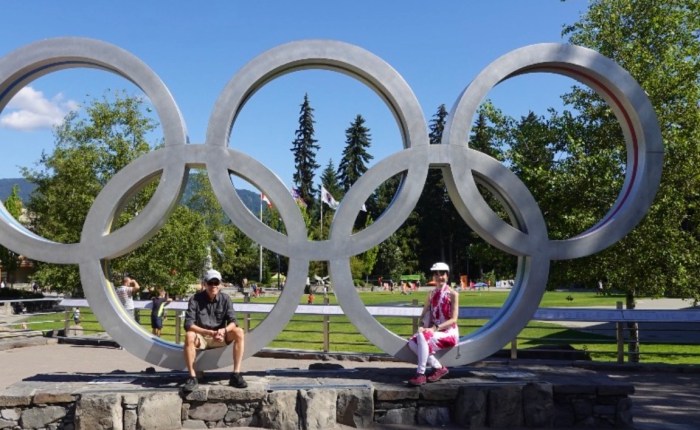
My sister, Mary, and I—both naturalized American citizens—with the Olympic rings in Whistler, British Columbia, the site of the 2010 Winter Olympics.

I’ve been thinking a lot about two things lately: the Olympics and immigration. They don’t seem connected—but in my life they are.

Watching athletes march behind flags has a way of stirring pride—and also stirring questions. Questions about belonging, about identity, and about who gets to wear a country’s colors and who is forever asked to explain themselves.

Somewhere between the opening ceremonies and the nightly news, those two worlds have been colliding in my head.

I’m a naturalized American citizen—but I didn’t take the test. My parents did. They filled out the forms. They stood in the lines. They navigated the system so I wouldn’t have to. My citizenship was inherited before it was understood, and respect for authority came with it.

Growing up as the only Asian kid in my elementary school, authority meant structure. Structure meant stability. And stability meant safety. My parents always told me to keep my nose out of trouble and not to make waves.

So yes, I stand for the anthem. I feel pride when the flag goes up.

But while we’re counting medals and celebrating national pride, immigration has been dominating the headlines again—raids, protests, tension, fear. And it’s made me uneasy in a way that’s hard to articulate.

Part of it is personal.

I joke sometimes—half joking—that I’m probably next on the list to be hauled away by ICE. It’s said half in humor, half in recognition of something many immigrants understand instinctively: that possessing the paperwork doesn’t always erase the perception.

Citizenship may be official, but belonging can still feel conditional.

And that’s where Olympic pride and immigration collide.

Let me say something plainly.

Criminals—especially violent criminals—should be deported. Who wants thugs around? Wanting safe streets doesn’t make you heartless. Communities have the right to protect themselves.

But immigration isn’t just a policy debate. We live it daily through personal relationships. There’s something different about the nanny who watches your kids. About the workers on the horse farms who show up before dawn and leave without applause. About the people who do the jobs no one else wants.

They aren’t abstractions. They’re faces and voices woven into daily life long before anyone asks where they’re from—or how they stay.

When I see immigration stories unfold, I don’t just see arguments. I see people who look like me. People who have been asked, “Where are you from?” enough times to know the follow-up is never innocent.

Citizenship didn’t erase that feeling. It just gave me the official paperwork.

Talking with my civic-minded friends has sharpened the tension. We look at the same issues and see different threats. I talk about order. They talk about liberty. One of them told me, “Protest is how liberties survive. If people don’t push back, they disappear.”

That sentence makes me uncomfortable. Because you can disagree with protest, debate enforcement, argue law and order endlessly. But at the very least, we should be able to agree on this: no one deserves to die for speaking up.

This is where the Olympics quietly teach us something.

Every athlete marches behind a flag, but the stories that move us most are personal ones. Refugees competing without a country. Athletes born somewhere else, representing a nation that gave them a chance. People who crossed borders not for glory, but for survival.

National pride, at its best, celebrates excellence without erasing humanity. At its worst, it tightens into something ugly and brutal.

Jesus lived under an empire that loved banners and authority. He respected order—but He never confused it with righteousness. He didn’t issue policy papers. He noticed who was hurting. He touched people others avoided. He stood with the vulnerable even when it complicated the story.

Christians don’t have to choose between loving their country and loving their neighbor. But we do have to choose which one shapes our tone.

I can believe criminals should be deported and still see dignity in the people who hold up daily life. I can stand for the anthem and sit with those who feel unseen. I can feel pride and practice humility.

My parents stood in line so I could belong. Others are still standing—sometimes quietly, sometimes fearfully, sometimes invisibly.

As flags rise and medals are awarded, maybe the most faithful posture is this: to hold pride and compassion in the same breath.

Jesus is still asking the same question—Olympics or not:

Who is my neighbor?

I love this country, and I’m grateful to stand for its flag.
But a nation worth standing for is one that still knows how to kneel.

Dr. John Huang is a retired orthodontist, military veteran, and award-winning author. He currently serves as a columnist for Nolan Group Media and invites readers to follow him on social media @KYHuangs. His latest book is Whining For Posterity, available on Amazon.
A Legacy Renewed

A Legacy Renewed

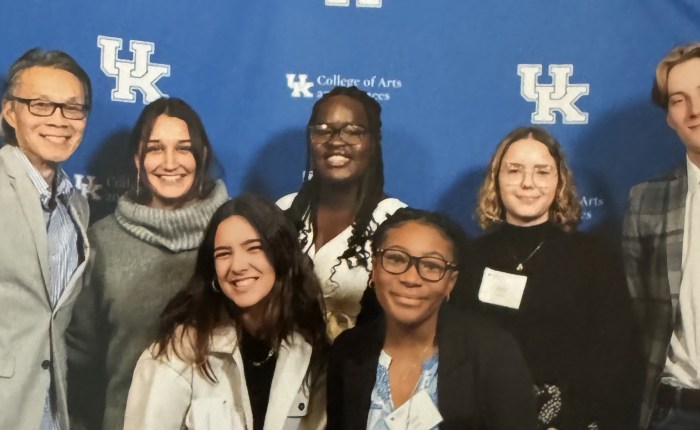
Me, with scholarship recipients at the recent Dean’s Circle Donors Luncheon sponsored by the UK College of Arts and Sciences.

I miss my dad. It’s hard to believe it’s already been over two years since he died. I think about him a lot—much more so it seems as the days slip away.

I find myself thinking also about his circle of influence. As his eldest-born son, his influence on me was meaningful and profound. But during his ninety-three years on the face of this earth, what legacy did he leave behind to the many others he encountered?

Come to think of it, what lasting legacies do any of us leave behind? The answer, I’m afraid, is slim to none. Most legacies fade away like yesterday’s news. Once you’re laid out on that cement slab, people quickly forget the things you’ve accomplished.

Just look at the great athletes of our generation. After Father Time catches up with them and their playing careers are kaput, no one remembers them anymore. They’re all distant memories, reduced to a small footnote in the annals of sports history.

An even better example are the legacies of U.S. presidents. Here you have people who at one time held the most powerful positions on the planet. And yet, other than George Washington, Abraham Lincoln, and Franklin Roosevelt, we can’t really recall any of their most significant achievements.

What did Zachary Taylor or Millard Fillmore ever do?

Here’s my point. My dad was not a transcendent athlete or famous political figure, but he was legacy smart. Before he left us, he directed a substantial part of his life savings towards scholarships at Centenary Church and at the University of Kentucky, knowing full well that education has a transformative and lasting impact.

I’ll admit I bristled a bit when I heard he was giving away my inheritance. But practically speaking, it made sense. Years from now, those scholarships would be worth a heck of a lot more than an African safari or a new Mercedes.

In that vein, I now present to you “Family Strong,” a memoir that my father meticulously crafted before his passing. It’s not just a book; it’s a beacon of hope, a reminder that our stories can create lasting impact for others in our own circle of influence. By purchasing the book, you not only gain insights into my dad’s remarkable life, but you also become a permanent part of the scholarships he established, furthering his legacy of belief in the transformative power of education and academic achievement.

“Family Strong” takes you on a journey from Fujian, China, to the heart of America, weaving together a tapestry of faith, love, and perseverance. My dad’s inspirational story embodies the American Dream in action, showcasing virtues like industriousness, honesty, humility, selflessness, and love. Through his vivid recollections, you’ll gain a unique perspective on the American immigrant experience during the 1950s and ’60s—all sprinkled with rich doses of humor, wisdom, and cultural insights.

This memoir, however, is not just my dad’s story told in his own words; it’s a celebration of love, faith, and family. As you explore his amazing life, you’ll also discover these similar narrative themes coming from us—his children and grandchildren—thus adding depth and warmth to the overall tale.

Moreover, the book pays homage to my dad’s legacy through the aforementioned Huang Family Scholarships. Established in June 2022, these scholarships inspire academic success, hard work, and a spirit of learning that transcends time.

Ultimately, “Family Strong” is an invitation to embark on a journey of faith, love, and the pursuit of your own dreams. My dad’s life, with all its trials and triumphs, serves as an inspiration for you to reflect on your own unique journey and the personal legacy you wish to leave behind.

Please join me in spreading the good word about “Family Strong” and be a part of preserving my dad’s legacy for generations to come. Remember, your purchase is not just a transaction—it’s a step towards ensuring that his story continues to inspire, motivate, and impact lives.

Click on the link below to purchase. Note that kindle, paperback, and hardcover versions are all available.

https://www.amazon.com/dp/B0CTD1ML8J

Once you’ve made a purchase, please let me know either through direct message or email (KYHuangs@aol.com) so that I can include your name as a permanent part of the scholarship legacy.

THANK YOU!

“From generation to generation – Dr Huang came to Kentucky and fulfilled an American dream for his children, their children and those who will follow in extending a legacy of goodness, kindness and a love for his colleagues, students and the Wildcats.”        

Dr. Eli Capilouto, University of Kentucky President

“As a pastor, I meet many people who are extremely kind, who are humble and who have accomplished great things. I’ve met very few who can be described in all three ways. Dr. Huang was a man of impressive achievement, yet he respected others and was a true witness of his deep, Christian faith. His autobiography is not only interesting but so very inspiring.”

—James Williams, Centenary Church Lead Pastor

“This book serves to witness that our Lord Jesus Christ is merciful, full of love and grace, and is a good Shepherd who always wants to find and save His lost sheep.”

—”Pete” Huang, author of Family Strong